

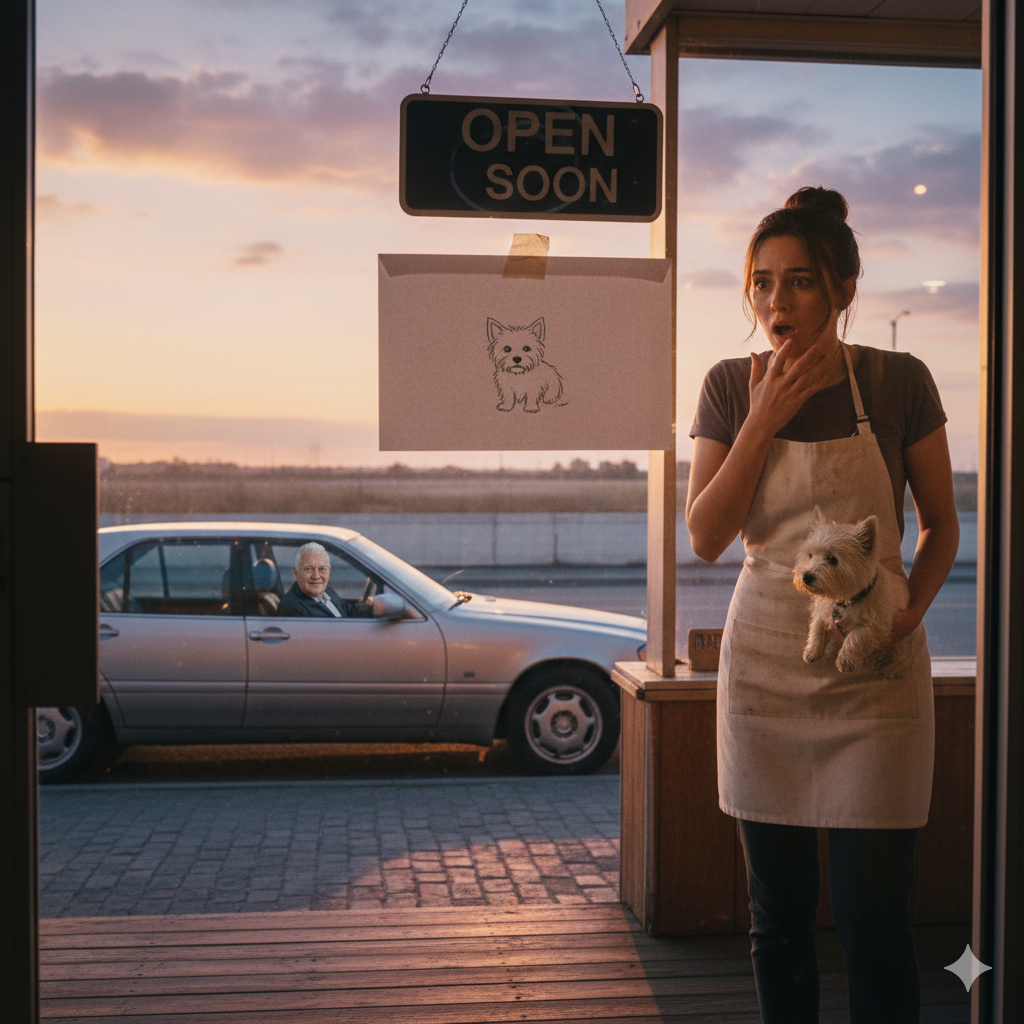
I Gave a Free Dinner to an Elderly Man and His Tiny Dog—By Morning, a White Envelope on My Diner Door Changed Everything.
My name is Laura Hayes, and for the last five years, I’ve been pouring everything I have into Laura’s Corner Diner—a small, stubborn holdout in downtown Chicago, squeezed between gleaming skyscrapers and chain coffee shops. The place was my grandfather’s pride and joy, opened in 1958 with red vinyl booths, chrome stools, and a neon “OPEN” sign that still flickers like it has secrets. He built it from nothing, fed families through recessions, and always said, “We feed people, not wallets.” After he passed, it came to me. I thought I could keep the flame alive.
But life doesn’t always cooperate. Our daughter, Emily, was diagnosed with leukemia at 14. We fought for three years—chemo, hospitals, hope that flickered brighter than any neon. She lost the battle at 17. My husband, Mark, couldn’t bear the emptiness. He left six months later, saying he needed “space to breathe.” The diner became my anchor and my burden. Bills piled up: suppliers, utilities, rent hikes from the new building owners. Customers dwindled—everyone’s in a hurry these days, grabbing lattes to go. I put up a “FOR SALE” sign twice, but took it down both times. It felt like betraying Grandpa. And honestly, what else did I have?
Most nights, I closed alone, counting the till with more receipts for coffee than meals. One Tuesday in January, the wind howling off Lake Michigan, I was locking up around 10 PM. Snow swirled under the streetlights, and the neon sign buzzed faintly.
The bell jingled just as I turned the key. I sighed, expecting a drunk or someone seeking warmth. Instead, an elderly man shuffled in, leaning heavily on a wooden crutch. He was bundled in a threadbare coat, scarf wrapped high, face weathered like old leather. Trailing him on a frayed leash was the tiniest dog I’d ever seen—a scruffy Chihuahua mix, no bigger than a loaf of bread, with oversized ears and a determined trot. The dog wore a little knitted sweater, clearly handmade.
“Sorry, sir, we’re closed,” I started, but he looked so frail, steam rising from his breath.
“Please, miss,” he said softly, voice raspy but kind. “Just something warm. Me and Pickles here—we’ve been walking a while.”
Pickles. Of course that was the dog’s name. The little guy sat politely, tail thumping, eyes bright despite the cold.
I should have turned them away. The diner was barely breaking even. But Grandpa’s voice echoed: Feed people. I unlocked the door fully. “Come in. Sit by the counter where it’s warm.”
He hesitated, then nodded gratefully. I boiled water for tea while he studied the menu board, fingers counting crumpled bills and coins from his pocket. “What’s the cheapest thing you’ve got? Soup, maybe?”
I glanced at the meager pile—maybe three dollars. My heart twisted. “Tell you what,” I said, “tonight’s special is on the house.”
His eyes widened. “I couldn’t—”
“You can, and you will.” I fired up the grill. Made him a full plate: meatloaf with gravy, mashed potatoes, green beans, cornbread fresh from the oven. For Pickles, a small saucer of chopped meat and a bit of broth—no onions, safe for dogs.
We ate together. Him at the counter, me perched on a stool nearby, Pickles curled at his feet nibbling happily. His name was Harold Jenkins, 82 years old. Widower. Lost his wife ten years ago, his home five years back when medical bills took everything. Lived in a tiny efficiency now, Social Security barely covering rent. Pickles was his only family—rescued from a shelter when he was lonely.
“You remind me of my Rosie,” he said, eyes misty. “She had that same kindness. Always feeding strays.”
I don’t know why, but I opened up. Told him about Emily—her laugh, her favorite pie (cherry), how the diner felt haunted without her. About Mark leaving, the bills, the fear of losing Grandpa’s legacy. Tears came unbidden. I hadn’t cried in front of anyone in years.
Harold listened, really listened. No pity, just understanding. “You’ve carried a heavy load, Laura. You shouldn’t have had to alone. But kindness like yours—it comes back. Always does.”
When we finished, he tried to push his coins toward me. I closed his hand gently. “Keep it for Pickles’ treats.”
He smiled, eyes twinkling. “God bless you, child.” They shuffled out into the night, Pickles glancing back as if to say thanks.
I locked up again, feeling lighter somehow. A small act, but it reminded me why I kept going.
The next morning, I arrived at 6 AM to prep for the breakfast rush—that is, the handful of regulars. Snow had blanketed everything overnight. As I approached the door, something caught my eye: a plain white envelope taped to the glass, my name scrawled in shaky blue ink. “Laura Hayes.”
My hands trembled as I peeled it off. I knew it was from Harold.
Inside was a single sheet of paper, folded neatly. And a cashier’s check.
The note read:
Dear Laura,
Last night, you gave me and Pickles more than food. You gave us dignity, warmth, and hope when we had little left. Your grandfather was right—we feed people.
I wasn’t always the man who walked in last night. Years ago, I owned Jenkins Foods—a chain of grocery stores across the Midwest. Sold it for a fortune in the ’90s, retired comfortably. But after Rosie died, I gave most of it away anonymously—scholarships, shelters, food banks. Kept enough for a simple life. Lately, I’ve been wandering, seeing where kindness still lives.
You have it. In spades.
The diner is yours now, free and clear. Paid off the debts, the back taxes, everything. Use the rest to keep feeding people. Maybe hire help, fix the roof, whatever you need.
Consider it payback for one good meal—and for reminding an old man that the world still has light.
With gratitude,
Harold (and Pickles)
P.S. Pickles says the meatloaf was top-notch.
The check was for $500,000.
My knees buckled. I sank to the snowy steps, sobbing—not from grief this time, but overwhelming relief. The amount covered all debts, renovations, and a cushion to breathe.
Harold became a regular after that—lunch most days, always paying now, with Pickles in tow. We renovated: new kitchen, fresh paint, but kept the vintage charm. Word spread somehow—maybe Harold’s quiet influence—and business boomed. Tourists, locals, even food bloggers. We added a “Pay It Forward” board: free meals for those in need.
Today, the diner’s thriving. I hired staff, including a young cook who reminds me of Emily. And on quiet nights, I still hear Grandpa’s voice.
Kindness comes back. Always.
Would I have done the same in Laura’s place? In a heartbeat. That free dinner didn’t just save the diner—it saved her soul. And mine, just reading about it.