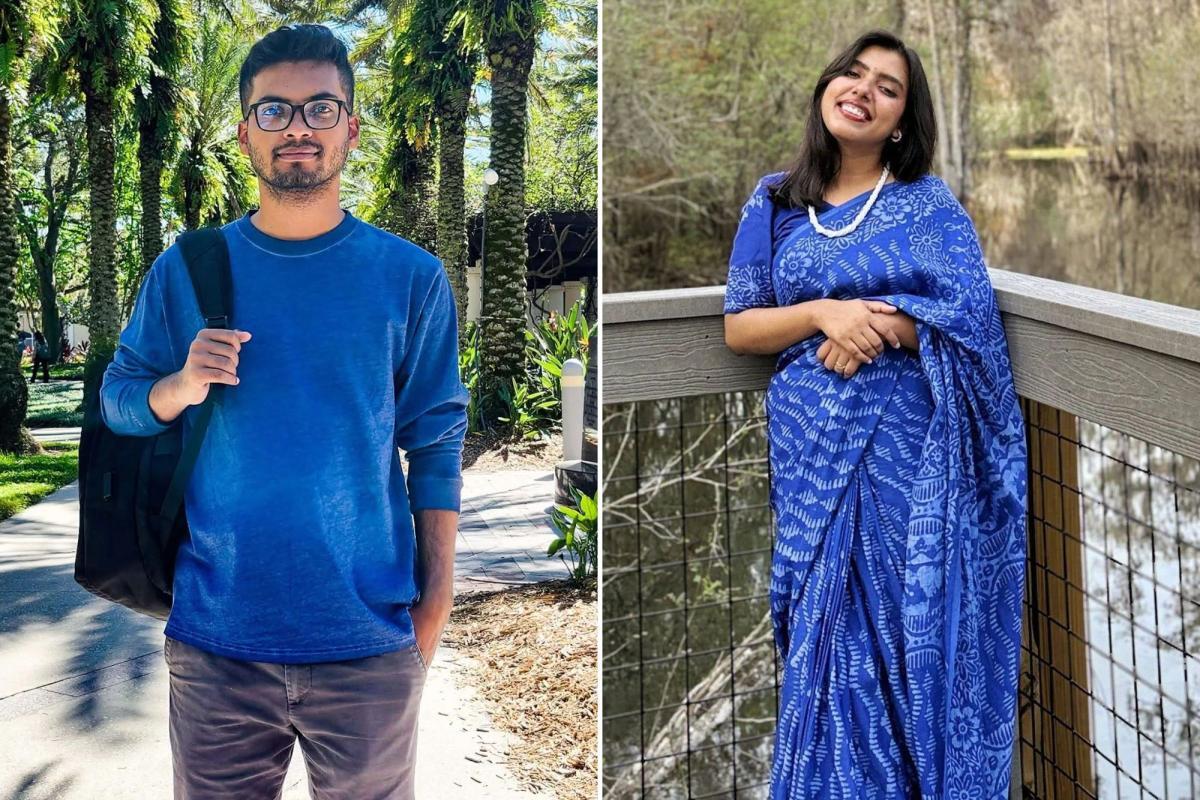
The shocking disappearance and murder of two promising Bangladeshi doctoral students at the University of South Florida (USF) has sent ripples of grief through the academic community in Tampa and far beyond to their home country. Zamil Ahmed Limon, 27, and Nahida Sultana Bristy, 27, vanished on April 16, 2026, under circumstances that quickly turned from a missing persons case into a horrifying double homicide investigation. Limon’s body, bearing multiple sharp force injuries, was discovered the following week on the Howard Frankland Bridge over Tampa Bay, wrapped in trash bags. Bristy remains missing, with authorities presuming her dead based on the volume of blood evidence at the scene. Their roommate, 26-year-old Hisham Saleh Abugharbieh, a U.S.-born former USF student, now faces two counts of first-degree premeditated murder with a weapon, along with charges including tampering with evidence, unlawfully moving a body, and false imprisonment.
What has captured particular public attention in recent updates is the role of family communications and subtle signs of distress that may have hinted at trouble brewing in the off-campus apartment shared by Limon and Abugharbieh. While specific details of a “last text message” from Limon to his mother have not been publicly released in official court documents or law enforcement statements, reports circulating in the days following the discovery have highlighted how familial concern and observations of an “inexplicable change” in the roommate’s behavior ultimately helped escalate the case and prompt deeper police involvement. In tight-knit immigrant families like Limon’s, regular check-ins via text or calls are common lifelines across time zones, and any deviation can raise immediate red flags.
Limon, who was pursuing a Ph.D. in geography, environmental science, and policy, was described by those who knew him as dedicated, well-mannered, and focused on his studies. Bristy, studying chemical engineering, was reportedly in a budding romantic relationship with Limon, with the pair considering marriage. Both had come to the United States chasing academic dreams, representing a generation of bright young Bangladeshi scholars contributing to research in critical fields. Their last known sightings were routine: Limon at his apartment complex near campus around 9 a.m. on April 16, and Bristy an hour later at a campus science building. Phones for both went silent shortly after, prompting a family friend to report them missing on April 17.
The apartment at the center of the tragedy became a key crime scene. Neighbors noted anomalies, such as the door being slightly ajar—unusual for the typically secure space. Inside, investigators later found disturbing evidence: blood in multiple areas, including two human-sized spots in Abugharbieh’s bedroom that tested positive chemically; blood-stained duct tape; missing items like a kitchen floor mat; and personal belongings of both victims scattered or discarded, including Bristy’s purse, ID, sneakers, and iPhone case, as well as Limon’s wallet and glasses in a nearby trash compactor. A CVS receipt timestamped late on April 16 for trash bags, cleaning supplies, and other items was linked to Abugharbieh’s phone activity.
Abugharbieh, who had prior misdemeanor arrests for battery and domestic violence-related issues within his family, initially spoke with detectives but ended the interview. Court records reveal even more chilling digital footprints. Days before the disappearances, around April 13, he allegedly queried ChatGPT with questions like “What happens if a human is put in a black garbage bag and thrown in a dumpster?” When the AI responded that it sounded dangerous, he reportedly followed up with “How would they find out?” Subsequent searches allegedly included inquiries about changing a car’s VIN number, keeping a gun without a license, surviving a gunshot to the head, and whether neighbors could hear gunfire. These queries, uncovered on his device, have been cited by prosecutors as evidence of premeditation.
The “inexplicable change” in the roommate referenced in family and community discussions appears to stem from behavioral shifts noted by those close to the victims. Abugharbieh’s mother reportedly told detectives that her son had long struggled with anger management and had been violent with family members in the past. In the context of the apartment dynamic, friends and relatives of Limon described a previously normal living situation turning tense or off in ways that were hard to pinpoint at first—perhaps increased isolation, erratic behavior, or unexplained absences. Such changes, while subtle, can signal deeper issues, especially in shared student housing where conflicts over space, relationships, or personal stresses can escalate rapidly.
Family members, including Limon’s brother, expressed disbelief at the disappearance, insisting it was out of character for the diligent student to go silent without explanation. In many such cases, a final text or call to a parent—often a plea for help or an odd comment about surroundings—becomes the catalyst for action. Although exact wording of Limon’s communications with his mother has not been detailed publicly (likely to protect the ongoing investigation), reports suggest that concerns raised by the family about unusual texts or lack of response, combined with observations about the roommate, helped authorities prioritize the apartment as a focal point. When police responded to a domestic violence call at Abugharbieh’s family home on April 24, it led to a brief SWAT standoff. He eventually surrendered, clad only in a towel, after negotiators intervened. This encounter provided the breakthrough, with Limon’s remains discovered that same morning on the bridge.
The discovery was gruesome: Limon’s body, in an advanced state of decomposition, showed evidence of multiple stab wounds. Dive teams and searches in Tampa Bay continue for Bristy, with additional human remains recovered nearby, though their connection is still under analysis. Prosecutors argue the evidence points to a brutal attack in the apartment, followed by efforts to clean the scene and dispose of the bodies. Abugharbieh allegedly admitted to driving Limon to the bridge area but claimed he merely dropped him off— a story contradicted by vehicle sightings, cell data, and other forensics.
This tragedy has sparked broader conversations on campus safety, roommate screening in student housing, and mental health support for international students navigating the pressures of graduate school far from home. USF has offered counseling and issued statements expressing heartbreak, while the Bangladeshi community in Florida and abroad has mourned the loss of two rising stars. Joint statements from the victims’ families have called for justice, proper Islamic burial rites for the remains, and accountability regarding housing security at the complex.
As the case heads toward a pretrial detention hearing, questions linger about what exactly transpired in those fateful hours on April 16. Did a seemingly innocuous change in the roommate’s demeanor mask dangerous intentions? Could earlier intervention based on family texts or neighbor observations have altered the outcome? In an era where digital trails—like ChatGPT queries—and instant family messaging play pivotal roles in investigations, this case underscores both the vulnerabilities of young adults living independently and the power of vigilance from loved ones.
The “last word” that reportedly prompted deeper police scrutiny, whether a specific phrase in a text or a final concerning message, highlights how one anomalous communication can pierce the veil of normalcy. For Limon’s mother, receiving what may have been her son’s final outreach—perhaps expressing unease about his living situation or something more urgent—turned personal worry into a catalyst for official action. In the absence of full public disclosure, it serves as a poignant reminder of the human cost behind crime statistics.
Authorities from the Hillsborough County Sheriff’s Office continue to appeal for information, emphasizing that no other suspects are being sought. The community, meanwhile, grapples with the randomness of violence that can invade even the safest academic environments. Zamil Limon and Nahida Bristy came to Florida to build futures through knowledge; their stories now serve as a tragic cautionary tale about trust, observation, and the thin line between everyday roommate friction and unimaginable horror.
As details continue to emerge from court filings, the focus remains on seeking justice for the victims and closure for their devastated families. In the words of those who knew them, these were not just students—they were dreamers, friends, and beloved sons and daughters whose lights were extinguished too soon. The investigation stands as a stark illustration of how “inexplicable changes” in behavior, when noticed and acted upon through family bonds and law enforcement, can bring perpetrators to account, even if it comes too late to save the innocent.
Để lại một bình luận