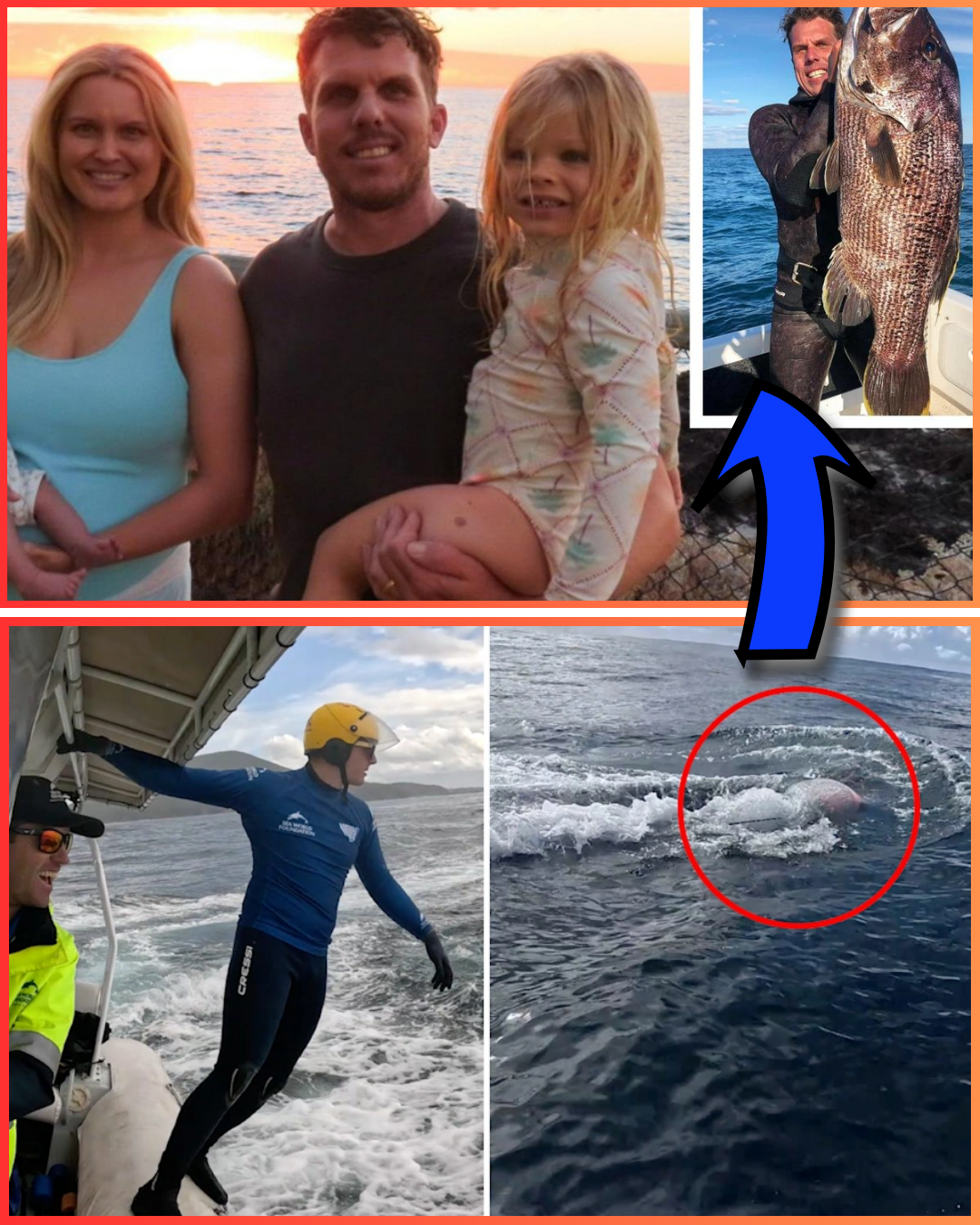
A 5-meter mega-beast stalks the coast, a terrifying nightmare consuming the famous tourist waters! One would think the recent horrific tragedy of Steven Mattaboni was the peak of fear, but the deep ocean has just sent a warning many times more devastating! A newly released video captures the breathtaking, heart-stopping moment of a group of fishermen as a 5-meter giant phantom suddenly surfaced, closing in and frantically stalking their small boat. Witnesses at the scene could only gasp in terror at the unbelievable size and bloodthirsty gaze of this cold-blooded predator.
The crystal-clear waters off Western Australia, popular with tourists and locals alike for fishing, swimming, and diving, have once again become a stage for primal fear. Just days after 38-year-old Perth father Steven Mattaboni was fatally attacked by a shark while spearfishing near Rottnest Island, new footage has emerged showing a massive great white shark relentlessly pursuing a small fishing vessel in nearby coastal waters. The video, now circulating widely online, shows the enormous predator gliding with eerie grace before accelerating toward the boat, its dorsal fin cutting through the surface like a knife. Fishermen on board can be heard shouting in panic as the 5-meter beast circles and bumps the hull, testing the vessel in a display of raw power that has left viewers stunned and authorities on high alert.
Steven Mattaboni’s death sent shockwaves through the community. The devoted father of two young daughters was spearfishing with friends about a kilometre offshore at Horseshoe Reef when a large shark, believed to be around 4 metres, struck with devastating force. Despite the efforts of his companions, Mattaboni succumbed to severe injuries from the bite to his lower leg. His wife Shirene described him as fiercely loyal and endlessly generous, a one-of-a-kind gentleman whose loss has left the family’s hearts irrevocably broken. That tragedy was still fresh in the minds of coastal residents when the new encounter unfolded, amplifying the sense that something ominous is stirring in these famed tourist waters.
In the newly released video, the fishermen, operating a modest aluminium boat typical of those used for day trips along the WA coast, were initially enjoying a routine outing. Suddenly, the water erupted as the massive shark surfaced nearby. What followed was several minutes of heart-pounding tension as the predator stalked them, repeatedly approaching from different angles and making physical contact with the boat. Witnesses described its cold, calculating eyes and powerful tail thrusts that sent waves rocking the vessel. One fisherman can be heard warning others to pull in lines and prepare to head for shore, his voice laced with unmistakable terror. The sheer size of the animal — estimated at 5 metres and several tonnes — made any resistance futile; this was not curiosity alone but the behaviour of an apex hunter assessing potential prey.
Marine experts reviewing the footage have confirmed it as a great white shark, one of the ocean’s most formidable predators. At this length, it represents a mature specimen capable of speeds over 50 kilometres per hour in short bursts and possessing a bite force strong enough to crush bone or damage fibreglass hulls. While great whites are naturally inquisitive and often “test bite” unfamiliar objects, the persistence shown in this encounter has raised concerns. The waters around Rottnest Island and broader stretches of the WA coastline are rich in seals, fish, and other marine life that attract these sharks, especially during certain seasonal migrations. Recent environmental factors, including changing water temperatures and baitfish movements, may be drawing larger specimens closer to popular recreational zones.
The timing could not be more alarming. Mattaboni’s fatal attack has reignited long-running debates about shark management in Australia. Beach safety authorities have increased patrols, drone surveillance, and shark spotting efforts in the region, while some voices call for more proactive measures such as drum lines or expanded culling in high-risk areas. Tourism operators, already wary after the latest fatality, now face the challenge of reassuring visitors that the waters they promote as paradise remain safe. Yet videos like this one, showing a mega-beast actively stalking a boat in broad daylight, undermine those reassurances and fuel public anxiety. Swimmers, surfers, and divers are being urged to exercise extreme caution, particularly during dawn and dusk when sharks are most active.
For the fishermen involved in the latest close call, the experience has been life-changing. They described the shark’s bloodthirsty gaze and relentless pursuit as something out of a nightmare, admitting they feared the boat might be compromised or tipped if the animal became more aggressive. Fortunately, they managed to return to shore without injury, but the psychological impact lingers. One crew member later recounted how the predator’s shadow beneath the boat made the water feel alive with threat, turning a relaxing day into a desperate fight for safety. Their decision to release the video serves as both documentation and a stark public warning about the power lurking just below the surface.
This incident highlights the eternal tension between humans and the ocean’s apex predators. Great white sharks play a vital role in maintaining marine ecosystem balance, but their presence in waters shared with growing numbers of recreational users creates inevitable conflict. Scientists emphasise that unprovoked attacks remain statistically rare, yet when they occur — especially fatal ones like Mattaboni’s — they leave lasting trauma. The newly surfaced video adds another layer, demonstrating that even those in boats are not entirely immune when a determined 5-metre giant decides to investigate.
As authorities analyse both the fatal attack and this latest encounter, questions mount about whether these events signal a shift in shark behaviour or simply a reminder of nature’s unpredictability. Local fishermen and tour operators report more frequent sightings of large sharks in recent months, prompting renewed calls for better real-time monitoring technology and public education campaigns. For families planning beach holidays along Australia’s western coast, the images of a massive shark stalking a small boat serve as a chilling deterrent, reminding everyone that the ocean demands respect.
The horror unfolding in these famous tourist waters carries a clear message from the deep. Steven Mattaboni’s tragedy was devastating, but the continued presence of such mega-beasts suggests the risks have not subsided. As the video spreads and sparks widespread discussion, coastal communities are left grappling with how to coexist with an ancient predator that shows no sign of yielding its domain. The 5-metre phantom and its bloodthirsty gaze have delivered a warning that resonates far beyond one boat or one beach: the ocean remains wild, unforgiving, and home to giants that can turn any day on the water into a fight for survival. For now, swimmers and fishermen alike are heeding the call for heightened vigilance, hoping that awareness and caution will prevent the next heartbreaking headline in these deceptively beautiful waters.
Để lại một bình luận