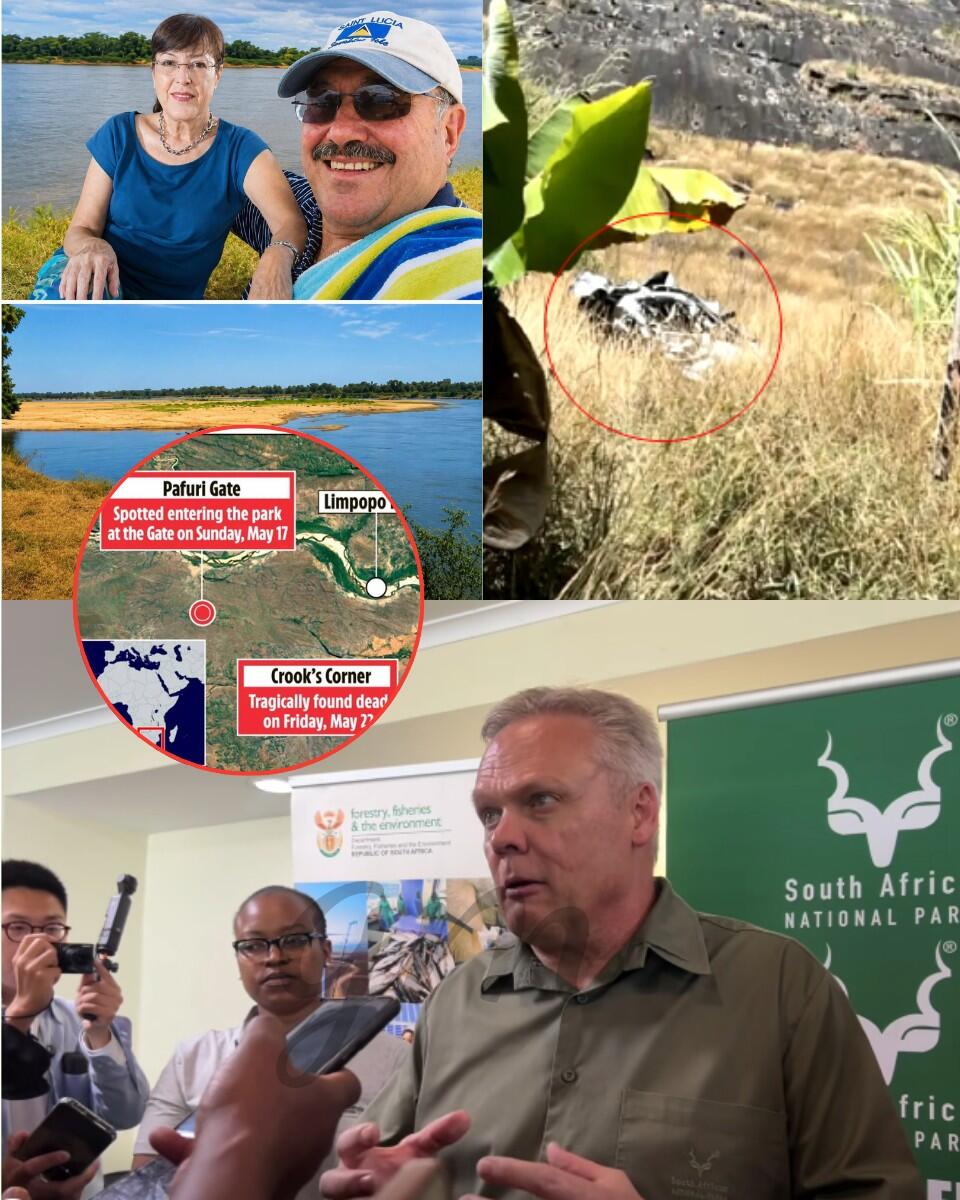
The global wilderness community has long regarded South Africa’s Kruger National Park as a pristine bastion of natural beauty, an ancient landscape where the laws of nature reign supreme and human visitors find a sanctuary from the relentless pace of modern life. For over a century, the sprawling, two-million-hectare conservation area has welcomed millions of international and domestic tourists, offering them a safe glimpse into the untamed heart of the African bushveld. However, in May 2026, the historical sanctity of this world-renowned reserve was shattered by a shocking and unprecedented act of human malice. The brutal murder and hijacking of an elderly, retired South African couple, Ernst Marais, 71, and his wife, Dina Marais, 73, has plunged the nation into a state of profound grief and exposed a terrifying new vulnerability along the park’s porous international borders. This tragic event stands as the first tourist murder of its kind in the park’s 100-year history, rewriting the security narrative of the African safari and leaving investigators to untangle a complex web of cross-border criminality.
To truly understand the weight of this tragedy, one must look at the lives of the individuals who were lost. Residents of the quiet, coastal town of Mossel Bay in the Western Cape, Ernst and Dina Marais were widely known within their community as warm, soft-hearted, and deeply humble people. Ernst was a highly respected quantity surveyor who had spent his career building a reputation for meticulous integrity, co-founding the firm Van Rensburg Marais & Associates and maintaining a long-standing membership with the Association of South African Quantity Surveyors until his well-earned retirement in 2018. Together, he and Dina had constructed a life defined by hard work, enduring devotion to their family, and a profound, lifelong passion for the outdoors. They were not naive travelers; they were veteran campers and regular visitors to Kruger National Park who knew its dirt tracks, hidden loops, and strict safety regulations exceptionally well. The bushveld was their spiritual home, a place where they routinely escaped to celebrate life’s milestones surrounded by the wildlife they cherished.
The fateful journey began on Sunday, May 17, 2026, when the couple passed through the park gates for what was intended to be a peaceful winter holiday. The primary anchor for the trip was an intimate celebration of Dina’s 73rd birthday, which fell on Tuesday, May 19. Family members later recalled how excited the couple had been to spend that specific day deep within the northern reaches of the reserve, isolated from the noise of civilization and immersed in the raw beauty of nature. Photos and messages sent to relatives during the first two days of their stay reflected an atmosphere of absolute tranquility and joy—an elderly couple completely at peace, navigating the dust-covered roads in their green Ford Ranger double-cab bakkie, a sturdy vehicle that had accompanied them on numerous wilderness excursions across Southern Africa.
The peace of their vacation evaporated into a terrifying void on Wednesday, May 20. The couple had traveled up into the remote Pafuri section, an area situated in the far northern expanse of the park that is celebrated for its towering fever tree forests, spectacular birdlife, and dramatic sandstone cliffs. According to eyewitness accounts and park records, Ernst and Dina were last seen alive on Wednesday morning at the Pafuri picnic site, a shaded, scenic rest area located along the banks of the Luvuvhu River. It was a routine stop for a midday lunch, but as the afternoon waned and the African sun dipped below the horizon, the couple failed to return to their designated rest camp. By Thursday morning, when their camp remained untouched and all attempts by worried family members to establish telephonic contact met with absolute silence, an official missing persons report was filed, prompting South African National Parks (SANParks) rangers and local police to launch an urgent search operation.
The Grim Discovery at Crooks Corner
The localized search came to a devastating and heartbreaking conclusion on the afternoon of Friday, May 22. A group of fellow tourists, engaged in routine game-viewing along the riparian loops near the iconic viewpoint known as Crooks Corner, noticed an anomalous shape floating in the slow-moving waters of the river. Upon closer inspection, the horrified visitors realized they were looking at human remains and immediately utilized their satellite radios to alert the nearest SANParks ranger station. Law enforcement and emergency recovery teams rushed to the coordinate, pulling the bodies of an elderly man and woman from the water. The physical descriptions matched the missing couple perfectly, and a formal identification subsequently confirmed the worst fears of the Marais family: Ernst and Dina had been found, but they were no longer alive.
A preliminary forensic examination conducted on the shoreline revealed a level of violence that stood in stark, grotesque contrast to the peaceful surroundings of the nature reserve. Pathologists and detectives from the Limpopo police service noted that both Ernst and Dina had suffered multiple, severe stab wounds to their upper bodies, primarily concentrated around the chest and torso. The nature of the injuries indicated a brutal, close-quarters physical assault inflicted by a sharp weapon, completely ruling out any initial theories of an accidental drowning or a tragic encounter with the park’s predatory wildlife. The serene waters where the Luvuvhu and Limpopo rivers converge had been transformed into a cold, forensic crime scene, marking the genesis of a high-stakes double homicide investigation.
The Historical Weight of the Crime: “This horrific incident represents the first time in the 100-year history of Kruger National Park that a tourist has been targeted and murdered inside the reserve’s boundaries, permanently altering the public’s perception of wilderness safety.”
The geographic location of the recovery added a chilling, historical irony to the unfolding investigation. Crooks Corner is a highly isolated, triangular wedge of land where the borders of South Africa, Zimbabwe, and Mozambique meet. In the late 19th and early 20th centuries, the area was a notorious lawless haven for gunrunners, ivory poachers, and fugitives from justice, who would simply step across the invisible border lines into a neighboring jurisdiction whenever local police approached. Over the decades, conservation efforts had successfully reclaimed the area, turning it into a celebrated tourist destination where visitors are permitted to exit their vehicles to look out over the expansive riverbeds. Investigators believe it was precisely this geographical isolation and the historical vulnerability of the border convergence that attracted a modern breed of human predators.
Tracking the Ghost Vehicle Across International Borders
As forensic teams processed the primary crime scene along the riverbank, a parallel mystery began to emerge regarding the couple’s missing property. Their green Ford Ranger double-cab bakkie had completely vanished from the vicinity of the Pafuri picnic site and Crooks Corner. In South Africa, high-end four-wheel-drive utility vehicles are premium targets for organized crime syndicates, who rapidly smuggle them into neighboring African countries where they can be resold on the black market or dismantled for parts. Detectives immediately initiated an electronic sweep of the vehicle’s onboard global positioning system (GPS), but the signal had been professionally jammed or disconnected shortly after the ambush occurred, leaving authorities digitally blind.
The initial investigation into the vehicle’s escape route yielded highly confusing results that initially baffled the Limpopo police service. A comprehensive audit of the advanced license plate recognition (LPR) cameras and gate security infrastructure operating at all nine of Kruger National Park’s official access gates confirmed that the missing green Ford Ranger had never exited through any authorized portal. Furthermore, the two official, highly secured international border posts connecting the park directly into Mozambique showed absolutely no record of the vehicle passing through their checkpoints. It appeared as though a massive, heavy utility truck had simply materialized out of the Pafuri section without leaving a single digital footprint on the park’s security network.
The breakthrough came when veteran KNP tracking rangers, utilizing traditional visual tracking methodology passed down through generations, began scanning the dense, rugged bushveld surrounding the northern boundary fence. In an area located miles away from any established tourist road, the trackers discovered a fresh, heavily broken path slicing through the virgin vegetation. Flattened mopane bushes, broken tree limbs, and deep, aggressive tire tracks in the soft soil painted a vivid picture of a heavy four-wheel-drive vehicle operating under high speed and extreme duress. The physical tracks led directly to a section of the international border perimeter fence that had been violently cut down and flattened against the earth, continuing uninterrupted directly into the wild terrain of Mozambique.
The discovery of the tire tracks has completely upended the handling of the case, shifting it from a localized criminal incident into a complex, high-stakes international manhunt. South African authorities have formally reached out to their counterparts in Mozambique, activating cross-border mutual legal assistance treaties to track the movement of the vehicle through the rural Mozambican province of Gaza. Law enforcement officials believe that the killers were members of a highly organized, heavily armed cross-border syndicate that uses the dense, unmonitored topography of the national park as a pipeline for smuggling stolen luxury vehicles out of South Africa, using the cover of the wilderness to shield their operations from conventional police patrols.
A Landscape Altered: Security and Public Guilt
The realization that a predatory network could infiltrate the northern reaches of the country’s crown jewel to commit a double murder has sent shockwaves through the South African tourism industry and ignited an intense national debate regarding wilderness security. In the immediate aftermath of the tragedy, Patricia de Lille, the national Minister of Tourism, took to the floor of Parliament during a budget vote address to deliver a solemn message of condolence to the Marais family, emphasizing that tourist safety remains the absolute pillar of the country’s economic stability. The state’s rapid diplomatic and political response underscores the existential threat that the incident poses to South Africa’s global reputation as a premier safari destination.
For the management of Kruger National Park and SANParks, the incident has forced an immediate, radical re-evaluation of their security architecture. Historically, the park’s highly trained ranger corps has been deployed primarily as an anti-poaching force, focusing their combat-level tracking skills on protecting the reserve’s endangered rhinoceros and elephant populations from illicit wildlife syndicates. The Marais case has delivered a grim reminder that these same wilderness corridors can be exploited by violent criminals targeting human lives. In response, park authorities have mobilized additional counter-poaching units to conduct aggressive patrols along the northern border fences, utilizing advanced drone surveillance and thermal imaging technology to detect unauthorized human movement before it can intersect with innocent holidaymakers.
As the joint cross-border investigation continues to hunt for the perpetrators in the dense thickets stretching between South Africa and Mozambique, an ambient sense of sorrow and hyper-vigilance hangs over the camps of Kruger National Park. The comment sections of wildlife forums and travel blogs have transformed into virtual spaces of mourning, filled with lengthy tributes from travelers who are struggling to reconcile their love for the bush with the horrifying reality of what transpired at Crooks Corner. The memory of Ernst and Dina Marais remains frozen in the collective consciousness of a nation—a gentle, devoted couple whose final dream safari was violently cut short, leaving behind a legacy of kindness that their family vows will outshine the darkness of their final hours.
Để lại một bình luận