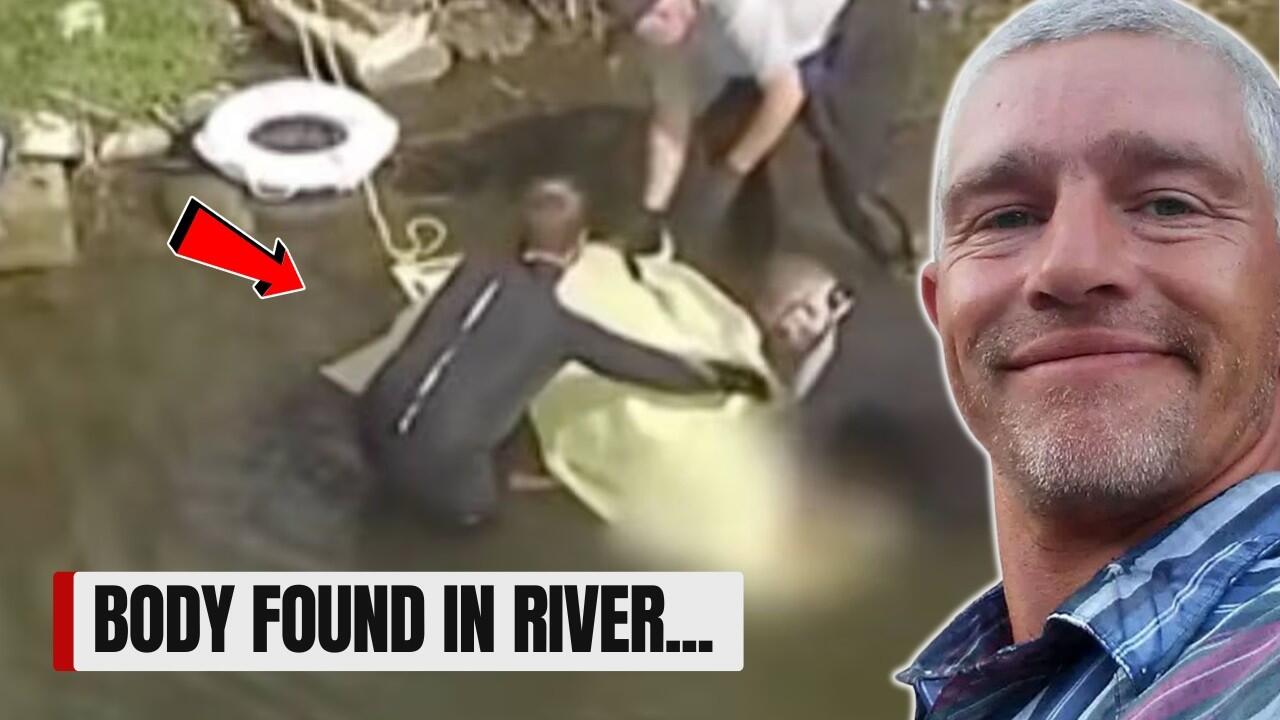
KYOTO, JAPAN — The grueling, heart-wrenching search that captured the attention of the global community has reached its most devastating conclusion. After eight agonizing days of scouring the rugged, storm-battered wilderness surrounding Japan’s historic cultural capital, the body of 20-year-old Auburn University junior James “Weston” Higginbotham has been found. The news was officially confirmed in a poignant, deeply private social media statement by his mother, Nancy Higginbotham, plunging his family, friends, and the entire Auburn community into an unimaginable state of mourning.
Yet, even as a family begins the painful process of navigating a lifelong void, the toxic machinery of the internet has refused to grant them peace. Within hours of the discovery, sensationalized headlines and unverified digital reports began flooding social media channels, claiming that a “purple bruise on his arm” had become a point of intense controversy and suspicion among local detectives. For onlookers seeking to understand the tragic reality on the ground in Kyoto, separating the cold facts of a wilderness tragedy from the predatory nature of modern clickbait has become a critical necessity.
The Anatomy of the Recovery: A Family’s Absolute Conviction
To comprehend the profound tragedy of Weston’s passing, one must look at the relentless perseverance of his parents, Nancy and Keith Higginbotham. The 20-year-old biosystems engineering student had vanished on May 29, 2026, during a graduation trip intended to celebrate his younger brother’s high school milestone. Following a minor, routine family disagreement regarding travel planning, Weston had boarded a local train to clear his head, eventually exiting at Yamashina Station in the eastern suburbs of Kyoto. Surveillance footage captured him walking purposefully toward a trail system that directly connects to the dense, mountainous forests of Mount Otowa and the Lake Biwa Canal.
Shortly after his entry into the foothills, a powerful Pacific typhoon battered the Kansai region with torrential rains and mudslides, severely compromising early official search efforts. By the end of the week, local Japanese authorities had begun scaling back their formal tracking operations, concluding that Weston had likely walked away intentionally and could be anywhere within the transit network.
However, his parents refused to give up, remaining steadfast in their conviction that their son—an experienced triathlete and passionate naturalist who sought the solace of the woods whenever he felt emotionally overwhelmed—was trapped somewhere in the steep, unforgiving terrain.
“We know he is out in these woods somewhere,” his parents wrote in a desperate social media appeal early Saturday morning. “The terrain is steep and the brush is incredibly dense. Weston is missing in the woods, and we will find him.”
Their maternal and paternal intuition proved heartbreakingly accurate. Just hours after their early-morning plea, a dedicated volunteer search-and-rescue group, operating closely with the family, pushed deep into the rugged, slick slopes of the Kyoto mountains. There, in a secluded section of the forest, team members discovered the young student’s lifeless body.
Dismantling the Rumor: The Truth Behind the “Purple Bruise”
Almost immediately after news of the discovery broke, internet sleuths and true-crime content creators began parsing the text of the family’s announcements and early local media reports, looking for anomalies to feed the algorithmic demand for mystery. The focus rapidly narrowed onto a single, sensationalized detail: a “purple bruise on his arm” that online rumors claimed pointed to foul play, a violent physical struggle, or a sinister third-party intervention in the deep woods.
Forensic experts and independent investigative journalists quickly moved to dismantle this malicious speculation, pointing out the biological realities of a wilderness recovery. When a body is recovered from a steep, mountainous environment several days after a disappearance—particularly following the severe physical intervention of a major typhoon—the presence of physical marking is not evidence of a crime; it is an inevitability of nature.
The Reality of Post-Mortem Hypostasis: In forensic science, the discoloration of a body following death is heavily influenced by a natural process known as livor mortis or post-mortem hypostasis. When the heart stops pumping, gravity causes blood to settle in the lowest points of the body, creating deep purple or bluish discolorations that closely resemble bruises. Depending on how a body rests on a sloped mountain incline, these markings can appear on the limbs, torso, or arms, completely independent of any physical trauma sustained in life.
Environmental Trauma and Post-Mortem Artifacts: Weston was navigating a steep, treacherous terrain characterized by loose gravel, exposed root systems, and jagged rock formations during the height of a heavy storm. A slip, a tumble down an incline, or the physical impact of falling branches during a typhoon can easily cause soft-tissue contusions. Furthermore, wildlife and natural decomposition elements can introduce post-mortem artifacts that untrained observers online frequently misinterpret as signs of a violent altercation.
Kyoto Prefectural Police and forensic medical examiners have remained tight-lipped regarding the precise clinical cause of death, but they have repeatedly emphasized that there are no initial indicators of a criminal homicide. The family has explicitly stated that they are not seeking an aggressive criminal investigation, but are instead focused entirely on the logistical and emotional burden of bringing their sweet, precious son back to American soil.
A Mother’s Grief: The Ultimate Plea for Dignity
For Nancy and Keith Higginbotham, the compounding trauma of discovering their son’s body has been severely exacerbated by the invasive, insensitive nature of the digital world. Having used their personal social media platforms as a vital tool to mobilize search volunteers, they found those same channels instantly transformed into a breeding ground for clickbait theories.
In a heartbreaking, beautifully dignified statement published on Saturday afternoon, Nancy Higginbotham confirmed the loss of her son, while making an explicit, definitive plea to the public to cease the spread of harmful rumors.
“The grief we feel is impossible to put into words,” Nancy wrote, her words carrying the raw, unvarnished pain of a mother facing the ultimate loss. “We are forever grateful for the time we had with our sweet, precious Weston, but we cannot begin to understand what life without him will be like. We shared our story here and in the media in the absolute hope of finding Weston alive. Now that he has been found, we ask for privacy as we begin to navigate this unimaginable loss. Thank you for your thoughts, prayers, and support. We will need them now more than ever. We will always love you, Weston.”
The family’s request for privacy is a direct directive to the internet community to step away from the keyboard and stop converting a profound family tragedy into online entertainment. Weston was a brilliant student, a dedicated runner, and an engineering major with a bright future ahead of him. To reduce his life, and the immense grief of his survival-focused family, to a clickbait headline about a purple bruise is an act of digital cruelty that the family has begged the world to stop.
The Legacy of an Environmental Soul
As the community of Hoover, Alabama, and the student body at Auburn University prepare to receive Weston’s family back home, those who knew him best are determined to control the narrative of his life, ensuring he is remembered for his passions rather than the tragic circumstances of his final days.
Friends from Auburn remember Weston as a young man deeply attuned to the natural world. He was a junior studying biosystems engineering, a field he chose out of a genuine, fiercely protective love for the Earth’s ecosystems. He was the type of person who wore t-shirts advocating for the protection of bees, who spent his free hours studying local flora, and who viewed running and hiking not merely as exercise, but as a form of spiritual connection with the environment.
When the emotional noise of the world became too loud, the wilderness was his sanctuary. It is a profound, shattering irony that the very environment he loved so fiercely ultimately became the place where his journey ended.
The search for James “Weston” Higginbotham has concluded, and the answers regarding his physical body are now in the hands of quiet medical professionals, far away from the glare of social media algorithms. The purple bruise on his arm is not a clue in a Hollywood murder mystery; it is a quiet mark of a young man who faced the elements of a fierce mountain storm alone. In the days ahead, as the digital rumors fade into insignificance, the true legacy of Weston will endure in the memories of a family who loved him beyond measure, and in the quiet, green spaces of the world that he spent his short life trying to protect.
Để lại một bình luận