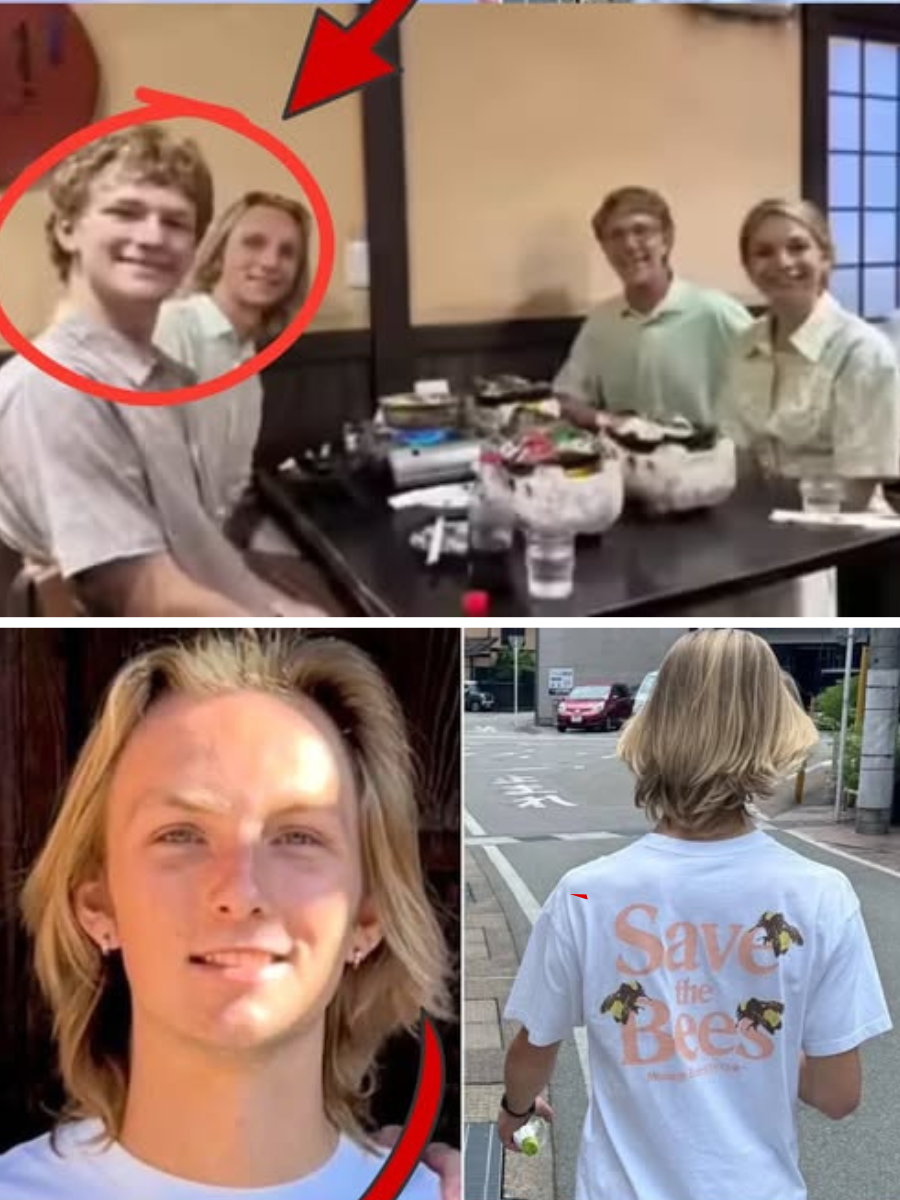
The heartbreaking resolution of the international search for twenty-year-old Auburn University junior James “Weston” Higginbotham left a family shattered and communities across two continents mourning a profound loss. As the public continues to grapple with the tragedy that unfolded in the mountainous terrain of the Yamashina district outside Kyoto, Japan, the investigation into his final hours has moved from the physical trails to his final digital communications. The emotional weight of the tragedy has intensified exponentially following a heartbreaking revelation from his best friend, Hiyu Shikari, who has shared the final text message exchange he received from Weston just hours before the engineering student vanished into the forested wilderness.
For days, the public knew only of the external circumstances: a devoted vegan, pacifist, and biosystems engineering student who sought solitary retreat following a normal family argument regarding the heavy resource consumption of modern technology. However, the release of his final text message has provided a direct, devastating window into Weston’s internal landscape. The exchange, sent from his mobile phone shortly before it disconnected from the local network near Yamashina Station, has quickly become the most talked-about and emotional aspect of the entire tragedy, leaving those closest to him struggling to hold back tears.
The message itself was not an expression of anger or panic; instead, it possessed a calm, deeply philosophical tone that beautifully reflected Weston’s gentle character. He spoke directly to the existential burden he had been carrying, a profound disconnect between his deeply held environmental principles and a world increasingly dependent on digital convenience. The specific line from that exchange that has broken the hearts of thousands across the globe read: “I just want to find a place where the noise of the world cannot drown out the breath of the earth.”
Those who knew Weston best state that this single line encapsulates his entire soul, making the reality of his absence almost too painful to bear. His mother, Nancy Higginbotham, had previously described her son as a pure naturalist who possessed such an intense reverence for living things that he refused to harm even the smallest insect. To read his final words—expressing a desperate, innocent desire to escape the digital weight of modern society and reconnect with the raw simplicity of nature—reveals the depth of the silent struggle he was navigating during what was supposed to be a celebratory family vacation.
Behavioral analysts and family friends who have reviewed the message note that the wording carries a haunting, poetic finality. It illustrates that his decision to walk into the dark, rainy mountain trails of Kyoto was not a random act of impulsive frustration, but a deeply felt, solitary quest for peace. For a young man who structured his entire life around leaving the absolute lightest possible ecological footprint, the line represents a final, beautiful, yet ultimately tragic attempt to find a sanctuary that aligned with his core ethical values.
The revelation has triggered a massive wave of collective empathy and grief across social media platforms and university forums. At Auburn University, where Weston was highly regarded for his intellect and his quiet dedication to environmental conservation, students and faculty members have expressed absolute devastation. Many have noted that the text message strips away the clinical details of the accident report, forcing everyone to confront the sensitive, compassionate young human being who felt the burdens of the modern world far too acutely.
Outside the digital sphere, the Higginbotham family continues to navigate an unimaginable landscape of sorrow, processing the reality of a future taken away far too soon. The final text message has become a sacred, agonizing artifact for his loved ones—a digital echo of a voice that was always quiet, thoughtful, and deeply concerned with the preservation of life. It serves as a reminder that the true cost of the tragedy is not measured in the logistics of the search operation, but in the permanent silence of a brilliant young mind that simply wanted to find harmony in a world that felt increasingly out of tune.
As the days press forward and the initial shock of the loss slowly transitions into a long-term process of remembrance, the words Weston sent to his best friend will remain the definitive portrait of his spirit. The image of the gentle student seeking a place where the noise of the world could not reach him stands as an enduring, heartbreaking testament to his character. His final message ensuring that his voice will never be entirely lost in the shadows, continuing to remind those he left behind of the pure, unyielding love he held for the planet beneath his feet.
Để lại một bình luận