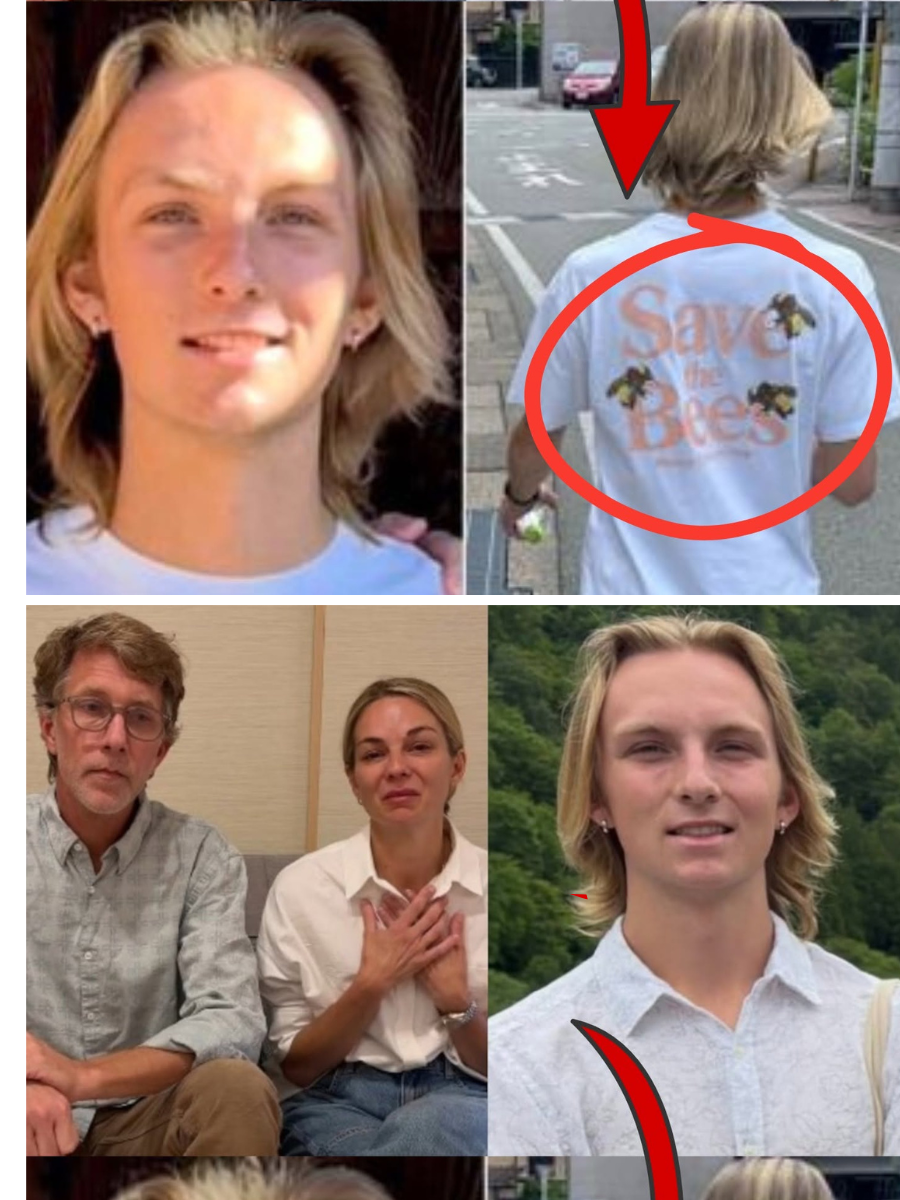
The modern digital landscape possesses an insatiable appetite for mystery, frequently transforming real-world family tragedies into sensationalized internet lore. A prominent example of this disturbing trend is the online discourse surrounding James “Weston” Higginbotham, a twenty-year-old Auburn University student who tragically lost his life during a family vacation in Japan. Within days of the discovery of his body, various social media accounts and automated bots began circulating alarming headlines. These posts claimed that official autopsy results had led Japanese authorities to classify his death as a homicide, pointing toward an intricate web of seven key pieces of evidence and multiple critical timelines.
However, a rigorous examination of the actual facts, official statements from Japanese law enforcement, and communications from the Higginbotham family reveals a starkly different reality. There is no homicide investigation, no secret cache of forensic evidence, and no criminal conspiracy. Instead, the true story of Weston Higginbotham is one of a devastating accidental tragedy compounded by harsh weather conditions, a grueling community-led search effort, and a grieving family whose private pain has been weaponized by digital algorithms designed to generate clicks and engagement.
The Promising Life of an Auburn Tiger
To understand the profound impact of this tragedy, one must first look at the life of the young man at the center of the story. James “Weston” Higginbotham was a brilliant, promising twenty-year-old junior studying biosystems engineering at Auburn University in Alabama. Known for his academic dedication, warm personality, and love for exploration, Weston was a cherished member of the Auburn community.
In late May 2026, Weston embarked on a highly anticipated international journey with his family. The trip to Japan was envisioned as a grand celebration, marking his younger brother’s recent high school graduation. For the Higginbotham family, it was supposed to be a time of joy, bonding, and cultural discovery. They arrived in Japan on May 25, 2026, exploring the vibrant cities and historical landmarks that make the country a premier global destination. By May 29, the family had reached the historic city of Kyoto, a place famous for its stunning temples, bamboo groves, and mountainous hiking trails.
The Disappearance in Yamashina
The tragedy began to unfold on the afternoon of Friday, May 29, 2026, while the family was staying in the Yamashina ward of Kyoto. Weston, an enthusiast of nature and walking, expressed a desire to explore the local scenic trails on foot. Seizing the opportunity for a solo excursion, he stepped away from the family group, planning a routine hike through the wooded perimeter of the area.
For a time, the family maintained passive contact with Weston through Life360, a popular location-sharing mobile application. However, as the evening progressed, the digital tether severed. At approximately 8:29 PM local time, Weston’s phone lost signal entirely, freezing his location data.
Anxiety quickly turned to panic as the hours ticked by and Weston failed to return to the family’s lodgings. The Higginbotham family immediately contacted local authorities, triggering an urgent missing persons investigation. Investigators reviewing local security footage managed to secure the last known visual confirmation of the student. Closed-circuit television (CCTV) cameras captured Weston walking alone, heading directly toward a mountainous, densely forested trail at approximately 8:00 PM. It was the final time he would be seen alive.
A Grueling Search Against Nature
The search for Weston Higginbotham immediately encountered severe environmental obstacles. Shortly after his disappearance, a powerful typhoon swept across mainland Japan, bringing torrential rainfall, howling winds, and heavy fog to the Kyoto region. The adverse weather conditions turned the already challenging mountainous terrain of Yamashina into a treacherous landscape of mud, slippery rocks, and compromised visibility.
Despite the dangerous conditions, Japanese authorities launched a massive search and rescue operation. More than one hundred emergency personnel, equipped with specialized tracking dogs, drones, and helicopters, combed the dense forests and steep ridges. However, as days passed without a breakthrough, official state-sponsored search efforts began to scale back in accordance with standard search protocols.
Refusing to give up hope, the Higginbotham family took matters into their own hands. They established a localized command center, utilized social media to raise global awareness, and hired a private professional search and rescue team to continue the operation. The local Japanese community responded with overwhelming empathy. Dozens of English-speaking expats, local hikers, and Japanese volunteers joined the grid search, navigating the rugged terrain daily.
The agonizing search came to an end on Saturday, June 6, 2026. A volunteer search team operating in a remote, rugged mountainous sector on the outskirts of Kyoto discovered Weston’s body. The location was deep within the terrain, consistent with someone who had become disoriented or suffered a fall during severe weather.
Fact-Checking the “Homicide” Myth
Almost immediately after the tragic discovery was made public, the narrative was hijacked by online true-crime factions and engagement-bait networks. Headlines declaring an official homicide classification and referencing “7 key pieces of evidence” began flooding platforms like Facebook, TikTok, and X (formerly Twitter). These posts invariably included sensationalized phrasing, crying emojis, and the classic directive to “read the full details in the comments,” which simply led users to ad-heavy blogs or malicious links.
In direct contradiction to these viral rumors, the Kyoto Prefectural Police and international authorities have been entirely transparent: there is absolutely no suspicion of foul play.
“Japanese law enforcement officials completed a thorough review of the scene and the preliminary medical examination, explicitly classifying the case as a tragic accident with no criminal elements involved.”
The official consensus indicates that Weston likely became disoriented by the rapidly deteriorating weather brought on by the typhoon, lost his footing on the slick, steep mountain trails, and suffered a fatal fall. Out of respect for the family’s privacy during an unimaginable period of mourning, the specific medical cause of death has not been paraded through public media, which online grifters exploited to manufacture a nonexistent murder mystery.
A Family’s Grief and Gratitude
Following the recovery of her son, Nancy Higginbotham, Weston’s mother, released a deeply moving public statement confirming the tragedy. Her words contained no anger, no suspicion of crime, and no mention of the sensationalized theories circulating online. Instead, her message was one of profound heartbreak and immense gratitude for the humanity shown to her family during their darkest hour.
She expressed eternal thankfulness to the Japanese authorities, the private search teams, the U.S. Consulate, and the legions of volunteers who risked their own safety in the muddy mountains to bring her son home. The family requested that the public respect their privacy as they began the painful process of repatriating Weston’s remains back to Alabama and preparing for his memorial service.
The Anatomy of Social Media Exploitation
The case of Weston Higginbotham serves as a sobering case study in the unethical mechanics of modern social media engagement. When an individual goes missing or dies abroad, automated scraper bots and clickbait content creators utilize templates—such as “7 pieces of evidence” or “autopsy reveals homicide”—and insert the names of recent victims.
This tactic exploits the human curiosity surrounding true-crime investigations to generate ad revenue, completely disregarding the emotional trauma inflicted upon the victim’s surviving family and friends. For the Auburn University community and the Higginbotham family, Weston is not a character in a true-crime podcast or a puzzle to be solved; he was a beloved son, a protective brother, and a brilliant student whose life was cut short by a terrible accident.
As the Auburn community mourns the loss of one of their own, the enduring legacy of Weston Higginbotham will not be defined by the deceptive headlines of the internet, but by his passion for engineering, his adventurous spirit, and the profound unity of the international volunteers who labored to bring him peace.
Để lại một bình luận