🚨 WHAT IF LINDSAY CLANCY DIDN’T BELIEVE SHE WAS K!LL!NG HER CHILDREN — BUT “SAVING” THEM?
A stunning new courtroom theory is putting her state of mind at the center of the case: one expert says she may have believed her children would suffer after she died, while defense experts say she was trapped in postpartum psychosis and hearing voices commanding her to act. 👀
Two radically different explanations. Three children dead. And now the jury must decide which version of Lindsay Clancy’s mind is supported by the evidence.
The expert testimony that could determine whether this ends in murder convictions — or an insanity verdict. 👇
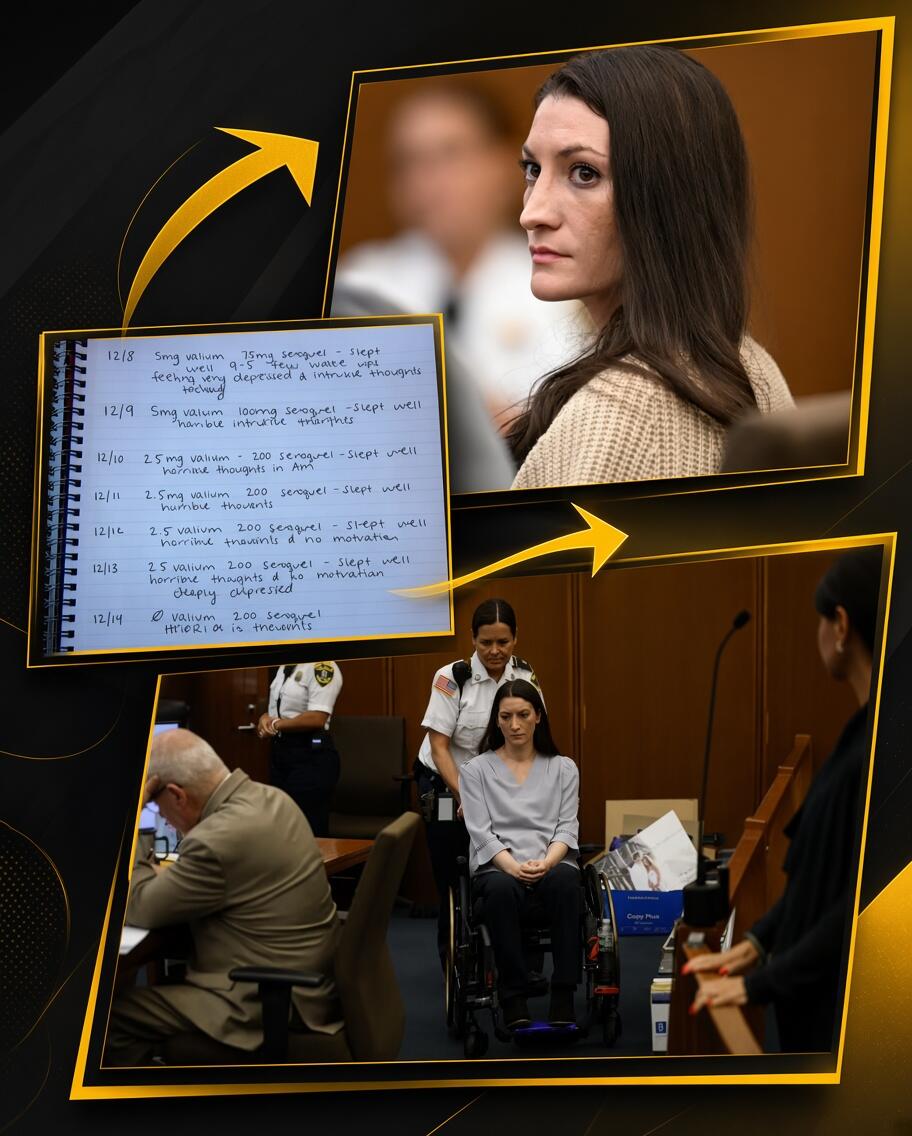
The most consequential question in the Lindsay Clancy murder trial is no longer simply what happened inside the Duxbury home on Jan. 24, 2023.
The basic facts are largely undisputed.
Clancy strangled her three young children — 5-year-old Cora, 3-year-old Dawson and 8-month-old Callan — before attempting to take her own life. She survived the suicide attempt but suffered severe injuries that left her paralyzed.
What the jury must now determine is something far more complicated:
What was happening inside Clancy’s mind when she killed her children?
After nearly a month of testimony, that question has produced two dramatically different explanations.
Defense experts say Clancy was suffering from severe postpartum psychosis, a rare psychiatric condition that can cause hallucinations, delusions and a profound break from reality. They argue that she did not understand the wrongfulness of what she was doing and therefore should not be held criminally responsible for murder.
Prosecution experts acknowledge that Clancy was suffering from significant mental illness, but reject the conclusion that she was acutely psychotic when the killings occurred.
The latest and perhaps most consequential testimony came Monday from forensic psychologist Dr. Kirk Heilbrun.
Heilbrun told jurors that he did not believe Clancy was experiencing acute psychosis or command hallucinations when she killed her children. Instead, he proposed another explanation: Clancy may have believed her children would suffer after she killed herself and therefore killed them first.
That distinction could ultimately determine the verdict.
Two competing pictures of the same tragedy
The defense does not deny that Clancy killed her children.
Its argument is that the killings occurred during a profound psychiatric crisis that stripped her of the ability to appreciate the wrongfulness of her actions.
Defense psychologist Paul Zeizel testified earlier in the trial that Clancy was not criminally responsible because of her mental illness. He described her as experiencing postpartum psychosis and testified that she did not appreciate the wrongfulness of killing her children.
Another defense expert, forensic psychiatrist Dr. Phillip Resnick, similarly supported the conclusion that Clancy was profoundly psychotic and not in control of her actions.
The defense has also presented testimony from people who knew Clancy before the killings, including family members and former colleagues, portraying a woman whose mental health had deteriorated significantly in the months following the birth of her third child.
Her former mother-in-law, Susan Clancy, testified that Lindsay had been “begging for help” and had struggled with her mental health before the killings.
Those accounts form an important part of the defense’s effort to show that the tragedy was the culmination of a severe psychiatric crisis rather than a calculated murder.
The prosecution sees the evidence differently.
The prosecution’s theory: mental illness, but not psychosis
Prosecutors have not argued that Clancy was completely free of mental illness.
Instead, their experts have drawn a line between being mentally ill and being legally insane.
Dr. Kirk Heilbrun diagnosed Clancy with bipolar II disorder, but testified that he did not believe she was suffering from acute psychosis when she killed her children.
He also rejected Clancy’s account that a male voice commanded her to kill the children.
According to Heilbrun’s testimony, he considered another explanation more plausible: Clancy believed she was going to die by suicide and feared her children would be left behind to suffer.
Under that interpretation, the killings could have been driven by a profoundly disturbed but organized belief rather than a hallucination commanding her to act.
It is a critical distinction.
Someone can be deeply depressed, suicidal and mentally ill without necessarily being legally incapable of understanding that killing another person is wrong.
That is essentially the boundary prosecutors are asking jurors to recognize.
The “saving them” theory is not the defense’s only explanation
The idea that Clancy may have believed she was protecting her children has attracted considerable attention because it creates an unsettling paradox.
The prosecution is not suggesting that she necessarily killed them out of hatred or anger.
Instead, Heilbrun’s interpretation suggests that Clancy may have believed death was preferable to leaving her children behind after her own planned suicide.
That concept has been described in forensic terms as “altruistic filicide.”
The phrase does not make the killings less horrific.
Rather, it describes a category of cases in which a parent kills a child while believing, however tragically and irrationally, that the act is intended to protect the child from future suffering.
The prosecution’s argument is that this belief could exist without acute psychosis.
The defense’s argument is essentially the opposite: if Clancy genuinely believed she was receiving commands from a voice and was operating within a distorted reality, that could be evidence of postpartum psychosis severe enough to make her legally insane.
The jury must decide which interpretation is better supported.
The alleged voices are a major point of disagreement
One of the most striking pieces of defense evidence has involved Clancy’s reported hallucinations.
Hospital chaplain Sheila Cavanaugh testified that Clancy repeatedly described hearing a male voice telling her to kill her children and then herself. Cavanaugh said she visited Clancy at least 14 times following the killings.
Defense experts have treated those reports as evidence consistent with psychosis.
The prosecution’s experts have been much more skeptical.
Heilbrun testified that Clancy’s description of the voice was highly unusual and that he did not believe she was experiencing command hallucinations.
That leaves jurors with a fundamental credibility question:
Was Clancy describing a genuine psychotic experience — or was the explanation being applied after the fact to an otherwise understandable, though horrific, sequence of decisions?
There is no simple medical test that can answer that question retrospectively.
Psychiatric experts must instead evaluate interviews, medical records, behavior before and after the killings, witness testimony and the defendant’s accounts.
What happened before the killings?
The prosecution has repeatedly emphasized Clancy’s behavior on the afternoon of Jan. 24.
According to the state’s theory, Clancy sent her husband, Patrick, out of the house to pick up food and medication before killing the children.
Prosecutors have argued that this sequence demonstrates planning and awareness.
The defense has a different interpretation.
Sending Patrick away, they argue, does not necessarily prove that Clancy was rationally planning a murder. Someone experiencing severe psychosis could still perform ordinary tasks or make apparently coherent decisions while suffering from profound delusions.
That is one reason psychiatric testimony has become so central to the case.
The same behavior can look very different depending on the mental state attributed to the person performing it.
Family testimony has complicated the picture
The defense has spent considerable time presenting evidence about Clancy’s deterioration before the killings.
Her mother and sister testified during the defense case. Her former mother-in-law described her as a loving mother who was struggling and actively seeking help.
Those witnesses described fears, paranoia, suicidal thoughts and concerns surrounding medication.
The testimony is designed to establish that the killings did not occur in isolation.
There had been warning signs.
There had been attempts to obtain treatment.
And, according to defense witnesses, Clancy’s condition had become increasingly unstable.
The prosecution has countered that medical professionals who saw Clancy shortly before the killings did not observe clear psychotic symptoms.
Several treating professionals testified that she denied suicidal or homicidal thoughts and did not display signs of psychosis during their interactions with her.
That conflict is particularly important because the jury is being asked to determine her mental state at one specific moment.
A diagnosis does not automatically answer the legal question
Perhaps the biggest misconception surrounding the case is that a psychiatric diagnosis alone determines criminal responsibility.
It does not.
The jury must ultimately determine whether Clancy met Massachusetts’ legal standard for insanity at the time of the killings.
That means the central issue is not simply whether she suffered from depression, bipolar disorder or postpartum psychosis.
It is whether her mental state was so severely impaired that she could not appreciate the wrongfulness of her conduct.
That is why the expert disagreement matters so much.
The defense experts say the answer was yes.
The prosecution’s experts say Clancy was mentally ill but retained sufficient awareness and control to understand what she was doing.
The Andrea Yates comparison
The case has inevitably drawn comparisons with Andrea Yates, the Texas mother who drowned her five children in 2001 and was ultimately found not guilty by reason of insanity after a retrial.
The comparison has resurfaced because of the role psychiatric experts play in explaining how a mother could kill her own children while apparently believing she was acting for their benefit.
But the Yates case has also introduced controversy of its own.
Dr. Park Dietz, a prominent forensic psychiatrist who testified in the original Yates trial, made a false claim about an episode of Law & Order that he said may have influenced Yates. His testimony was later found to have contributed to the need for a retrial.
That history has become relevant in the Clancy trial because defense attorney Kevin Reddington has questioned prosecution experts who have professional connections to Dietz.
The defense is effectively asking jurors to scrutinize not only the conclusions of psychiatric experts but also the methodology and assumptions behind them.
The trial’s public reaction
Outside the courtroom, the case has generated an unusually emotional response.
Supporters of Clancy have gathered outside the courthouse wearing pink, while other demonstrators have appeared in white in remembrance of the children.
The online conversation has become even more polarized.
Some people view Clancy primarily through the lens of maternal mental health and postpartum psychiatric illness.
Others argue that the evidence of planning and her behavior before the killings points toward deliberate murder.
The controversy has also generated conspiracy theories involving Patrick Clancy, despite no evidence that he participated in the children’s deaths. The New Yorker and WIRED have examined how those theories developed online and how broader frustrations about motherhood and mental-health care have shaped the public response.
That online debate, however, is separate from the evidence the jury is required to consider.
The defense has now rested
The defense rested its case on Aug. 21 after presenting several days of testimony focused heavily on Clancy’s psychiatric condition.
The prosecution has moved into its rebuttal phase.
On Aug. 24, Heilbrun delivered one of the prosecution’s most important counterarguments, rejecting acute psychosis and instead presenting the theory that Clancy killed the children because she believed they would suffer after her suicide.
The testimony was followed by a request for a mistrial after references to Clancy’s Catholic faith entered the proceedings. The judge denied the request and instructed jurors regarding the issue.
The trial is now approaching its conclusion.
What happens next?
Closing arguments are expected shortly, after which the jury will begin deliberations.
If Clancy is convicted, she faces the possibility of life in prison without parole.
If she is found not guilty by reason of insanity, she would not simply walk free; she would instead face commitment to a psychiatric facility under Massachusetts law.
That makes the coming decision extraordinarily consequential.
The jury is not being asked whether the deaths were tragic.
They are not being asked whether Clancy suffered.
And they are not being asked whether postpartum mental illness deserves greater attention.
They must answer a much narrower legal question: Was Lindsay Clancy criminally responsible for what she did?
The evidence has produced two competing narratives.
One portrays a mother in the grip of postpartum psychosis, hearing voices and unable to understand the wrongfulness of her actions.
The other portrays a severely mentally ill woman who nevertheless retained enough awareness to make deliberate choices — including the belief that killing her children would spare them suffering after her own death.
Both narratives attempt to explain the same horrific event.
Only one will ultimately determine the verdict.
And as the jury prepares to weigh the final evidence, the most disturbing question in the courtroom may also be the hardest to answer:
Can a person be profoundly mentally ill, believe they are protecting the people they love, and still remain legally responsible for what they do?
That is the question the Lindsay Clancy jury is now being asked to confront.
Để lại một bình luận