🚨 MISSISSIPPI’S DA JUST BROKE HER SILENCE — AND HER MESSAGE TO THE PUBLIC IS RAISING EVEN MORE QUESTIONS.
As pressure mounts over what really happened to 18-year-old Nolan Wells, District Attorney Angel Myers McIlrath is refusing to release more details — insisting the case must be built for a grand jury, not for social media.
But with Nolan’s family demanding transparency, attorneys fighting over his phone, and the official cause of death still unresolved, one question is becoming impossible to ignore:
What does the DA know that the public still hasn’t been told? 👇
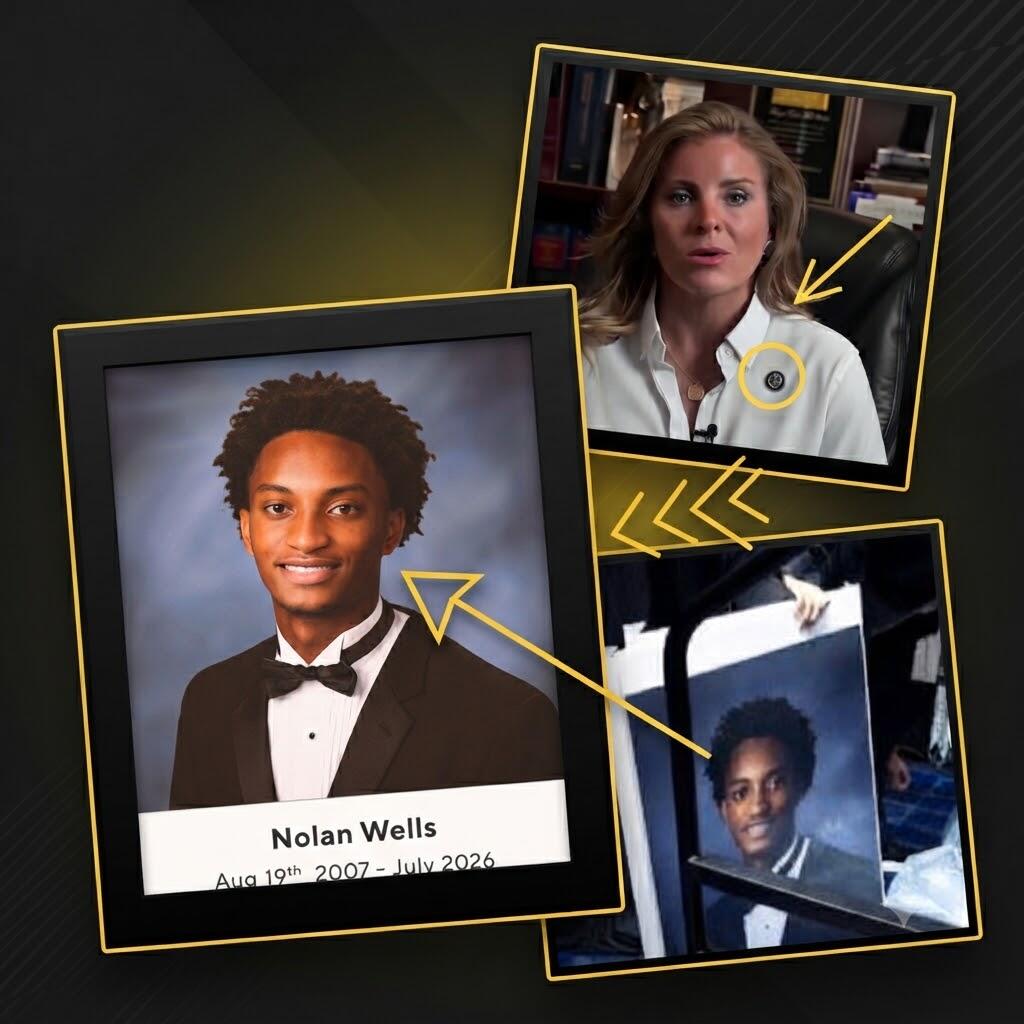
The pressure surrounding the investigation into the death of 18-year-old Nolan Wells is escalating — but Mississippi’s top prosecutor overseeing the case says the public will have to wait.
Jackson County District Attorney Angel Myers McIlrath has pushed back against growing demands for more information about the circumstances surrounding Wells’ death, arguing that legal restrictions prevent her office from publicly discussing many aspects of an active investigation.
Her message was unusually direct.
McIlrath acknowledged that a “void” has developed because Wells’ family, attorneys and other public figures have been speaking about the case while prosecutors have remained largely silent.
But she said filling that void with information from an active investigation would violate the limits placed on her office.
“I would be stepping outside the bounds of the law if I were to fill that void and share information publicly,” McIlrath said in a statement released Aug. 18.
Her comments came amid mounting pressure from Wells’ family and their attorney, civil-rights lawyer Ben Crump, who have repeatedly called for greater transparency.
At the same time, crucial questions surrounding Nolan’s death remain unresolved.
And that combination — a grieving family demanding answers, a prosecutor refusing to publicly discuss the evidence and an inconclusive independent autopsy — has made the case increasingly contentious.
“Nolan deserves better”
Perhaps the most striking portion of McIlrath’s statement was her response to the growing public pressure.
The district attorney said she understood why people wanted answers, but insisted that her responsibility was to protect the integrity of the investigation rather than satisfy public demands for immediate information.
“Nolan deserves better,” she said, adding that no amount of pressure would override her oath and responsibility to the people she serves.
McIlrath promised that the evidence collected in the case would eventually be presented to a grand jury.
“My obligation and commitment is to present the Grand Jury with all evidence collected in this case,” she said, describing her goal as a “thorough, complete, and fair investigation.”
That means the next major stage of the investigation is expected to take place largely behind closed doors.
Why isn’t the DA releasing more?
McIlrath’s explanation centers on the difference between a private individual and a prosecutor.
She said her office cannot publicly release letters exchanged during the investigation, discuss witness cooperation or reveal details concerning the testing of evidence.
She also said she cannot publicly identify which information circulating online has been verified and which information is false.
That distinction has become increasingly important as the Wells case has exploded across social media.
Online users have circulated competing accounts of Nolan’s final hours, theories about his friends and claims about evidence allegedly overlooked or mishandled.
Some of those claims have been amplified by prominent public figures.
Others have been challenged by investigators or the people directly involved.
McIlrath’s position is essentially that prosecutors cannot litigate the case through public statements.
The evidence must instead be tested through the legal process.
The family’s frustration
For Nolan’s parents, that answer has not been enough.
Christine Wonsley and Elmore Wonsley have repeatedly demanded a deeper investigation into their son’s death.
Nolan disappeared after traveling to Horn Island on July 4 with friends.
His body was discovered in the water near the island two days later.
Authorities initially indicated that they had no immediate reason to suspect foul play, but the investigation remained open.
The family’s concerns intensified after an independent autopsy failed to establish a definitive cause or manner of death.
That examination did not prove homicide.
But it also did not provide the conclusive explanation the family had hoped to receive.
The result has left the circumstances of Nolan’s death unresolved while public speculation continues to grow.
The phone fight
One of the most visible disputes between the family and prosecutors concerns Nolan’s cellphone.
The family has sought a forensic examination of the device, believing it could help reconstruct Nolan’s final communications and movements.
According to the family’s legal team, attorneys for both sides had previously discussed a coordinated forensic examination.
In August, however, the parties became embroiled in a dispute over when and how the examination should occur.
The family’s lawyers said they remained willing to make the phone available and proposed dates for a joint examination, with their own forensic experts present.
The dispute became part of the broader argument over transparency.
The family has pushed back against any suggestion that it has been unwilling to cooperate with investigators.
Its lawyers said the parents remained prepared to facilitate the examination under the terms previously discussed.
The disagreement has created an unusual situation in which both sides say they want the phone examined, while publicly disputing how the process should be handled.
What could the phone reveal?
A forensic examination could potentially provide valuable information about Nolan’s final hours.
Depending on what remains recoverable, investigators could examine communications, application activity, deleted material, timestamps and potentially location-related information.
That does not mean the phone necessarily contains a “smoking gun.”
It could simply help establish a more precise timeline.
But timeline evidence can be crucial in a death investigation.
Investigators are trying to understand what happened after Nolan arrived at Horn Island, why he remained behind when his friends returned to the mainland and what occurred before his body was recovered.
The phone could potentially help confirm or challenge portions of witness accounts.
That is why the disagreement over access has attracted so much attention.
The DA’s warning about social media
McIlrath also delivered a warning to people following the case online.
She said she cannot control which pieces of information are released by other parties or whether those details are presented in context.
That concern is not theoretical.
The Wells investigation has generated a substantial amount of online material, including alleged screenshots, photographs, videos and competing interpretations of witness statements.
Authorities have previously warned about misinformation and AI-generated content surrounding the investigation.
The Mississippi Clarion Ledger reported that investigators had been dealing with information submitted by members of the public that was either inaccurate, unrelated to the case or artificially generated.
That creates an obvious problem.
The more sensational an allegation becomes, the more quickly it can spread.
But the number of people repeating it does not make it true.
The “information vacuum”
The current conflict has created a classic information vacuum.
The family and its lawyers are talking publicly.
Civil-rights organizations and prominent figures have joined calls for greater scrutiny.
Online communities are producing their own theories.
Meanwhile, prosecutors are saying very little.
That imbalance can make official silence appear suspicious to some observers.
McIlrath directly addressed that perception.
She argued that public commentary does not necessarily equal transparency and that prosecutorial restraint does not necessarily mean corruption.
Her point is significant because the investigation is now being judged not only by what authorities have found, but also by what they have chosen not to disclose.
The two are not necessarily the same thing.
The independent autopsy remains a major unresolved issue
Another reason pressure has intensified is the lack of a definitive public explanation for Nolan’s death.
The independent autopsy conducted for the family was inconclusive.
Forensic pathologist Dr. Roger Mitchell reportedly said additional information and access to certain internal structures were needed before he could reach a final conclusion.
The examination did not reveal obvious fractures or other definitive evidence of major trauma.
However, the condition of the remains limited what could be established with certainty.
That means the independent examination has not confirmed the most serious theories circulating online.
But it has also failed to close the door on every possibility.
The state’s completed autopsy has not been publicly released because officials say it is part of the evidence that will be presented to the grand jury.
Why the grand jury matters
McIlrath’s repeated reference to the grand jury is perhaps the clearest indication of where the investigation is headed.
Rather than publicly releasing evidence piece by piece, prosecutors intend to present the investigative record through the grand-jury process.
That could include forensic findings, witness information and other evidence collected during the investigation.
A grand jury would then determine whether the evidence supports criminal charges.
Until that process occurs, the public may continue to have only a partial picture.
That can be frustrating.
But it also means that the absence of public information should not automatically be interpreted as evidence that investigators have found nothing.
Nor should it be interpreted as evidence that investigators have found something extraordinary.
At this point, the public simply does not know.
The friends remain under scrutiny
The three friends who accompanied Nolan to Horn Island have also become central figures in the public discussion.
They have said Nolan chose to remain on the island after meeting a woman there.
The explanation has been questioned by Nolan’s family, particularly because Nolan’s phone and keys were reportedly left behind.
But no public criminal charge has been filed against the friends in connection with Nolan’s death.
The intense scrutiny they have faced has also produced legal consequences.
Authorities have investigated threats associated with the broader controversy, underscoring how quickly online speculation surrounding the case has moved beyond ordinary discussion.
That has made the prosecutor’s warning about misinformation even more significant.
The public wants answers. The prosecutor wants evidence.
The disagreement can ultimately be reduced to two competing demands.
The Wells family wants answers now.
McIlrath says the justice system requires answers to be established through evidence first.
Neither position is difficult to understand.
For parents who have lost an 18-year-old son under unexplained circumstances, waiting weeks or months for information can feel unbearable.
For a prosecutor responsible for potentially presenting a criminal case to a grand jury, releasing evidence prematurely could compromise witnesses, contaminate testimony or undermine the investigation.
The tension between those responsibilities is at the heart of the current dispute.
What happens next?
The immediate future of the case is likely to be dominated by the grand-jury process.
McIlrath has promised that her office will present a thorough investigation rather than respond to public pressure with piecemeal disclosures.
Meanwhile, Nolan’s family and its attorneys are continuing their independent investigation.
They are seeking forensic examination of Nolan’s phone and additional information that could clarify his final hours.
The NAACP has also joined the family’s push for greater transparency, adding another major national civil-rights organization to the effort.
The case therefore continues on two parallel tracks.
One is taking place inside the official investigation.
The other is happening publicly, where the family, attorneys, supporters and online communities continue searching for answers.
For now, those two worlds remain separated by a significant wall of information.
And McIlrath appears determined to keep it that way.
Her message was not that there is nothing more to learn.
It was almost the opposite.
There is more evidence to be examined — but the public will have to wait.
The question is whether that restraint will ultimately produce the clarity everyone is seeking.
For Christine and Elmore Wonsley, the wait is already devastating.
For investigators, the stakes are equally high.
And for the public, one question continues to hang over the case:
What exactly is inside the evidence file that the grand jury will eventually see — and will it finally explain what happened to Nolan Wells?
For now, the DA is saying only one thing with certainty:
The investigation is not over.
Để lại một bình luận