THREE WORDS JUST CHANGED THE ENTIRE CONVERSATION AROUND THE LINDSAY CLANCY TRIAL. 😳
A forensic psychiatrist revealed a chilling detail about what Lindsay Clancy allegedly said in the final moments involving her children — just three words that prosecutors believe could carry enormous significance.
But the defense sees the same case through a completely different lens: a mother in the grip of a devastating psychiatric crisis, hearing a voice and believing she was acting for a reason she could no longer rationally understand.
So why have these three words suddenly become such a major focus of the trial — and what could they mean for the jury’s decision?
The testimony is raising questions that may ultimately decide Clancy’s fate. 👇
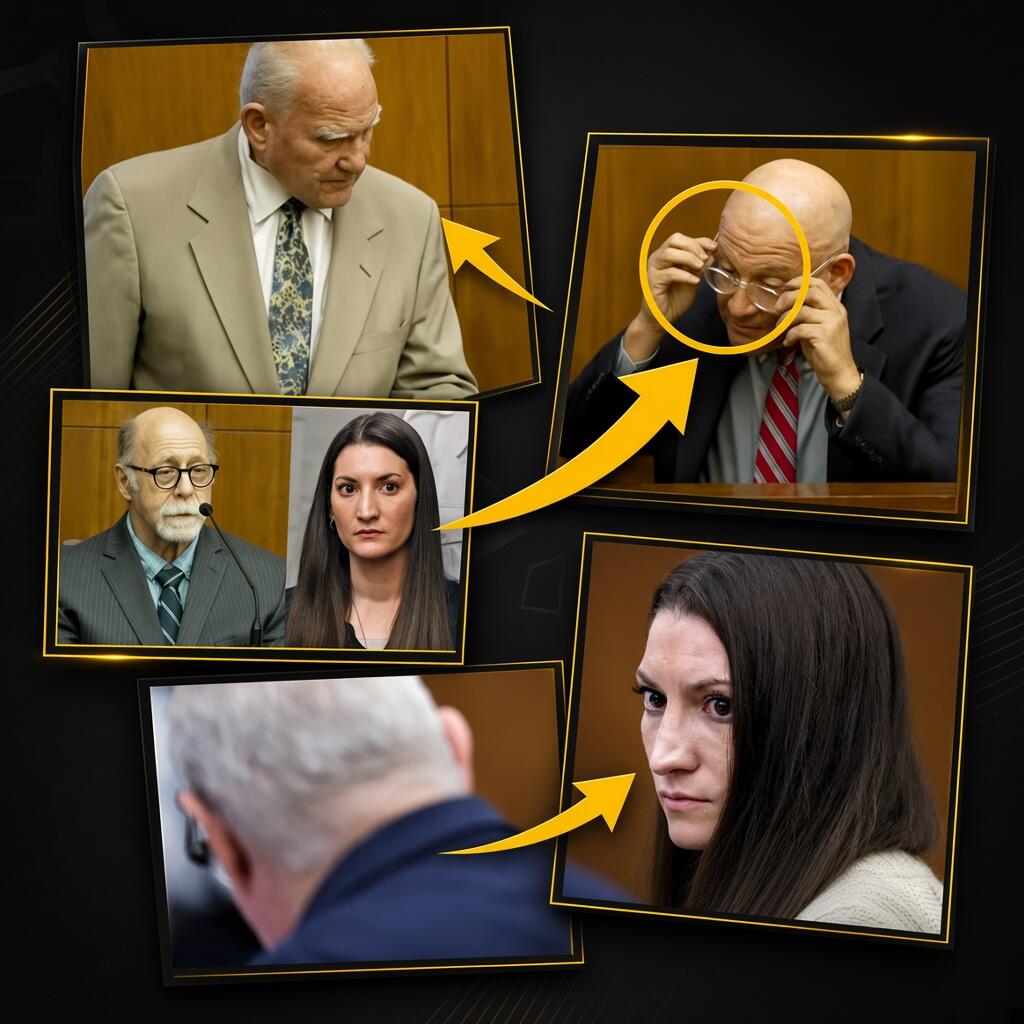
The Lindsay Clancy murder trial has entered its final stretch, but one brief phrase has emerged as an unexpectedly important piece of testimony in the courtroom debate over what was happening inside the Massachusetts mother’s mind on the day her three children died.
According to forensic psychiatrist Dr. Avram Mack, Clancy told him that she said three words to her children during the fatal episode: “Go to God.”
The phrase itself is brief.
Its potential significance is anything but.
For prosecutors, the statement is part of a broader argument that Clancy understood what she was doing and was capable of making decisions despite suffering from serious mental illness.
For the defense, however, the central issue remains whether Clancy was experiencing postpartum psychosis and other severe psychiatric symptoms that destroyed her ability to understand reality and control her behavior.
The competing interpretations have brought the five-week trial to a dramatic conclusion, with closing arguments expected shortly and the jury ultimately facing a question that has divided psychiatric experts throughout the proceedings: Was Clancy criminally responsible for the deaths, or was she legally insane at the time?
The three words at the center of the testimony
The phrase “Go to God” emerged during testimony from Dr. Avram Mack, a psychiatrist who evaluated Clancy for the state.
Mack testified that Clancy described hearing a male voice during the afternoon of Jan. 24, 2023, telling her to kill her children and then herself. According to testimony reported from the courtroom, Clancy said the voice instructed her that this was her last opportunity to act.
Mack also testified about the phrase she allegedly used while carrying out the fatal acts: “Go to God.”
The significance of the statement depends heavily on how the jury interprets Clancy’s mental state.
The prosecution argues that the words suggest an awareness of what she was doing.
The defense argues that they must instead be understood within the context of an alleged psychotic episode in which Clancy believed her children were going to suffer and that she was sending them somewhere safe.
That distinction goes directly to the legal issue at the heart of the case.
A trial built around one question
Clancy, 36, has pleaded not guilty to charges arising from the January 2023 deaths of her three children: 5-year-old Cora, 3-year-old Dawson and 8-month-old Callan.
Her defense has never primarily disputed that she caused the children’s deaths.
Instead, attorneys have argued that she was suffering from severe postpartum psychiatric illness, including psychosis, and therefore should not be considered criminally responsible.
The prosecution has presented a dramatically different interpretation.
Prosecutors contend that Clancy deliberately killed her children and that her behavior before, during and after the incident demonstrated planning and awareness.
The jury must ultimately determine which interpretation is supported by the evidence presented in court.
That makes psychiatric testimony particularly important.
Prosecutors challenge the “voice” account
One of the prosecution’s major targets has been Clancy’s reported claim that a male voice commanded her to kill her children.
During recent testimony, forensic psychiatrist Dr. Gregory Saathoff questioned the consistency of that account.
He noted that, according to his evaluation, the reported voice appeared only for a relatively short period — approximately 18 minutes — and then stopped after the children had died.
Saathoff described that pattern as highly unusual.
He also pointed to inconsistencies between different versions of Clancy’s account about when the voice first appeared.
Those discrepancies became a central part of the prosecution’s attempt to undermine the claim that Clancy was experiencing genuine auditory hallucinations.
The prosecution’s experts have not argued that Clancy was perfectly healthy.
Instead, they have acknowledged significant mental illness while maintaining that mental illness does not necessarily eliminate a person’s ability to understand right from wrong.
That distinction is critical under the legal standard the jury must apply.
The defense presents a very different picture
The defense has called experts who described Clancy as being in a severe psychiatric crisis.
Dr. Phillip Resnick, a prominent forensic psychiatrist who testified for the defense, characterized her condition as genuine psychosis.
Other defense testimony focused on the deterioration of Clancy’s mental health during the months leading up to January 2023.
Her family members described dramatic changes in her behavior.
Her mother testified that Clancy had disclosed thoughts about harming her children in December 2022. Friends also described her struggling with sleep, feeling emotionally numb and experiencing what she described as “dark thoughts.”
The defense has argued that these were warning signs of an escalating psychiatric illness that was not adequately recognized or treated.
That argument has also placed Clancy’s medical care under intense scrutiny.
Her psychiatric treatment has become part of the case
Clancy had been receiving psychiatric treatment before the deaths.
Dr. Jennifer Tufts, a psychiatrist who treated her through telehealth appointments, testified that she had multiple sessions with Clancy, including one on Jan. 23, 2023 — one day before the tragedy.
Tufts said Clancy appeared depressed and reported anxiety and a lack of motivation, but did not appear psychotic during that appointment.
She also testified that Clancy did not tell her about hearing voices.
That testimony has become important because the defense argues that Clancy’s condition was rapidly deteriorating while prosecutors point to the absence of obvious psychotic symptoms during some professional evaluations.
The competing accounts have produced a complicated picture rather than a simple explanation.
“Go to God” and the question of intent
That is why the three-word phrase has attracted so much attention.
On its own, “Go to God” does not establish whether Clancy was legally responsible.
But prosecutors can use the statement as part of a larger narrative.
If Clancy was able to communicate deliberately, understand the nature of what she was doing and make decisions about what would happen next, the prosecution can argue that her mental illness did not reach the legal threshold necessary to excuse her actions.
The defense can respond that a person experiencing psychosis can still speak coherently while holding profoundly distorted beliefs.
In other words, the question is not simply whether Clancy could speak.
It is whether she understood reality and the moral and legal significance of her actions at the time.
That is precisely the dispute the psychiatric experts have been asked to address.
The “18-minute voice” has become another flashpoint
The prosecution has also focused heavily on the reported duration of Clancy’s hallucination.
According to recent testimony, she described the male voice as lasting about 18 minutes.
Saathoff testified that such a brief and highly specific episode was unusual, particularly given the absence of an established history of auditory hallucinations.
The defense, however, has emphasized that the absence of a previous history does not automatically rule out psychosis.
That disagreement reflects a broader problem confronting the jury: psychiatric diagnoses cannot be reconstructed as neatly as a timeline of physical evidence.
The experts are examining behavior, statements, medical records and retrospective interviews.
Their conclusions inevitably depend in part on how they interpret Clancy’s own accounts.
Earlier testimony showed a woman in crisis
The recent prosecution rebuttal testimony has come after weeks of defense evidence describing a woman whose mental health was deteriorating.
Clancy’s mother and sister described her as increasingly numb, hopeless and distressed.
A former mother-in-law testified that Clancy was effectively “begging for help” as her mental health worsened.
Friends described sleep problems, brain fog and emotional changes.
At the same time, prosecutors presented evidence they say shows Clancy was capable of planning and functioning normally in the period immediately before the killings.
That contrast has become one of the defining features of the trial.
The same person can appear deeply troubled in one setting and relatively composed in another.
The jury must determine what those conflicting observations reveal about her mental state at the precise moment when the deaths occurred.
The courtroom has also witnessed intense emotion
The proceedings have been emotionally difficult for everyone involved.
During earlier testimony about the children’s injuries, Clancy became visibly distressed and broke down in court.
The judge subsequently reminded jurors that they had to separate their emotional reactions from the evidentiary value of what they heard.
That instruction reflects the extraordinary challenge of the case.
The facts are inherently emotional, but the jury’s legal task is narrower.
They are not being asked simply to determine whether the events were tragic.
They must decide whether the prosecution has proved the charges and whether Clancy meets the legal standard for criminal responsibility.
The husband’s role in the case
Patrick Clancy, the children’s father, has also provided some of the most emotionally significant testimony and statements connected to the case.
He has described his children in deeply personal terms and has spoken publicly about the devastating loss.
His earlier statements emphasized the family’s closeness and his belief that the woman he knew had been profoundly affected by a deteriorating psychiatric condition.
Patrick has also publicly expressed forgiveness toward Lindsay, adding another unusual dimension to a case that has attracted enormous public attention.
His perspective has not eliminated the legal dispute, but it has helped explain why the defense’s mental-health narrative has resonated with some people following the trial.
Public reaction has split sharply
The case has generated a significant online following, with supporters and critics of Clancy debating the evidence and the role of postpartum mental illness.
Court TV reported that hundreds of people lined the street outside the courthouse in August in support of Clancy, with some describing the case as evidence of failures in the mental-health system.
At the same time, others have strongly rejected the idea that psychiatric illness should obscure the deaths of the children or reduce the seriousness of the alleged conduct.
The online debate has sometimes become highly emotional.
But inside the courtroom, the legal question remains much more specific.
The jury must evaluate testimony and evidence rather than public opinion.
The case is approaching its final stage
The defense rested its case on Aug. 21, after presenting several days of evidence focused on Clancy’s mental state and psychiatric treatment.
The prosecution then called rebuttal witnesses, including Heilbrun and Saathoff, who challenged the defense’s portrayal of Clancy as psychotic and unable to control her behavior.
As of the latest testimony, the trial is nearing its conclusion.
Closing arguments are expected soon, followed by jury deliberations.
The possible outcomes are stark.
A finding of criminal responsibility could expose Clancy to a life sentence.
A verdict of not guilty by reason of insanity would instead lead to commitment to a psychiatric facility under Massachusetts law.
The precise legal consequences will depend on the verdict and subsequent court proceedings.
What the three words may — and may not — tell the jury
The phrase “Go to God” has become a powerful headline because of its emotional weight.
But legally, it is only one piece of a much larger evidentiary puzzle.
The jury has heard competing accounts of Clancy’s behavior, medical history, statements, reported hallucinations and actions surrounding the tragedy.
Prosecutors say the evidence demonstrates awareness and decision-making.
The defense says the same evidence reflects a profound break from reality.
Neither interpretation can be reduced to three words.
And that may ultimately be the most important point as the trial approaches its conclusion.
“Go to God” may become one of the phrases jurors remember from the testimony.
But their verdict will have to rest on the entire record.
The central question remains unchanged: what was happening inside Lindsay Clancy’s mind on Jan. 24, 2023, and did her psychiatric condition make her legally incapable of understanding the wrongfulness of what she was doing?
After five weeks of emotionally charged testimony, that question is now closer than ever to being answered.
But until the jury reaches its verdict, the competing interpretations remain just that — competing interpretations of evidence presented in court.
And the three words that have captured public attention may ultimately prove important not because they provide a simple answer, but because they expose just how complicated the question of responsibility has become.
Để lại một bình luận