FIVE WORDS FROM LINDSAY CLANCY ARE BACK UNDER THE MICROSCOPE — AND THE TIMING IS RAISING QUESTIONS. 💔
“I love you very much.”
Those were reportedly among the first words Lindsay Clancy said to her husband during a hospital call weeks after the tragedy. But what she said immediately afterward became far more significant — and is now at the center of a fierce courtroom battle over what was happening inside her mind.
Why did those words matter so much? And why has the timing of that conversation become one of the most debated details of the entire trial?
The answer goes far beyond five simple words. 👇
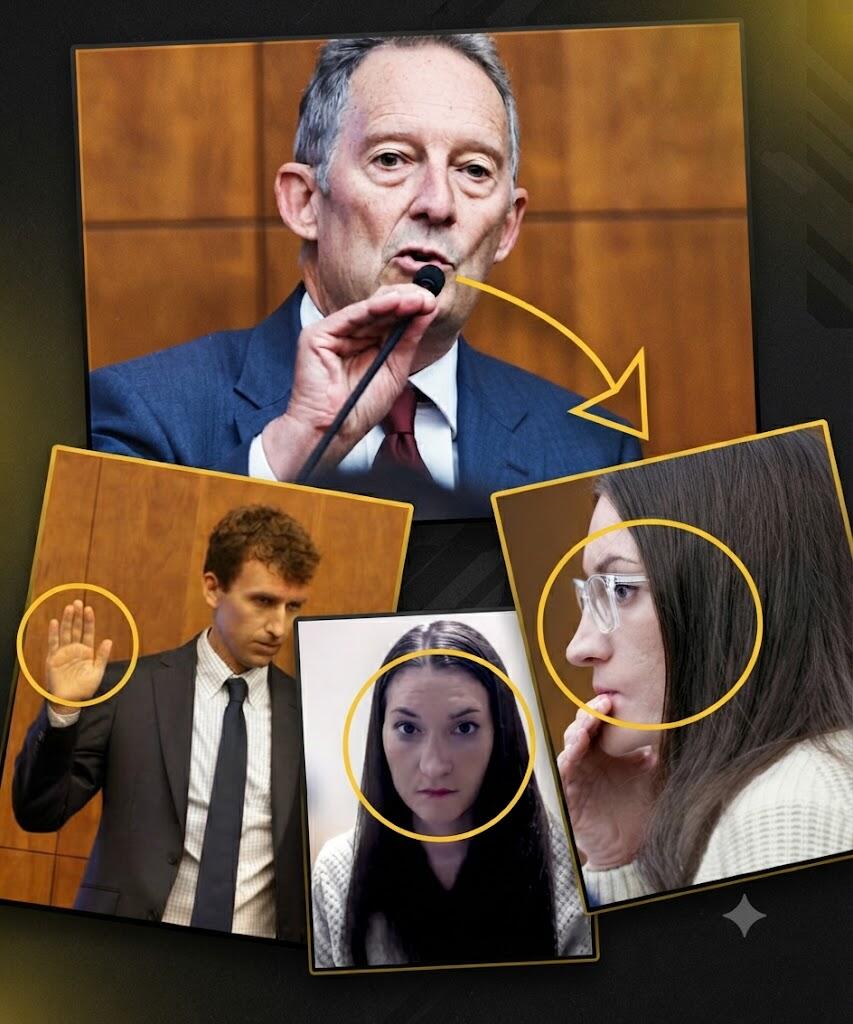
Five seemingly simple words have resurfaced as the Lindsay Clancy murder trial approaches its final stage.
“I love you very much.”
According to testimony from forensic psychologist Dr. Paul Zeisel, those were among the words Clancy said to her husband, Patrick Clancy, during a hospital phone call in February 2023, weeks after the deaths of their three children.
But the emotional statement was followed by something far more consequential.
Clancy reportedly told Patrick that she had heard a male voice telling her she had no choice and had to kill her children and then herself.
That account has become a central part of the defense’s argument that Clancy was experiencing postpartum psychosis when the children died.
For prosecutors, however, the timing and circumstances surrounding the statement have raised questions about when Clancy first began describing the alleged hallucination, and whether the explanation emerged only after she was being evaluated for a possible legal defense.
The competing interpretations have made the hospital call one of the most closely examined moments in a trial that has spent weeks debating a single overarching question: Was Lindsay Clancy legally responsible for what happened to her children, or was she experiencing a severe psychiatric break from reality?
The five words that caught public attention
The phrase “I love you very much” may sound ordinary.
In another context, it would probably be unremarkable.
But the circumstances surrounding this particular conversation have given it unusual significance.
Clancy was hospitalized after attempting to take her own life following the deaths of her three children, Cora, 5, Dawson, 8, and Callan, 8 months, in January 2023.
According to testimony presented during the trial, Clancy used Zeisel’s cellphone to contact Patrick on Feb. 6, 2023.
Zeisel testified that he was present for the call.
When asked what Clancy said to her husband, he described her as expressing strong emotion and telling Patrick that she loved him very much. He then testified that she said she had heard a male voice telling her she had no choice and that she had to kill the children and then herself.
The statement therefore became important not because the declaration of love itself proved anything about Clancy’s mental state.
It was what came immediately afterward.
A crucial correction to the timeline
The original framing of the story can make it sound as though Clancy whispered the five words to Patrick immediately after the deaths.
That is not what the current court record indicates.
The call took place on Feb. 6, roughly 13 days after the Jan. 24 incident.
That distinction matters.
By that point, Clancy was hospitalized, had survived her suicide attempt and was being evaluated by mental-health professionals.
The trial has also heard that Zeisel had been retained by Clancy’s defense team.
That fact has become particularly important because prosecutors have questioned the timing of Clancy’s account of hearing voices.
The prosecution has suggested that the explanation may have developed after the tragedy rather than being something she had consistently reported to family members and clinicians beforehand.
The defense strongly disputes that interpretation.
What Patrick had previously been told
Patrick’s testimony has also played an important role in the dispute.
Before the tragedy, Clancy had told him about intrusive thoughts involving harm to the children, according to testimony presented at trial.
But Patrick testified that she had not previously told him she was hearing an external voice commanding her to act.
That distinction has become a major issue.
There is a significant difference between reporting intrusive thoughts and reporting an external voice giving commands.
The defense says the latter can occur during severe psychosis and that the absence of an earlier report does not prove that the hallucination was fabricated.
The prosecution, meanwhile, has emphasized that the alleged voice became part of Clancy’s explanation only after the deaths.
That timing has been repeatedly examined during the trial.
Why the hospital call matters
The phone conversation has become particularly important because it sits at the intersection of the two competing narratives.
The defense says Clancy experienced a profound psychiatric crisis.
According to its experts, she was experiencing postpartum psychosis and command hallucinations, meaning she believed an external voice was directing her actions.
The prosecution argues that she suffered from mental illness but remained capable of understanding what she was doing and that the evidence does not establish legal insanity.
The hospital call provides both sides with material to work with.
For the defense, Clancy’s account of a male voice is consistent with its psychiatric explanation.
For prosecutors, the timing of that account is something the jury can consider when evaluating its reliability.
That is why a short conversation from more than three years ago has received so much attention during a trial unfolding in 2026.
Zeisel denies telling her what to say
The prosecution has raised questions about the circumstances under which Clancy first described the alleged voice.
Zeisel was hired by defense attorney Kevin Reddington to evaluate Clancy.
According to courtroom testimony, Zeisel denied telling Clancy to claim that she had heard voices or suggesting that she should develop such an explanation.
When questioned about the call with Patrick, Zeisel said he allowed Clancy to use his phone out of “human compassion,” according to a recent discussion of his testimony.
The defense has argued that the prosecution’s suggestion that Zeisel somehow coached Clancy is unsupported.
The prosecution, meanwhile, has used the circumstances to question why the voice account was not documented earlier in Clancy’s treatment.
That disagreement has become one of the most contentious parts of the psychiatric evidence.
What did Clancy’s doctors know before the tragedy?
Another major issue in the trial is whether Clancy showed signs of psychosis before Jan. 24, 2023.
Her treating psychiatrist, Dr. Jennifer Tufts, testified that she had 14 telehealth appointments with Clancy over approximately four months, with the final appointment occurring the day before the children’s deaths.
Tufts said Clancy appeared depressed and anxious but did not appear psychotic during their sessions.
She also testified that Clancy never told her she was hearing voices.
That testimony has provided ammunition for prosecutors.
If Clancy was suffering from an escalating psychotic disorder, they argue, jurors may reasonably ask why she did not report the alleged hallucinations to the professionals treating her.
But the defense has offered another explanation.
Severe psychiatric symptoms can fluctuate, and a person may not disclose every symptom to a clinician.
The defense has also argued that Clancy’s condition deteriorated rapidly during the period leading up to the tragedy.
A complicated history of mental-health treatment
The trial has produced extensive testimony about Clancy’s mental-health treatment.
Defense witnesses have described significant depression, intrusive thoughts, anxiety, sleep problems and other symptoms.
They have also argued that Clancy was prescribed numerous medications over a relatively short period and that medication changes may have contributed to her deterioration.
One of the defense’s central themes has been that the healthcare system failed to recognize the severity of what was happening.
Her family members testified that they had seen substantial changes in her behavior.
The defense has portrayed a woman who was repeatedly seeking help while becoming increasingly distressed.
The prosecution has not necessarily disputed that Clancy was mentally ill.
Instead, prosecutors have argued that mental illness and legal insanity are not the same thing.
That distinction is fundamental to the case.
The prosecution’s experts challenge the psychosis theory
Recent testimony from prosecution experts has sharpened the dispute.
Forensic psychologist Kirk Heilbrun testified that Clancy suffered from a mental disorder but argued that she retained the ability to understand the nature and wrongfulness of her conduct.
He also questioned the reported male voice.
According to recent testimony, Clancy described hearing the voice for only about 18 minutes — a period that coincided with the killings.
Heilbrun described that pattern as highly unusual.
For prosecutors, that timing supports their argument that the voice account should be examined skeptically.
The defense has countered that unusual does not mean impossible.
The legal battle therefore remains centered on competing interpretations of the same evidence.
The phrase “I love you” does not answer the legal question
It is easy for a dramatic headline to make the five words sound like a revelation.
But legally, they are not.
Saying “I love you very much” does not establish whether someone was psychotic, rational, criminally responsible or legally insane.
The importance of the phrase comes from its place in the larger conversation.
Clancy was communicating emotionally with her husband.
She was describing what she claimed had happened inside her mind.
And she was doing so while being evaluated by a psychologist retained by her defense team.
Those circumstances are what have made the call significant.
The jury is not being asked to decide whether Clancy loved her husband.
It is being asked to determine her mental state at the time the children died.
The defense says psychosis can coexist with normal behavior
One of the more difficult concepts for the jury is the idea that a person experiencing psychosis can still perform ordinary actions and communicate coherently.
Defense experts have emphasized that someone suffering from a severe psychiatric disorder does not necessarily appear visibly detached from reality every minute of the day.
That argument is particularly relevant because prosecutors have presented evidence of Clancy carrying out routine activities in the hours before the tragedy.
She communicated with Patrick.
She cared for the children.
She made ordinary plans.
And, according to messages presented at trial, she even discussed ordering takeout.
Prosecutors argue that these actions demonstrate planning and awareness.
The defense argues that normal-looking behavior does not rule out psychosis.
The jury must decide which interpretation is better supported by the evidence.
Social media has added another layer to the controversy
Outside the courtroom, the case has generated an enormous amount of online speculation.
TikTok creators, YouTube commentators and true-crime communities have dissected nearly every detail of the trial.
Some have focused on the hospital call.
Others have promoted theories involving Patrick that have no basis in the evidence presented in court.
The Guardian recently reported on the explosion of conspiracy theories surrounding the case, noting that social-media discussions have sometimes transformed speculation into apparently established narratives.
That phenomenon has become part of the story itself.
It has also created a difficult environment for people following the trial, because courtroom evidence, expert interpretation and online speculation are often presented side by side.
The distinction between them is crucial.
Patrick’s position has remained unusual
Patrick Clancy’s role has also drawn attention.
Despite the devastating circumstances, he has publicly expressed compassion toward Lindsay and supported the argument that her mental health played a major role.
In an earlier statement after the tragedy, Patrick described Lindsay as a loving and caring mother and asked people to show compassion toward her.
During the trial, he has also provided testimony concerning Lindsay’s mental state and what she had told him before and after the tragedy.
His position has been one of the reasons the case has generated such strong public debate.
It is difficult for many observers to reconcile his continued support for Lindsay with the prosecution’s contention that she should be held criminally responsible.
But his perspective is not itself evidence of whether the legal standard for insanity has been met.
That decision belongs to the jury.
The trial is now approaching its end
The prosecution presented 72 witnesses over 14 days before resting its case.
The defense then called psychiatric and other witnesses to support its claim that Clancy was not criminally responsible because of her mental state.
The prosecution has since presented rebuttal testimony challenging those conclusions.
The case is now moving toward closing arguments and jury deliberations.
The jury will ultimately have to weigh an extraordinary amount of testimony.
Medical records.
Private writings.
Internet searches.
Text messages.
Expert psychiatric opinions.
Statements from family members.
And conversations such as the hospital call with Patrick.
What those five words really reveal
“I love you very much” is an emotionally powerful phrase in this case.
But its significance is not that it provides a hidden answer.
Instead, it reminds observers that the trial is examining the behavior of a person whose mental state is fiercely disputed.
Immediately after the phrase, according to Zeisel’s testimony, came an account of a male voice ordering Clancy to act.
That account has become one of the central pieces of the defense’s explanation.
The prosecution sees its timing as a reason for skepticism.
The defense sees it as evidence of the psychiatric crisis it has described from the beginning.
Neither side can resolve the question through five words alone.
And that may be precisely why the hospital call has become so important.
The jury must look beyond the emotional weight of the statement and examine when it was made, what was said afterward, who was present, what Clancy had previously reported to doctors and family, and how the competing psychiatric experts interpret the evidence.
As the trial nears its conclusion, the public may continue debating every sentence, text and testimony.
But the final question remains much narrower:
What was happening inside Lindsay Clancy’s mind on Jan. 24, 2023 — and did her mental state make her legally responsible for her actions?
That is the question the jury, rather than social media, will ultimately have to answer.
Để lại một bình luận