FOUR GENERATIONS. ONE FAMILY. EIGHT LIVES — GONE IN A SINGLE NIGHT.
A 92-year-old great-grandmother. A 7-year-old girl. Two teenagers. Their parents, grandparents and other loved ones — all gathered as a family before an unimaginable nightmare unfolded.
They weren’t just “8 victims.”
They were children who had dreams, parents who were raising families, grandparents who held generations together — and a great-grandmother who had lived nearly a century.
Now their family is trying to make sure the world remembers the people they were… not just the horrifying way they died. 👇
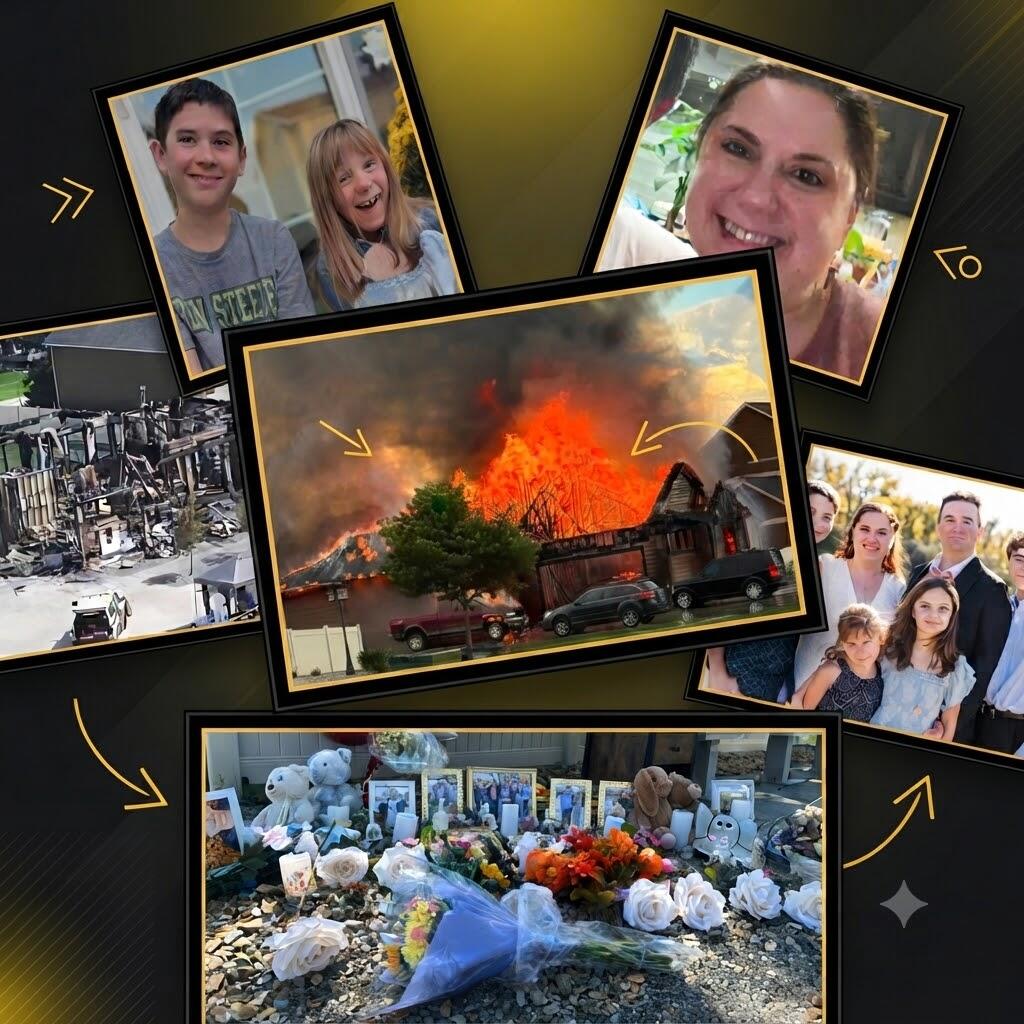
The numbers are devastating.
Eight people dead.
Four children among them.
Four generations of one blended family erased in a matter of minutes.
But behind those numbers were people with completely different lives.
There was a 92-year-old great-grandmother who had lived through nearly a century of American history. There were teenagers preparing for another school year. There were younger children growing up surrounded by parents, grandparents, siblings and extended family.
And there were adults who had built a family life around something as ordinary as gathering for dinner.
On Sunday, Aug. 23, that ordinary family gathering became the scene of a massacre.
Authorities say 44-year-old Alan Smith killed eight relatives at a home on White Star Circle in the Billings area before the residence was engulfed in flames. Smith later died from an apparent self-inflicted gunshot wound.
But as the investigation continues, relatives and friends are trying to shift the focus away from the man responsible and toward the people who were lost.
Because eight people were killed — but eight lives were taken.
Four generations under one roof
The victims represented an extraordinary span of ages.
According to relatives and local reporting, they included 92-year-old Evelyn Smith, four adults and four children.
Among the children were:
- Landon Ghekiere, 15
- Charlotte Ghekiere, 12
- Owen Ireland, 13
- Chloe Ireland, 7
The adult victims included Megan Ghekiere, her parents Dana and Barb Smith, and other family members connected to the blended household.
The youngest victim was just seven.
The oldest was 92.
Between them were two generations of parents, children and grandparents.
It is a detail that has become central to how the family is being remembered.
This was not simply a group of eight people caught in a random act of violence.
They were connected through family.
They gathered together.
They knew one another.
And according to friends and relatives, they were close.
Charlotte: the 12-year-old who tried to get help
Among the youngest victims, Charlotte Ghekiere has emerged as one of the most poignant figures in the aftermath.
Family friend Jennifer Mercer said Charlotte called 911 during the attack in an attempt to get help for her family.
That detail has transformed the way relatives talk about her.
Charlotte was not simply one of the children who died.
She was a 12-year-old who, according to her family, recognized that something was terribly wrong and reached out to emergency services.
Her family has described her as funny, intelligent and caring, with a “heart of gold.”
She was preparing to enter seventh grade.
She enjoyed activities including crochet and golf.
And those ordinary details may now become some of the most important ones.
Because they tell people who Charlotte was when she wasn’t inside a crime report.
She was a child getting ready for another year of school.
She had hobbies.
She had people who loved her.
And she had a future that was supposed to stretch far beyond that Sunday evening.
Her brother Landon was only 15
Charlotte’s older brother Landon Ghekiere was 15.
The siblings were part of a blended family and were among the children gathered at the home that night.
Their father, Adam Ghekiere, was not there when the shooting began.
He was working when he heard through emergency communications that there was an active shooting at the family residence.
He rushed toward the house.
Instead of walking into an ordinary family dinner, he arrived to find the home burning.
His wife Megan and both of his children were among those killed.
The sequence has become one of the most heartbreaking elements of the case.
A father heard that something was happening to his family.
He raced home.
But he arrived too late.
Owen and Chloe
Megan Ghekiere’s children from a previous relationship, Owen Ireland, 13, and Chloe Ireland, 7, were also killed.
Their deaths illustrate the terrible reach of the attack.
The victims were not all members of the same immediate household.
They were part of a wider family network that had gathered together.
And according to family accounts, those gatherings were an important part of their lives.
That is why the phrase “family massacre” does not fully capture what was lost.
It describes the crime.
It does not describe the relationships.
For the people left behind, Owen and Chloe were not “victims No. 3 and No. 4.”
They were children.
They were siblings.
They were someone’s son and daughter.
They were part of a family that expected to see them grow up.
The grandparents at the center of the family
Also killed were Dana and Barb Smith, the parents of the suspected gunman.
Their deaths add another painful dimension to the story.
According to relatives, Alan Smith had been living with his parents for years.
He had reportedly been asked to move out several weeks before the killings.
That family conflict is now being examined as investigators try to understand what may have led to the attack.
But the fact that his parents were among the victims makes the situation particularly difficult to comprehend.
Whatever grievances Smith may have had, the people he allegedly killed included the same parents with whom he had shared a home.
The family conflict that preceded the massacre ultimately ended with an entire generation gone.
And then there was Evelyn
At 92 years old, Evelyn Smith was the oldest victim.
Her presence in the list of victims means the massacre stretched across almost an entire century of life.
A woman born decades before many of the other victims had the longest history with the family.
She had lived through generations of births, marriages, celebrations and ordinary family gatherings.
Then she died in the same home as four children.
That contrast is difficult to ignore.
A seven-year-old had barely begun life.
A 92-year-old had lived almost all of it.
Both became victims of the same attack.
The family gathering that became a nightmare
According to relatives, the family had a tradition of getting together for dinner.
Adam Ghekiere told The Associated Press that those dinners normally took place on Fridays.
This particular gathering was on Sunday.
He also said his two children were not originally expected to be there that evening.
Those details have attracted significant attention because of what happened afterward.
But there is no public evidence establishing that the change in dinner plans was connected to the attack or that Smith knew the children would attend.
The distinction matters.
A changed dinner schedule may ultimately prove to have been nothing more than an ordinary family decision.
But after eight people die under the same roof, even ordinary decisions suddenly take on enormous emotional weight.
A family friend remembers the children
In the aftermath, people who knew the family have attempted to describe them as individuals rather than statistics.
Mercer, a friend of the family, described the group as close-knit and loving.
She also emphasized Charlotte’s actions during the attack.
That message appears deliberate.
The family does not want the children remembered only through the circumstances of their deaths.
They want people to know who they were.
This is common after mass-casualty tragedies, but it takes on particular significance when children are involved.
The circumstances of their deaths are inevitably shocking.
Their lives, however, were much bigger than those final moments.
The timeline of the attack
Authorities say the first 911 call came at approximately 6:01 p.m.
Police arrived around 6:12 p.m.
Officers reported hearing additional gunfire from behind the residence.
Around 6:15 p.m., smoke appeared and the house became engulfed in flames.
The fire created a second emergency on top of the shooting.
Firefighters faced a structure that was burning while law enforcement was still dealing with an active threat.
The home was eventually destroyed.
Investigators have been working through the damaged scene to reconstruct what happened.
The destruction may make that process more difficult.
Why the victims’ stories matter
Crime coverage naturally tends to focus on the perpetrator.
Who was he?
Why did he do it?
Was there a warning?
What was his motive?
Those questions matter to investigators.
But there is another question that can easily disappear:
Who were the people who died?
In this case, the answer spans four generations.
There was a child who had barely started elementary school.
There were teenagers on the threshold of adulthood.
There were parents raising children.
There were grandparents.
And there was a woman who had reached 92.
Their lives intersected inside one family.
Their deaths did too.
The tragedy of the missing future
Perhaps the most difficult aspect of the story is not simply what happened that night.
It is what will never happen now.
Charlotte will not enter seventh grade.
Landon will not reach adulthood.
Owen will not experience his teenage years.
Chloe will never become a teenager.
Parents will not watch their children graduate.
Grandparents will not see another generation grow.
And a 92-year-old woman who had already witnessed decades of family history will not see what should have been the next chapter.
Mass violence destroys more than the lives recorded on a police report.
It destroys futures.
The family is now left with memories
For Adam Ghekiere, the loss is almost impossible to quantify.
He lost his wife.
He lost both of his children.
And he lost other members of the extended family.
He was not inside the house when the shooting began.
He was working.
Then he heard something was wrong.
Then he drove toward home.
And by the time he reached the scene, the house was burning.
That sequence is now permanently attached to the memory of his family.
But relatives and friends are trying to ensure that the fire and gunfire do not become the only images associated with them.
There were Sunday dinners before this.
There were birthdays.
There were school days.
There were family jokes.
There were hobbies.
There were ordinary disagreements.
There were plans for the future.
That is the part of their lives that cannot be reconstructed from a crime-scene report.
The questions surrounding Alan Smith remain
The investigation into Smith’s motive is continuing.
Relatives have described warning signs before the attack, including Smith’s isolation and difficulties within the family.
His parents had reportedly asked him to move out.
But authorities have not publicly established a complete motive.
Investigators are also working to determine the precise sequence of the shooting and fire.
Those answers may take time, particularly because the residence was heavily damaged.
Social media has already generated theories about what happened.
Some focus on Smith’s relationship with his parents.
Others focus on the unusual Sunday dinner.
Still others examine the fire and the emergency response.
But the facts must remain separate from speculation.
The investigation will ultimately determine which theories survive contact with evidence.
What remains after the headlines fade?
The most immediate news cycle will eventually move on.
Another story will replace this one.
The images of the burning house will disappear from television screens.
The name of the suspect may eventually become less familiar to the public.
But the family will continue living with the consequences.
That is why remembering the victims matters.
Because when the headlines eventually become part of the historical record, the people who died should not be remembered merely as:
Eight dead.
They were eight individual human beings.
They belonged to a family that stretched across four generations.
They had different ages, personalities, interests and futures.
And on one Sunday evening, they were together.
For a family that had gathered around dinner tables many times before, that final gathering was supposed to be ordinary.
Instead, it became the last time four generations would ever be together.
**The gunfire lasted minutes.
The fire destroyed a house.
But the loss of eight lives will last for generations.**
Để lại một bình luận