🚨 A MURDER TRIAL IS NOW BREAKING UP RELATIONSHIPS.
Some men online say they are ending relationships after discovering their girlfriends or fiancées support Lindsay Clancy — while women firing back say those men completely misunderstand what “supporting Lindsay” actually means.
So what does it really mean when a person says, “I support Lindsay Clancy”… and why has that sentence suddenly become a relationship deal-breaker for some couples?
The answer is far more complicated — and far more explosive — than it sounds.
👇 Click to see why the Lindsay Clancy case is now dividing couples, mothers, and the internet itself.
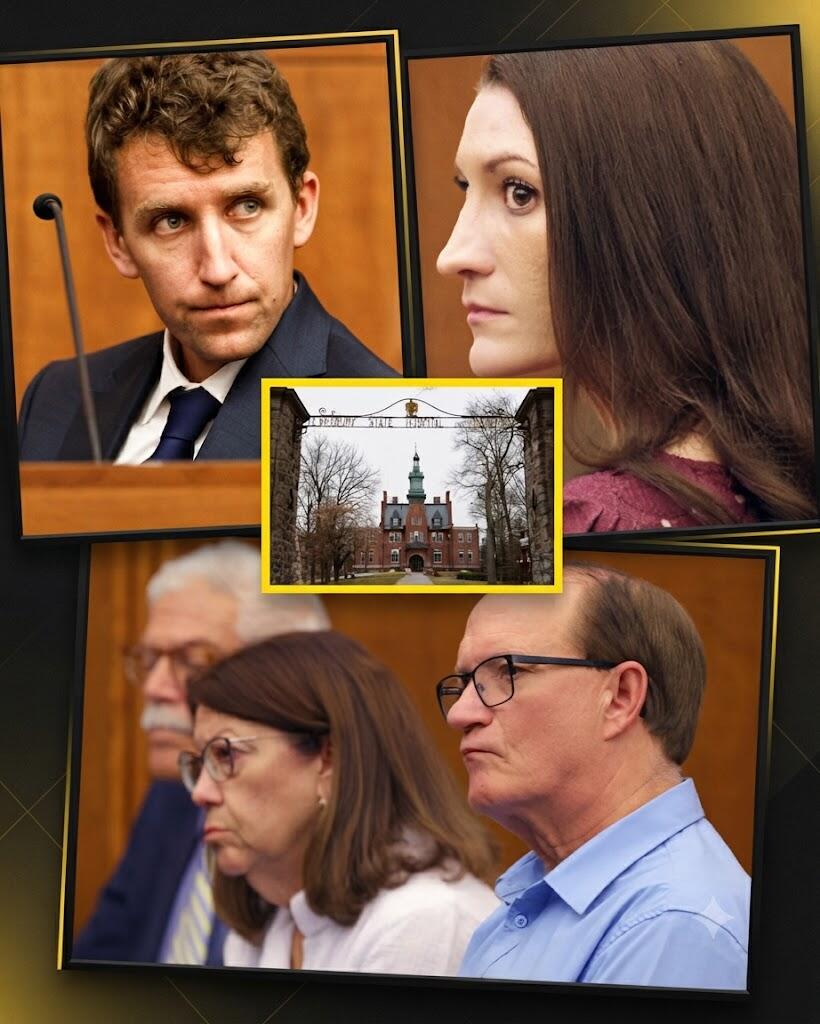
A murder trial that began with the deaths of three children has now produced an unexpected second courtroom — the court of public opinion.
As Lindsay Clancy’s Massachusetts murder trial enters its final stage, the debate surrounding her case has become so emotionally charged that some people online claim their relationships have ended because of their partner’s position on Clancy.
The claims are difficult to independently verify and should not be treated as evidence of a widespread trend. But the online arguments are real, intense and revealing. On social media, the question is no longer simply whether Clancy should be held criminally responsible for the deaths of her three children.
For some couples, the question has become much more personal:
Could you stay with someone whose view of Lindsay Clancy was completely opposite to yours?
Clancy, a former labor-and-delivery nurse, is accused of killing her children — Cora, 5, Dawson, 3, and Callan, 8 months — in January 2023. Her defense does not dispute that she killed the children. Instead, attorneys argue that she was suffering from severe mental illness, including postpartum psychosis, and therefore should not be held criminally responsible.
Prosecutors have presented a fundamentally different picture, arguing that Clancy remained capable of understanding right from wrong and exercising control over her actions.
That legal question has now become a social and moral one far beyond the courtroom.
The phrase that started the fight
One of the most controversial aspects of the online debate is the phrase “I support Lindsay.”
To critics, that sounds like support for a woman who killed three children.
To many of Clancy’s supporters, however, it means something very different: support for recognizing postpartum psychosis, questioning the mental-health treatment she received and accepting the possibility that a person can commit an unspeakable act while experiencing a severe psychiatric crisis.
That distinction has become crucial.
Hundreds of supporters — many of them women — gathered outside the Plymouth courthouse on August 20 wearing pink and carrying messages including “Believe,” “She Needed Help” and “Peace For Lindsay.” The Associated Press reported that roughly 300 women and a few men participated. Many said they were there to raise awareness about how women’s mental-health problems are treated rather than to celebrate the killings.
That public show of support immediately intensified the online argument.
For critics, seeing large numbers of women rally around a defendant accused of killing three children was difficult to understand.
For supporters, the rally was about a broader issue: whether society takes women’s mental-health crises seriously enough before they become catastrophic.
And that disagreement is now spilling into relationships.
“Would you stay with someone who supports Lindsay?”
Several viral social-media posts in recent days have claimed that men ended relationships after discovering their partners supported Clancy.
One widely circulated X post claimed that a man had broken up with his girlfriend because he wanted children in the future and could not reconcile her position on the Clancy case with the possibility of her becoming the mother of his children.
Another viral post claimed that a man called off his wedding only weeks before the ceremony after learning that his fiancée supported Clancy.
Those stories have been amplified by websites and social-media accounts, but their underlying details have not been independently established by major news organizations. Even on Reddit, users have questioned whether the wedding story is genuine or simply rage bait.
That uncertainty, however, has not stopped the argument.
On Reddit, commenters have split sharply.
Some users argue that ending a relationship over a position on the Clancy case is perfectly reasonable because attitudes toward motherhood, mental illness and criminal responsibility are fundamental values.
Others say the entire premise is absurd because “supporting Lindsay” can mean supporting treatment and mental-health awareness rather than approving of the killings.
One highly upvoted Reddit discussion specifically questioned what “supports Lindsay” actually means, pointing out that someone could believe Clancy was failed by the mental-health system without believing that killing her children was acceptable.
That distinction may be the most important part of the entire online debate.
Two sides are arguing about two completely different things
The first camp sees the case primarily through the lens of accountability.
Their argument is straightforward: three children died, and compassion for their mother should never erase the victims.
This position has also appeared in mainstream commentary. The New York Post recently published an opinion piece questioning how Clancy came to occupy so much of the public’s sympathy while the three children risked becoming secondary characters in the story.
The second camp sees the case through the lens of mental illness and prevention.
For these supporters, the crucial question is not whether the deaths were horrific. It is whether Clancy’s psychiatric condition fundamentally altered her ability to understand reality and control her behavior.
That distinction is at the heart of the trial itself.
Defense expert Dr. Phillip Resnick testified that Clancy was experiencing psychosis and command hallucinations at the time of the killings. Prosecutors, however, have presented experts who reached different conclusions. The prosecution’s final expert, forensic psychiatrist Dr. Gregory Saathoff, testified that Clancy was mentally ill but nevertheless understood right from wrong and was capable of controlling her actions.
So when two people say they “support” or “oppose” Lindsay Clancy, they may actually be answering two entirely different questions.
One may be talking about moral responsibility.
The other may be talking about medical responsibility.
And social media is often leaving little room for that distinction.
Why mothers are especially drawn into the debate
The case has struck a particular nerve among mothers and women who see postpartum mental health as an under-discussed issue.
The rally outside the courthouse made that visible.
Participants told reporters that Clancy’s story resonated with their own concerns about women’s mental health and the way mothers can be expected to endure enormous physical and psychological pressures without receiving adequate help.
The broader social-media discussion has grown dramatically as well.
CT Insider recently reported that more than 164,000 TikTok videos had been posted using the hashtag “#clancy,” illustrating just how large the online ecosystem surrounding the trial has become. Experts interviewed by the publication warned that social media can turn ordinary users into “armchair detectives,” while sensational or unverified theories can spread rapidly because they generate engagement.
That environment creates a perfect storm for relationship conflict.
A person sees a short TikTok clip.
Another sees a courtroom testimony.
Someone else reads a Reddit thread.
Another watches a livestream.
Everyone can walk away believing they understand the same case — while actually consuming completely different versions of it.
The “deal-breaker” debate is becoming bigger than Lindsay
The most interesting part of this controversy may therefore have little to do with Lindsay herself.
It is about what people believe their partners should value.
For one person, empathy toward someone suffering from psychosis may be a sign of compassion.
For another, sympathy toward an accused child killer may be an unacceptable moral boundary.
For another, both positions can coexist: Clancy may have been seriously mentally ill, and the deaths of her children may still demand accountability.
That third position is increasingly important because the actual legal question is more nuanced than the social-media binary suggests.
Clancy’s defense is not asking jurors to declare that the killings did not happen. It is arguing that she should not be held criminally responsible because of her mental state.
The prosecution argues that she remained sufficiently aware and controlled to be held responsible.
The jury must ultimately decide which account is supported by the evidence.
And now the real jury is about to take over
The timing makes the online relationship debate particularly intense.
On August 26, the prosecution completed its rebuttal case after more than three weeks of testimony. Closing arguments are scheduled for August 27, after which the case will go to the jury for deliberations.
That means the internet’s “relationship trial” is unfolding at exactly the same moment as the real trial reaches its climax.
But the two have very different standards.
Online, a viral post can become accepted as fact within hours.
In court, the jury must evaluate evidence and follow the judge’s legal instructions.
Online, “I support Lindsay” can mean almost anything.
In court, the question is far more precise: was Lindsay Clancy criminally responsible for the deaths of her three children?
That distinction may be lost in the noise of social media — but it could determine the rest of Clancy’s life.
And perhaps that is why the case has become such an extraordinary test not only of America’s understanding of postpartum mental illness, but also of how couples, families and strangers decide what they are willing to forgive, what they consider unforgivable, and what values they expect the people closest to them to share.
For now, the internet has already chosen its sides.
The jury has not.
And as closing arguments begin, the most consequential judgment is no longer coming from TikTok, Reddit or X.
It is coming from twelve people inside a Massachusetts courtroom.
Để lại một bình luận