🔦 THE MARKER WAS SUPPOSED TO BE LIT. SO WHY DID SCHNEIDER SAY HE SAW IT ONLY AT THE LAST SECOND?
Authorities say Channel Marker 39 was functioning properly that night.
But Schneider’s defense team is now questioning whether the marker was actually illuminated when his boat struck it — a detail that could become crucial in court.
If the light was working, why wasn’t it seen sooner?
And if something was wrong with the marker, could that change how the crash is understood?
The answers could turn on a single question investigators are still examining…
👇 SEE WHAT THE DEFENSE IS NOW QUESTIONING ABOUT MARKER 39.
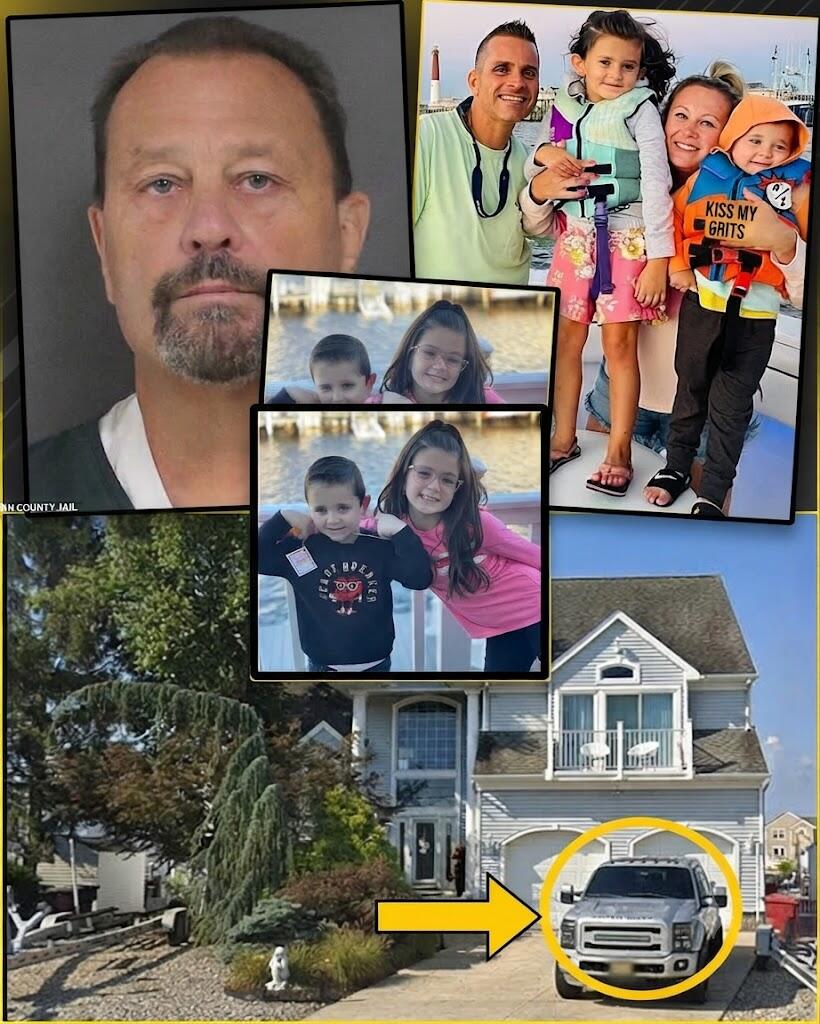
The Marker 39 Mystery: Why A Single Light Could Become Crucial In The Stephen Schneider Boat Crash Case
A wooden channel marker in Barnegat Bay has suddenly become one of the most closely watched pieces of evidence in the criminal case against Stephen Schneider — and the question is deceptively simple: Was it actually illuminated when his boat hit it?
Authorities have said the navigation marker was functioning properly on the night of the July 19 crash that sent two children into the water.
But Schneider’s defense team has raised a different question: whether the marker was actually lit at the precise time of the collision.
That does not mean investigators have concluded the marker was dark.
It does not mean the defense has proved it was malfunctioning.
And it does not erase the prosecution’s allegation that Schneider was operating the boat while impaired.
But it introduces a potentially important factual dispute into a case already drawing intense attention.
At the center of it all is Channel Marker 39.
What happened at Marker 39?
The crash occurred shortly after 9 p.m. July 19 in the Berkeley Township area of Barnegat Bay.
According to police and court documents, Schneider was operating a Tidewater Custom 280 when the vessel struck an Intracoastal Waterway channel marker.
The impact sent his two grandchildren, 9-year-old Mya Bella Golabek and 7-year-old Sigmund Paul Golabek, into the water.
Both children were wearing life jackets, according to court documents.
They were recovered from the water unresponsive and transported to a hospital, where they were later pronounced dead.
Schneider subsequently surrendered to police and was charged with two counts of reckless vessel homicide, along with operating a vessel under the influence and reckless operation of a vessel.
The case initially appeared straightforward from the perspective of the prosecution: a boat collided with a navigational marker, two children were thrown overboard, and investigators alleged the operator was intoxicated.
But as more details emerged, the marker itself became a point of interest.
Authorities say the marker was lit
One of the most important facts currently established by investigators is that officials have said the marker’s lights were working.
News 12 reported shortly after the crash that Berkeley Township Councilman James Byrnes said Marker 39 was fully functioning and its lights were working that night.
ABC 7 later reported that police said the lights on the channel marker were functioning properly at the time of the crash.
NBC Philadelphia likewise described the marker as a lit channel marker in its coverage of the case.
Those reports establish the position publicly attributed to authorities: the marker was illuminated.
But that is not necessarily the end of the question.
The defense wants to investigate the lighting
During Schneider’s Aug. 19 detention hearing, his attorney raised questions about whether the marker was actually lighted or unlighted at the time of the collision.
ABC 7 reported that the defense said investigators were still looking into whether the marker Schneider struck was lighted or unlighted when the crash occurred.
That distinction is important.
A marker can be designed to display a light.
A navigation system can list it as a lighted marker.
And authorities can report that its lights were functioning.
But the defense appears interested in a narrower question:
What was the actual visual condition at the precise location and moment Schneider’s boat approached it?
That is a question for evidence, not social media.
And it could involve more than simply determining whether a bulb was on.
“He saw it at the last second”
Another detail has made the lighting question particularly interesting.
According to court documents reported by ABC 7, Schneider told police that he was traveling at approximately 20 mph and saw the marker only at the last second.
That statement does not establish why he failed to see it earlier.
It could potentially become relevant to several different explanations.
Was the marker visible from a sufficient distance?
Was Schneider’s view obstructed?
Was the boat approaching from an angle that made the marker harder to see?
Were weather or water conditions affecting visibility?
Was the marker illuminated as authorities have said?
Or, as prosecutors allege, was Schneider’s ability to perceive and react impaired by alcohol?
At this stage, those possibilities should not be treated as equally supported.
The prosecution points to alleged alcohol impairment.
The defense is examining other circumstances.
The court will ultimately have to consider the evidence.
The 0.16 BAC complicates the picture
The marker dispute is unfolding alongside another major piece of evidence.
Prosecutors have said Schneider’s blood alcohol concentration was approximately 0.16, twice New Jersey’s legal limit.
Schneider reportedly told investigators that he had consumed three beers over approximately two hours before the crash.
According to court documents, those drinks were two Guinnesses and a Miller Lite. He reportedly said he had been having dinner with family before the boat trip.
That evidence gives prosecutors another way to explain the crash.
If Schneider was significantly impaired, prosecutors could argue that his ability to detect the marker, judge his approach and react in time was compromised.
The defense, however, has indicated that it intends to examine the BAC evidence as well as the marker.
That means the eventual courtroom battle may not center on one isolated fact.
It could involve the interaction between alcohol, visibility, speed and navigation.
What would the marker question actually prove?
Even if the defense were eventually able to establish that the marker was not illuminated, that would not automatically resolve the criminal case.
That point is crucial.
Schneider still faces allegations related to operating a vessel under the influence and reckless operation.
And prosecutors would still be able to point to the reported BAC, the boat’s speed and the circumstances surrounding the collision.
Conversely, if investigators confirm that Marker 39 was clearly illuminated and visible from an appropriate distance, that could strengthen the prosecution’s argument that Schneider should have seen it.
The lighting evidence therefore could become one piece of a larger reconstruction, rather than a single fact that determines guilt or innocence.
Why the question is spreading online
The marker issue has an obvious appeal on social media because it creates a simple question with a complicated answer:
If the marker was lit, why wasn’t it seen?
And the reverse question is equally powerful:
If the marker wasn’t properly illuminated, how much did that contribute to the crash?
That binary framing has helped push the issue into online discussion surrounding the case.
But the reality is more complicated.
There is currently a difference between what authorities have reported and what the defense says it wants to investigate.
Those two things should not be confused.
Authorities have publicly said the marker’s lights were functioning.
The defense has raised a question about the marker’s actual lighting condition at the time of the crash.
No publicly available evidence reviewed for this report establishes that the marker was definitely dark.
The newly released 911 call adds another piece
The marker question also takes on additional significance following the release of the 911 recordings from the night of the crash.
The recordings capture Laurie Schneider attempting to communicate with emergency dispatchers after the collision.
At one point, she asks whether they are near Channel Marker 39 while explaining that her husband is in the water trying to locate one of the children.
The dispatcher asks whether the children are unconscious.
Her response is immediate: “Yes, yes they are.”
The call provides a glimpse into the confusion immediately after the crash.
It does not, however, establish whether Marker 39 was visible before impact.
In fact, the recording illustrates why investigators may need to reconstruct the scene independently.
The family was dealing with an emergency in darkness, searching for children in the water and trying to communicate their location to rescuers.
What someone remembers seeing during those moments is not necessarily enough to determine the precise visibility conditions at the instant of impact.
The crash reconstruction could become critical
As the case develops, investigators and attorneys may need to answer a series of technical questions.
How far away was Marker 39 when it would normally have become visible from the boat?
What direction was Schneider traveling?
What was the angle between the vessel and the marker?
How bright was the marker’s light?
Were there other sources of light in the surrounding area?
What were the weather and water conditions?
Was anything obstructing the operator’s view?
And how much time would a sober, attentive operator have had to react?
Those questions could matter more than any single headline.
The reported speed of approximately 20 mph is particularly relevant.
At that speed, even a seemingly short delay in recognizing an obstacle can dramatically reduce the available reaction time.
The defense could therefore attempt to establish that visibility or navigation conditions contributed to the collision.
The prosecution could counter that a competent operator should have recognized the marker regardless — particularly if it was properly illuminated.
The family tragedy has already raised broader safety concerns
The Schneider case is also unfolding during what NBC described as a particularly dangerous year on New Jersey waterways.
NBC reported that at least six people had been killed in boating incidents in New Jersey by the time of its Aug. 21 report, while authorities were also seeing increased boating-under-the-influence enforcement.
That broader context could become significant because the case highlights several recurring boating-safety issues at once:
alcohol, nighttime navigation, speed and awareness of channel markers.
The purpose of navigation markers is to help boaters safely navigate waterways.
But markers only work as intended if operators understand their meaning, maintain an appropriate lookout and operate at a speed that allows them to react.
The Schneider case is therefore likely to attract attention from boating-safety advocates regardless of how the criminal proceedings develop.
Schneider remains presumed innocent
It is also important to separate the allegations from established criminal liability.
Schneider has been charged with two counts of reckless vessel homicide/death by vessel, operating a vessel under the influence and reckless operation.
He has not been convicted.
A judge granted him conditional release on Aug. 19 after prosecutors argued that his reported 0.16 BAC warranted continued detention. Schneider’s attorney pointed to his lack of criminal history and the family’s request that he be released.
His release included restrictions on operating a boat or motor vehicle while he undergoes a court-ordered assessment.
His next court appearance is scheduled for Sept. 15.
The question that may follow this case to court
For now, Marker 39 remains just one part of a much larger investigation.
Authorities say it was functioning.
The defense wants to investigate whether it was actually illuminated when Schneider’s boat struck it.
Schneider says he saw it only at the last second.
Prosecutors say he had a BAC of approximately 0.16.
And two children were thrown from the boat during the collision.
Those facts leave investigators with a difficult task: reconstructing not simply what the boat hit, but exactly what the operator could see, when he could see it and what he did in the seconds before impact.
That is where the Marker 39 question could become important.
Not because a single light will determine the entire case.
But because in a collision that unfolded in seconds, what was visible in those seconds could matter enormously.
Để lại một bình luận