💔 THEY JUST WANTED TO RIDE HOME WITH GRANDPA.
After a family dinner on July 19, 9-year-old Mya and 7-year-old Sigmund had a simple request: they wanted to go home with their grandparents instead of their parents.
It was supposed to be a short boat ride across Barnegat Bay.
Instead, that innocent decision became one of the most heartbreaking details in the entire Stephen Schneider case.
Minutes later, the boat would strike a channel marker — and everything would change.
Now, as newly released 911 audio brings that night back into the spotlight, people are revisiting the tiny choice that separated the children from their parents just before the tragedy unfolded.
What happened during those final minutes?
👇 Read the full story.
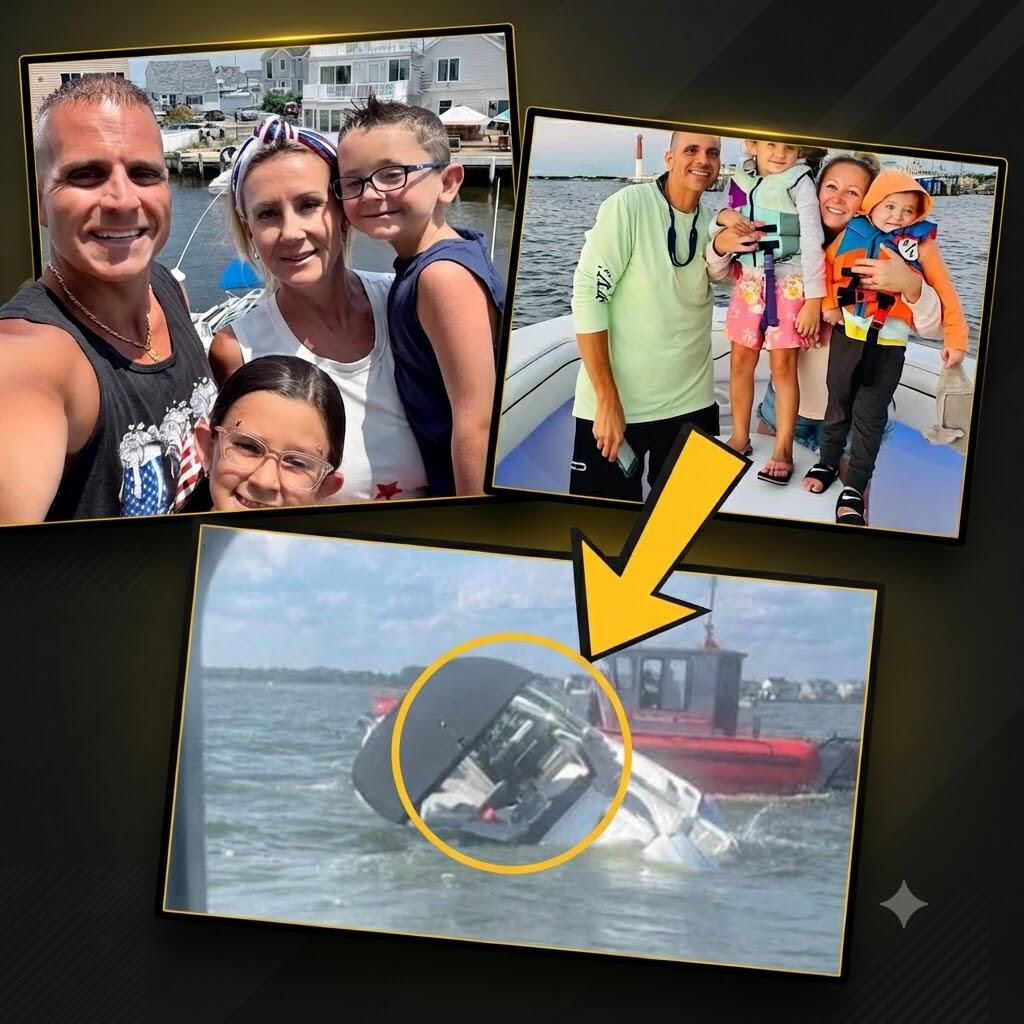
The Last Choice: The Innocent Request That Became A Haunting Detail In The Stephen Schneider Case
It was an ordinary request made by two children after a family dinner: Mya and Sigmund wanted to ride home with their grandparents. Minutes later, their grandfather’s boat would collide with a channel marker on Barnegat Bay, setting off a tragedy that would eventually lead to criminal charges.
Some details in a criminal case are buried in toxicology reports, police interviews and courtroom arguments.
Others are painfully simple.
In the case involving Stephen Schneider, one of the simplest details may also be one of the hardest for the public to process.
According to court documents cited by the New York Post, 9-year-old Mya Bella Golabek and her 7-year-old brother, Sigmund Paul Golabek, asked to return to their grandparents’ nearby home with their grandfather after a family dinner on July 19.
Their parents had arrived separately by boat.
The grandparents had their own vessel.
The children could have gone back with their parents.
Instead, they chose the grandparents’ boat.
It was an ordinary family decision.
What happened afterward was anything but ordinary.
A family dinner before everything changed
The evening began at a restaurant on Bay Boulevard in Bayville, New Jersey, where the Golabek and Schneider families gathered for dinner.
Mya and Sigmund were there with their parents, Jennifer and Sigmund Golabek.
Their grandparents, Stephen and Laurie Schneider, were also there.
The families had arrived by separate boats, according to accounts based on the investigation.
Nothing about the evening suggested that a catastrophic event was approaching.
When dinner ended, the children reportedly wanted to go back to their grandparents’ nearby waterfront home.
Their parents left separately.
The children climbed aboard their grandfather’s Tidewater vessel.
Laurie Schneider was also aboard.
The boat headed across Barnegat Bay.
The journey was supposed to be short.
Instead, around 9 p.m., the vessel struck an Intracoastal Waterway channel marker.
The impact sent both children into the water.
Both were wearing life jackets, according to authorities.
They were eventually recovered and rushed to the hospital, but neither survived.
The grandfather who had been operating the boat would later face two counts of reckless vessel homicide, as well as charges related to boating under the influence and reckless operation.
Why the children’s decision matters
The decision to ride with their grandparents does not establish anything about criminal responsibility.
It does not prove that anyone could have predicted what would happen.
And it certainly does not mean the children or their parents made a “wrong” choice.
Children routinely ask to spend a few extra minutes with grandparents.
Families routinely divide up rides after dinner.
A short boat trip between relatives’ homes is hardly unusual in a waterfront community.
That is precisely what makes the detail so emotionally powerful.
There was nothing extraordinary about the choice when it was made.
Its significance exists only because of what happened afterward.
That distinction is important.
The children’s decision was not a warning sign.
It was not evidence of anything sinister.
It was simply an innocent family moment that became permanently connected to the tragedy.
The parents were on another boat
One of the most difficult aspects of the timeline is that the children’s parents were not aboard Schneider’s boat.
They had their own vessel.
The grandparents had theirs.
The two groups separated after dinner with the expectation that they would reunite at the nearby waterfront home.
That meant the parents were not present when the collision occurred.
Instead, the first moments of the emergency unfolded on the grandparents’ boat.
The children’s grandmother, Laurie Schneider, ultimately made the 911 call.
Newly released recordings provide the public with a glimpse into what happened next.
“We have one on the boat”
The 911 recording released this week has become one of the most emotional pieces of evidence made public in the case.
Laurie Schneider told the dispatcher that one child was aboard the boat while her husband was in the water searching for the other.
“We have one on the boat and my husband’s in the water trying to get the other child out,” she said, according to NBC Philadelphia’s report on the recording.
The dispatcher asked whether the children were unconscious.
The grandmother responded:
“Yes, yes they are.”
In another portion of the call, Laurie tried to determine exactly where they were.
She asked Stephen whether they were near Channel Marker 39.
The exchange illustrates how quickly an ordinary trip home had become a desperate emergency.
One child had been recovered.
The other was still somewhere in the dark water.
The parents were not aboard that boat.
Emergency responders were being called.
And the family was trying to save the children.
The decision that keeps getting revisited
The newly released 911 audio has caused people to look back at the events immediately preceding the crash.
That has inevitably brought renewed attention to the children’s decision to ride with their grandparents.
On social media, the detail has become particularly emotional because of how ordinary it sounds.
There is an obvious temptation to look backward and imagine that the decision somehow carried a warning.
But hindsight can distort how people understand ordinary events.
At the time, the children were simply choosing which boat they wanted to ride home on.
Nobody making that decision knew what would happen minutes later.
There is no evidence that the family had reason to expect a crash.
The tragedy came from what happened after the decision — not from the decision itself.
Then investigators found the alcohol evidence
As the investigation developed, prosecutors introduced another major element.
They said Schneider’s blood alcohol concentration was approximately 0.16, twice New Jersey’s legal limit.
Schneider reportedly told investigators that he had consumed three beers during dinner over approximately two hours.
That contrast has become one of the central issues in the case.
Prosecutors argue that alcohol impairment played a significant role in the crash.
The defense has indicated that other circumstances surrounding the collision also need to be examined.
Schneider has not been convicted, and the allegations against him will ultimately be tested in court.
What happened at the channel marker?
The exact circumstances immediately before the collision remain important.
Schneider reportedly told investigators that he was traveling at approximately 20 mph and saw the channel marker only at the last second.
Authorities have said the marker was illuminated and functioning.
Schneider’s defense team has nevertheless raised questions about whether the marker was actually illuminated at the time of the crash.
That does not establish that the marker was dark.
It means the defense wants the issue examined.
The distinction could become significant as investigators reconstruct the collision.
How far away was the marker?
How visible was it?
What was the boat’s actual speed?
What was the lighting like?
How much time would an attentive operator have had to react?
And how much, if any, did alcohol affect the operator’s ability to perceive and respond?
Those questions remain for the evidence and the court.
The grandfather is now out of jail
Another remarkable element of the case emerged during Schneider’s Aug. 19 court hearing.
Prosecutors argued that Schneider should remain detained, citing the alleged 0.16 BAC and the seriousness of the charges.
But his attorney presented letters from the children’s parents asking that Schneider be released.
The judge ultimately granted conditional release.
Schneider was prohibited from operating a boat or motor vehicle while completing a court-ordered assessment.
The decision has generated considerable debate online.
For some observers, the family’s support is difficult to understand.
For others, it illustrates the complicated reality of a family trying to survive an unimaginable loss.
The same person can occupy multiple roles within a family.
To prosecutors, Schneider is a criminal defendant accused of reckless conduct.
To the children’s parents, he is also the grandfather they have known for years.
The court will determine the first question.
The family must live with the second.
The online reaction has focused on the “what if”
The case has naturally produced a large number of hypothetical questions online.
What if the children had gone home with their parents?
What if Schneider had not taken the boat?
What if the marker had been seen earlier?
What if the trip had lasted only a few more minutes?
What if the family had stayed at the restaurant longer?
These questions are emotionally understandable.
But they are not necessarily legal questions.
A criminal court does not decide a case based on alternate timelines.
It examines what actually happened, what the defendant allegedly did and whether prosecutors can prove each element of the charges.
The “what if” questions belong more to the emotional side of the story.
And that is why the children’s innocent request has resonated so strongly.
A choice that should have meant nothing
Perhaps the most painful part of this detail is how normal it was.
Mya and Sigmund did not make a dramatic decision.
They did not knowingly step into danger.
They simply wanted to spend a little more time with their grandparents.
For countless families, that would be a forgettable moment.
A child asks for a ride.
A grandparent says yes.
Parents take the other boat.
Everyone expects to meet again shortly.
But on July 19, the family did not get the ordinary ending they expected.
The boat struck a marker.
The children went into the water.
The grandmother called 911.
And a routine ride home became the center of a criminal investigation.
What comes next
Schneider remains free under court-ordered conditions while the case proceeds.
His next court appearance is scheduled for Sept. 15.
The prosecution’s evidence, including the alleged BAC, will face scrutiny.
The defense is expected to continue examining the circumstances surrounding the channel marker and the crash.
The newly released 911 recordings will remain an important part of the public record, offering a rare glimpse into the immediate aftermath.
But perhaps the detail that will remain with people the longest is not a toxicology number or a courtroom argument.
It is a simple request made after dinner.
Two children wanted to ride home with their grandparents.
At the time, it was nothing more than a child’s choice.
Only afterward did the world learn how much that ordinary choice would come to mean.
Để lại một bình luận