🚨 TIKTOK JUST FOUND ANOTHER PIECE OF THE NOLAN WELLS TIMELINE — AND NOW PEOPLE ARE LOOKING VERY CLOSELY AT THE GRANDFATHER DETAIL.
A new wave of online investigators is comparing newly surfaced footage, GPS movements and the timeline surrounding the boat distress call — including the moment Nolan’s friend’s grandfather reportedly stepped in and the rescue request was suddenly canceled.
Then comes the footage, the unexplained timeline gaps and questions about what happened after the boats left Horn Island… and suddenly, the story looks a lot harder to piece together than it did before. 👇🔥
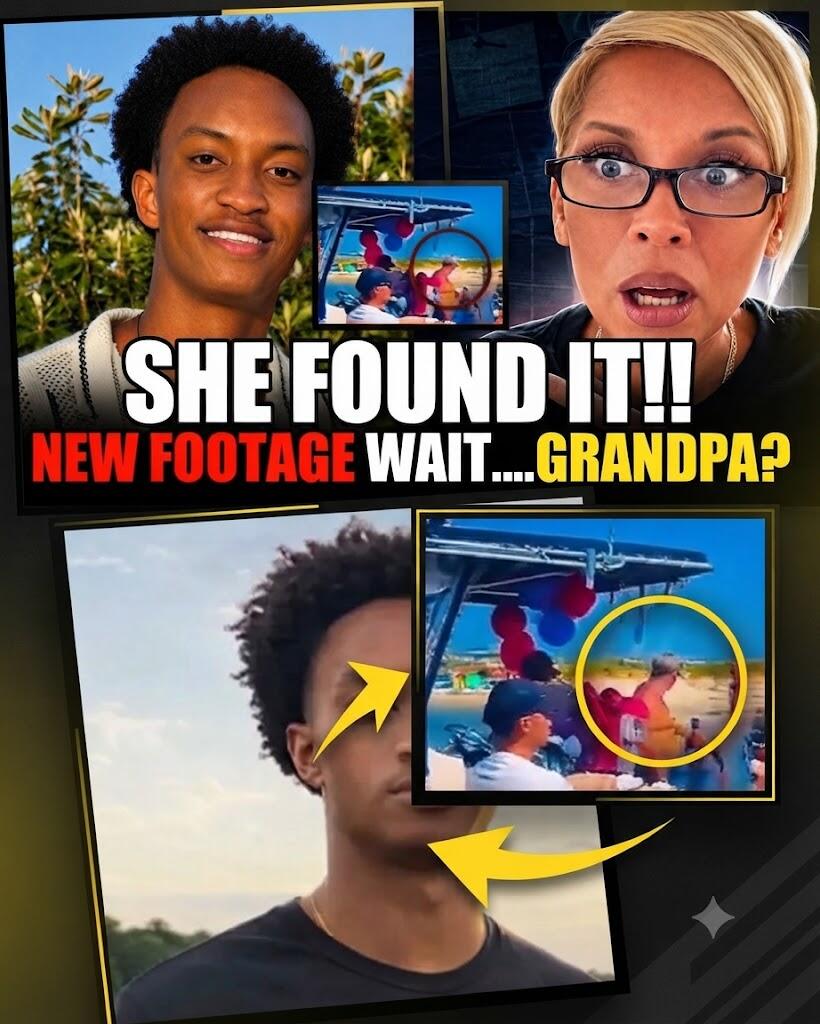
Nolan Wells Update: TikTok Investigators Revisit New Footage, GPS Data and the “Grandpa” Detail
The Nolan Wells investigation has entered another intense cycle of online scrutiny, with TikTok and YouTube investigators revisiting newly surfaced footage, boat movements and one particularly debated detail involving the grandfather of one of Wells’ friends.
The latest wave of discussion does not establish that anyone involved in Wells’ July 4 disappearance committed a crime.
Instead, internet investigators are attempting to reconstruct the timeline minute by minute and determine whether the publicly available accounts can be reconciled with GPS records, emergency-call information, videos and witness statements.
One detail has attracted particular attention: a boat carrying members of Wells’ group reportedly contacted Sea Tow after experiencing trouble, only for the commercial assistance to be canceled shortly afterward following a call from the grandfather of one of the young men aboard.
That grandfather, Jerry Adkerson, later cooperated with investigators and allowed authorities to search the boat and download its GPS information.
The incident is now being repeatedly revisited online.
But the question is not simply why was the tow canceled?
It is whether the timing of the call, the subsequent movements of the boat and the accounts given by those involved can all be placed into one consistent timeline.
The “grandpa” detail
According to reporting on the investigation, a boat carrying members of Wells’ group contacted Sea Tow on July 4 after experiencing trouble on the water.
The call was significant because the young people aboard were reportedly panicking and the vessel was described as taking on water.
The dispatcher asked how many people were aboard, and the caller reportedly indicated that there were no children and nobody over the age of 21. TMZ later published portions of the call.
Then came the unexpected development.
Jerry Adkerson, the grandfather of one of the young people aboard the boat, contacted the tow-boat captain directly and canceled the commercial assistance.
According to the account reported by People and WLOX, Adkerson said a 21-year-old local boater had arrived to help and that the group no longer needed a commercial tow.
That fact has become a major point of discussion online.
Some TikTok users have questioned why a commercial rescue would be canceled so quickly if the boat had genuinely been in serious trouble.
Others argue that the arrival of another capable boater could provide a perfectly ordinary explanation.
Without knowing precisely what happened aboard the boat during those minutes, neither interpretation can be treated as established fact.
Why the GPS data matters
The “grandpa” issue has become more interesting because investigators did not simply rely on verbal accounts.
They also obtained GPS information from boats connected to the group.
On July 8, investigators met with Jerry Adkerson and Jennifer Pyron-Adkerson, the mother of one of Wells’ friends. They obtained permission to search their boat and download its GPS information. Investigators also separately collected data from Bart Edmiston Jr.’s boat.
According to a detailed chronology based on the underlying marine investigation records, the Adkerson boat’s GPS file contained waypoints, tracks and routes, while the Tideline associated with Bart Edmiston contained waypoints rather than a comparable continuous track.
That difference is important.
A complete track can potentially show the vessel’s movement over time.
A collection of waypoints is more limited.
Online investigators have nevertheless attempted to reconstruct the boats’ movements using the available data.
Some claim that the resulting timeline reveals unexplained stops or movements.
Those claims require caution because the public does not necessarily have the complete underlying datasets, and an internet reconstruction is not equivalent to an official forensic analysis.
The timeline problem
The biggest unresolved issue in the Wells case remains the gap between the last confirmed sightings of Nolan and the time his friends left the area.
According to accounts collected by investigators, Warren Hudson said he last saw Wells around 3 p.m.
Another friend, Jayvon Williams, reportedly placed his last sighting somewhat later.
Katie McCormack, the woman Wells was reportedly spending time with, did not personally see him leave but said she assumed he was getting ready to return with the friends he arrived with.
That creates a complicated sequence.
At some point, Wells was separated from the group.
At some point, the group began leaving.
Around the same general period, a boat connected to the group experienced a problem serious enough to prompt a call for assistance.
Then the commercial tow was canceled.
Meanwhile, Wells was eventually found dead near Horn Island.
The challenge for investigators is to establish precisely how those events relate to one another.
Online investigators, naturally, have attempted to fill the gaps themselves.
A new wave of footage
The latest online discussions have also focused on additional footage.
One video reported by TMZ in August appeared to show a boat potentially connected to Wells’ final known movements.
The footage was reportedly recorded on July 4, and TMZ said metadata placed its recording time at approximately 2:23 p.m., although the original uploader had reportedly described it differently.
That distinction is important because timestamps can radically change the significance of a video.
If a clip was recorded at one time, it may support one version of the timeline.
If metadata establishes a substantially different time, the same footage can mean something entirely different.
This is precisely why investigators generally rely on original files and metadata rather than screenshots or reposted social-media clips.
The fourth-boat theory
Another theory gaining traction among TikTok and YouTube investigators involves a possible fourth vessel.
Recent online analysis has attempted to identify an additional boat visible in photographs or reflected in GPS and location information.
One recent video examining the case claims a TikTok investigator identified discrepancies involving boat movements, Life360 data, photographs and a potentially unidentified fourth vessel.
Another video published in early August similarly claimed that an independent online investigator had identified a possible fourth boat and a hidden 30-minute stop.
These claims are currently part of the online investigation rather than established findings by law enforcement.
That distinction matters enormously.
A boat visible in a photograph does not automatically mean it carried Wells.
A GPS point does not automatically identify every person aboard.
And a gap in publicly available data does not automatically mean investigators are concealing information.
The underlying records would need to be authenticated and interpreted by investigators.
The phone adds another layer
The renewed attention to the timeline comes as Wells’ cellphone remains one of the most important unresolved pieces of evidence.
His mother, Christine Wonsley, has subpoenaed multiple technology companies, including Meta, Snapchat, TikTok and Life360, seeking records associated with her son’s accounts and movements.
The family has raised concerns about discrepancies between location information and social-media activity.
TMZ previously reported that Wonsley compared Life360 information with Snapchat location data and believed the records did not match.
Those discrepancies could eventually prove important.
But there are many possible reasons for location data to differ.
Different services use different location technologies.
Some update intermittently.
Some rely on GPS, Wi-Fi or cellular information.
Some retain historical locations differently.
Therefore, a mismatch is something investigators can investigate — not automatic evidence of manipulation.
TikTok investigators are trying to build the timeline themselves
The latest wave of online research reflects a growing trend in the Wells case.
Rather than focusing on a single piece of evidence, internet investigators are trying to combine everything.
Boat GPS.
Life360.
Phone records.
TikTok videos.
Instagram photographs.
Sea Tow audio.
Witness interviews.
And even the movements of boats visible in the background of photographs.
Some of these efforts have produced legitimate questions.
The problem comes when the questions are presented as conclusions.
A recent video discussing the case, for example, highlights claims about Warren Hudson’s account of eight calls to his mother, the phone, Life360 data, the Coast Guard timeline, boat movements and a possible fourth vessel.
Those are legitimate subjects for investigation.
But they do not automatically prove that someone lied or that evidence was deliberately concealed.
What about the grandparents’ cameras?
Another online theory has focused on security cameras allegedly located at the grandparents’ home.
A recent video claimed that the cameras captured boats leaving in the morning but did not capture them returning that night. It also claimed that an independent researcher had overlaid GPS coordinates with other information and identified additional discrepancies.
This is potentially interesting if the underlying footage can be authenticated.
But once again, the public needs to know exactly what the cameras covered, whether they were operating continuously, whether footage was retained and whether the relevant time period was actually recorded.
A security camera that does not show something is not necessarily proof that the event never happened.
There could be blind spots, recording gaps, motion-trigger limitations or overwritten footage.
The “missing night” question
The camera discussion nevertheless illustrates why the timeline has become so important.
If investigators can establish exactly when the relevant boats left and returned, they can compare that information with:
- GPS records;
- cellphone locations;
- witness statements;
- Sea Tow records;
- photographs;
- video metadata;
- and the reported times of Wells’ last sightings.
That type of cross-referencing could either resolve apparent contradictions or expose genuine ones.
For now, the public has only fragments.
And fragments are exactly what social media is best at turning into narratives.
The Sea Tow call remains controversial
The emergency call itself has become another major focus.
Online users have analyzed background audio from the recording and claimed to hear references to Nolan.
Some have also focused on the fact that the rescue request was canceled shortly afterward.
But audio interpretations circulating on social media have not been established as official findings.
Similarly, the decision to cancel a tow is not inherently suspicious.
The important question is what was happening on the boat at the time and whether the explanation given by the people involved is consistent with other evidence.
That is precisely the kind of question investigators can answer using phone records, GPS information and witness interviews.
The new footage does not solve the case
The latest footage may eventually become useful.
But it should not be treated as a smoking gun.
The same lesson emerged earlier in the case when another viral video was widely described online as showing Nolan in a confrontation.
The video’s original owner later said that interpretation was wrong, while Tracestin Shepherd said the voice heard in the clip belonged to him rather than Wells.
That episode demonstrated how quickly an ambiguous recording can become “evidence” once thousands of viewers begin analyzing it.
The new footage deserves the same level of caution.
What the “grandpa detail” actually establishes
At minimum, the public record indicates that:
- A boat connected to Wells’ group experienced trouble on July 4.
- A Sea Tow call was placed.
- Jerry Adkerson subsequently contacted the tow captain.
- The commercial tow was canceled after another boater reportedly arrived to assist.
- Investigators later obtained permission to search Adkerson’s boat and collect its GPS information.
Those are meaningful facts.
What they do not establish is why the tow was canceled beyond the explanation publicly reported, whether anything improper happened aboard the boat, or whether the event is connected to Wells’ death.
Those questions remain open.
Why the timeline could become decisive
The Wells case may ultimately turn less on one dramatic video than on whether dozens of small pieces of information fit together.
If GPS data, cellphone records and witness statements all point toward the same sequence, investigators could establish a much stronger timeline.
If they conflict, those discrepancies may require further explanation.
The family is already pushing for that type of comprehensive review.
Wonsley has sought records from technology companies precisely because digital evidence could potentially reconstruct the movements and communications surrounding her son’s disappearance.
The investigation is still moving
The case remains active.
The NAACP has now joined the Wells family’s legal team, while the family continues to push for transparency. Recent reporting says the official investigation remains ongoing and that a grand jury is expected to assess evidence once prosecutors have completed their work.
Meanwhile, the online investigation shows no sign of slowing down.
Every new photograph becomes a possible clue.
Every GPS point becomes a potential timeline marker.
Every deleted post becomes a source of suspicion.
And every previously overlooked detail can suddenly become the centerpiece of a viral theory.
But the distinction between “this deserves an explanation” and “this proves wrongdoing” remains critical.
The grandfather’s call is worth examining.
The GPS records are worth examining.
The footage is worth examining.
The timeline gaps are worth examining.
None, standing alone, establishes what happened to Nolan Wells.
What happens next?
The most important developments are likely to come from evidence that can be independently authenticated.
That includes the complete GPS files, cellphone and Life360 records, original video files, forensic analysis of Wells’ phone, the official autopsy and any additional witness testimony.
If those pieces converge, they could finally answer some of the questions that have fueled weeks of online speculation.
Until then, TikTok investigators may continue finding what appear to be contradictions.
Some could turn out to be meaningful.
Others could have innocent explanations.
And some may simply be artifacts of incomplete public information.
For now, the most honest conclusion is also the least sensational:
There are still gaps in the public timeline of Nolan Wells’ final hours.
The “grandpa” detail adds another question to that timeline — but it does not, by itself, provide the answer.
Để lại một bình luận