HER FAMILY THOUGHT PAMELA CISNEROS WAS FINALLY GETTING BETTER. THEN EVERYTHING CHANGED.
For years, Pamela Cisneros struggled with serious mental-health issues. But her family believed she had finally found some stability.
Her father thought she was back on the right track.
Then, in the days before the horrific Times Square attack, relatives began noticing something different.
She stopped showing up. Her behavior seemed to change. And behind those final days was a deeply complicated family history that is now raising even more questions.
Then Erin Piacenti crossed her path.
What happened inside Pamela’s life before that moment?
What did her family notice — and what did they fail to see?
And why is her past now being examined so closely?
👇 Read the full story behind the disturbing timeline.
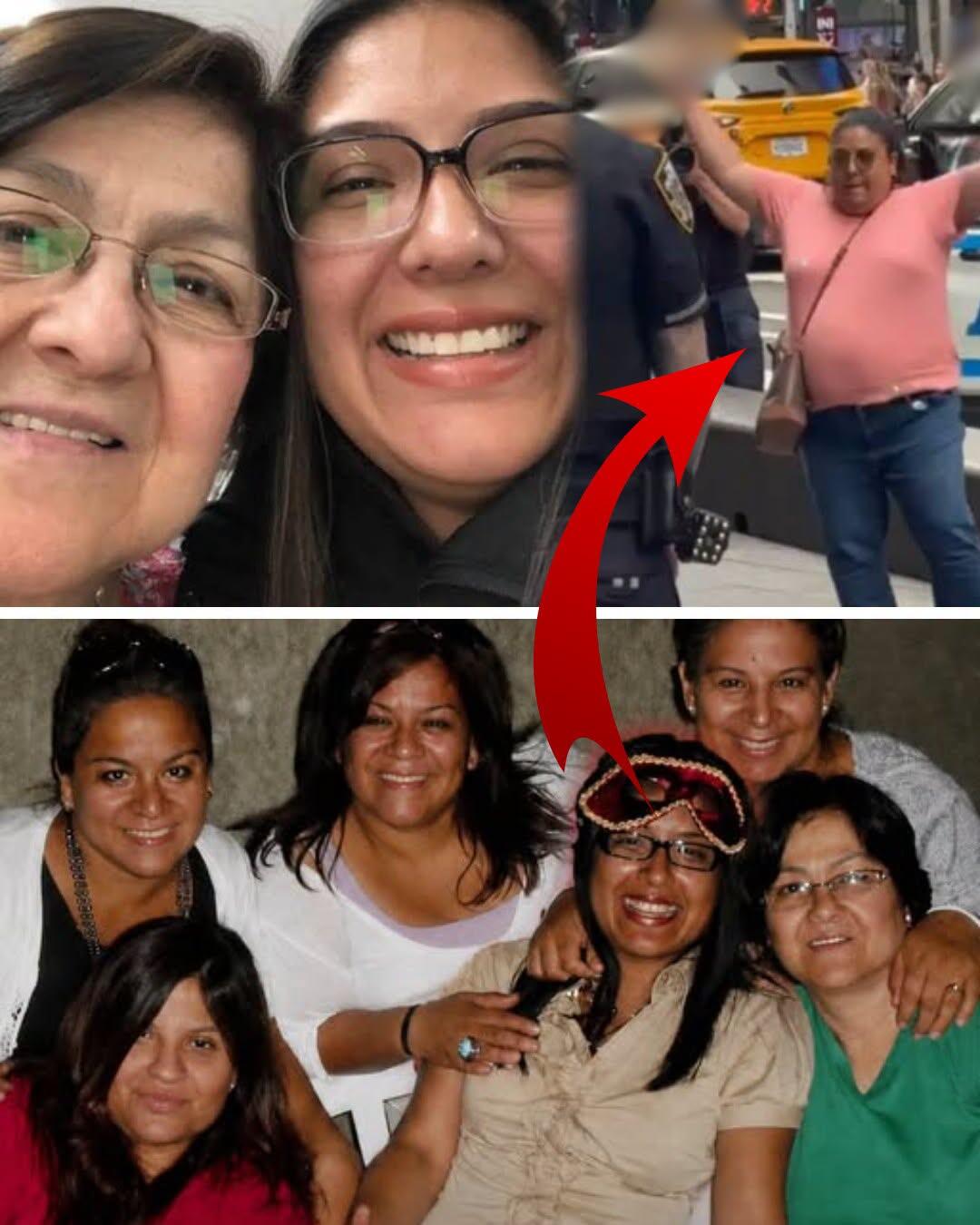
For years, Pamela Cisneros’ family had watched her struggle with serious mental-health problems, periods of instability and personal turmoil.
But there was also a period when relatives believed the worst might finally be behind her.
Her brother, Patrick Peralta, told Gothamist that Cisneros had appeared stable for several years while receiving treatment. She had not been known to behave violently, regularly visited her mother and stepfather and had even helped organize a family birthday gathering in August.
Then, shortly before the Aug. 31 Times Square attack, that routine abruptly changed.
Cisneros stopped visiting her family. Relatives tried calling her. On Saturday, just two days before the attack, her mother spoke with her and was told she was fine.
Less than 48 hours later, Cisneros was dead after police shot her following a stabbing attack that killed 32-year-old Erin Piacenti and injured a 68-year-old man.
The sudden turn has left relatives struggling to understand how someone they believed was doing better could become involved in such a violent episode.
A woman her family believed was getting better
Cisneros, 49, had a documented history of mental-health-related encounters with the NYPD.
Her brother said she had struggled with what he described as postpartum depression and bipolar disorder beginning more than two decades ago, after the birth of her second daughter.
The family later endured additional difficulties.
According to Peralta, Cisneros had three daughters. After the birth of her third child, she divorced her husband and eventually moved to Florida with her children. One daughter, who is autistic, was later placed in a care facility in Brooklyn, while two others lived in Florida with their father, according to The New York Post.
The breakdown of her marriage became another significant chapter in her personal history.
Court records show that Cisneros’ husband filed for divorce in Hillsborough County, Florida, in 2020. The case was sealed and was finalized in 2025, according to reporting based on court records.
That timeline overlaps with a period in which Cisneros was already dealing with serious mental-health difficulties.
But her family did not describe her as permanently unstable.
Quite the opposite.
Peralta said Cisneros had seemed to improve substantially in the years following a 2019 suicide attempt. She received medication, including injections, and appeared to regain some stability.
“She was doing well,” Peralta told Gothamist, describing the previous four or five years as a period when she had not shown aggression.
Then the routine suddenly disappeared
One of the most unsettling details to emerge after the Times Square attack was how ordinary Cisneros’ life appeared immediately beforehand.
Her brother said the family last saw her at a gathering for their stepfather’s birthday on Aug. 10.
She normally visited her mother regularly.
Then, during the final week of her life, she stopped coming.
The family noticed.
They called.
On Saturday, her mother spoke with her and was reassured that everything was fine.
There was no apparent warning that relatives understood as an imminent danger.
That makes the final days particularly difficult for the family to reconstruct.
Peralta told Gothamist that it felt as though something had changed suddenly — describing it as being “like a switch.”
Her father, Mario Cisneros, separately described his daughter as someone he believed he knew well but acknowledged that he did not understand what was happening inside her mind.
He said she had been receiving monthly medication injections and had previously appeared to be doing better. More recent reporting has also raised questions about whether she had become reluctant to continue treatment.
That possibility remains part of the broader investigation and should not be treated as an established explanation for the attack.
What happened in Times Square
On Aug. 31, shortly after 4:20 p.m., police said Cisneros was near West 41st Street and Seventh Avenue when she pulled two knives from a shopping bag.
According to NYPD officials, she first approached a 68-year-old man, identified as Tak Kam, and stabbed him in the abdomen.
Roughly 20 seconds later, police said, she attacked Piacenti.
Piacenti, a 32-year-old vice president at Bank of America, was struck in the abdomen.
She was transported to Bellevue Hospital but died from her injuries.
Kam survived and was hospitalized in stable condition.
Police described the attack as random and unprovoked.
There is currently no publicly established personal connection between Cisneros and either victim.
That point is crucial because much of the online discussion surrounding the case has attempted to reconstruct a motive that investigators have not publicly established.
Erin Piacenti had just returned to work
The identity and circumstances of the victim have added another heartbreaking layer to the case.
Piacenti had recently become a mother.
She and her husband, Frank Piacenti, had welcomed a daughter approximately five months before the attack. Aug. 31 was reportedly her first day back at work after maternity leave.
She was heading home from Bank of America when she encountered Cisneros.
The contrast between the two women’s lives in the days leading up to the attack has become a major focus of public attention.
Piacenti had recently celebrated family milestones and shared photographs with her husband and infant daughter.
Just days before her death, she posted a photograph showing herself smiling with her baby.
Now, her five-month-old daughter is growing up without her mother.
A GoFundMe campaign established for the child has attracted hundreds of thousands of dollars in donations, reflecting the extraordinary public response to Piacenti’s death. NBC New York reported that the campaign had surpassed $500,000 by Sept. 3.
Bank of America described Piacenti as a valued colleague, while Fordham Law School, where she had studied and met her husband, also remembered her warmly.
The final confrontation with police
After the two stabbings, officers surrounded Cisneros.
Police said they repeatedly ordered her to put down the knives.
She refused.
According to NYPD Commissioner Jessica Tisch, Cisneros told officers, “I’m not dropping anything. I would rather kill both of you.”
Officers deployed Tasers, but they were unsuccessful in stopping her.
Police said Cisneros continued advancing while holding the knives, prompting two officers to open fire.
She was struck and later pronounced dead at Bellevue Hospital.
The New York attorney general’s office has opened an investigation into the police shooting, as is standard in officer-involved civilian deaths. The NYPD’s Force Investigation Division is also examining the circumstances.
Social media posts add another layer — but not necessarily an explanation
As investigators and journalists have examined Cisneros’ background, attention has also turned toward social-media activity attributed to her.
The New York Post reported that some of her posts became increasingly religious in tone and included references to violence, social collapse and biblical end-times themes.
One 2025 post reportedly referenced the idea of people stabbing others “for no reason.”
Those posts have generated considerable discussion online because of their disturbing proximity to the later Times Square attack. But they do not, by themselves, establish that Cisneros planned the attack or explain why Piacenti and Kam were targeted.
Authorities have not publicly identified a specific motive and have not classified the incident as terrorism.
That distinction matters as online communities attempt to piece together the case.
In the days following the attack, social-media discussions have focused heavily on Cisneros’ history, her family relationships, her apparent change in behavior and the question of whether earlier intervention could have prevented the violence.
But speculation remains speculation.
The clearest documented picture so far is one of a woman with a long history of mental-health struggles who appeared to have achieved a period of relative stability before experiencing an apparent deterioration that her family did not fully recognize until after the attack.
A family left with questions
Perhaps the most haunting element of the case is that Cisneros’ relatives were not describing someone they expected to become violent.
Her brother said he had never known her to be aggressive.
Her family had seen her struggle, recover and establish routines again.
Her father believed she was receiving treatment.
And only days before the attack, her mother reportedly spoke with her and believed she was fine.
Then came Times Square.
For the Piacenti family, the consequences are irreversible. Erin Piacenti is gone, leaving behind a husband and infant daughter.
For Cisneros’ family, there is a different kind of devastation: the inability to understand how years of mental-health struggles and apparent recovery ended in a random act of violence that took another person’s life.
The two investigations now move forward separately — one examining the deadly attack and its origins, the other examining the police shooting that ended Cisneros’ life.
The central question remains unanswered: what changed in Pamela Cisneros during those final days?
Investigators may never be able to provide a complete answer.
But as authorities examine her medical, family and social history, those last days — when relatives noticed that something seemed different, yet were told everything was fine — could become an important part of understanding what happened before the violence erupted in the middle of Times Square.
Để lại một bình luận