HOW “GOD’S BLESSING” CREATED TRUMP: The Dangerous Marriage of Anti-Intellectualism and Politics! 🚨🔥
To the outside world, it has always been the ultimate political paradox: How did millions of devout, conservative Christians rally behind a figure with an openly hedonistic lifestyle, declaring him “God’s chosen leader”?
Behind closed doors, political scientists and historians are pointing to a deeper, decades-long cultural shift. It’s not just about policy—it’s the weaponization of anti-intellectualism. When a large segment of the population feels culturally alienated, mocked by academic elites, and left behind by modern institutions, populist politics fuses with a specific brand of populist religion. Rallies stop looking like town halls and start mimicking megachurch revivals—complete with emotional energy, absolute loyalty, and an “us versus them” divine mandate.
Critics argue it’s a transactional alliance where faith is traded for political power. Supporters call it a holy restoration.
The hidden cultural blueprints that engineered this movement will shock you.
👉 Read the full investigative breakdown before it gets restricted: 🔥
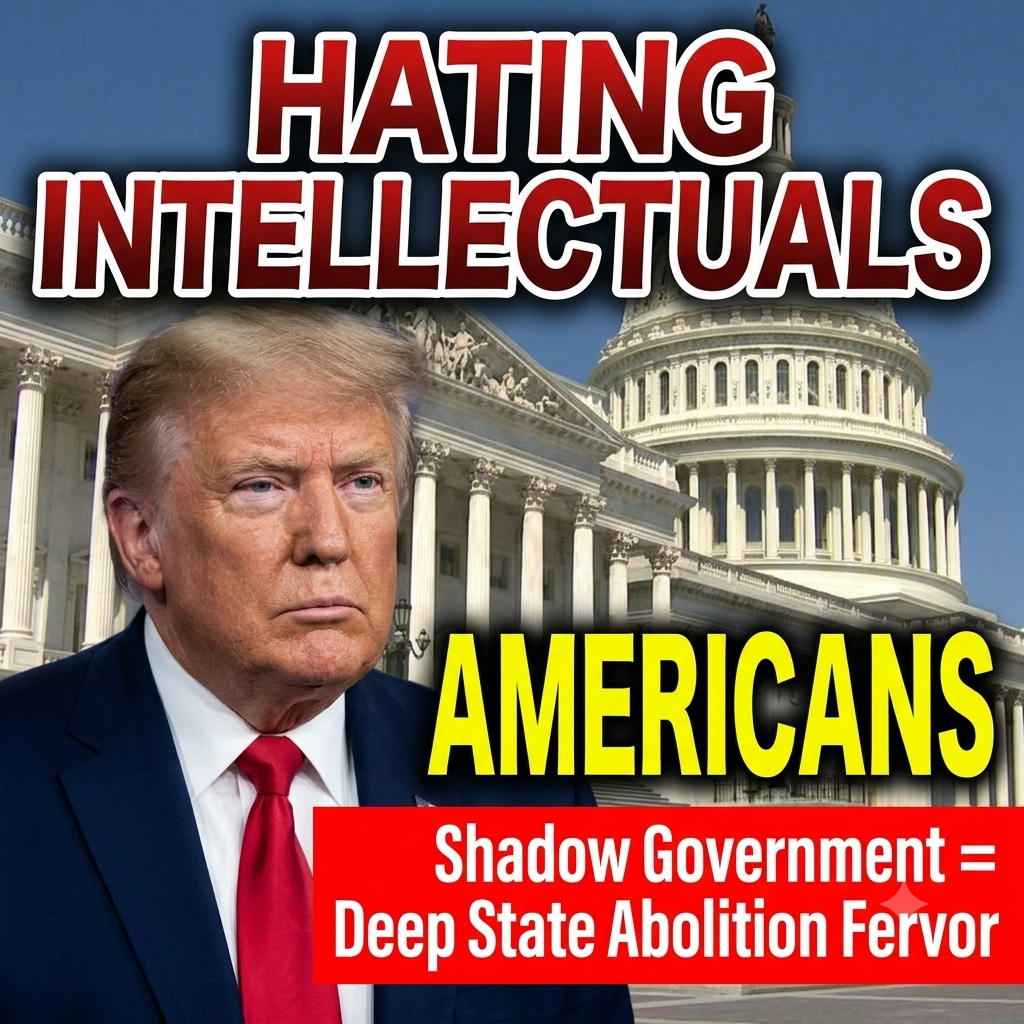
One of the most perplexing political phenomena of the 21st century remains the unbreakable bond between Donald Trump and white evangelical Christians. To external observers, the alliance appears deeply contradictory: a twice-divorced, thrice-married billionaire real estate mogul embodying New York secular hedonism embraced as a champion of faith, hailed by some religious leaders as a modern-day King Cyrus chosen by God.
Yet, sociologists, historians, and political scientists studying the American religious landscape argue that this marriage is neither an accident nor a momentary lapse in judgment. Instead, it is the culmination of a century-long trajectory marked by the rise of religious populism, a deep-seated distrust of institutional authority, and a potent strain of American anti-intellectualism that paved the way for modern political tribalism.
The Anatomy of Alienation: The Roots of Anti-Intellectualism
To understand why millions of devout Americans gravitated toward Trump, one must first examine the widening chasm between working-class religious communities and the nation’s cultural, academic, and media elites. For decades, traditional religious values regarding family, gender, and morality were increasingly marginalized by secular institutions, universities, and federal courts.
This cultural displacement bred a profound sense of grievance. As historian Richard Hofstadter famously noted in his seminal work on American anti-intellectualism, public suspicion of “experts,” academic credentials, and institutional elites is a cyclical feature of American populism. When mainstream intellectual culture began viewing traditional religious orthodoxy not merely as a differing opinion, but as backward or bigoted, a defensive cultural fortress went up.
Trump possessed the populist genius to tap directly into this resentment. Unlike traditional, polished politicians who deferred to institutional norms, expert consensus, and academic data, Trump weaponized disdain for the establishment. His rhetoric validated the gut instincts of everyday citizens over the complex technocratic jargon of policy wonks. For alienated believers, his blunt, unfiltered style was not a flaw, but proof that he was fighting the same cultural enemies they were.
The Megachurch and the Rally: Blurring Faith and Politics
The operational parallels between modern American evangelical megachurches and Trump political rallies are striking. Both rely heavily on charismatic authority, emotional catharsis, and high-production-value environments designed to foster intense group cohesion.
In many independent charismatic and prosperity-gospel networks—often aligned with dominionist philosophies such as the “Seven Mountain Mandate”—politics is viewed not merely as a secular contest of policies, but as a spiritual battleground for control of societal pillars (government, education, media, religion). In this framework, pragmatic compromises are discarded in favor of absolute loyalty.
When conservative religious leaders entered a transactional partnership with Trump, the calculation was stark: We provide the moral legitimacy and grassroots mobilization; you deliver the judicial appointments, regulatory protections, and cultural victories. For a voting bloc convinced they were fighting an existential war for the survival of Christian America, conventional moral scrutiny of a leader’s personal lifestyle took a back seat to the preservation of institutional power.
Institutional Capture and the New Christian Nationalism
As the movement institutionalized within the federal government—marked by the creation of faith-based offices, religious liberty commissions, and targeted policy initiatives protecting traditional Christian institutions—critics from both the secular left and traditional religious communities raised alarms about the rise of Christian nationalism.
Scholars point out that modern Christian nationalism is less about sincere theological devotion and more about cultural and political dominance—using religious identity as a tribal marker to define who is a “real American.” By framing political opponents as existential threats to faith and freedom, intellectual nuance is entirely squeezed out of the public square. Disagreement is no longer treated as a policy debate, but as apostasy.
Conclusion: A Legacy That Extends Beyond One Man
The convergence of anti-intellectualism, populist grievance, and religious nationalism did not begin with Donald Trump, nor will it vanish with him. It reflects a deep structural fracture in American society—a populist revolt against secular technocracy that found its most effective vehicle in a political outsider willing to shatter institutional norms.
Whether viewed as a holy restoration by his supporters or a dangerous degradation of democratic norms by his critics, the Trump-evangelical alliance remains a defining testament to how cultural alienation and institutional distrust can fundamentally redraw the political map of a superpower.
Để lại một bình luận