🚨 THE WILD 1960S HOME DECOR TRENDS THAT WOULD ABSOLUTELY SHOCK TODAY’S MINIMALISTS! 🤯
If you walked inside a real middle-class American home in the 1960s, you weren’t stepping into a sterile, all-white modern apartment. You were entering a sensory explosion of avocado green, bright orange, dizzying geometric wallpaper, and plush sunken conversation pits! 😳
From pink and pastel blue bathrooms inspired by First Lady Mamie Eisenhower to the heavy, glowing console TVs that served as the undisputed power hub of the living room—the 1960s interior was packed with personality and character.
And let’s not forget the compact built-in cocktail bars, the shiny chrome kitchen appliances, and the perilous electric blankets that kept everyone warm before modern insulation! 💥
🔥 Is today’s minimalist home design too boring, or are you glad we left the shag carpets and wood paneling behind?
👇 Click the link below to step inside a real 1960s home and explore the iconic, unforgettable features that defined the decade! 👇
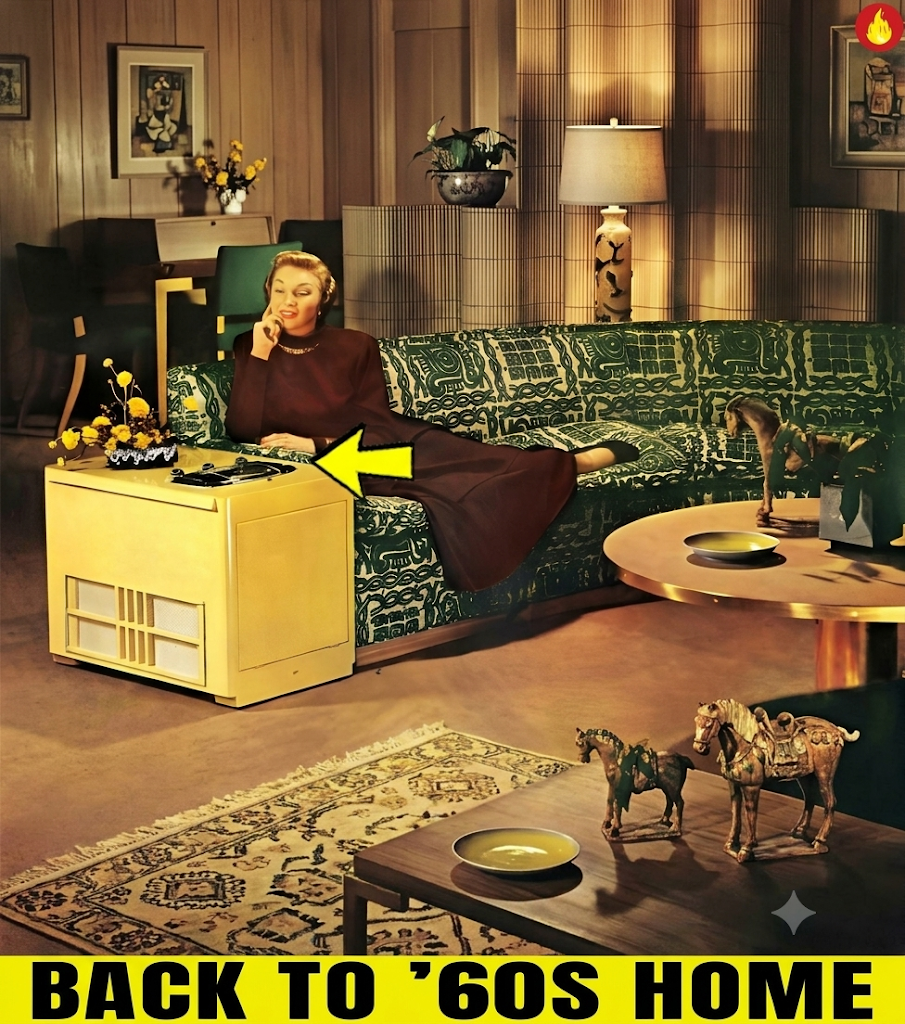
Stepping across the threshold of a well-preserved 1960s American home is akin to walking onto a movie set designed by an artist with an unbridled passion for saturated color, organic textures, and space-age optimism. While contemporary interior design often favors stark minimalism, neutral tones, and sterile open-concept layouts, the residential landscape of the 1960s was a vibrant, tactile celebration of personality and architectural experimentation.
From the sunken conversation pit in the living room to the pastel pink bathroom suites upstairs, the 1960s home reflected a society in transition—bridging the traditional post-war conformity of the 1950s with the psychedelic cultural revolution of the late decade.
The Living Room: Conversation Pits and Mid-Century Modern Mastery
The heart of the 1960s home was the living room, designed explicitly around socialization, entertainment, and visual drama.
1. Sunken Conversation Pits
Perhaps the most striking architectural feature of high-end mid-century homes was the conversation pit. Lowered below the standard floor level like a cozy oasis, these carpeted, cushion-lined recesses brought people together in an intimate, communal circle around a central coffee table or fireplace. By blurring the lines between furniture and architecture, conversation pits encouraged unhurried face-to-face dialogue before the tyranny of television layouts took over residential floor plans.
2. Bold Wallpapers and Wood Paneling
Walls in the 1960s were rarely painted flat white. Instead, they served as artistic canvases covered in bold, large-scale floral patterns or dizzying geometric prints. Concurrently, rich natural wood paneling crafted from walnut, oak, and mahogany lined dens and bedrooms, imparting a warm, secluded, cabin-like ambiance that insulated families against the cold winter months.
3. High-Fidelity Stereos and Console Televisions
Music and media dominated the living space. Built-in hi-fi stereo systems housed inside sleek wooden credenzas allowed families to drop vinyl LPs onto turntables, filling rooms with rich analog sound. Meanwhile, massive console televisions—encased in heavy wood cabinets with integrated speakers—sat as the undisputed power hubs of the home, drawing the entire family together for evening broadcasts.
The Kitchen: Chrome, Diner Vibes, and Rotary Telephones
The mid-century kitchen was a bustling laboratory of cheerful colors, shiny metallic finishes, and early space-age convenience.
1. Retro Diner Aesthetics
Inspired by classic American roadside diners, kitchens frequently featured black-and-white or red-and-white checkered floor tiles, sparkling chrome accents, and laminate Formica countertops in vibrant shades of turquoise, lemon yellow, or burnt orange.
2. Shiny Chrome Appliances and Melamine Ware
Kitchen counters sparkled with heavy chrome-finished toasters, stand mixers, and coffee percolators that symbolized modern hygiene and industrial progress. Cabinets were stocked with nearly indestructible melamine dinnerware and colorful Tupperware containers featuring airtight “burping” seals in avocado green and burnt orange.
3. Wall-Mounted Rotary Telephones
Mounted securely on kitchen walls, Western Electric rotary phones—often styled in pastel green or pink to match the surrounding tile—served as the vital communication links for busy homemakers managing households while chatting with neighbors.
Private Sanctuaries: Pastel Bathrooms and Sunken Tubs
Private spaces within the home were designed to evoke luxury, resort-like relaxation, and distinct color coordination.
1. Colorful Bathroom Suites
Departing sharply from modern neutral palettes, 1960s bathrooms embraced vibrant hues. Soothing pastel blues, bold avocado greens, and iconic bubblegum pinks dominated sinks, bathtubs, and wall tiles. Championed heavily by First Lady Mamie Eisenhower’s famous affection for pink, these colorful suites transformed private washrooms into glamorous personal retreats.
2. Sunken Bathtubs
Ultra-luxury homes featured bathtubs built flush with the bathroom floor rather than elevated above it. Surrounded by ceramic tile, stone, or indoor greenery, these sunken tubs resembled private hot springs, offering deep, uninterrupted relaxation.
Practical Ingenuity and Everyday Living
Beneath the stylish surface, 1960s homes were packed with clever spatial innovations and everyday comforts designed for practical family life.
-
Compact Built-in Bars: Tucked discreetly into living rooms or dens with mirrored backs and glass shelving, home bars made entertaining effortless during weekend cocktail parties.
-
Fold-Down Ironing Boards: Integrated directly into walls or kitchen cabinets, these space-saving boards vanished completely when not in use.
-
Built-in Planters: Cleverly incorporated into room dividers and entryways, indoor planters brought biophilic design elements into suburban living spaces long before the modern houseplant craze.
-
Electric Blankets: Before modern central heating and home insulation reached today’s standards, electric blankets with wired temperature controls served as cold-weather saviors on freezing winter nights.
Conclusion: The Timeless Appeal of Mid-Century Design
The real 1960s home was far more than a collection of retro furniture pieces; it was a cohesive physical environment built around craftsmanship, vibrant self-expression, and direct human interaction. While modern architecture has largely traded conversation pits for open-plan neutrality and rotary dials for smartphones, the enduring obsession with mid-century modern design proves that the bold aesthetic and warm soul of the 1960s home will never truly go out of style.
Để lại một bình luận