🚨 THE HIDDEN WAR: Why Putin’s Invasion of Ukraine Was Only Act One! 🔥
Everyone is staring at the front lines in Donetsk and Kherson, measuring gains and losses by a few hundred meters. But while the world watches the trenches, a terrifying shadow war is already unfolding across all of Europe.
Undersea communication cables severed, railways targeted by arson, drone incursions over airports, and covert sabotage operations hitting every major European nation—intelligence experts warn that Europe is already locked in a direct, unconventional war with Russia, whether it admits it or not.
Was Ukraine just a staging ground for a much larger, darker geopolitical master plan to fracture NATO and rewrite global power?
👉 Uncover the shocking findings from major security institutes, the decentralized “gig economy” of Russian saboteurs, and the ultimate strategic trap facing the West. Read the full explosive breakdown before it gets scrubbed:🔥👇
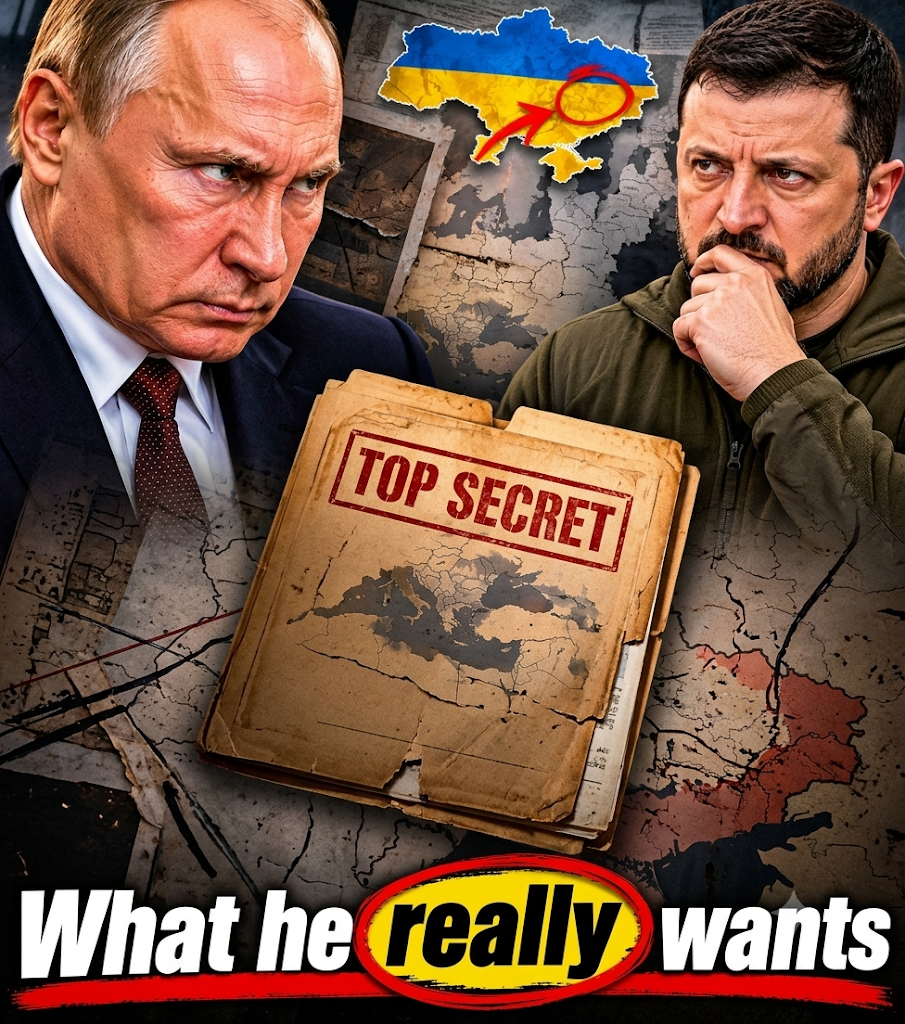
For years, the global narrative surrounding the war in Eastern Europe has been defined by maps of the front lines—shifting trench lines in Donetsk, artillery duels in Kherson, and missile strikes targeting critical infrastructure across Ukraine. To the casual observer, the conflict is localized: a territorial dispute between two nations, measured by square kilometers gained or lost.
However, security analysts, think tanks, and intelligence experts are sounding an urgent alarm: focusing exclusively on the physical battlefields of Ukraine misses the forest for the trees. According to recent comprehensive assessments by organizations like the Institute for the Study of War (ISW), the International Institute for Strategic Studies (IISS), and the Hague Centre for Strategic Studies (HCSS), the full-scale conflict initiated in 2022 is not merely a war over Ukrainian territory, but a war being fought on Ukrainian territory.
Behind the smoke of the frontline artillery, Moscow has unleashed an aggressive, unconventional “gray-zone” war across the entire European continent—utilizing sabotage, cyberattacks, espionage, and psychological operations designed to fracture NATO, destabilize Western governments, and restore Russian hegemony.
The Real Motive: Beyond Territorial Expansion
To understand why the Kremlin ordered the invasion, one must look past official pretexts and examine Vladimir Putin’s long-standing geopolitical objectives. Growing up during the twilight of the Soviet Union and witnessing its subsequent collapse, Putin’s worldview has been defined by an obsession with restoring Russia to global superpower status.
As the ISW noted in detailed analytical reports, Putin did not launch the invasion out of a genuine fear of NATO defense postures. Rather, he calculated that NATO offered former Soviet republics an alternate path—a way to escape Moscow’s economic, political, and cultural orbit. When the 2014 Euromaidan Revolution ousted Kremlin-friendly leadership in Kyiv and pulled Ukraine firmly toward Western integration, it threatened to unravel Putin’s entire blueprint for regional dominance.
If a democratic, prosperous Ukraine successfully aligned with the West, neighboring states would follow suit, isolating Russia and leaving the Kremlin a diminished power. The annexation of Crimea and the initial proxy conflict in the Donbas were never isolated tactical moves; they were the opening gambits in a protracted strategy to break Ukraine apart from the inside out and subjugate its sovereignty.
The Echo Chamber and the Miscalculation
When traditional political coercion, economic pressure, and diplomatic leverage failed to bring Kyiv to heel, Putin doubled down. Isolated during the pandemic within an insular circle of loyal advisors and ideologues, the Russian leadership retreated into an echo chamber.
Inside this alternate reality, Putin convinced himself that the Ukrainian state was an artificial construct propped up by Western puppet masters, and that Russian troops would be welcomed as liberators by a population eager to cast off Western influence. Concurrently, he perceived the West as weak, fragmented, and hesitant to mount a unified defense.
This profound miscalculation led to the 2022 full-scale offensive. Yet, when the anticipated swift collapse of Kyiv failed to materialize and Western nations rallied in historic solidarity, the nature of the conflict evolved. The conventional battle in Ukraine became the violent epicenter, but the secondary theater expanded across the borders of Europe.
The Unconventional War on Europe
While world headlines remain transfixed on the physical front lines, a parallel hybrid war is raging across the European continent. According to comprehensive open-source databases compiled by defense institutes, Russia has orchestrated dozens of covert sabotage and destabilization operations spanning the Baltic states, Nordic countries, Poland, the Czech Republic, France, Germany, Italy, and the United Kingdom.
This unconventional campaign utilizes a diversified portfolio of hybrid tactics designed to remain just below the threshold of triggering a formal Article 5 NATO response:
-
Critical Infrastructure Sabotage: Mysterious damage and severance of vital undersea fiber-optic communication cables and power grids in the Baltic Sea; deliberate arson attacks targeting rail corridors and military supply lines moving through Poland toward Ukraine.
-
Industrial and Aviation Disruption: Suspected explosive plots and drone incursions near major European transport and manufacturing hubs, including facilities in Germany.
-
Cyber Warfare and GPS Jamming: Large-scale cyber intrusions and continuous regional GPS signal interference across the Baltic and Nordic airspaces, creating severe hazards for commercial aviation and maritime navigation.
-
Information Warfare and Migration Pressure: Coordinated bot networks and state-backed hacker armies deploying mass misinformation to deepen societal polarization, alongside the weaponized amplification of migrant flows across Eastern European borders to strain social safety nets.
The “Gig Economy” of Sabotage and the Strategic Trap
One of the most concerning adaptations in Moscow’s intelligence playbook has been its shift in recruitment methodology. Following the expulsion of hundreds of accredited Russian intelligence officers from European capitals, the Kremlin adapted by establishing a decentralized, gig-economy-style network.
Rather than relying solely on traditional deep-cover operatives, Russian handlers now recruit third-country nationals, criminal proxies, and local discontents through encrypted messaging apps to execute isolated acts of arson, vandalism, and reconnaissance for cash incentives.
This creates what security analysts at the HCSS term a “strategic trap.” Russia retains the initiative—choosing the time, place, and method of asymmetrical attack—while European governments are forced into an impossible defensive posture, attempting to protect an expanding array of vulnerable targets everywhere, all at once. Because individual acts of sabotage often masquerade as ordinary crimes or industrial accidents, Western capitals have frequently struggled to forge a unified deterrence policy or impose crippling costs on Moscow.
Conclusion: Waking Up to the Hard Truth
The overarching reality of the current geopolitical landscape is stark: the confrontation between Russia and the West is not a distant threat on the horizon; it is an active, ongoing reality.
Even if formal ceasefires were negotiated or territorial lines in Ukraine were temporarily frozen, Putin’s broader ambitions remain unchanged. The subversion of European stability, the fracturing of NATO unity, and the re-establishment of Russian dominance over the Eurasian space are core ideological imperatives for the Kremlin.
As security experts and strategic institutes increasingly urge Western capitals to adopt proactive multidimensional strategies—encompassing aggressive disruption of intelligence networks, degradation of sabotage resources, and ironclad deterrence—the message to the free world is unmistakable. The war on the ground in Ukraine is merely the visible tip of a much deeper, darker geopolitical iceberg. Recognizing the true scope of the threat is the first and most critical step toward ensuring it does not consume the democratic world.
Để lại một bình luận