She had a global empire, chart-topping hits, and millions in the bank—yet the thing that broke fans’ hearts the most wasn’t a song. It was what she did for the father who could never read a single word. 📚💔
Most people know the glitz, the guitars, and Dollywood. Far fewer stop to think about what happened behind closed doors in Sevier County—or the hidden battles a local book giveaway faces right now even after passing 300 million books worldwide.
Why did her dad’s struggle spark a worldwide movement? What is actually putting local chapters at risk today despite massive milestones? And why are parents and communities arguing so fiercely over what her legacy means next?
The full story behind the books—and the debate nobody expected—is waiting for you. 🔥
Read the full story here 👇
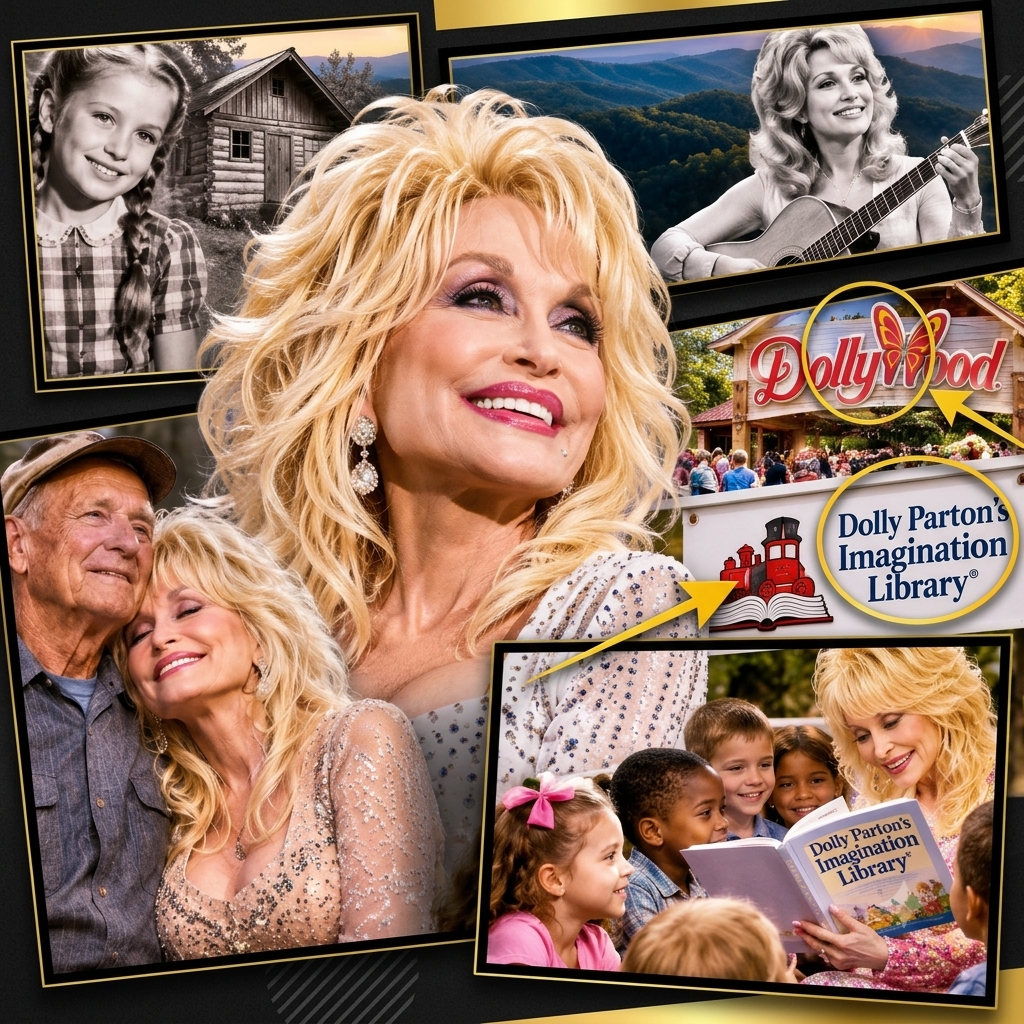
For decades, the public image of Dolly Parton has rested on a study in contrasts: rhinestone glamour paired with Appalachian grit, chart-topping country anthems alongside sharp-elbowed business savvy, and a larger-than-life persona rooted in an unshakeable sense of home. Even as her name became synonymous with entertainment, theme parks, and pop-culture permanence, one thread of her biography has consistently drawn emotional weight from fans and critics alike: her insistence on tying mega-success back to the modest East Tennessee upbringing where she started.
At the center of that story stands the Imagination Library, the early-childhood book gifting program Parton launched in 1995 in honor of her father, Robert Lee Parton, who worked hard his entire life without ever learning to read or write. What began as a local effort for children in Sevier County, Tennessee—with an initial order of just over 1,700 books—has grown into a global operation mailing millions of free books every month to young children across multiple countries and passing the 300-million-book mark. Yet as tributes, milestone tallies, and policy debates swirl around the program, the conversation has broadened beyond simple nostalgia into questions of funding sustainability, local partnerships, and what happens to a beloved philanthropic model over the long haul.
The Hook: A Personal Wound Turned Into a Global Bookshelf
When stories about Dolly Parton’s roots circulate online, they rarely stay confined to music trivia. Mentioning classics like “Jolene,” “Coat of Many Colors,” and “I Will Always Love You” immediately establishes her status as an American songwriting institution, while Dollywood illustrates how she turned regional pride into a major economic engine. Still, for many readers, the sharpest emotional pivot comes when the spotlight shifts from stadium stages and entertainment ventures to a father who couldn’t read his own daughter’s words on a page.
That personal backstory gives the Imagination Library an unmistakable moral clarity. Rather than framing philanthropy purely as corporate image-building or celebrity charity, the origin story links a specific family limitation—Robert Lee Parton’s lack of formal literacy—to a practical monthly habit: putting a physical book addressed to a young child in the mailbox every month until they start school. For audiences scrolling past hundreds of promotional posts a day, that combination of personal sacrifice, family loyalty, and tangible childhood impact explains why the narrative continues to travel so far.
Background: How a Hometown Idea Scaled Across Borders
To understand why the Imagination Library occupies such a distinctive place in celebrity philanthropy, it helps to look at how the program actually operates. Founded through The Dollywood Foundation in 1995, the initiative started in Sevier County, Tennessee, with the goal of fostering a love of reading among children from birth to age five. Over the following years, the model expanded from a single county to a statewide effort in Tennessee and eventually into a broader network spanning the United States, Canada, the United Kingdom, Australia, and the Republic of Ireland.
Crucially, the program is not a single centralized government handout or a solo check written entirely out of one person’s pocket. As program materials and reporting on the foundation’s structure explain, The Dollywood Foundation coordinates operations, curates age-appropriate book selections, negotiates wholesale book pricing, and manages administrative systems, while local program partners—such as school districts, nonprofits, civic groups, and community coalitions—raise funds locally to cover book and mailing costs so families receive the books for free. That partnership model has allowed the initiative to scale past hundreds of millions of books gifted while keeping roots in individual communities.
At the same time, milestones and research updates have kept the program in headlines for reasons beyond sentimentality. Marking three decades since its 1995 launch and crossing more than 300 million books distributed globally has reinforced its scale, while literacy studies—including large-scale shared-reading research highlighted in 2026—have given supporters data-backed arguments regarding early reading habits and school readiness. Meanwhile, high-profile gifts and local expansions in various states and countries have periodically injected fresh celebrity and civic attention into the program.
Community Reactions: Praise, Policy Friction, and Online Debate
Across social platforms and online forums, reactions to Dolly Parton’s legacy and the Imagination Library tend to divide into distinct moods depending on the platform and the specific angle being discussed.
On X, posts celebrating Parton’s roots and the Imagination Library regularly draw waves of heartfelt replies. Users frequently share photos of their own children opening monthly mailers, praise her for putting money and structure behind literacy rather than vanity projects, and contrast her down-to-earth reputation with more self-promotional celebrity brands. Whenever news breaks about a new state or county joining the program—or a notable donation arriving—threads on X tend to fill quickly with celebratory quotes and reminders of her father’s story.
On Reddit, conversations in pop-culture, parenting, and regional subreddits are often more nuanced and occasionally contentious. Many users speak warmly about the real-world difference free monthly books make for working families, especially in rural or lower-income areas where bookstores are scarce and budgets are tight. At the same time, commenters in local and political threads frequently dissect the mechanics of the program: debating state budget allocations, questioning why some local chapters face funding freezes or shortfalls, and arguing over how much responsibility belongs to state governments versus local nonprofits and private donors.
TikTok and Discord bring different dynamics to the conversation. On TikTok, short-form videos focusing on “celebrities who actually gave back” or “the sweet reason Dolly Parton started the Imagination Library” lean heavily into emotional storytelling, family memory, and comment-section testimonials from parents who grew up with the books. In Discord servers—spanning book clubs, parenting communities, local civic groups, and general entertainment chats—members often trade practical information about eligibility zip codes, local fundraising drives, or frustrations when a community lacks an active local sponsor.
Meanwhile, news and lifestyle outlets cover the story along two parallel tracks: warm human-interest profiles celebrating her Appalachian roots and enduring cultural goodwill, alongside local and national reporting examining literacy outcomes, high-profile contributions, and budget pressures in specific jurisdictions.
Beyond the Feel-Good Narrative: Why Sustainability Matters
What makes the broader conversation around Parton’s legacy especially compelling is the tension between an inspiring origin story and the gritty logistics of keeping a massive program running. Celebrating a star who never forgot where she came from is easy; sustaining monthly mailings for millions of young children year after year requires steady local fundraising, postal logistics, community volunteers, and predictable public or philanthropic support.
When local funding tightens or enrollments pause in certain areas, critics and supporters alike are reminded of a basic reality: even the most beloved cultural icon cannot single-handedly guarantee every child’s bookshelf without active local partners stepping up. Conversely, when communities rally to launch new chapters or expand coverage, the program looks like a textbook example of grassroots civic pride amplified by a famous name.
What’s Next for Her Legacy
Looking ahead, the next chapter of Dolly Parton’s legacy around reading and community impact will be shaped by how well the Imagination Library adapts to both growth and financial pressure. Continued international reach, new literacy research, and community partnerships point toward ongoing expansion in regions eager to boost early childhood reading. At the same time, budget debates and local funding gaps will test how resilient the decentralized partnership model remains in an era of tighter public and charitable budgets.
Ultimately, the reason stories about Parton’s roots continue to resonate is that they bridge two ideas people rarely see together: towering ambition and enduring humility. Whether remembered for three-chord country classics, Dollywood, or millions of children’s books arriving in family mailboxes, the core of the story remains remarkably consistent—using a remarkable platform to give younger generations a stronger start than many had before.
Để lại một bình luận