Default GTA 6 settings on PS5 and Xbox are secretly ruining your picture AND drowning out your car engines—and OLED players are fighting a civil war over one slider right now. 😳🎮🔥
Wait until you see what happens when you switch off TV motion smoothing, calibrate HGiG HDR properly, and dial in motion blur on a 30 FPS console screen… 🤯📺
Wait—should you crank motion blur up to 7–10 to smooth out 30 FPS OLED stutter, or drop it to 0 for razor-sharp visuals?! And why are players turning radio volume down by 30% just to hear their ride roar?! 🤔🚨
Don’t play a single minute with broken default sliders before checking the setup guide!
See the full PS5 & Xbox settings breakdown right here 👇🔥
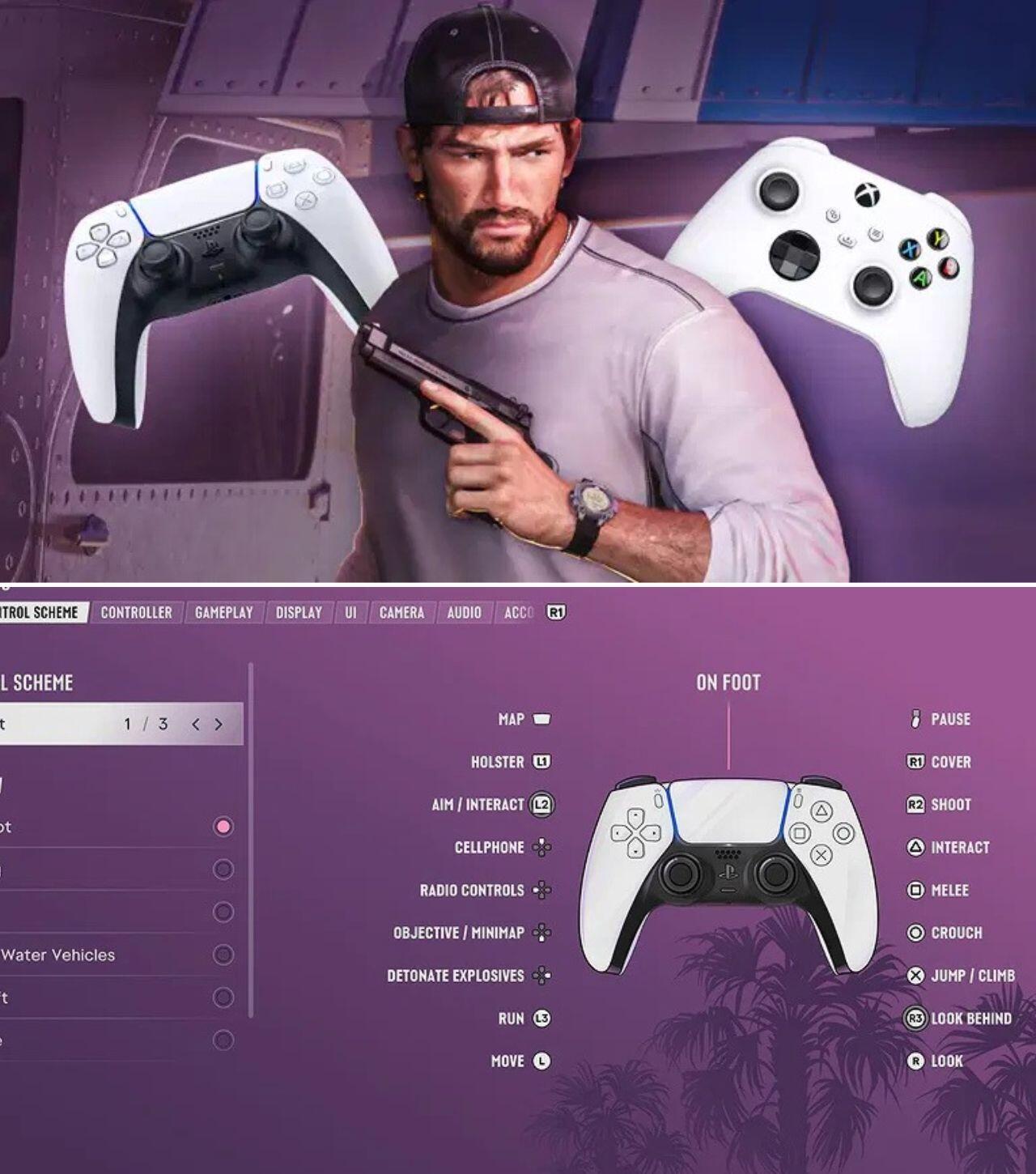
With Grand Theft Auto 6 officially out on PlayStation 5 and Xbox Series X/S, launch-day players are doing more than exploring Vice City and Leonida—they are racing to dial in display, audio, camera, and control settings before getting too deep into the story. Because the game is locked to a 30 FPS frame rate on current-generation consoles and packs dense neon lighting, dark interiors, and bustling city audio, leaving default sliders untouched can leave visuals washed out or drowned out by background noise.
Across setup guides from outlets like BGR, Engadget, and Beebom, alongside active player threads on Reddit (r/GTAVI and r/PS5pro), X, and Discord, a clear consensus has emerged on which console and in-game tweaks matter most—alongside heated debate over motion blur, OLED black levels, and radio volume balance.
Console & TV Display Setup: 4K, ALLM, HGiG, and Killing Motion Smoothing
Before launching into Grand Theft Auto 6, both PlayStation 5 (including PS5 Pro) and Xbox Series X/S guides emphasize locking down system-level video output and TV processing so the screen doesn’t fight the game’s image pipeline.
On PlayStation 5 / PS5 Pro, players are advised to check Settings → Screen and Video → Video Output, ensuring resolution is set to 2160p (4K) or Automatic on a 4K display, HDR is set to On When Supported (rather than forcing HDR onto non-HDR panels), ALLM is set to Automatic, and 120 Hz Output and VRR are kept on Automatic unless a specific display exhibits glitches. On Xbox Series X/S, players should head to Settings → General → TV & Display Options to confirm 4K UHD, enable Allow Auto Low Latency Mode (ALLM), check Variable Refresh Rate (VRR) and refresh rate options under video modes, and verify green checkmarks in the 4K TV Details screen, while also checking Dolby Vision and Dolby Atmos support if their TV or sound system supports them.
Equally important on the television side is disabling artificial soap-opera motion interpolation—often labeled TV Motion Smoothing or frame interpolation—and enabling Game Mode or HGiG (HDR Gaming Interest Group) tone mapping where supported so the display doesn’t apply aggressive dynamic tone mapping on top of console calibration.
HDR Sliders and Dark-Scene Visibility: Avoiding Crushed Blacks or Washed Neon
Because Grand Theft Auto 6 shifts rapidly between sun-drenched beaches, neon-lit nightlife, and dim indoor spaces, HDR and brightness tuning is one of the first adjustments players recommend.
In-game display guides suggest adjusting Peak Brightness until the calibration logo is barely visible—commonly landing around 1,000–1,500 on standard HDR displays and higher on capable OLED or Mini-LED panels—while keeping Paper White moderate (often cited around 40–50, or adjusted to taste) so UI menus and bright lights don’t blow out. Black Level is a particular focal point: OLED users using HGiG often test values around 0 or 15, with some noting that setting black levels too low can crush shadow detail in dark scenes or when reading printed materials like books and magazines, while setting them too high can raise blacks.
Controls, Camera, and Gameplay Tweaks: Aiming, Dead Zones, and Sprint Flow
On the gameplay side, Grand Theft Auto 6 modernizes several longstanding franchise habits—including moving away from classic tap-to-sprint on foot in favor of clicking the left stick by default, while offering alternative control schemes (such as Classic, which swaps run and crouch buttons, or Left-Handed options) under Settings → Control Scheme, alongside Tap Assist options for players who prefer less button mashing.
Players tuning camera and gunplay responsiveness frequently highlight a few practical adjustments:
-
Aiming & Drive-By Assists: Using Partial aiming snap and balanced Aim Assist Strength (around 3/5 as a baseline) helps snap onto targets without locking rigidly onto the wrong threat, while Drive-By Assist helps keep shots on target during vehicle pursuits.
-
Camera Shake & Visual Effects: Turning down Camera Shake and dialing back intense screen-edge status or hit effects can make high-speed driving and chaotic firefights easier to read.
-
Stick Dead Zones & Sensitivity: Tightening stick dead zones slightly (such as 1–2 in settings that support it) and tuning horizontal/vertical look sensitivity to personal comfort helps counter sluggish camera turns on a 30 FPS controller setup.
Audio Balance: Why Players Are Turning Down the Radio
One of the most frequent quality-of-life tweaks shared by launch players isn’t visual at all—it’s turning down the in-game radio. Several players on Reddit noted that default radio volume can overpower engine notes, ambient city noise, and environmental audio, prompting them to lower radio volume by roughly 25%–40% (or drop it to around 4 out of 10 while keeping dialogue and master audio higher) so they can hear car engines and surroundings clearly.
On PlayStation 5, players using compatible headphones or audio setups are also encouraged to configure 3D Audio under Settings → Sound, while Xbox users can verify spatial and Dolby Atmos settings under Settings → General → Volume & Audio Output.
Context: Tuning a 30 FPS Next-Gen Blockbuster
Setting up Grand Theft Auto 6 on PS5 and Xbox reflects a familiar reality of modern console blockbusters: massive visual ambition paired with a locked 30 FPS frame target at launch. While GTA V originally arrived on seventh-generation hardware and later saw 60 FPS performance modes on newer consoles, GTA 6 launches into a console ecosystem dominated by high-refresh OLED TVs, VRR, ALLM, and HDR tone-mapping quirks.
That combination creates a distinct tuning puzzle. Even when a game runs at 30 FPS—where VRR windows on PS5 typically operate above 40 FPS—how a TV handles low latency, tone mapping, and pixel response times dramatically changes how smooth or sharp the game feels in motion.
Community Reaction: The Motion Blur Civil War and Audio Tips
Across Reddit (r/GTAVI and r/PS5pro), X, and Discord, launch-week settings discussions have been lively, with one topic dividing players more than almost any other: Motion Blur.
On one side, many gamers—especially those playing on fast-pixel OLED TVs—report that turning motion blur down or off makes static scenes and camera sweeps look cleaner and less smeared, with some feeling it reduces visual clutter. On the other side, a large group of players and technical observers argue that at 30 FPS, moderate-to-high motion blur (often cited in the 6–10 range on a 10-point scale, or around 1–3 depending on the slider and panel) helps blend frames together and masks OLED 30 FPS judder, with some users noting headaches after turning it off completely and relief after raising it back up.
Meanwhile, players on Reddit and X have swapped practical tips on HGiG vs. Dynamic Tone Mapping, avoiding crushed shadows when reading in-game books and magazines, and lowering radio volume so they don’t miss engine sounds or street details.
Future Outlook: Patches, Digital Foundry Deep Dives, and Custom Profiles
As more players log hours across PS5, PS5 Pro, Xbox Series X, and Xbox Series S, settings advice will continue to evolve alongside frame-time testing from outlets like Digital Foundry and any post-launch stability or audio/display patches from Rockstar Games.
For players jumping in right now, the best approach is to start with clean console and TV fundamentals—4K, ALLM, Game Mode, and calibrated HDR—tweak radio volume if music is drowning out the world, and test motion blur in short stretches to see whether sharper frames or smoother 30 FPS motion blending feels better to your eyes.
Để lại một bình luận