Beijing Just Pulled the Plug on Putin Right on the Tarmac—And the Kremlin Has Nowhere Left to Run. 🚨
Imagine flying into Shenzhen for a historic power summit bragging about “unbreakable friendship” and “sanction-proof growth”… only for Beijing to drop a bombshell export control regime on the exact day your plane touches down. ✈️📉
We’re talking about critical drone engines, radar tech, and military components that Russia desperately needs to keep its war machine running—now locked behind Beijing’s approval gate, shipment by shipment. Worse yet, Kyiv is openly cheering the move while Moscow’s own war bloggers are melting down over being treated like a “junior partner” and a “raw material appendage.”
Wait until you see what happens to Russia’s yuan trade, why 20% middleman fees in Dubai are bleeding Moscow dry, and the shocking truth about how much leverage Xi Jinping actually holds over the Kremlin right now. 👀
Is the “no-limits” partnership officially cracking in plain sight—or is Beijing playing a much colder game?
Read the full breakdown before everyone else is talking about it 👇🔥
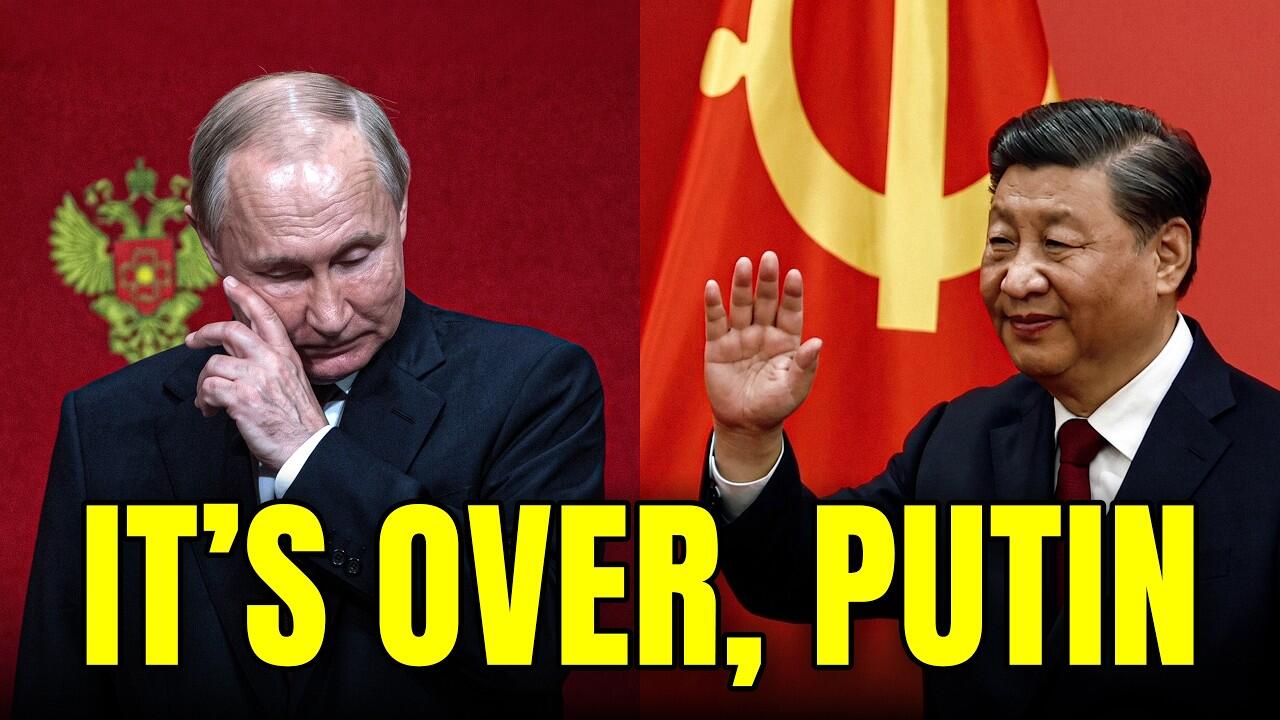
While diplomatic cameras flashed for a headline-grabbing trilateral summit bringing together Russian President Vladimir Putin, Chinese leader Xi Jinping, and U.S. President Donald Trump on November 19, 2026, a far sharper reality was unfolding beneath the polished rhetoric: Beijing has quietly tightened export controls on sensitive components tied to Russian drone warfare, exposing the growing asymmetry between Moscow and its most vital economic lifeline.
According to geopolitical analysis highlighted on the Business Basics YouTube channel and corroborated by recent reporting on the November APEC and Shenzhen diplomatic gatherings, Chinese export control measures taking effect around November 18—coinciding with Putin’s arrival in China—placed stricter licensing requirements on items including jet engines used in Geran attack drones, UAV radio modules, and heavy brushless motors and speed controllers. Rather than an outright public embargo, the regime requires case-by-case government approval for shipments, handing Beijing sweeping discretionary leverage over what leaves Chinese soil for Russia’s defense-industrial supply chain.
For a Kremlin that has spent years touting resilience against Western sanctions, the timing and mechanics of the move raised uncomfortable questions across defense forums, social media feeds, and diplomatic circles. Publicly, Moscow and Beijing maintained the posture of strategic partners navigating a shifting global order alongside Washington. Privately—and increasingly loudly among nationalist commentators—the episode underscored a sobering truth: Russia’s wartime economy and military production rely heavily on Chinese inputs, and Beijing is willing to calibrate that tap according to its own strategic priorities.
The Anatomy of Dependency: Why Beijing Holds the Cards
To understand why a licensing shift on drone components sends shockwaves through Russian commentary, analysts point to the dramatic restructuring of Russia’s foreign trade since the full-scale invasion of Ukraine entered its fifth year. Before the war, Russia’s export and import relationships were far more diversified, with roughly half of Russian exports once directed toward European markets and around 14 percent going to China, alongside roughly 20 percent of imports originating from China.
That balance has shifted dramatically. Data cited in recent economic breakdowns indicates that China now accounts for roughly 35 to 40 percent of Russian exports—while European share has fallen below 10 percent—and supplies nearly 40 percent of Russia’s imports. Even more consequential than overall trade totals are the figures governing industrial and military inputs: estimates cited in the Business Basics analysis indicate that China supplies roughly 80 percent of Russia’s critical drone electronics, around 70 percent of its industrial machine tools, and up to 90 percent of the sanctioned Western-origin technology reaching Russia.
When supply chains become that concentrated, an export control rule does not need to be framed as a hostile break to bite. Requiring permission for each transaction shifts power from buyer to gatekeeper. As Russia adapted earlier in the conflict by deploying faster, jet-powered variants of its Geran one-way attack drones to evade air defenses, access to specialized propulsion and control hardware became a key battleground in itself. Any friction in obtaining engines, motors, or avionics modules complicates production schedules and forces procurement networks to jump through bureaucratic hoops.
At the same time, observers note an asymmetric opacity in how Beijing exercises such leverage. When China has restricted exports in disputes with Western nations or regional neighbors—such as over rare earths or trade friction—affected companies and governments often speak out publicly. In dealings with Moscow, analysts note that Russian officials and firms have strong incentives to avoid public confrontation over denied permits, fearing retaliation or damage to a lifeline they cannot easily replace. Conversely, when Beijing grants approvals, it rarely advertises them.
Ukrainian Diplomacy and a Shifting Drone Supply Chain
One of the sharpest twists in the November coverage came from Kyiv’s sanctions apparatus. Vladyslav Vlasiuk, highlighted in the video as Ukraine’s sanctions commissioner and presidential adviser, welcomed Beijing’s enforcement of export controls on drone-related items starting November 18, noting comparisons between restricted categories and components identified in Russian Geran drones, missiles, and reconnaissance UAVs. At the same time, Ukrainian officials pointed out gaps—such as anti-jamming antennas, navigation modules, gimbal cameras, and servos—while stating they had shared manufacturer data with the Chinese side and expected rigorous enforcement.
That dynamic puzzles casual observers who assume Kyiv and Beijing exist in permanent hostility. In reality, Ukraine’s posture toward China has blended sharp criticism—such as over diplomatic stances, peace initiatives, or reports of Chinese nationals fighting alongside Russian forces—with pragmatic outreach aimed at curbing material support to Moscow’s war effort and encouraging Chinese pressure for an end to hostilities.
Meanwhile, the drone war itself is undergoing a structural shift on the Ukrainian side as well. While Ukraine has historically relied on Chinese components for many UAV builds, that dependence has been trending downward—cited in the analysis at around 38 percent and falling year over year—as domestic manufacturers build out supply chains free of Chinese parts. Reducing reliance on Chinese hardware is not merely a technical exercise; it helps unlock Western and private American defense investment sensitive to supply-chain security, even as both sides race to scale production to tens of thousands of drones across vast front lines.
Currency Friction, Sanctions, and the 20 Percent Middleman Tax
The friction over hardware mirrors a broader reality in cross-border finance: the dream of effortlessly replacing the U.S. dollar in Russia-China commerce has run into hard banking math.
Following sweeping Western sanctions and Russia’s exclusion from key SWIFT messaging channels early in the war, Moscow leaned heavily on the Chinese yuan to settle trade and bypass dollar bottlenecks. Because global exporters sell goods to China, the yuan offered greater utility than the ruble, which faces limited international appetite outside bilateral trade loops where counterparties also want Russian goods. Use of the yuan in Russian trade climbed steadily into 2024, reaching an estimated peak around 22 percent.
Then Washington tightened secondary sanctions risk around banks facilitating war-related trade, broadening exposure even for institutions that claimed ignorance of end-use support. For major Chinese banks, the calculus was straightforward. Even as bilateral trade with Russia looms large for Moscow, Russia represents only a small slice—roughly 2 to 3 percent—of China’s total exports, whereas the vast majority of Chinese trade depends on global markets and dollar-linked finance. Protecting access to global finance outweighed the risks of clearing dubious Russian transactions, prompting tighter compliance and pullbacks by Chinese lenders.
The result has been a return to complex, costly workarounds. Analysts and trade watchers describe Russian exporters and importers relying more heavily on rubles and overseas intermediaries—frequently routing funds through hubs such as Dubai—to match payments and clear settlements indirectly. Those intermediaries shoulder steep compliance and sanctions risks, extracting hefty fees that Business Basics notes can reach up to 20 percent on certain transactions, while leaving a portion of export proceeds tied up abroad rather than flowing freely back into domestic investment. Far from dethroning the dollar, the episode highlighted how difficult it is for sanctioned economies to build frictionless alternatives overnight.
Shenzhen’s Big Stage and a Crowded Geopolitical Map
The export-control story landed amid an extraordinary convergence of high-stakes diplomacy in mid-to-late November 2026. In Shenzhen, Xi Jinping hosted Trump and Putin for a rare trilateral meeting alongside APEC diplomacy, producing a broadly worded joint “Declaration toward Peace” that emphasized energy supply stability, nuclear risk dialogue, state consent, and opposition to perceived overreach by bodies like the International Criminal Court—while conspicuously omitting binding breakthroughs on the war in Ukraine, the conflict involving Iran, or Taiwan.
For Washington, the talks followed the February 2026 expiration of the New START nuclear arms treaty and unfolded amid domestic political crossfire, ongoing Middle East tensions, and a fragile U.S.-China trade truce facing a January 2027 deadline. Trump framed the trilateral encounter as historic and argued for engaging rivals directly on nuclear risks and global conflicts, even as his warm personal remarks toward Putin drew sharp pushback from European leaders such as Poland’s Donald Tusk and Denmark’s Mette Frederiksen. For Beijing, hosting the trio projected diplomatic centrality while keeping China’s own commitments measured and avoiding direct entanglement as a guarantor in foreign wars.
Community Reaction: War Bloggers Seethe, Reddit Debates “Junior Partner” Status
Across online communities, the collision of summit optics and export restrictions sparked fierce debate—though reactions split sharply depending on where users sat.
On Russian military and nationalist Telegram and war-blogger channels cited in the video, frustration was palpable. Commentators argued that Beijing’s trade restrictions amounted to an “export stop list” for Russia’s defense industry—pointing specifically to manufacturing hubs such as Alabuga in Tatarstan—and complained that Moscow was being squeezed just as it sought to appease Washington or keep key supply lines open. To those voices, welcoming Putin with diplomatic formalities while choking off dual-use hardware felt like a sharp reminder of Russia’s vulnerability when Beijing prioritizes broader geopolitical deals.
Western and geopolitical forums on Reddit—including threads across r/UkrainianConflict and r/geopolitics around the Shenzhen summit—echoed skepticism about what the meeting actually achieved versus what it symbolized. Many users dismissed the trilateral summit as heavy on spectacle and light on binding commitments, arguing that Moscow wanted status parity at the table, Washington pushed for broader nuclear and strategic framing, and Beijing preferred to manage competition on its own terms without surrendering leverage. Commenters frequently debated whether Russia had slipped into a “junior partner” role vis-à-vis China, while others pointed out historical friction between Chinese nationalists and Russia over past territorial disputes, alongside ongoing arguments over U.S. policy toward Ukraine, Europe, and Iran.
On X and YouTube, clips and commentary around the Shenzhen meeting and export controls drew intense engagement from viewers tracking sanctions evasion, drone warfare, and great-power bargaining, with lively arguments over whether Beijing’s move represents a genuine tightening against Moscow’s war machine or a calculated adjustment designed to placate trading partners without severing ties.
What Comes Next? Scenarios for Moscow, Beijing, and Washington
Looking ahead from late November 2026, several fault lines will determine whether Beijing’s export controls mark a turning point or a tactical recalibration:
-
Enforcement vs. Workarounds: The practical impact of China’s licensing regime will depend on how strictly authorities scrutinize applications for engines, motors, radars, and dual-use electronics—and whether Russian buyers can route shipments through third countries, shell firms, or alternative suppliers.
-
The U.S.-China Trade Clock: With bilateral trade arrangements facing a January 2027 expiration window and broader negotiations ahead of future summits, Beijing’s willingness to show restraint on sensitive exports will remain closely tied to how Washington manages tariffs, tech disputes, and diplomatic pressure.
-
War Fatigue and Winter Pressure: As winter strains infrastructure and forces both Ukraine and Russia to sustain high-tempo drone and missile operations, any bottleneck in propulsion or electronics—paired with costly currency and payment friction—adds pressure on Moscow’s industrial planning.
-
A More Transactional Axis: Rather than an unconditional alliance or an open rupture, relations between Moscow and Beijing appear increasingly transactional. China retains deep economic and strategic reasons to keep Russia stable and useful as a counterweight, yet has shown little appetite to let Russian vulnerabilities drag Chinese banks or exporters over a cliff.
For now, the images from Shenzhen tell one story—leaders trading carefully worded statements under diplomatic spotlights—while export ledgers, customs clearances, and war-blogger feeds tell a much more complicated one about who really calls the shots when powers collide.
Để lại một bình luận