A Russian Warship Just Turned Into a Submarine 1,500 Miles From Ukraine—And Everyone Is Asking Who Helped Pull It Off. 🚨🌊
First, Libyan officials claimed a massive port explosion in Benghazi was “just an accident.” 24 hours later, Kyiv dropped the truth bomb—and satellite photos told the real story. 💥
A brand-new Russian corvette allegedly worth hundreds of millions—built for the Black Sea Fleet yet never even making it there—was hammered by unmanned drones alongside a weapons-linked cargo ship, while another Russian logistics vessel burned in the Gulf of Finland and air defenses lit up Kaliningrad.
Hold on… how do naval drones strike off Libya without a nearby launchpad? Who really backed the move in a divided country where rival factions, Turkey, and Moscow all have skin in the game? And why did one side’s “accidental blast” story collapse overnight? 👀
Don’t fall for the spin—get the full breakdown of what just blew up and who’s sweating next 👇🔥
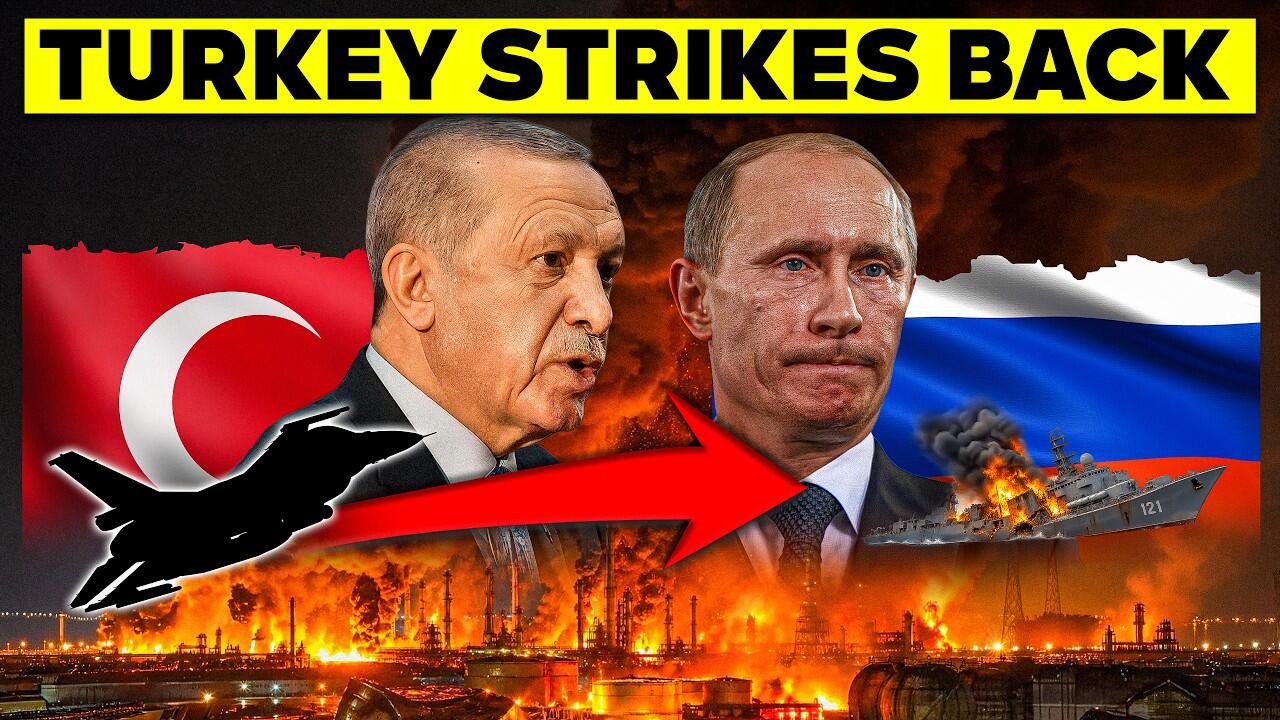
A fiery explosion lit up the port of Benghazi over the weekend, initially dismissed by local authorities as an accidental ammunition depot blast before satellite imagery and Kyiv’s public acknowledgment pointed to a far more dramatic reality: a coordinated, long-range strike that sank or severely damaged a modern Russian naval vessel roughly 1,500 miles from Ukraine’s frontline.
The strike off Libya unfolded alongside a turbulent weekend for Russian maritime and border operations in late November 2026, including a drone strike on a sanctioned Russian military-linked cargo vessel in the Gulf of Finland, air-defense activity around the Baltic exclave of Kaliningrad, and unverified online claims of border movement near Kursk. Together, the developments—examined in a Business Basics video analysis and corroborated across international news reports, defense trackers, and U.N. diplomatic exchanges—highlight how the war has stretched far beyond the Black Sea and eastern Ukraine.
At the same time, the strikes have fueled intense speculation across defense circles, social media channels, and geopolitical forums over regional alignments in North Africa and the Mediterranean, including the complex web of interests involving Moscow, Kyiv, Ankara, and rival factions in Libya.
Fireball in Benghazi and the “Accident” That Didn’t Hold
Early accounts from Benghazi—located in eastern Libya, controlled by forces aligned with Field Marshal Khalifa Haftar’s Libyan National Army—described a sudden, massive explosion and fire near the port, captured on bystander video and followed shortly by satellite imagery showing a capsized or heavily damaged vessel alongside the pier. Initially, statements attributed to Libyan authorities sought to frame the incident as an accidental blast rather than an external military attack.
That narrative unraveled within roughly 24 hours when Ukrainian President Volodymyr Zelenskyy and Ukraine’s Security Service (SBU) publicly claimed responsibility for the operation. According to Ukrainian officials and reporting from outlets including The Guardian and Naval News, the SBU deployed seven domestically produced unmanned surface drones launched from a mothership to strike targets off Libya, hitting the Russian Navy corvette Merkury—a vessel commissioned during the war—as well as destroying a Ka-27 helicopter and striking the dry cargo vessel MV Angara, which Kyiv accused of transporting weapons.
Russian officials and eastern Libyan authorities pushed back sharply on the characterization and scope of the raid. Moscow’s U.N. mission condemned the strikes as “terrorist” acts that risked spilling conflict into North Africa, while reporting noted claims that air or coastal defenses engaged incoming drones and intercepted several of them. Even where accounts diverge on interception counts or exact damage assessments, satellite views of the vessel in Benghazi’s harbor underscored the seriousness of the hit for a navy that has already absorbed heavy losses in the Black Sea over the course of the war.
In the Business Basics breakdown, host Sam noted the striking cost asymmetry of modern naval warfare: a modern corvette represents a major capital investment—often estimated in the hundreds of millions of dollars—while a handful of unmanned surface vessels costs a tiny fraction of that sum. Analysts also pointed to the irony that a ship associated with Black Sea Fleet planning was operating far away in the Mediterranean after Turkish closure of the Turkish Straits to belligerent warships under the Montreux Convention limited movements between the Black Sea and outside waters.
The Libya Puzzle: Factions, Bases, and Regional Motives
Beyond the tactical mechanics of the Benghazi strike, much of the online and analytical debate has centered on how such an operation was pulled off so far from Ukrainian territory—and whether any regional actor played a direct or indirect role.
Libya has long been fractured between a U.N.-recognized administration in Tripoli and the eastern authorities in Benghazi backed by Haftar, who has maintained ties with Moscow while drawing scrutiny from Western observers over his own decades-long history in the United States. Russia has sought to expand its footprint in North Africa and the Sahel, using eastern Libya as a logistics hub and viewing Mediterranean ports as potential alternatives or supplements to strained positions elsewhere in the region.
In Business Basics, Sam laid out a circumstantial theory examining why regional dynamics invite speculation—while stressing repeatedly that no public proof confirms direct involvement by Ankara or the Tripoli side. The argument traces several overlapping pressures:
-
Competing Mediterranean footprints: Turkey has backed the Tripoli government against Haftar’s forces in past fighting and has long opposed expanding Russian military influence in its neighborhood, from Crimea to Syria. With Russian logistics in Syria facing pressure, observers note that any Russian naval foothold in eastern Libya would touch sensitive Mediterranean security calculations.
-
Drone proliferation and diplomatic caution: Bayraktar TB2 drones—built by Turkish defense firm Baykar—have been exported to multiple countries, including Ukraine and factions in Libya, meaning the appearance of such systems or regional speculation does not by itself prove state-sponsored complicity. When eastern Libyan figures alleged drones originated from western Libya, Ukraine’s SBU maintained the strike drones came from a mothership, a statement analysts suggested could also reflect a desire to avoid drawing diplomatic heat onto friendly actors.
-
Transactional ties with Moscow: At the same time, Ankara has maintained significant trade and energy links with Russia and has not joined Western sanctions regimes, underscoring that Turkey’s policy toward Moscow is shaped by balancing act and national interest rather than wholesale confrontation.
From the Gulf of Finland to Kaliningrad: A Wider Maritime Front
Libya was not the only maritime flashpoint in the weekend news cycle. In the Gulf of Finland—a narrow stretch of the Baltic Sea bordered by Finland, Estonia, and Russia—drones struck the cargo vessel Sparta II (also spelled Sparta 2), a ship linked to Russian defense logistics and subject to Western sanctions.
According to Finnish authorities and reports from Al Jazeera, Marine Insight, and The Guardian, the strike occurred in international waters west of Gogland Island before the burning vessel drifted toward Finnish territorial waters and anchored. Finnish coast guard and border authorities coordinated firefighting and monitoring efforts to prevent environmental harm while allowing the crew to be evacuated and the vessel to be towed away after fires were brought under control, even as Finnish officials noted a suspected Russian airspace violation by a helicopter and reiterated that the war’s fallout was reaching closer to Finland’s neighborhood.
Hours later, attention shifted further down the Baltic coast to Kaliningrad, the heavily militarized Russian exclave wedged between NATO members Poland and Lithuania and home to key Baltic Fleet facilities. Air defenses and alerts were reported around Baltiysk and border areas, sparking conflicting claims online. Kaliningrad officials mentioned a suspicious object near the Lithuanian border that air defenses assessed posed no threat, while Lithuania’s foreign ministry categorically denied any use of Lithuanian airspace for attacks on Russian targets. Independent assessments such as the Institute for the Study of War (ISW) noted air-defense activation in Baltiysk around November 21 while cautioning that many details of reported strikes remained unconfirmed, and Ukrainian officials did not claim credit for every reported incident there.
Meanwhile, along the Russia-Ukraine border in Kursk Oblast—site of Kyiv’s major August 2024 cross-border incursion—social media posts circulated over the weekend claiming Ukrainian forces had broken through near the settlement of Novyi Put. However, Ukraine’s 8th Air Assault Corps refuted claims of a new border breakthrough or village capture there, illustrating how quickly unverified battlefield rumors spread during high-tempo information cycles.
Community Reaction: War Bloggers, Reddit, and X Clash Over Escalation
Across online communities, the combination of long-range maritime strikes, Baltic jitters, and conflicting official statements triggered lively debate across distinct audiences:
-
Russian Military & Nationalist Channels: Pro-war commentators and Telegram channels reacted angrily to the loss of naval hardware and logistics capacity, questioning air and naval defenses while blasting what they viewed as expanding reach by Ukrainian forces into distant theaters like Libya and the Baltic. Many focused on the vulnerability of supply ships feeding Russian operations abroad, including logistics tied to Africa.
-
Reddit (
r/UkrainianConflict,r/geopolitics,r/CredibleDefense): Users dissected satellite imagery of the Merkury in Benghazi, debated whether unmanned surface vessels could transit or operate via motherships in the Mediterranean without detection, and argued over whether long-range maritime strikes meaningfully degrade Russian power projection or merely stretch defense resources across more fronts. Skepticism was high toward unconfirmed Kursk border claims until official or geolocated evidence emerged. -
X and YouTube Commenters: Clips of the Benghazi blast, Sparta II firefighting footage, and Business Basics’s deep dive drew heavy engagement. Viewers traded theories on Mediterranean intelligence, questioned why Sparta II was towed out rather than seized, and debated whether strikes so far from the front lines bring negotiations closer or harden positions in Moscow and Kyiv.
What Comes Next? Scenarios for the Months Ahead
As the conflict grinds on amid winter conditions and parallel diplomatic tracks—including U.N. debates over maritime and energy strikes and talks involving U.S., European, Ukrainian, and Russian officials—several key dynamics bear watching:
-
Long-Range Asymmetric Reach vs. Escort Defenses: Ukraine’s ability to project unmanned systems into the Baltic and Mediterranean—and Russia’s push to adapt air defenses, escorts, and port security—will shape how costly it is for Moscow to move military and dual-use cargo outside the Black Sea.
-
Mediterranean & African Supply Lines: With Black Sea container routes heavily disrupted and port security tested far afield, how Russia sustains logistics links to North Africa and sub-Saharan partners—and how regional powers like Turkey and neighboring states respond—remains a major strategic question.
-
NATO Spillover Risks: Every drone incident near Baltic waters, Kaliningrad, or neighboring airspace raises the stakes of miscalculation or accidental spillover, keeping Nordic and Baltic states on high alert even as governments seek to avoid direct military escalation.
-
Diplomacy Under Fire: Whether ongoing diplomatic efforts can produce concrete constraints on maritime and infrastructure strikes—or whether escalating tit-for-tat raids continue to set the pace on the ground and at sea—will define the next phase of the crisis.
Để lại một bình luận