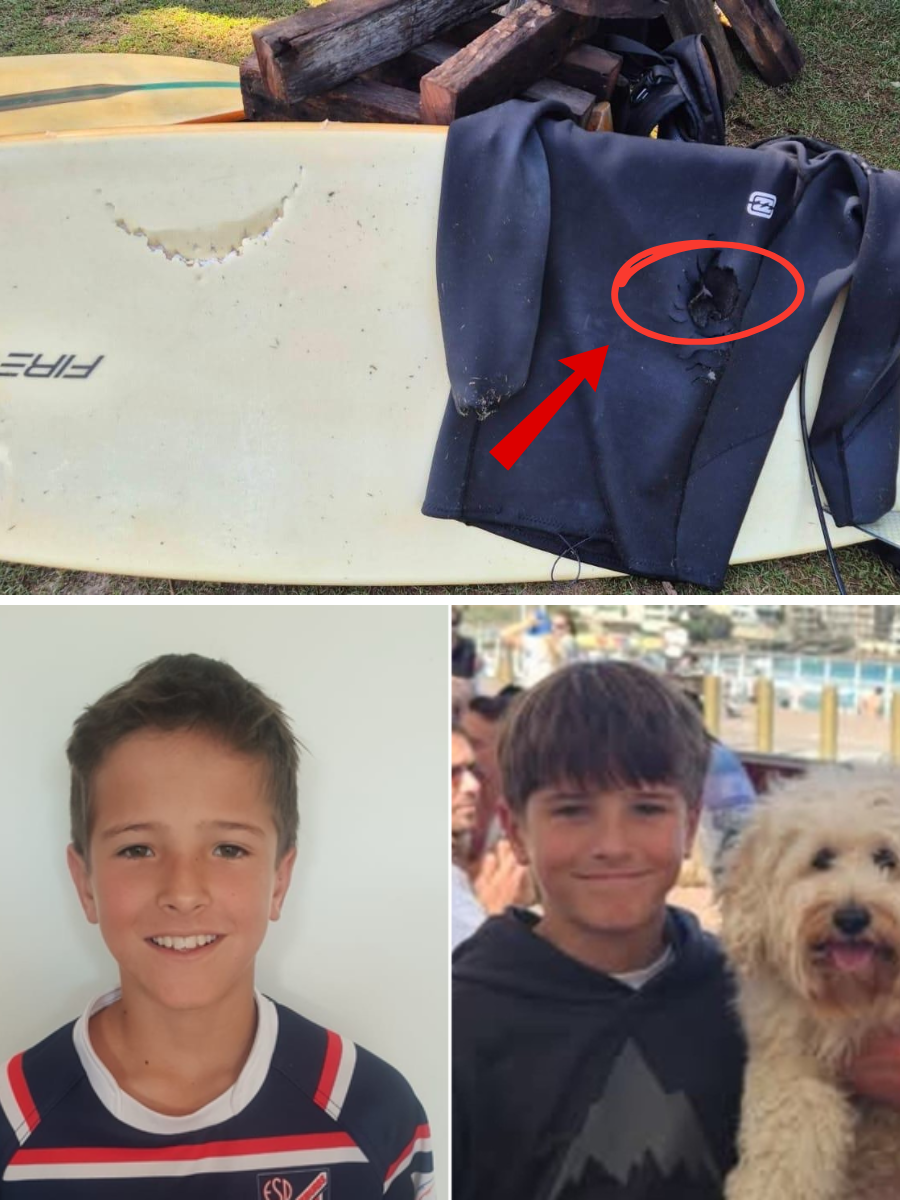
A 12-year-old Australian boy who had been clinging to life after a shark attack last week died from severe injuries suffered when a suspected bull shark took a single bite while he was swimming in the famous Sydney Harbour.
Nico Antic was cliff-jumping with two friends at Jump Rock near Shark Beach in the Sydney suburb of Vaucluse just before 4:20 p.m. local time on Jan. 18 when he entered the water outside the area protected by anti-shark nets.
The enclosures are physical barriers designed to reduce the chances of large sharks entering designated swimming areas.
While in the water, Nico was bitten once by the shark on both legs, causing catastrophic injuries and massive blood loss. Authorities said major tissue and blood vessels were severed by the vicious bite.
Immediately after the attack, one of Nico’s friends jumped into the water and pulled him toward the rocks.
Another friend helped lift Nico onto a rock platform as emergency responders rushed to the scene.
Police and emergency crews applied tourniquets in an effort to stem the bleeding before transporting Nico by boat to a nearby ferry wharf.
An ambulance then rushed him to the hospital, where he received a blood transfusion during transport after the tourniquets proved insufficient to stop the blood loss.
Within hours, Nico underwent emergency surgery at Sydney Children’s Hospital in Randwick and was placed into a medically induced coma.
He remained in intensive care for days in critical condition. Doctors kept him on life support, administered additional transfusions and performed brain surgery in an effort to relieve swelling and bleeding.
By Saturday, Nico was declared brain-dead due to complications from his injuries. His family later made the decision to withdraw life support.
“We are heartbroken to share that our son, Nico, has passed away,” his parents, Lorena and Juan, said in a joint statement.

“Nico was a happy, friendly, and sporty young boy with the most kind and generous spirit. He was always full of life and that’s how we’ll remember him.
“We would like to sincerely thank the first responders and the teams at Sydney Children’s Hospital, Randwick for everything they did to care for Nico.
“We would also like to thank everyone in the community for their support and kind messages.”
A GoFundMe campaign that was launched to help the family has raised more than $270,000 as of Sunday.

Marine experts said the shark involved was suspected to be a bull shark — a species known to frequent Sydney Harbor, which can grow up up to 11 feet in length and 290 lbs.
Bull sharks also have the strongest bite force of any shark in the world.
Dozens of beaches in the Sydney area were closed in the immediate aftermath of the attack.
Authorities and scientists pointed to extreme weather conditions the day before the attack that may have increased the risk.
Sydney was hit with just under five inches of rain on Jan. 17 — the wettest January day since 1988 — flushing large amounts of fresh, dirty water into the harbor and drastically reducing visibility, according to official records.
Professor Rob Harcourt of Macquarie University said bull shark bite risk is “tightly linked to freshwater inflows,” explaining that murky, brackish water creates ideal hunting conditions and increases the likelihood of an “investigatory bite” when sharks mistake humans for prey.
Để lại một bình luận