A 26-year-old Russian army officer inside the ranks reportedly helped feed intel that cost over 300 soldiers—and walked right past investigators without getting caught 😱🔥
Commanders kept moving troops and blaming phones, never realizing their own communications officer had the exact timing and locations they needed—and an excuse ready seconds before missiles hit.
How did a single lie about a stomach ache keep him alive right under their noses? What password got him across the lines in the dark—and why did he join the fight on the other side instead of running? 👀
See how the whole double life unfolded and what happened next 👇
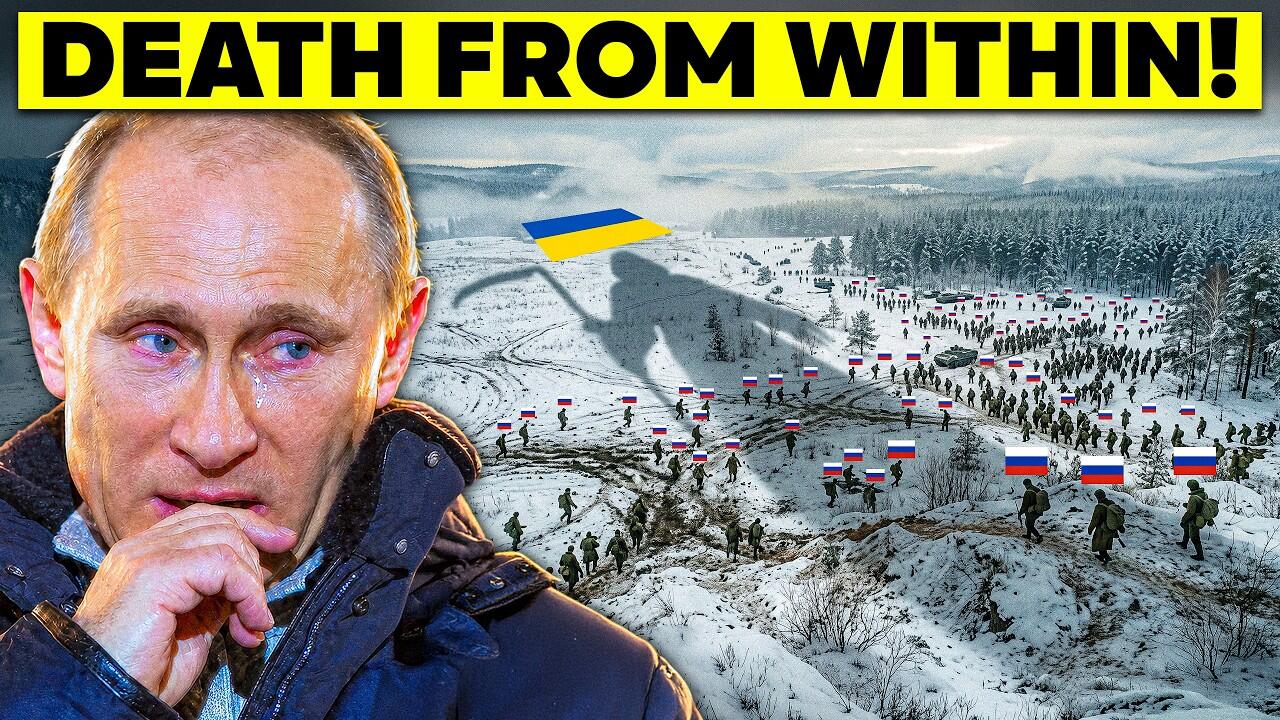
A Wall Street Journal profile of a former Russian communications lieutenant details months of alleged espionage, a deadly field strike, a midnight escape across minefields, and a family reunion out of Russia.
For months in 2024, Russian commanders pushing into eastern Ukraine grew increasingly frustrated by precision strikes hitting troops, gatherings, and positions they believed were secure. Units rotated and relocated, yet incoming fire still arrived at critical moments.
According to a Wall Street Journal report featuring an interview with 26-year-old former Russian communications officer Lev Stupnikov, part of that intelligence leak came from inside Russia’s own military ranks. Stupnikov claimed his actions over roughly five months in 2024 helped Ukrainian forces target operations that resulted in more than 300 Russian casualties—including a strike on a field gathering that killed dozens of troops and senior officers—before he crossed over to Ukrainian lines in July 2024.
Independent verification of every operational detail in wartime espionage accounts is inherently difficult, and Russian authorities have not publicly corroborated his claims. Still, the account—along with the subsequent departure of Stupnikov’s mother and younger sister from Russia in early 2025—has drawn widespread attention from military observers, intelligence analysts, and online communities watching how internal dissent and counterintelligence play out inside the conflict.
From Military Academy to the Front Lines
According to the Wall Street Journal account, Stupnikov was born in Kazakhstan and raised in the Siberian city of Omsk after his family relocated. He went on to attend the Budyonny Military Academy of Telecommunications in St. Petersburg—a pipeline meant to build a career in military communications.
Instead, Stupnikov told the Journal that years inside the military system soured him on its culture, pointing to corruption and harsh treatment within the ranks. His mother, Tatyana Yansen, also opposed the Kremlin’s war policies, creating a household deeply skeptical of the invasion long before Stupnikov was deployed to Ukraine in November 2023 as part of efforts to replace heavy losses in the east.
By that point in the war, walking away from service carried severe legal penalties under tightened Russian laws on desertion and refusal of orders. Rather than simply abandoning his post and risking years in prison, Stupnikov’s mother sought outside help to get her son out of the war zone, reportedly connecting through YouTube in February 2024 with Dmytro Karpenko, a Ukrainian programmer assisting Ukrainian intelligence outreach to Russian personnel.
According to the report, Stupnikov agreed to pass information without seeking payment, framing his decision around personal opposition to the invasion rather than financial reward.
An Insider’s Window Into Movements and Timing
As a communications lieutenant in Russia’s 36th Separate Guards Motor Rifle Brigade—a unit originally tied to Russia’s Eastern Military District—Stupnikov sat inside information flows linking troops and commanders.
In modern artillery and missile warfare, knowing a general grid square is often not enough if a unit is moving or dispersing. Officers who handle troop coordination, schedules, and communications can offer context on when personnel will gather and where they are heading. Stupnikov told the Journal he passed location and movement details to Ukrainian contacts, photographed sensitive materials, and reportedly sabotaged equipment while continuing his regular duties.
The sharpest flashpoint described in the account occurred in February 2024, when more than 100 Russian officers and soldiers assembled in an open field in eastern Ukraine for a training event attended by senior commanders, including brigade leadership. Stupnikov claimed he photographed the gathering and transmitted details to Ukrainian intelligence, then feigned stomach illness to slip away shortly before incoming strikes hit the site, causing heavy casualties among troops and officers.
In the aftermath, Russian security services—including the Federal Security Service (FSB)—scrutinized the strike, questioning personnel and checking phones for signs of leaks. Stupnikov claimed he helped with evacuation efforts, pretended to have a concussion, and buried the phone used for his outside contacts in the ground while turning over another device during checks.
The July Escape and a New Front
By mid-2024, the pressure around Stupnikov grew tighter. He described a commander making pointed remarks about a traitor in the ranks while looking directly at him, alongside a shrinking circle of fellow officers in his battalion due to casualties and transfers.
With his Ukrainian contacts helping coordinate an extraction through channels tied to Ukraine’s “I Want to Live” surrender initiative, Stupnikov made his move on the night of July 6, 2024. Guided by GPS coordinates and drone oversight, he navigated contested terrain, mine hazards, and damaged armor to reach Ukrainian positions, using a prearranged password—translated in reports as “peanut shop”—to identify himself without drawing fire. He also claimed he carried a device capable of viewing live feeds from Russian drones and cameras.
The defection carried steep personal costs. Stupnikov told the Journal his wife rejected his actions as a betrayal and did not join him, while returning to Russia was out of the question—and staying safe abroad was no guarantee, given high-profile cases such as the February 2024 killing in Spain of former Russian pilot Maxim Kuzminov, who had flown a Mi-8 helicopter to Ukraine in 2023.
Rather than retreating from the conflict, Stupnikov joined the Russian Volunteer Corps, an armed unit of Russian nationals fighting on the Ukrainian side. In February 2025, his mother and younger sister traveled out of Russia via Moldova into Ukraine to reunite with him in Kyiv—where his mother asked why he was still fighting now that he was out of the Russian army, and he answered that he felt a personal responsibility to help stop a war he believed his government had wrongly started.
What the Community Is Saying: Reddit, X, and Defense Forums
Stupnikov’s story has sparked vigorous discussion across online forums, social media feeds, and defense-focused communities, where readers have weighed both the human drama and the operational questions it raises.
On Reddit—including communities such as r/RussiaUkraineWar, r/UkraineWarVideoReport, and r/europe—many users focused on counterintelligence and operational security. Commenters noted how a single insider with access to schedules and unit movements can undermine strict phone bans or movement drills, while others pointed out that defectors’ accounts often highlight dramatic escapes while leaving broader battlefield attrition and intelligence-gathering methods in the background.
On X (formerly Twitter), Telegram channels, and OSINT (open-source intelligence) circles, reactions split between skepticism and validation. Some analysts and commentators stressed that casualty figures and specific strike attributions claimed by defectors or wartime parties should be cross-checked against independent reporting and official records, while others argued the episode illustrates how prolonged trench and drone warfare—coupled with domestic political strain—can create vulnerabilities inside military units even when security services clamp down after major strikes.
What Happens Next?
Episodes like Stupnikov’s account point to several ongoing dynamics to watch as the war continues:
-
Counterintelligence vs. morale: How Russian commanders balance strict security checks, device confiscations, and loyalty pressure against the strain of high turnover and heavy front-line losses.
-
Insider recruitment and defection channels: Whether Ukrainian intelligence and allied networks continue drawing useful leads from disaffected personnel, or face tighter vetting and harsher internal surveillance from Russian security agencies.
-
The fate of Russian anti-war volunteers: How units made up of Russian citizens fighting alongside Ukrainian forces are integrated into future operations, and what security risks they and their families face.
Whether viewed as a cautionary tale about operational security inside a modern war or a rare personal account of defection and family separation, the story underscores that even in a conflict dominated by satellites, drones, and artillery, human choices inside the ranks can still shape what happens on the battlefield.
Để lại một bình luận