Three Russian cruise missiles just crossed into Polish territory in a single night—and Warsaw is pushing a move NATO has avoided since day one 😳🔥
Polish officials say the missiles weren’t a random slip-up—they were a deliberate test of NATO’s nerve. Now Poland is floating the idea of shooting Russian missiles down while they’re still over Ukraine if they’re headed toward Polish soil, drawing up a new border no-fly zone, and calling out Moscow’s war claims in blunt terms.
Did Putin just miscalculate Warsaw’s reaction—or is a real clash over the border edging closer than people think? And why are allies split on what happens next? 👀
Get the full breakdown and what Warsaw is proposing right now 👇
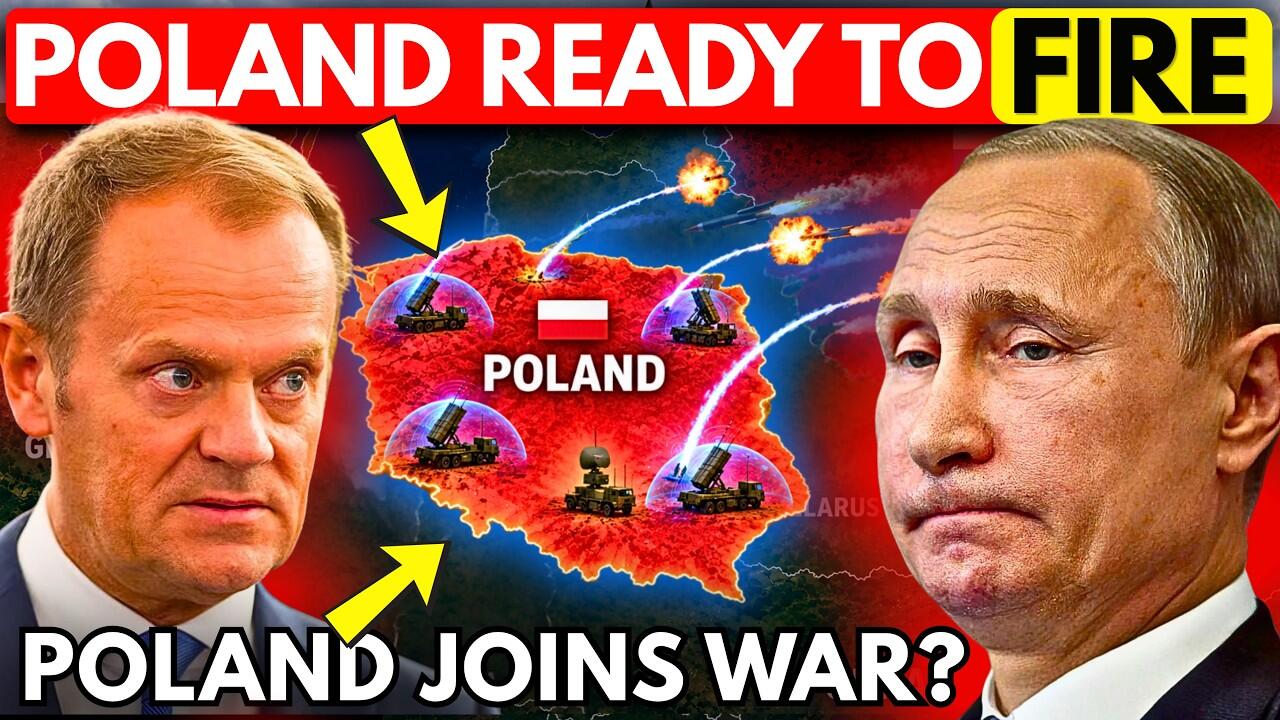
After three Russian Kh-101 cruise missiles came down in southeastern Poland during a massive wave of strikes on Ukraine, Polish leaders pressed NATO to weigh intercepting incoming threats over Ukrainian airspace and moved to establish a new restricted zone along the eastern border.
A tense new flashpoint along NATO’s eastern flank is forcing Western allies to confront an old taboo: whether air defense should remain strictly bounded by national borders or extend into neighboring airspace when missiles are heading toward alliance territory.
Following a heavy overnight Russian missile and drone barrage against Ukraine on November 19–20, 2026, three Russian Kh-101 cruise missiles crossed into Polish airspace and landed at separate locations in southeastern Poland, including near the town of Rudnik nad Sanem, without causing reported injuries. Days later, on November 23, a Russian surveillance drone reportedly entered Polish airspace briefly before departing, while Polish officials summoned Moscow’s ambassador to deliver a formal protest.
While Warsaw has not declared war or sought direct combat intervention in Ukraine, Polish diplomats and defense officials have moved quickly to shift the terms of the debate—proposing that allies consider shooting down Russian missiles still over Ukraine if they are bound for Poland, preparing a restricted no-fly zone along the eastern border, and arguing that Russia’s own battlefield claims are faltering.
What Happened Over Poland and Why Warsaw Views It as a Test
According to Polish officials, investigators identified the three munitions as Kh-101 air-launched cruise missiles—long-range, terrain-hugging weapons fired by Russian strategic bombers that are designed to evade radar and strike deep targets. Polish Justice Minister Waldemar Żurek said the missiles were manufactured near Moscow in the third quarter of 2026 and argued they were not stray accidents, but a deliberate effort to test Poland and NATO.
Ukrainian Ambassador to Poland Vasyl Bodnar added that Polish air defenses had closed airspace ahead of the barrage and tracked the incoming threats, making the three landings on Polish soil especially galling in Warsaw. Russia’s diplomatic envoy, summoned to Poland’s foreign ministry on November 24, denied accusations of a deliberate missile incursion—a pattern of denials that Polish officials ridiculed as routine deflection when caught red-handed.
The incident also revived memories of earlier border scares, including the November 2022 incident in Przewodów in which two men were killed by a stray air-defense missile during a Russian strike wave, as well as an earlier Kh-101 impact in a Polish field in July 2026. This time, however, three missiles in a single night—followed by a drone incursion—prompted sharper public pushback from Warsaw rather than quiet containment.
Sikorski’s Self-Defense Argument and the New Border Zone
At NATO headquarters in Brussels during ambassadorial discussions on November 23, Poland reportedly urged allies to examine intercepting Russian missiles while they are still over Ukraine if their trajectory threatens NATO territory.
Two days later, Polish Foreign Minister Radosław Sikorski took the case to Polish public radio, framing potential interceptions over Ukraine—at Kyiv’s request—as a matter of self-defense rather than offensive escalation. Under Sikorski’s framing, if a missile flying toward Poland can be intercepted earlier over Ukrainian territory with Ukraine’s consent, that action serves to protect Polish territory and lives. At the same time, Sikorski acknowledged practical hazards, noting that shooting down a missile does not eliminate falling debris and requires careful military and allied deliberation before any rules of engagement change.
Separately, Polish Deputy Defense Minister Cezary Tomczyk announced on November 25 that Warsaw is drafting a decree—expected around late December or early January—to create a restricted no-fly zone along Poland’s eastern border spanning roughly a dozen to several dozen kilometers inward. Clearing civilian air traffic from that strip is intended to help Polish air defenses and pilots identify unidentified objects coming from the east faster and respond with less ambiguity, while encouraging neighboring eastern-flank NATO states to consider similar measures.
In parallel with the air-defense push, Sikorski challenged narratives that Moscow is winning decisively on the battlefield, arguing that Russia’s major 2026 offensive failed to secure major territorial gains while inflicting heavy monthly losses on Russian troops—a point echoed in broader Western commentary, including remarks by U.S. Ambassador to the United Nations Mike Waltz on Fox News estimating Russian monthly casualties outpacing new recruitment.
Allies Hesitate as Escalation Fears Loom
Despite Warsaw’s push, extending air-defense interceptions over Ukrainian territory faces significant hesitation across NATO and Washington. Polish defense officials themselves have acknowledged that the alliance as a whole has not endorsed shooting down Russian missiles over Ukraine, reflecting deep concern among several capitals over the risk of direct clashes between Russian forces and NATO aircraft or air defenses.
Signals from Washington have also underscored caution around escalation management. In late November, wording adjustments around a joint statement involving U.S. President Donald Trump and NATO Secretary General Mark Rutte highlighted sensitivity to avoiding steps that could be portrayed as drawing NATO deeper into the conflict, even under a defensive rationale.
At the same time, analysts note that even debating the idea carries strategic weight. If Warsaw’s proposal ever gained traction—or if a restricted border zone tightened reaction times along the frontier—it would complicate Russia’s long-range strike planning near western Ukraine, even as Ukraine continues to press partners for air-defense support ahead of winter.
What the Community Is Saying: Reddit, X, and Defense Forums
The missile landings and Poland’s counter-proposals have sparked intense debate across online communities, social media feeds, and defense-analysis forums.
On Reddit—including communities such as r/europe, r/poland, and r/ukraine—users have debated whether intercepting missiles over Ukraine would deter future Russian breaches or risk dragging NATO into an unintended military clash. Some commenters argued that allowing neighboring NATO air defenses to engage missiles bound for alliance soil is a logical defensive measure, while others warned about debris risks, air-traffic deconfliction, and the danger of tit-for-tat escalation.
On X (formerly Twitter), Telegram channels, and OSINT (open-source intelligence) accounts, commentators have scrutinized flight paths, debris reports from southeastern Poland, and the distinction between headlines claiming Poland is “joining the war” versus actual policy proposals focused on border no-fly zones and defensive interception over Ukraine. Many analysts emphasized the gap between a single member state’s diplomatic proposal and formal NATO consensus.
What Happens Next?
Several developments in the coming weeks will indicate whether Poland’s push reshapes eastern-flank air defense or remains a national initiative:
-
The eastern border no-fly zone: Finalization and implementation of Poland’s decree around the turn of the year, and whether neighboring NATO states adopt comparable restrictions.
-
Allied diplomatic discussions: Whether upcoming high-level NATO meetings and talks among allied leaders bring any shift on cross-border missile interception or keep the proposal sidelined.
-
Airspace and drone activity: Whether further cruise missile crossings or drone incursions occur along Poland’s border, and how Polish forces apply updated tracking and engagement rules.
-
Ukraine’s air-defense capacity: How Kyiv manages interceptor stocks against sustained winter missile and drone waves regardless of whether allies take on outer-ring interception roles.
For now, the three Kh-101 missiles that came down in Poland have not triggered a war declaration, but they have sharpened a central question for European security: how far NATO is willing to reach to defend its skies without crossing into a broader conflict.
Để lại một bình luận