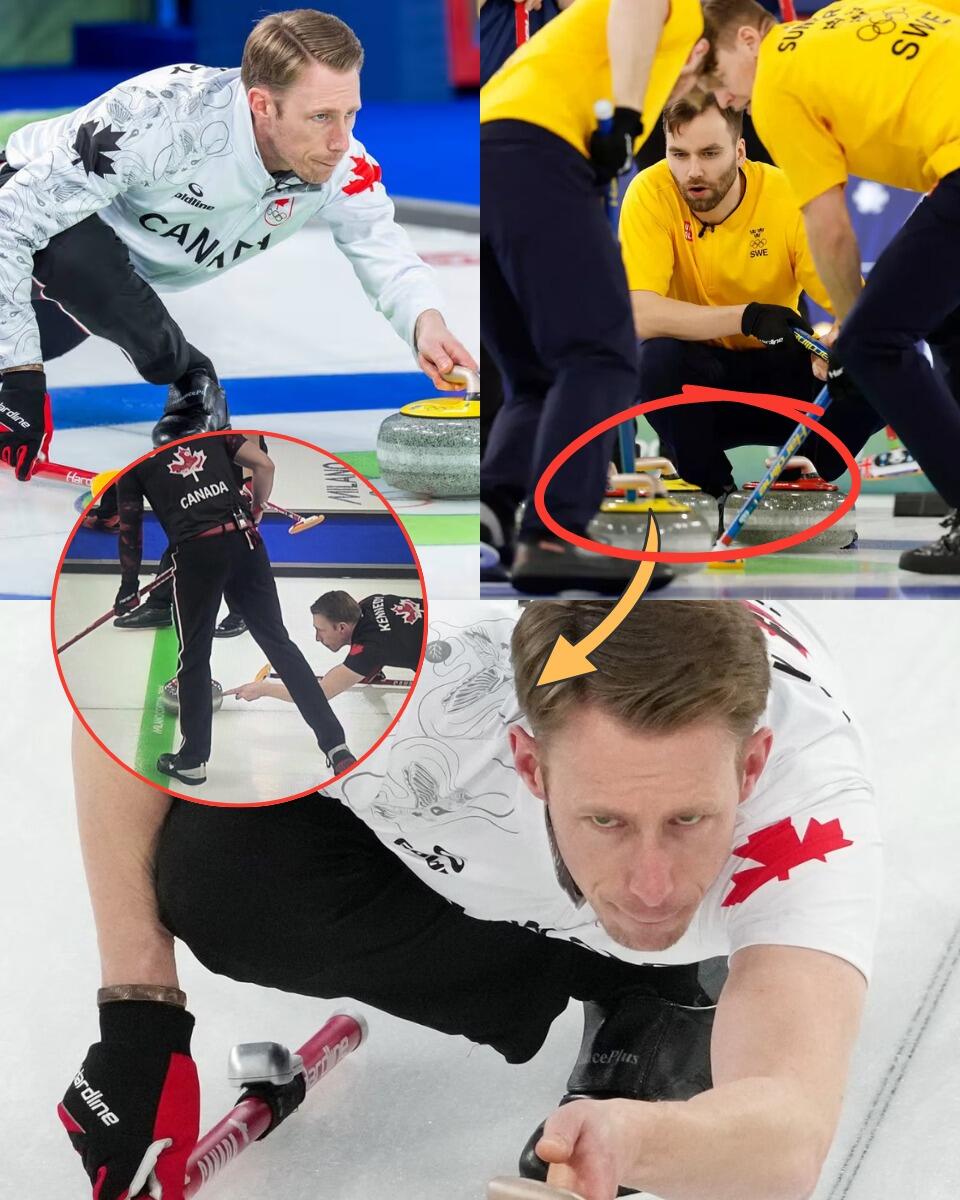
The sensational headline circulating online—”JUST IN: IOC to demand Marc Kennedy’s immediate RETIREMENT! The March ruling will officially brand him a ‘CHEAT’. Family speaks out in TEARS: ‘They’ve destroyed his life over 30 seconds.’ HEARTBREAKING UPDATE…”—appears to be a fabricated or exaggerated claim spreading primarily through social media posts on platforms like Facebook. These posts, often from pages with names like “Relax” or similar low-credibility accounts, link to dubious sites or simply tease “details in the first comment” without providing verifiable evidence. As of early March 2026, no credible news outlets, official IOC statements, World Curling Federation announcements, or reports from major sports organizations have confirmed any such IOC ruling, retirement demand, medal revocation, or formal branding of Kennedy as a “cheat.”
Marc Kennedy, the 44-year-old Canadian curler and vice-skip (third) for the men’s team led by skip Brad Jacobs, was at the center of a high-profile controversy during the 2026 Milan-Cortina Winter Olympics. The incident stemmed from accusations of rule-breaking in the sport of curling, but it did not escalate to the dramatic post-Olympic consequences described in the viral claim.
The Origin of the Controversy
The drama unfolded during the round-robin phase of the men’s curling tournament in mid-February 2026. In a match against Sweden on or around February 13-14, Swedish third Oskar Eriksson accused Kennedy of “double-touching” a stone. In curling rules, a player must release the stone (by letting go of the handle) before it crosses the hog line—a key demarcation on the ice. Touching the stone again after release, especially on the granite body rather than the handle, is a violation that can result in the stone being removed or other penalties. Eriksson claimed video evidence showed Kennedy touching the stone a second time with his finger as it approached or crossed the hog line.
Slow-motion replays circulated widely online and in media, appearing to show Kennedy’s finger making contact with the rock after initial release. Kennedy vehemently denied intentional cheating, emphasizing his 25-year career and four Olympic appearances (including gold in 2010). He responded heatedly on the ice, using expletives in a confrontation with Eriksson, telling him to “f*** off” and expressing frustration at being accused after decades of clean play. The exchange drew significant attention, with World Curling issuing Canada a verbal warning for the language used, cautioning against further inappropriate behavior.
Kennedy later expressed some regret over his profanity, telling reporters he could have handled the situation better but stood by defending his integrity and teammates. He apologized indirectly to young fans who might have been exposed to the language but refused to apologize for pushing back against the allegations.
No Formal Sanctions or Revocation
Officials reviewed the incident but did not impose major penalties during the Games. The electronic hog-line sensors on the stones (part of modern Olympic curling) and video analysis did not provide conclusive proof of a game-altering violation sufficient to alter results. No stones were removed, and the match proceeded with Canada winning 8-6 against Sweden.
The controversy widened slightly when videos surfaced suggesting other teams, including Britain and possibly even Sweden, had similar minor touches in other matches—highlighting how common light “double-taps” can be in high-level play, often without intent or impact. Experts and former players, including John Morris (a retired Canadian Olympian), defended Kennedy, arguing the touch was negligible and not deliberate cheating.
Canada overcame the drama to win Olympic gold, defeating Great Britain in the final on February 21, 2026. Skip Brad Jacobs delivered a pointed post-victory message: “For anyone who called us cheaters, for anyone who said negative things about Marc Kennedy, about us, about Canada, about our families… I hope that the image of us standing on top of the podium, embracing one another, smiling ear to ear with our gold medals is burned into your brain forever.” Kennedy celebrated exuberantly, leaping onto the boards in joy.
The Viral Claim: Fact vs. Fiction
The claim of an impending March IOC ruling demanding retirement and labeling Kennedy a “cheat” lacks substantiation. Searches across reliable sources (AP, ESPN, BBC, NBC Olympics, Yahoo Sports, and others) show no mention of IOC involvement—curling governance falls primarily under the World Curling Federation, not directly the IOC for such disciplinary matters. No reports indicate medal revocation, new video evidence overturning results, or family statements about life being “destroyed over 30 seconds.”
Instead, similar dramatic posts (e.g., “BOMBSHELL: Marc Kennedy’s Medal REVOKED!”) appear on Facebook pages known for clickbait, often linking to low-quality sites or simply farming engagement. These follow a pattern seen in other viral hoaxes, amplifying minor controversies into fabricated career-ending scandals. Kennedy’s family did face online abuse and threats during the height of the backlash (including disturbing messages about their children), prompting them to speak out against harassment, but no tearful statements align with the quoted “destroyed his life” narrative tied to a March ruling.
Broader Impact on Curling
The incident sparked discussions about curling’s “spirit of the game”—a sport traditionally built on trust, self-policing, and sportsmanship. Some players and commentators worried it could erode that culture or prompt stricter enforcement of hog-line rules. However, with Canada securing gold amid the noise, many viewed it as a storm that passed without lasting damage to results.
Kennedy, a veteran with a storied career, has not announced retirement, and no credible sources suggest forced exit. If anything, the controversy highlighted his passion, even if his on-ice outburst drew criticism.
In summary, while the 2026 Olympics curling tournament featured genuine tension and rule debates, the specific “heartbreaking update” about IOC action in March is unfounded misinformation. The Canadian team emerged victorious, and Kennedy remains an Olympic champion without official sanction beyond a warning for language.
Để lại một bình luận