The intersection of human vulnerability, criminal justice, and digital sensationalism often transforms a private family tragedy into a highly visible public battleground. In the modern media landscape, where engagement algorithms reward speculation and emotional outrage, the true facts of a criminal case can easily become buried under a mountain of clickbait headlines and manufactured controversies. This troubling dynamic has been vividly illustrated in the aftermath of the tragic death of eighteen-year-old Henry Nowak, a first-year finance and accounting student at the University of Southampton. Following the conclusion of a high-profile trial at Winchester Crown Court, where his killer was sentenced to life imprisonment, the public discourse surrounding the case has highlighted a profound friction between the definitive findings of the legal system and the chaotic, often toxic, nature of online commentary.
To understand the immense impact of this case on the British public, one must first look at the factual reality established by the court, rather than the speculative narratives circulating on social media platforms. Henry Nowak was a young man of exceptional promise, characterized by his family and peers as a dedicated, warm-hearted student who had recently achieved his lifelong dream of attending university. On the night of December 3, 2025, Henry was walking down Belmont Road in Southampton after spending a pleasant evening celebrating with his university football teammates. He was completely sober, at peace, and actively engaging with friends by recording a casual video of himself singing on the Snapchat application. It was during this ordinary, joyful walk home that his path crossed with twenty-three-year-old Vickrum Singh Digwa, an encounter that would end in an act of unprovoked and catastrophic violence.
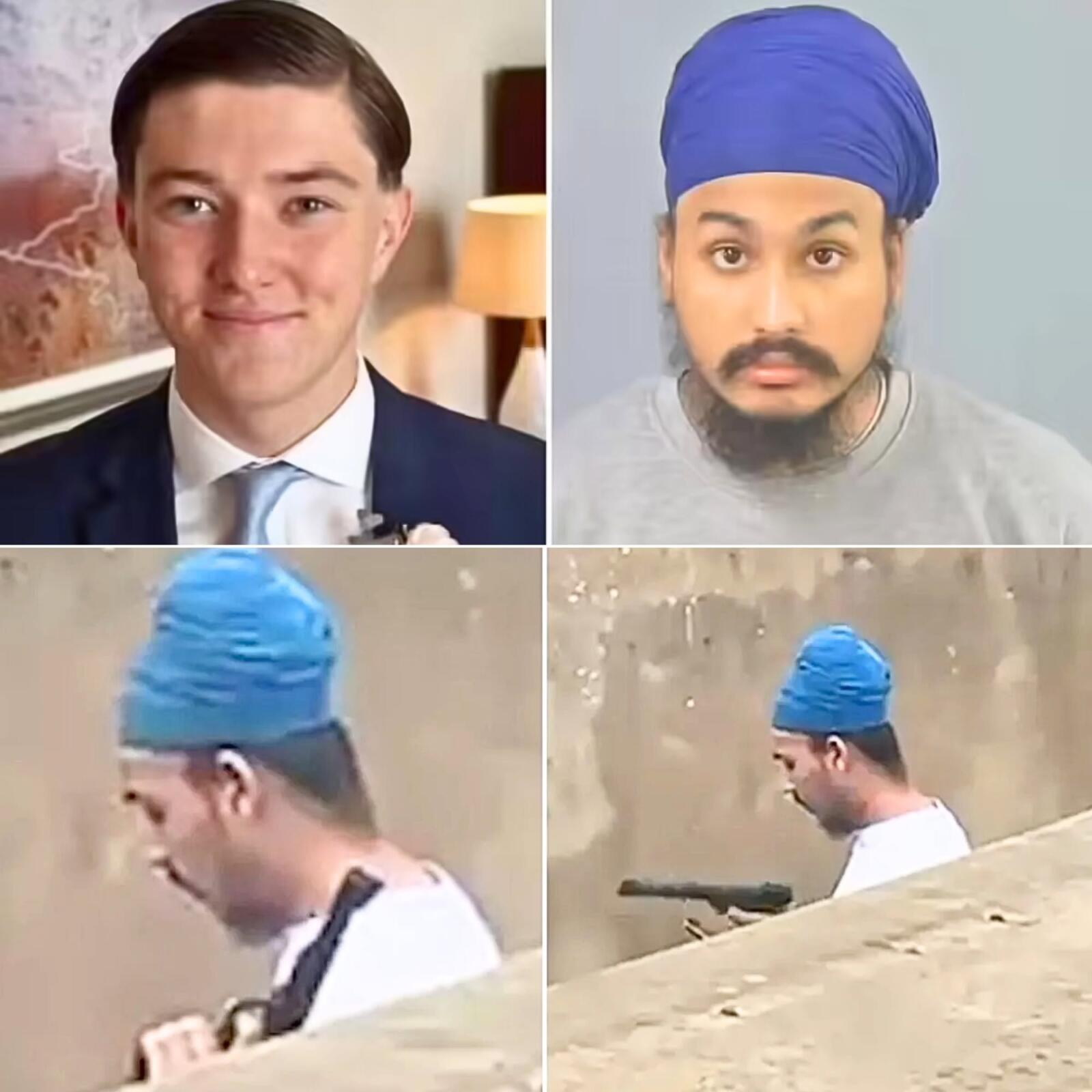
The prosecution presented definitive evidence demonstrating that Digwa was armed with a massive twenty-one-centimeter combat dagger when he confronted the unarmed student. When Henry casually filmed his surroundings and asked a passing question, Digwa reacted with immediate, disproportionate aggression, violently snatching the teenager’s mobile phone and launching a brutal physical assault. The defendant stabbed the defenseless freshman five times, inflicting a lethal chest wound that severed a major vein and caused massive internal hemorrhaging. Despite the sheer brutality of the attack, the true horror of the incident extended far beyond the initial physical violence, unfolding in the critical minutes immediately following the stabbing as the perpetrator actively sought to manipulate the justice system.
What sparked widespread national outrage and left the courtroom stunned during the trial was the calculated deception engineered by Digwa and his family to evade accountability. Instead of summoning medical assistance for the dying teenager, Digwa used his phone to film the injured student while his brother placed a frantic call to emergency services. During this call, the brothers fabricated a completely false narrative, claiming that they had been the victims of a racially motivated ambush initiated by Henry. When officers from the Hampshire and Isle of Wight Constabulary arrived at the scene, they relied entirely on this deceptive report, mistakenly treating the bleeding student as a dangerous aggressor. Officers placed handcuffs on Henry as he lay incapacitated on the pavement, ignoring his desperate, fading pleas that he had been stabbed and could not breathe. It took responding personnel three critical minutes to recognize the severity of the deception and remove the restraints, by which time the physical damage had become completely irreversible.
During the multi-week trial, the defense team attempted to leverage this initial confusion to flip the narrative, arguing that Digwa had acted in self-defense under intense provocation. They sought to introduce fragmented pieces of audio and video to portray the unarmed victim as the initial aggressor, a legal strategy that frequently inflicts severe secondary trauma on a grieving family. However, the presiding judge, William Mousley, and the jury decisively rejected these claims, recognizing them as a cynical attempt to distort the truth and escape the consequences of a premeditated act. On May 28, 2026, the jury found Vickrum Singh Digwa guilty of murder, and on June 1, 2026, he was sentenced to life imprisonment with a strict minimum term of twenty-one years before becoming eligible for parole. Additionally, his fifty-three-year-old mother, Kiran Kaur, was convicted and sentenced for her role in attempting to pervert the course of justice by removing and concealing the murder weapon.
While the formal legal process has reached a definitive conclusion, the secondary battle over the narrative continues to rage across digital platforms, demonstrating the dark side of modern true-crime obsession. In the days following the sentencing, internet platforms became flooded with sensationalized headlines promising bombshell updates, explosive twists, and hidden evidence that allegedly changed everything about the case. These engagement-bait tactics exploit real-world suffering for clicks and ad revenue, transforming a family’s ultimate nightmare into a viral spectacle for digital consumers. For the Nowak family, this continuous cycle of unverified speculation means their wounds are reopened on a daily basis, forcing them to defend Henry’s character against an anonymous online crowd that prioritizes entertainment value over objective truth.
The institutional fallout from the case has also intensified, as the public demands systemic accountability regarding the initial law enforcement response. The Independent Office for Police Conduct has launched an active, comprehensive investigation into the actions of the officers who handcuffed Henry during his final moments of life. This inquiry has raised critical questions regarding emergency protocol, bias, and the training of first responders when handling complex, high-stress crime scenes where perpetrators actively attempt to mislead authorities. Standing outside the courthouse, Henry’s father, Mark Nowak, fiercely criticized the inhumane treatment his son received on the pavement, while forcefully urging the British government to treat the rising tide of knife crime as an absolute national emergency that requires immediate legislative action.
Despite the immense pain of witnessing the graphic evidence and enduring the public circus surrounding the trial, the Nowak family has displayed an extraordinary degree of dignity, resilience, and grace. They have repeatedly utilized their public platform to issue a powerful plea for societal unity, explicitly asking that Henry’s tragic passing not be weaponized by political or social factions to incite racial division, community hostility, or broader cultural tension. In a deeply moving statement, Mark Nowak reminded the public that this tragedy was not a symptom of systemic racial conflict or religious friction, but a straightforward, horrific act of murder that should unite communities in a shared commitment to peace and street safety. The family remains entirely focused on ensuring that Henry is remembered for his beautiful soul, his academic achievements, and the profound love he brought into the world, rather than the ugly violence that cut his life short.
Moving forward, the legacy of the Henry Nowak case stands as a sobering landmark for both the British judicial system and contemporary digital culture. It underscores the urgent need for stricter regulations regarding how active and recently concluded criminal trials are commodified on social media, protecting vulnerable families from the predatory nature of clickbait misinformation. Furthermore, it highlights the necessity of ensuring that law enforcement training evolves to quickly identify domestic deception at crime scenes, prioritizing immediate medical triage over unverified accusations. Until these systemic reforms are implemented, the burden of maintaining integrity will continue to fall on individuals like Henry’s parents, who must navigate their natural grief while standing as a bulwark against digital exploitation. Their refusal to let their son’s memory be distorted by hatred or sensationalism offers a lingering hope that dignity, objective truth, and genuine empathy can eventually triumph over the loudest voices of the digital age.
Để lại một bình luận