The intersection of youth sports and sudden tragedy possesses a unique, painful capacity to paralyze a community, shifting the collective focus from the casual joy of a weekend game to the sterile reality of an intensive care unit. This profound emotional shift has completely enveloped the town of O’Fallon, Missouri, following a devastating injury suffered by twelve-year-old youth baseball player Xavier Taylor. For nearly two weeks, the local community, regional sports leagues, and thousands of supporters across the United States have united in an extraordinary display of solidarity, transforming a localized athletic accident into a national movement of hope and spiritual resilience. Operating under the collective anthem, “We believe in miracles,” the Taylor family, alongside an expanding network of teammates, neighbors, and professional athletes, is actively refusing to surrender to despair, clinging tightly to every incremental indicator of neurological and physical recovery.
The incident occurred during what was supposed to be an ordinary, high-energy weekend tournament game. Xavier, a highly talented and deeply beloved athlete known for his infectious smile, fierce competitive spirit, and exceptional sportsmanship, suffered a catastrophic impact to the head during a routine play on the baseball field. The sheer unexpectedness of the injury sent an immediate shockwave through the players, coaches, and parents present in the stadium, as emergency medical personnel rushed onto the diamond to perform immediate life-saving interventions. Xavier was rapidly airlifted to a specialized pediatric trauma center, where he was placed in a medically induced coma to allow his brain to rest and heal from the severe trauma. In the immediate aftermath, medical prognoses remained intensely guarded, leaving his family facing the ultimate nightmare of an uncertain future for their young son.
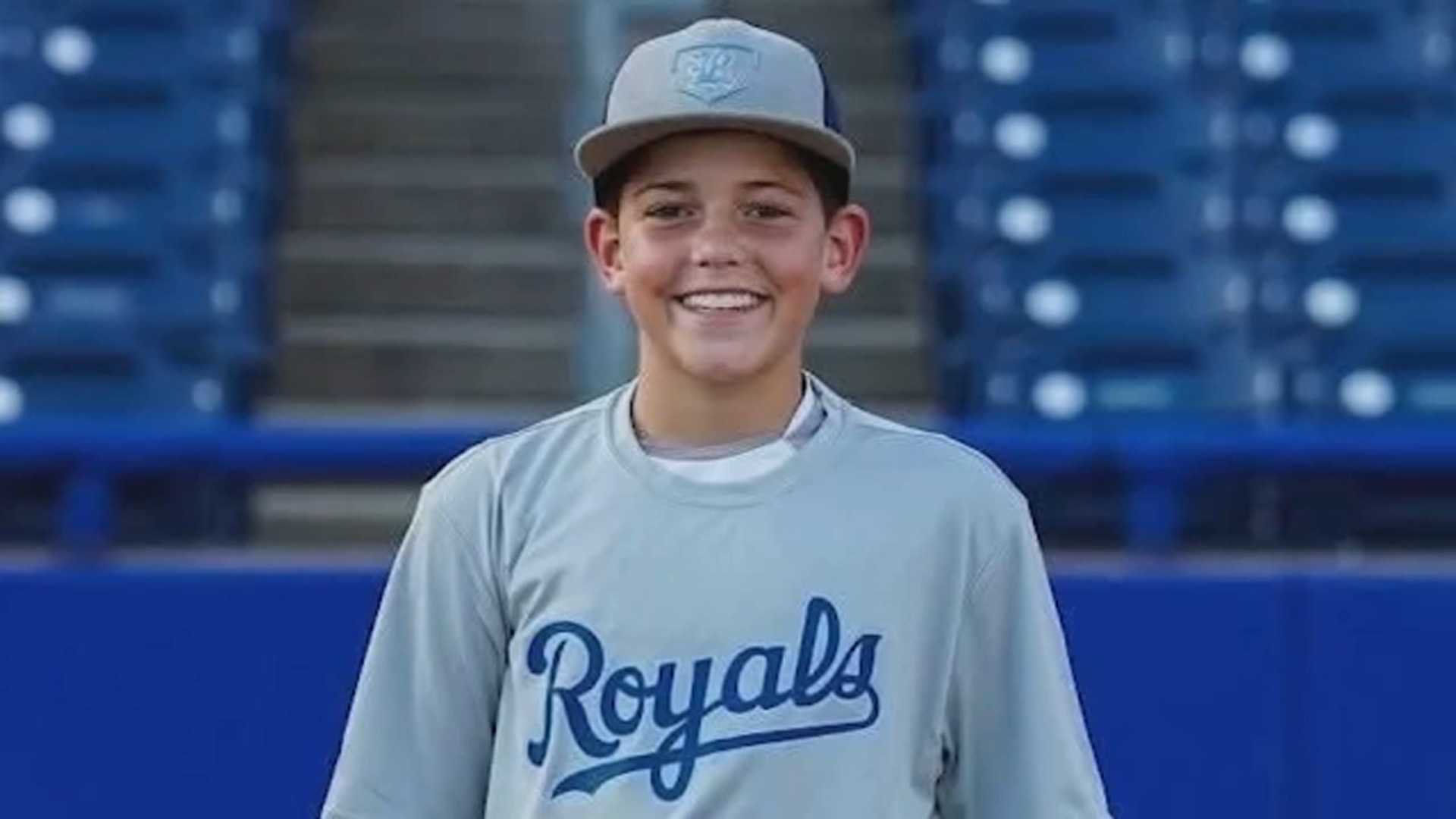
However, where medical science encounters its strict limitations, the human spirit often establishes its own territory, and the response from the O’Fallon community has been nothing short of transcendent. Within hours of the news breaking, a grassroots movement emerged to provide visible, unwavering support for the Taylor family. Neighbors and local residents began replacing their standard outdoor lighting with bright blue porch lights, casting a collective, supportive glow across entire subdivisions to signal that Xavier was constantly in their thoughts. Simultaneously, a deeply moving tradition materialized on front porches throughout the region: families began placing baseball bats outside their front doors, a quiet, powerful tribute signaling that the community was holding his spot in the lineup until he was strong enough to return home.
This visual manifestation of solidarity quickly expanded beyond the boundaries of the local neighborhood, capturing the attention of the broader baseball community and professional sports organizations nationwide. The St. Louis Cardinals, alongside several high-profile Major League Baseball players, issued public tributes, dedicated pre-game messages, and sent personalized videos of encouragement directly to Xavier’s hospital room. Professional athletes, many of whom remembered the unadulterated joy of playing youth baseball at Xavier’s age, utilized their massive social media platforms to amplify the family’s call for prayers, turning a local youth sports tragedy into a focal point of national empathy. These high-profile acknowledgments provided a vital psychological boost to the family, reminding them that they were not walking through the valley of shadow alone, but were backed by an entire army of supporters.
Inside the pediatric intensive care unit, the daily battle is measured not in major milestones, but in microscopic victories. In their regular public updates, Xavier’s parents have expressed profound gratitude for the global outpouring of support while sharing encouraging signs of early progress that have fortified their belief in a miraculous recovery. Medical teams have recently begun the delicate, slow process of reducing the sedative medications keeping Xavier in his induced state, a critical phase designed to assess his baseline neurological functions. The family revealed that Xavier has demonstrated localized physical responses, including subtle movements of his fingers and toes, and has shown signs of breathing independently alongside his mechanical support. Each of these small developments is celebrated by his loved ones as a monumental answer to the thousands of prayers echoing across the country.
The psychological impact of this collective vigilance cannot be overstated, particularly for Xavier’s teammates and peers who witnessed the accident or have grown up playing alongside him. For twelve-year-old children, confronting the sudden, fragile vulnerability of a friend who was just running the bases beside them is a confusing and heavy emotional burden. Local youth leagues and school districts have mobilized counseling resources to help these young athletes process their grief, anxiety, and fear. By channeling their nervous energy into positive actions—such as organizing jersey-wear days, creating custom wristbands bearing Xavier’s jersey number, and raising funds to offset the family’s mounting medical expenses—the children are learning a profound lesson in resilience, community responsibility, and the power of mutual care during a crisis.
What started as a devastating, heartbreaking local tragedy has ultimately evolved into a powerful, enduring reminder of how many lives one young boy has touched through his character and love for the game. The sheer volume of letters, digital messages, and prayer circles formed in honor of Xavier Taylor demonstrates that his impact extends far beyond his statistics on a baseball diamond. He represents the universal archetype of the joyful youth athlete—the child whose passion for sports brings families together on sunny afternoons, fostering a sense of shared identity and community pride. The global rally around his recovery is a testament to the fact that society still fiercely values the innocence and potential of its youth, refusing to allow a tragic accident to have the final word in a young person’s story.
As the Taylor family prepares for the long, grueling road of long-term rehabilitation and medical monitoring that lies ahead, the phrase “We believe in miracles” has transitioned from a hopeful sentiment into an absolute operational philosophy. They are fully aware that neurological recovery is a non-linear journey characterized by unexpected setbacks, plateaued progress, and immense physical exhaustion. Yet, the foundation of community support that has been constructed around them over the past two weeks provides an unyielding buffer against despair. The blue lights continue to burn bright through the Missouri nights, the baseball bats remain standing at attention on doorsteps, and the collective voice of thousands continues to rise in a unified plea for Xavier’s complete restoration.
Ultimately, the ongoing story of Xavier Taylor stands as a beautiful, sobering monument to the ultimate strength of community cohesion in an increasingly fragmented world. It proves that when tragedy strikes the most vulnerable among us, our shared humanity can rise above trivial divisions to create an unbreakable network of love, faith, and mutual support. While the medical monitors continue their steady rhythm in the quiet hospital room, the world outside waits with bated breath, entirely united in the conviction that this young athlete’s game is far from over. The Taylor family looks forward to the day when the blue lights can finally be turned off, not because the hope has faded, but because the miracle they have so fervently prayed for has walked through the front door and returned home.
Để lại một bình luận