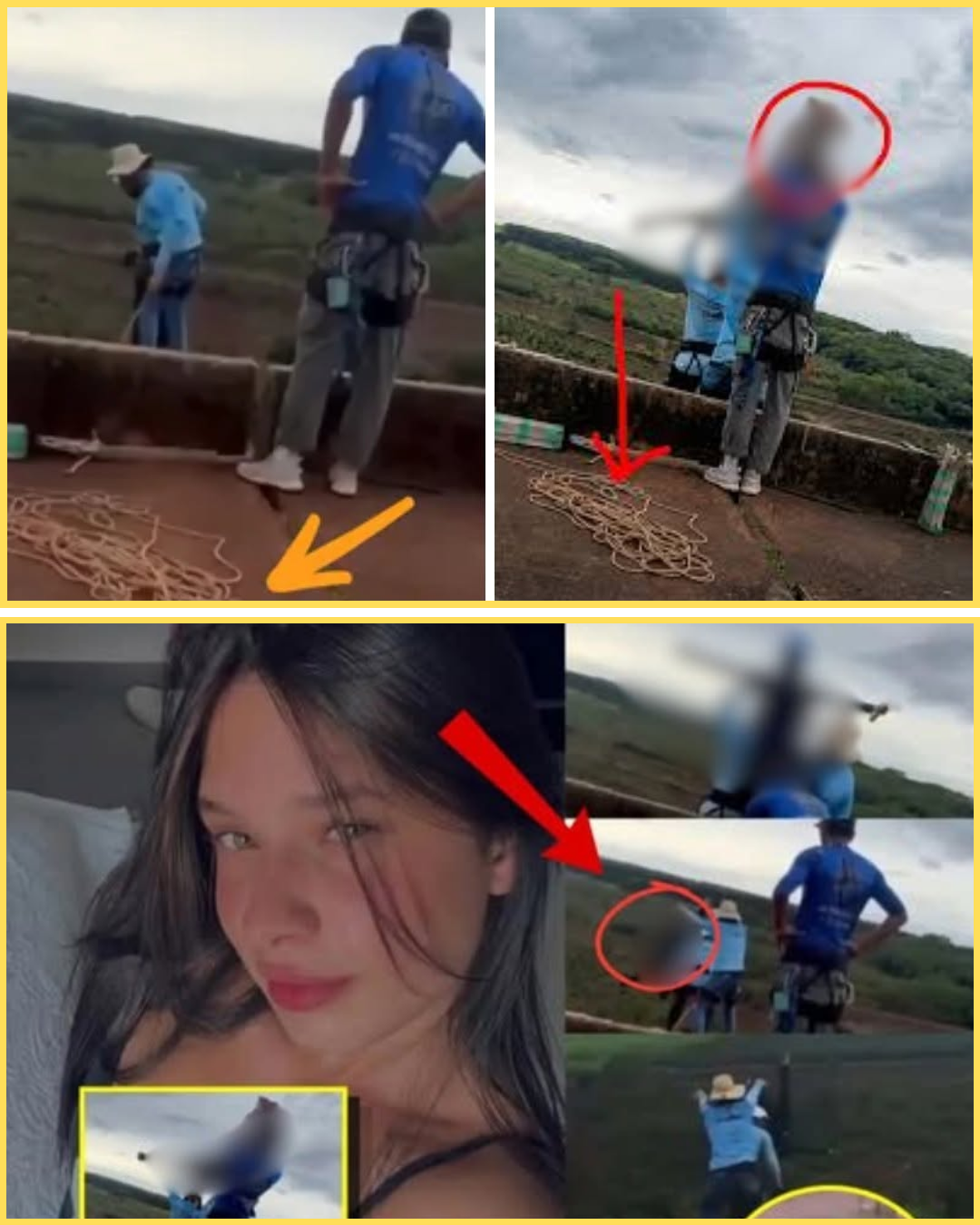
The emergence of video footage capturing the final moments of a young participant on an extreme sports platform introduces a devastating layer of physical evidence to an already complex investigation. In the digital age, when a catastrophic accident is captured on camera, the footage often spreads across social media networks with terrifying speed, accompanied by hyper-specific commentary analyzing the actions and words of those involved. The case of twenty-one-year-old Maria Eduarda, who lost her life during a high-altitude jump from a bridge in Brazil, has centered heavily on a brief, four-second window immediately following her launch from the platform. While online forums frequently analyze these split-second recordings through a lens of true-crime sensationalism, forensic investigators view the footage as a vital, clinical record that defines the boundary between an unpredictable mechanical accident and acute operational negligence.
According to the documentation compiled by local law enforcement and safety inspectors, the video recording details the standard operational sequence immediately preceding the jump. The footage shows Maria Eduarda being guided to the structural edge of the bridge by two commercial staff members responsible for securing her equipment and managing the launch sequence. In high-adrenaline sports like bridge jumping or rope jumping, participants frequently experience a momentary paralysis of fear as they approach the ledge, requiring physical guidance, verbal reassurance, or a gentle, supportive prompt from the jump masters to initiate the leap. However, the visual confirmation that the staff members actively assisted her off the ledge has intensified the legal scrutiny surrounding their real-time awareness of the structural setup.
The critical focus of the state’s criminal inquiry has pinned itself entirely on the verbal exchange and reactions captured just four seconds after Maria Eduarda cleared the platform. In the immediate aftermath of a launch, the jump masters are trained to watch the trajectory of the rope and the participant’s body to ensure the transition into the pendulum swing or vertical bounce is clean. The video reveals that within four seconds of her descent, the staff members realized an existential error had occurred. The immediate, recorded vocalizations from the platform were not ones of routine celebration, but of sudden, panicked realization that the calculations or the attachment mechanisms were fundamentally flawed. This brief, four-second interval proves that the operational crew was instantly aware of the system’s failure, shattering any defense of delayed perception or structural unpredictability.

From a legal and forensic standpoint, those four seconds provide a definitive timeline regarding the crew’s operational oversight. Investigators are utilizing the audio and video synchronization to match the staff’s reactions with the physical behavior of the rigging equipment. If the equipment checks performed beforehand had been executed with the mandatory double-redundancy required by international safety standards, the discrepancy in the rope length, the anchor points, or the harness connections would have been caught before Maria Eduarda was ever led to the edge of the bridge. The immediate panic recorded from the staff just seconds into the jump suggests that the error was glaringly obvious once the system was subjected to the actual weight and gravity of the participant, further supporting the theory that the preliminary safety checks were severely rushed or entirely omitted.
As the video continues to circulate across regional news outlets and digital platforms, public anger throughout Brazil has reached a fever pitch. The raw reality of seeing a young woman led to a ledge by professionals, only for a fatal catastrophe to manifest seconds later, has turned the case into a symbol for the urgent need for strict state regulation of the extreme tourism sector. Independent safety auditors reviewing the case notes emphasize that commercial thrill-seeking operations must be stripped of their ability to self-regulate. They argue that when an industry handles human lives at high altitudes, the staff must be held to the same rigorous, legally binding certifications as commercial airline pilots or structural engineers, where a single bypassed protocol results in immediate criminal prosecution.
The defense legal teams representing the extreme sports company have urged the public and the media to refrain from drawing definitive conclusions based solely on a truncated social media video snippet. They contend that the full, unedited sequence of events, including the backend technical preparation and the specific environmental conditions at the bridge, must be fully evaluated by certified engineering experts before criminal blame is assigned to the individual staff members. Nevertheless, the Civil Police have already secured the recording as a core component of the prosecution’s evidence file, utilizing it to establish a precise timeline of events for the upcoming judicial hearings.
While the legal system systematically processes the digital and physical evidence, the emotional devastation radiating from the tragedy remains unyielding. The existence of the video means that Maria Eduarda’s family and her fiancé are forced to navigate their profound grief in the shadow of a highly publicized, visual archive of her final moments. The digital commentary surrounding the clip often reduces the immense gravity of her passing into a viral talking point, focusing on the suspense of what the staff said rather than the systemic industry failures that allowed the situation to occur.
Ultimately, the true lesson of the Maria Eduarda tragedy is found not in the sensationalism of a viral video, but in the sobering reminder of the absolute discipline required to manage human safety in high-risk environments. The four-second realization captured on that bridge stands as a terrifying testament to the irreversible nature of operational negligence. As the investigation in São Paulo moves toward a formal trial, the case serves as a solemn warning to extreme sports operators globally that safety protocols are not mere administrative suggestions to be optimized for speed, but the literal, unyielding barrier that prevents an adventurous excursion from transforming into an instantaneous lifetime of mourning.
Để lại một bình luận