🚨 THE INTERNET HAS ALREADY CONVICTED SOMEONE — BUT IT’S NOT LINDSAY CLANCY.
While a real jury prepares to decide whether Lindsay was criminally responsible for the deaths of her three children, TikTok, Reddit and X have already built their own courtroom — complete with theories, “evidence,” suspects and verdicts.
And somehow, the internet’s version of the case has begun pointing in directions the actual courtroom never did.
So how did millions of views turn a murder trial into an online investigation — and why are so many people now convinced they’ve uncovered something the jury hasn’t?
👇 Click to see how the Lindsay Clancy case became the internet’s most controversial “trial within a trial.”
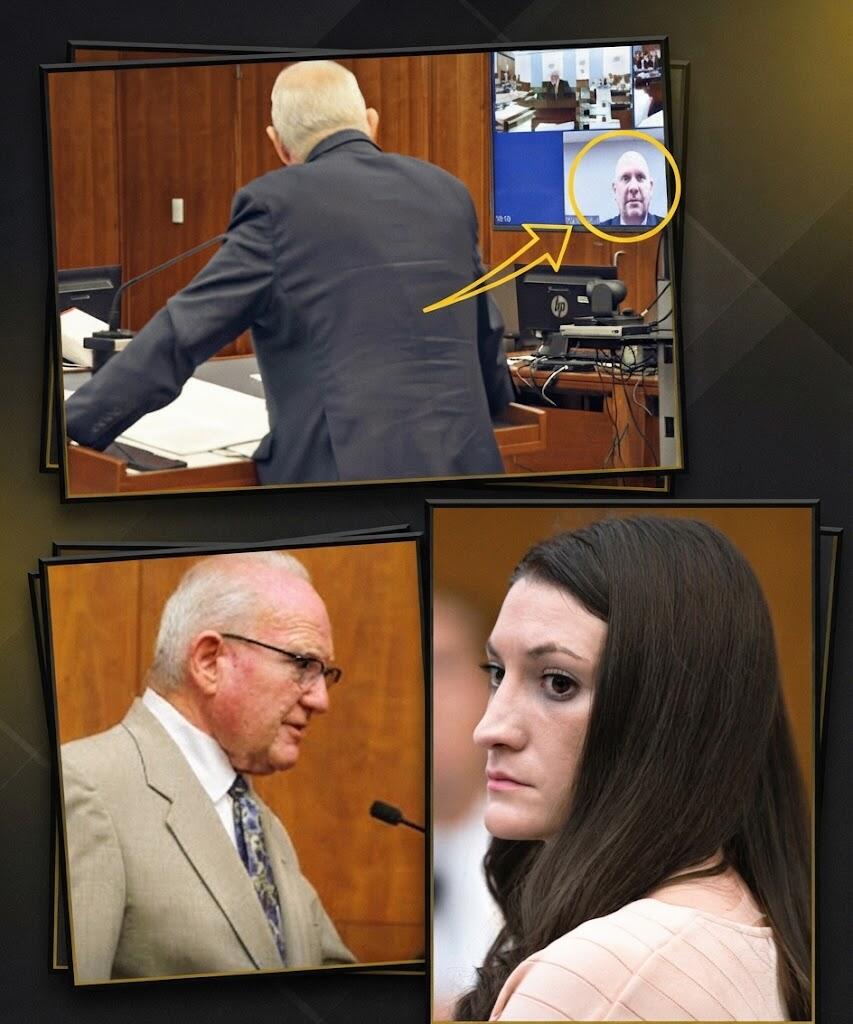
Before a jury has even delivered its verdict, the internet has already conducted a trial of its own.
For weeks, TikTok creators, Reddit users and X accounts have dissected the Lindsay Clancy case from every possible angle. They have reconstructed timelines, analyzed testimony, debated psychiatric evidence, questioned the actions of people around Clancy and, in some corners of the internet, developed theories that go far beyond what has been established in court.
The phenomenon has become so large that the Lindsay Clancy case is no longer simply a high-profile criminal trial.
It has become a social-media investigation.
And the biggest question may now be less about what happened inside the Duxbury home in January 2023 than about what happens when millions of people are given access to fragments of a criminal case and begin acting like investigators themselves.
According to CT Insider, more than 164,000 TikTok videos had been posted using the hashtag #clancy, illustrating the enormous scale of the online conversation surrounding the case. Experts say the combination of true-crime fascination, easy access to courtroom information and the ability to publicly analyze evidence has created a powerful environment for “armchair detectives.”
Now, as closing arguments begin on August 27, the real jury is finally preparing to decide the case.
The internet has already reached several different verdicts.
A trial inside the trial
The central legal issue in Lindsay Clancy’s case is relatively specific.
Clancy has admitted, through her defense, that she killed her three children — Cora, 5, Dawson, 3, and Callan, 8 months — in January 2023.
The dispute is whether she should be held criminally responsible.
Her defense argues that she was suffering from severe postpartum psychosis and other mental-health problems and that her psychiatric state prevented her from understanding the nature or wrongfulness of her actions.
Prosecutors have presented a very different picture, arguing that she understood what she was doing and retained the ability to control her actions.
On August 26, the final prosecution witness, forensic psychiatrist Dr. Gregory Saathoff, testified that Clancy was mentally ill but nevertheless had the ability to appreciate right from wrong. He also questioned aspects of her account of hearing a voice instructing her to kill the children.
The courtroom therefore has a clearly defined question.
But online, the questions have multiplied.
Was Clancy psychotic?
Were her medications partly responsible?
Did doctors miss warning signs?
Did her husband understand how serious her condition was?
Was the investigation complete?
Could parts of the timeline be interpreted differently?
And, in some online communities, did someone other than Clancy actually cause the deaths?
That last theory has become one of the clearest examples of how far the internet version of the case has drifted from the courtroom.
TikTok became the case’s unofficial newsroom
TikTok has played an especially powerful role.
The sheer volume of content surrounding the case has turned short-form video into something resembling an unofficial courtroom archive.
Creators summarize testimony.
Others explain psychiatric concepts.
Some reconstruct the timeline.
Some react emotionally to testimony.
Others make videos challenging what previous creators have said.
The result is a constantly evolving ecosystem in which one video can become the starting point for another person’s theory, which then becomes the subject of another reaction video.
The problem is that virality is not the same thing as verification.
A creator can take a 20-second fragment from testimony, combine it with photographs and dramatic music, and produce a compelling narrative without necessarily providing the surrounding context.
That narrative can then reach hundreds of thousands of viewers before anyone checks whether the interpretation is accurate.
Experts interviewed by CT Insider have warned about exactly this phenomenon, saying that the enormous amount of information available online can give users the impression that they are conducting genuine investigations when they may actually be working from incomplete information.
The danger becomes particularly obvious when theories begin to compete with established evidence.
Reddit became the counterweight
Reddit has developed a somewhat different role.
Rather than relying entirely on short videos, users often construct lengthy discussions around testimony, legal arguments and individual pieces of evidence.
One Reddit thread asking why people were suddenly saying Lindsay Clancy was “innocent” received more than 1,100 upvotes. The discussion itself demonstrates the confusion surrounding the case: some users understood that Clancy’s defense accepts that she killed her children but disputes her criminal responsibility, while others had encountered social-media content claiming that she was completely innocent.
Another recent Reddit discussion asking why people were defending Clancy received hundreds of upvotes and became a debate over postpartum mental illness, responsibility and the role of her husband.
That distinction matters.
Because legally, these are not the same argument.
“She didn’t kill them.”
and
“She killed them but was not criminally responsible because of severe mental illness.”
are two completely different claims.
Yet social media can flatten that distinction into a simple binary:
#JusticeForTheChildren vs. #BelieveLindsay.
And once the debate becomes tribal, nuance becomes much harder to maintain.
Then the conspiracy theories arrived
The most dramatic development in the online discussion has been the emergence of theories questioning Patrick Clancy’s role.
Patrick was the person who returned home after going out to pick up dinner and medication and discovered the aftermath of the killings and Lindsay’s suicide attempt.
Yet portions of social media have increasingly questioned whether he knew more than investigators have concluded.
Those claims have spread particularly heavily on TikTok.
The problem is that there is no established evidence that Patrick was responsible for the children’s deaths.
His attorney recently issued a warning to influencers and celebrities over what he described as false and defamatory conspiracy theories directed at Patrick. CT Insider reported that the lawyer emphasized the real-world consequences of spreading such claims.
This is where the internet trial becomes fundamentally different from the real one.
A courtroom requires evidence to meet legal standards.
An online theory often requires only one thing:
engagement.
The more shocking the theory, the more likely it may be to attract views, comments and reposts.
And once thousands of people have interacted with it, popularity can begin to look like credibility.
The strangest part: people are now debating the evidence they never saw
Another feature of the Clancy phenomenon is the way users can become confident about evidence without having experienced the trial directly.
Some follow daily courtroom updates.
Others watch edited clips.
Others see screenshots of testimony posted by strangers.
Still others encounter a reaction video to a reaction video.
That creates multiple layers between the original evidence and the person forming an opinion.
A user may therefore believe they have “seen the evidence” when what they actually saw was someone’s interpretation of a news report about a courtroom exchange.
That distinction is easy to overlook — especially when the content is presented with dramatic captions such as “THE JURY DOESN’T KNOW THIS” or “THE DETAIL THEY DON’T WANT YOU TO SEE.”
Those formats are perfect for social media because they create an information gap.
They also make a complicated legal case feel like a mystery waiting to be solved.
Even people inside the trial have become part of the social-media story
Perhaps nothing illustrates the collision between court and social media better than the controversy surrounding Emily Thorndike.
Thorndike, a former McLean Hospital employee and TikTok creator, had posted online about the hospital and its treatment environment. Lindsay Clancy’s defense attempted to call her as a witness.
The judge ultimately prevented her from testifying before the jury, and her appearance around the proceedings subsequently became a social-media story of its own.
Thorndike later apologized after receiving backlash over comments she made during the proceedings, and her TikTok account was subsequently made private.
In other words, the trial was no longer simply producing content for social media.
Social media was beginning to affect how people experienced the trial itself.
That is a remarkable shift.
The real jury now faces a very different task
On August 27, prosecutors and the defense are scheduled to make their closing arguments.
The jury has heard testimony from 85 witnesses over the course of the trial, according to CBS Boston. The jury instructions will allow consideration of first-degree murder, second-degree murder, manslaughter and a finding of not guilty by reason of insanity.
The real jurors therefore have a responsibility that TikTok creators do not.
They must evaluate the evidence presented in court.
They must follow the judge’s instructions.
And they must reach a verdict based on the law rather than on which narrative is most emotionally compelling.
That distinction is especially important in a case involving psychiatric testimony.
The defense has presented experts who described Clancy as experiencing severe psychosis.
The prosecution’s experts have acknowledged that she had mental-health problems while arguing that she nevertheless retained sufficient understanding and control to be criminally responsible.
The legal question cannot be settled by a poll.
It cannot be settled by the number of TikTok comments supporting one theory.
And it cannot be settled because one Reddit post receives more upvotes than another.
The internet may be solving the wrong problem
There is a larger question hiding underneath the social-media frenzy.
Why are people so fascinated by this particular case?
Experts quoted by CT Insider suggest several explanations: the true-crime phenomenon, the availability of detailed information, the desire to play detective and the broader debate surrounding motherhood and mental health.
The case also touches an especially sensitive cultural nerve.
People are confronting the possibility that postpartum psychiatric illness can become catastrophic.
They are debating whether the medical system recognized warning signs.
They are debating how much responsibility families should bear.
And they are debating whether a person can simultaneously be responsible for an unspeakable act and also be a victim of a devastating mental illness.
Those are legitimate questions.
But the internet’s appetite for certainty can turn legitimate questions into accusations.
And that may be the most important lesson of the Lindsay Clancy social-media phenomenon.
The verdict is coming — but the internet won’t stop
The real trial is now approaching its final stage.
After closing arguments, the jury will deliberate.
Whatever verdict emerges, it is unlikely to end the online debate.
If Clancy is convicted, supporters may argue that the psychiatric evidence was misunderstood.
If she is found not criminally responsible, critics may argue that the system has failed the three children.
And if the verdict surprises either side, social media will almost certainly produce another wave of theories, reaction videos and competing explanations.
The internet has already held its own trial.
It has produced suspects, theories, arguments and verdicts.
But there is one crucial difference.
The internet doesn’t have to prove anything.
The jury does.
And as twelve jurors prepare to decide Lindsay Clancy’s fate, the most important question may be whether they can separate the evidence presented in a courtroom from the enormous, emotional and sometimes unreliable story that the internet has built around it.
Để lại một bình luận