🚨 TWO PSYCHIATRISTS LOOKED AT THE SAME MOTHER — AND SAW TWO COMPLETELY DIFFERENT REALITIES.
One says Lindsay Clancy was “frankly psychotic,” trapped inside hallucinations and delusions like a “puppet.” Another says she was mentally ill — but still understood right from wrong and remained in control.
Now the witnesses are done. The closing arguments are here. And 12 jurors have to decide which version of Lindsay they believe.
👇 Click to see the explosive psychiatric battle that could determine whether Lindsay Clancy spends the rest of her life in prison — or in a psychiatric hospital.
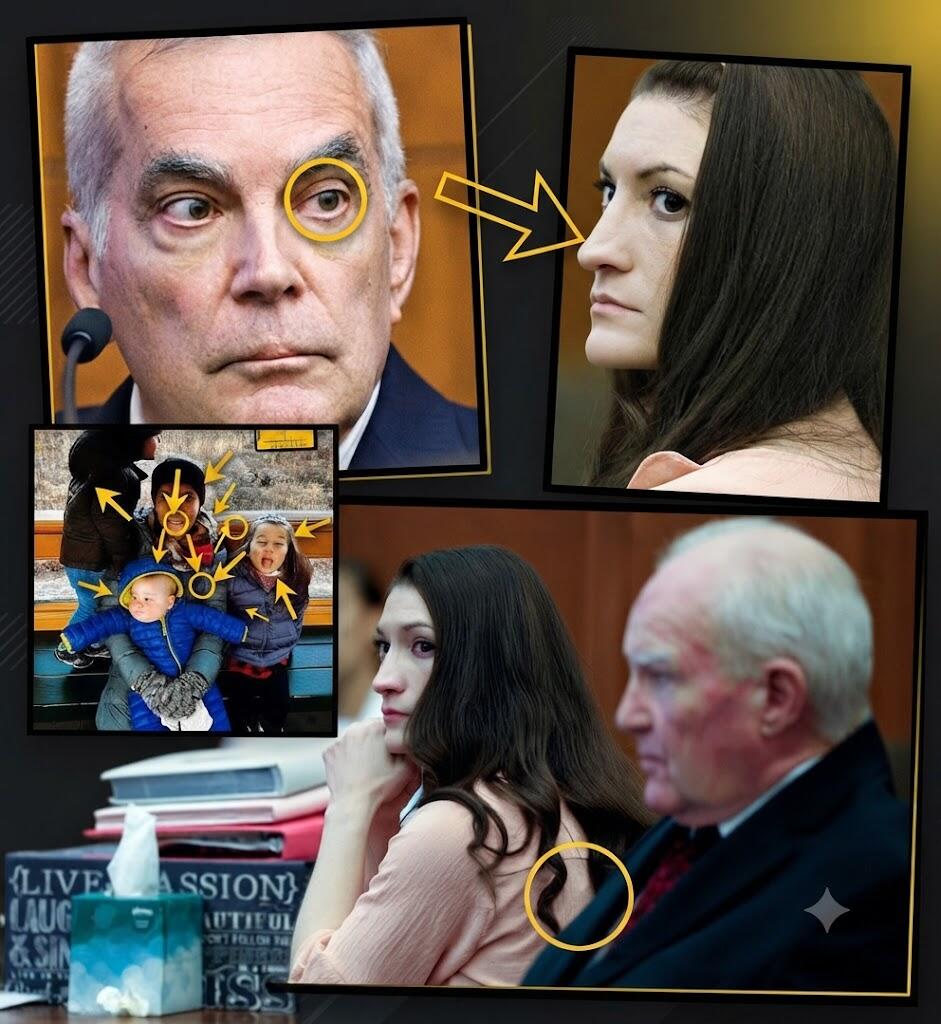
Two psychiatrists examined the same woman.
They heard versions of the same story.
They reviewed much of the same history.
And yet they arrived at dramatically different conclusions about what was happening inside Lindsay Clancy’s mind when her three children died.
That conflict is now at the heart of one of the most closely watched murder trials in Massachusetts.
As closing arguments begin Thursday in Plymouth Superior Court, the testimony phase of Clancy’s trial has ended after more than five weeks and more than 80 witnesses. The jury is now being asked to resolve a question that has proved extraordinarily difficult for both experts and the public: Was Lindsay Clancy a mentally ill mother who became psychotic and lost control of reality — or a mentally ill woman who nevertheless understood what she was doing?
The answer could determine whether Clancy is convicted of murder or found not criminally responsible because of her mental state.
And the final expert testimony has left the two sides presenting almost mirror-image versions of the same woman.
One psychiatrist saw a woman who was “frankly psychotic”
The defense’s most important psychiatric witness was Dr. Phillip Resnick, a forensic psychiatrist with extensive experience in cases involving parents who kill their children.
Resnick testified that Clancy was suffering from postpartum psychosis when she killed Cora, 5, Dawson, 3, and Callan, 8 months, in January 2023.
His conclusion was stark.
He described Clancy as “frankly psychotic” and said she experienced what he characterized as a command hallucination and a delusion of influence.
According to his testimony, Clancy described feeling as though she were being controlled — essentially like a puppet — and believed that killing her children was connected to preventing them from suffering after her own planned suicide.
Resnick also diagnosed her with bipolar II disorder and argued that her psychiatric history contained warning signs that had not been adequately recognized.
For the defense, the significance was obvious.
If the jury accepts Resnick’s assessment, the killings can be viewed not simply as an intentional act by a mother who decided to kill her children, but as the catastrophic result of a psychiatric break that fundamentally altered her perception of reality.
That is central to Clancy’s claim that she was not criminally responsible.
But the prosecution had a very different expert waiting in the wings.
Then came Dr. Gregory Saathoff
The prosecution’s final rebuttal witness, forensic psychiatrist Dr. Gregory Saathoff, offered a dramatically different interpretation.
Saathoff agreed that Clancy had significant mental-health problems.
But he did not believe those problems rendered her unable to understand the wrongfulness of her actions.
After interviewing Clancy for roughly 11 hours, Saathoff diagnosed bipolar II disorder but testified that she retained the ability to distinguish right from wrong and exercised control over her behavior. He also challenged the reliability of her description of the voice she said instructed her to kill her children.
One of his most striking observations concerned the alleged voice.
Saathoff said the way Clancy described it was highly unusual compared with typical descriptions of psychotic auditory hallucinations.
He also focused on what happened afterward.
The prosecution’s broader argument is that Clancy’s actions showed planning, sequencing and awareness rather than the chaotic behavior expected from someone completely detached from reality.
That interpretation has become one of the prosecution’s most important weapons in the final stage of the trial.
The voice may be the single most important psychiatric detail
Few details have generated as much discussion as Clancy’s account of hearing a male voice.
According to the defense, she experienced a voice directing her toward killing herself and her children.
That allegation is important because command hallucinations can occur in severe psychiatric disorders.
But simply claiming that a person heard a voice does not automatically establish legal insanity.
That is where the experts disagree.
Resnick considered Clancy’s account consistent with psychosis and said he believed her.
Saathoff viewed aspects of the account as unusual and questioned whether the reported experience supported the defense’s broader interpretation of her mental state.
The prosecution has also emphasized inconsistencies in Clancy’s accounts of when and how the alleged voice appeared.
Yet Saathoff reportedly stopped short of saying that inconsistencies necessarily meant Clancy was lying.
That distinction is important.
The prosecution does not necessarily have to prove that every element of Clancy’s account was fabricated.
Its argument is narrower and more legally consequential:
Even if Clancy was seriously mentally ill, was she still capable of understanding what she was doing and knowing it was wrong?
That is the question the jury ultimately has to answer.
Reddit is now arguing over the experts too
The psychiatric battle has spilled directly into online communities following the trial.
On Reddit, reactions to Saathoff’s testimony have been sharply divided.
In one discussion, users praised him for being calm, methodical and difficult to rattle during cross-examination. Another group questioned his credibility, focusing particularly on the fact that he evaluated Clancy years after the killings rather than immediately afterward.
Resnick has faced a similar split.
Some Reddit users have emphasized his experience and reputation in forensic psychiatry, arguing that his diagnosis raises serious questions about whether Clancy’s earlier treatment providers missed signs of psychosis.
Others criticized his conclusions, arguing that his interpretation relied too heavily on Clancy’s own account and did not adequately explain why psychosis had not been clearly identified before the killings.
That online disagreement mirrors the central problem confronting the jury.
There is no simple psychiatric test that can travel backward in time and tell jurors exactly what a person experienced during a particular few minutes in 2023.
Experts have to reconstruct that mental state from medical records, interviews, testimony, behavior and the defendant’s own descriptions.
And those sources do not always point in the same direction.
The biggest disagreement may actually be about the treatment before the killings
The psychiatric battle is not limited to what happened on the day of the killings.
It also reaches backward into the months before them.
The defense has highlighted Clancy’s deteriorating mental health, her struggles with medication and her attempts to obtain psychiatric treatment.
Prosecutors, meanwhile, have emphasized the absence of clear evidence that she was experiencing psychosis before the killings and have argued that her behavior showed awareness and planning.
The prosecution’s rebuttal experts acknowledged significant mental-health issues but challenged the conclusion that those issues amounted to postpartum psychosis.
That distinction has become one of the most consequential aspects of the case.
Online communities have seized on the medication issue as well.
Some Reddit discussions have questioned how many psychiatric medications Clancy had been prescribed and whether her treatment could have contributed to her deterioration. Others have pushed back against turning medication questions into a simple explanation for the killings.
That debate reflects a much broader public concern:
Did the medical system fail to recognize a psychiatric emergency before it became catastrophic?
But it is also an area where caution matters.
A complicated treatment history does not, by itself, prove that a particular medication caused the killings.
Nor does a diagnosis of depression, bipolar disorder or postpartum illness automatically establish legal insanity.
Those are questions for evidence — not social-media certainty.
Another expert offered a third perspective
The case is actually more complicated than a simple Resnick-versus-Saathoff showdown.
The prosecution called forensic psychologist Dr. Kirk Heilbrun and forensic psychiatrist Dr. Avram Mack as rebuttal witnesses.
Heilbrun testified that Clancy’s actions could be understood as part of a deliberate decision connected to her intention to die, rather than as the result of psychosis.
Mack, meanwhile, acknowledged major depression but said he found no clear evidence of psychosis or mania at the relevant time.
That gives jurors several competing psychiatric interpretations rather than just two.
And it may explain why the case has become so difficult to discuss online.
There is no universally accepted label that neatly explains everything.
The evidence involves depression, bipolar disorder, intrusive thoughts, medications, possible hallucinations, postpartum mental illness and questions about behavior and intent.
Different experts have assigned different weight to those pieces.
The “intrusive thoughts” controversy
Another major point of disagreement involves what Clancy had reportedly told people before the killings.
The defense has emphasized statements about thoughts of harm coming to her children.
Critics of the defense argument have pointed out that intrusive thoughts are not automatically evidence of psychosis, nor do they necessarily demonstrate an intention to hurt someone.
That distinction has also generated significant Reddit debate. Some users argue that the defense has blurred the difference between unwanted thoughts about harm and homicidal intent, while others believe those thoughts should be considered as part of the broader psychiatric picture.
Again, the difference matters.
A person can experience intrusive thoughts without wanting to act on them.
The legal question in Clancy’s case is what those experiences meant in the context of everything else happening inside her mind.
The jury now has to separate illness from legal responsibility
Perhaps the most important thing to understand about the trial is that the jury is not simply deciding whether Lindsay Clancy was mentally ill.
That appears to be far less controversial.
The prosecution itself has presented evidence acknowledging significant mental-health problems.
The real dispute is whether her mental condition reached the legal threshold required to eliminate criminal responsibility.
That is a much narrower question.
And it explains why two experts can agree that a person has a psychiatric disorder while disagreeing completely about whether that person should be held criminally responsible.
It also explains why the final testimony has become so important.
Resnick essentially told jurors:
Look at Lindsay’s mind through the lens of psychosis.
Saathoff effectively told them:
Look at the same evidence and consider the possibility that she remained in control.
Those are not merely different diagnoses.
They are two radically different interpretations of the same tragedy.
Now the experts are finished. The jury gets the final word.
The testimony phase has now ended.
Closing arguments are beginning, with prosecutors and defense attorneys each expected to make their final case before the jury receives its instructions and begins deliberating. The trial has included testimony from more than 80 witnesses and has lasted roughly five weeks.
The defense will have one final opportunity to connect Clancy’s psychiatric history, treatment problems and alleged psychosis into a coherent explanation for what happened.
The prosecution will have one final opportunity to convince jurors that mental illness does not erase the evidence of control, planning and awareness that it says accompanied the killings.
And somewhere between those two narratives sits the question that has dominated the trial from the beginning:
What was actually happening inside Lindsay Clancy’s mind?
There may never be a completely satisfying answer.
Dr. Resnick saw a woman overtaken by psychosis.
Dr. Saathoff saw a mentally ill woman who nevertheless remained capable of understanding right from wrong.
The jury now has to decide which interpretation is supported by the evidence — and whether that evidence is enough to determine criminal responsibility.
The internet has already chosen sides.
The psychiatrists have chosen sides.
Now twelve jurors have to decide.
Để lại một bình luận