🚨 THREE CHILDREN ARE GONE — SO WHY ARE HUNDREDS OF WOMEN STANDING WITH THEIR MOTHER?
They came wearing pink. They held signs saying “She Needed Help.” And online, women are passionately arguing that Lindsay Clancy should be seen not simply as a killer — but as a woman whose mental-health crisis was catastrophically ignored.
But critics have one brutal question: when does compassion for a mentally ill mother cross the line into excusing what happened to her children?
👇 Click to see why the Lindsay Clancy case has triggered one of the most explosive debates about motherhood, mental illness and accountability online.
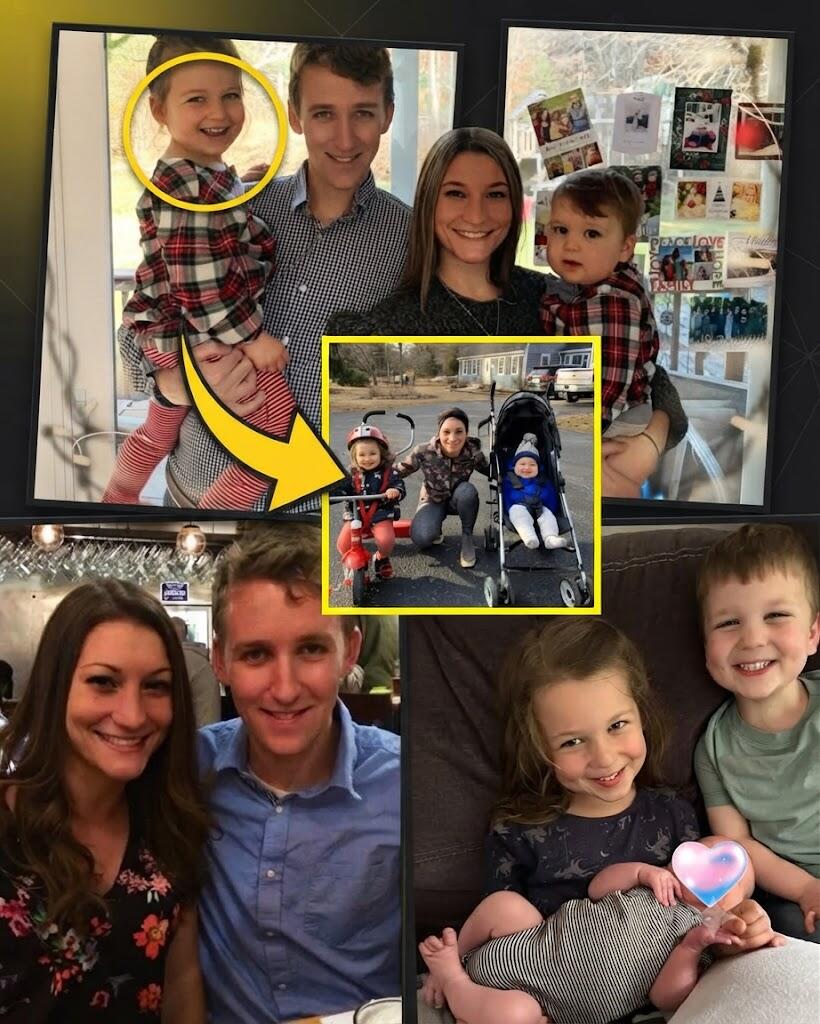
Three children are GONE.
Their mother is on trial for their killings.
And yet, outside the Massachusetts courthouse where Lindsay Clancy’s fate is being decided, hundreds of women recently gathered wearing pink and carrying messages of support.
The sight has become one of the most striking images of the trial — and one of the most controversial.
On August 20, roughly 300 women, along with a smaller number of men, gathered outside Plymouth Superior Court in Massachusetts to support Clancy. Some wore pink clothing displaying messages including “Believe,” “She Needed Help” and “Peace For Lindsay.” According to the Associated Press, several participants said Clancy’s story resonated with them because of concerns about women’s mental health and the way mothers in crisis are treated.
For critics, the rally raises an almost incomprehensible question:
How can anyone publicly stand behind a woman accused of killing her three children?
For supporters, however, that is not what they believe they are doing.
They say they are standing behind the idea that severe postpartum psychiatric illness can destroy a person’s perception of reality — and that women experiencing mental-health crises are often not taken seriously until it is too late.
That distinction has become the center of one of the most emotionally charged debates surrounding the Clancy trial.
And increasingly, the argument is happening not just outside the courthouse, but across Reddit, TikTok and other social-media platforms.
“She Needed Help”
The pink rally was striking partly because of its symbolism.
The participants were not gathered simply to protest the prosecution or demand that Clancy be immediately released.
Many said they wanted attention focused on the broader issue of women’s mental health.
The message “She Needed Help” captures the argument in its simplest form.
Clancy’s defense says she was experiencing severe postpartum psychosis and bipolar disorder around the time of the killings and therefore should not be considered criminally responsible.
The prosecution has presented a fundamentally different interpretation. Prosecutors argue that Clancy planned the killings and understood what she was doing.
The jury therefore faces a narrow legal question: not simply whether Clancy killed her children, but whether her mental state made her legally responsible for those deaths.
The defense does not dispute that she caused the children’s deaths.
It disputes what was happening inside her mind when she did it.
That distinction is exactly what supporters say the public often fails to understand.
“Supporting Lindsay” does not necessarily mean approving of the killings
This is where the online argument becomes particularly complicated.
On Reddit, users have repeatedly asked why people appear to be defending Clancy.
One recent discussion received hundreds of votes and several users pointed out that there is a difference between saying “Lindsay did nothing wrong” and saying “Lindsay was experiencing a psychiatric crisis and should not be criminally responsible.”
That distinction is important because criminal responsibility and moral sympathy are not necessarily identical concepts.
A person can believe that an act was horrific while also believing the person who committed it was severely mentally ill.
A person can believe that Clancy should never have been allowed to remain in a dangerous psychiatric state while still believing the children deserved justice.
And a person can believe the defense’s medical explanation without believing that every claim made on social media about the case is true.
But social media rarely rewards that kind of nuance.
The debate tends to collapse into two opposing camps:
“She was sick.”
versus
“She killed her children.”
Both statements can be true at the same time.
The difficult question is what follows from them.
Why mothers are connecting with the case
One of the strongest themes among Clancy supporters is recognition.
For some women, particularly mothers and women who have experienced postpartum mental-health problems, the case represents something frighteningly familiar.
A recent Reddit discussion in a parenting community described the trial as deeply unsettling because the poster feared that severe postpartum mental illness could affect mothers who otherwise appear completely ordinary. The discussion attracted hundreds of votes and numerous comments from women describing their own difficult postpartum experiences.
Another Reddit thread focused more broadly on the lack of empathy toward postpartum women, arguing that postpartum experiences vary dramatically from person to person and cannot be reduced to a simple comparison with women who experienced relatively uncomplicated recoveries.
This helps explain why some supporters appear so emotionally invested.
For them, Clancy is not merely a defendant in a murder case.
She represents a terrifying possibility:
What if a mother can be desperately ill and everyone around her fails to recognize just how dangerous the situation has become?
That fear can create empathy even when the underlying act is viewed as horrifying.
But critics see something very different
The opposition is equally emotional.
Critics argue that the growing focus on Clancy’s suffering risks turning the victims into secondary characters.
That concern has also appeared in mainstream commentary, including criticism of the amount of public sympathy directed toward Clancy compared with the attention given to her three children.
Some online commenters are especially disturbed by phrases such as “We are all Lindsay Clancy.”
One recent Reddit discussion objected strongly to that wording, arguing that it appeared to generalize a horrific act to women as a group and risked minimizing the individuality of the three children who died.
Another discussion argued that compassion for postpartum psychosis should not automatically translate into support for Clancy personally.
The underlying concern is simple:
Can society talk about mental illness without making the person who suffered from it the only victim in the story?
That question has no easy answer.
The debate is also exposing a misunderstanding about postpartum psychosis
Part of the online conflict comes from the fact that postpartum depression, postpartum anxiety and postpartum psychosis are frequently discussed together despite being very different conditions.
Postpartum psychosis is rare but extremely serious.
The defense argues that Clancy experienced this kind of psychiatric crisis.
The prosecution disputes that interpretation.
And experts have disagreed over what her symptoms meant.
Defense psychiatrist Dr. Phillip Resnick testified that Clancy was experiencing psychosis and described her as essentially under the influence of delusions and hallucinations.
The prosecution’s final psychiatric witness, Dr. Gregory Saathoff, agreed that Clancy had significant mental-health problems but testified that she nevertheless understood right from wrong and retained control over her actions.
That disagreement is crucial because it means the jury is not being asked to decide whether Clancy had mental-health problems.
There is considerable evidence that she did.
The question is whether those problems reached the legal threshold required to remove criminal responsibility.
Why the case has become a feminist issue
Another striking development is the extent to which some supporters have framed Clancy’s case as part of a broader issue involving women’s healthcare.
The women at the courthouse rally said they wanted to highlight how women experiencing mental-health crises can be dismissed or inadequately treated.
The Guardian reported that supporters described the case as an example of women not being taken seriously when they seek help.
That framing has transformed the case from a traditional true-crime story into something closer to a debate over the healthcare system.
The question becomes:
Did Lindsay Clancy fail her children — or did a system fail Lindsay before she became capable of harming them?
Critics reject the implication that the second question should reduce the importance of the first.
Supporters argue that asking the second question is precisely how future tragedies might be prevented.
Both sides therefore believe they are talking about justice.
They simply define the problem differently.
And then there is the internet
The online dimension has made everything more extreme.
TikTok has become a major platform for Clancy-related content, with more than 164,000 videos reportedly associated with the #clancy hashtag.
Creators have analyzed testimony, discussed postpartum mental illness, reconstructed timelines and offered their own interpretations of the evidence.
But the same ecosystem has also produced misinformation and conspiracy theories.
The Guardian recently reported that social media has become a major source of speculation surrounding the case, with TikTok playing a particularly prominent role. Experts warned that engagement-driven algorithms can amplify sensational narratives regardless of whether they are supported by evidence.
That creates an uncomfortable contradiction.
The same platforms helping women talk openly about postpartum mental illness are also capable of spreading unsupported claims about the people involved in the case.
One conversation can educate.
The next can distort.
And both can receive millions of views.
The “victim or killer?” question may be the wrong question
Perhaps the biggest problem with the debate is that it assumes Lindsay Clancy must fit into one category.
Victim.
Or killer.
Mentally ill.
Or responsible.
Mother.
Or murderer.
Reality can be considerably more complicated.
A person can be suffering from a severe psychiatric disorder and still cause devastating harm.
A person can be both a victim of illness and responsible for consequences, depending on the circumstances and the law.
And the legal system has mechanisms specifically designed to deal with that complexity.
That is why Clancy’s insanity defense exists.
The jury is not being asked to decide whether the public feels sorry for her.
It is being asked to determine whether she was criminally responsible under Massachusetts law.
The children remain at the center — whether the internet remembers it or not
For all the debate about Clancy’s mental health, the fundamental fact remains unchanged.
Cora, Dawson and Callan died.
Their deaths are the reason the trial exists.
And that reality is at the heart of the strongest criticism of the public support movement.
Some observers fear that focusing too heavily on Clancy’s psychiatric suffering creates a narrative in which the three children become almost incidental.
Supporters counter that understanding what happened inside their mother’s mind is not about minimizing the children.
It is about understanding how such a tragedy could happen — and perhaps preventing another one.
That tension is unlikely to disappear regardless of the verdict.
Now the jury will decide
The timing could hardly be more dramatic.
The final testimony ended Wednesday, August 26, with Dr. Saathoff’s rebuttal testimony.
Closing arguments begin August 27, after which the jury will receive its legal instructions and eventually begin deliberations.
By then, the internet will have spent months constructing competing versions of Lindsay Clancy.
Some see a monster.
Some see a desperately ill mother.
Some see both.
And some believe the entire system around her failed.
But the jury has a different responsibility.
It does not have to decide whether Lindsay deserves sympathy.
It does not have to decide whether social media’s supporters are right.
It does not have to decide whether critics are right.
It has to decide whether the evidence establishes criminal responsibility.
That is why the pink rally outside the courthouse may ultimately be remembered as something larger than a demonstration supporting one defendant.
It was a snapshot of a society struggling with a deeply uncomfortable question:
Can we have compassion for a person who committed an unimaginable act without excusing that act?
For hundreds of women outside the courthouse, the answer appears to be yes.
For many furious critics online, that line has already been crossed.
And somewhere between those two positions, twelve jurors are now preparing to make the decision that actually matters.
Để lại một bình luận