🚨 THE VIDEO EVERYONE THOUGHT SHOWED NOLAN WELLS IN HIS FINAL MOMENTS… MAY NOT HAVE BEEN NOLAN AT ALL.
For days, the footage fueled accusations, theories and outrage — until a friend stepped forward and said the voice everyone was analyzing was HIS. So why did the video become such a huge part of the story, and what does the family say happened to Nolan’s phone afterward?
Now, with the timeline still disputed and crucial digital evidence under scrutiny, one haunting question remains: what really happened before Nolan disappeared? 👇🔥
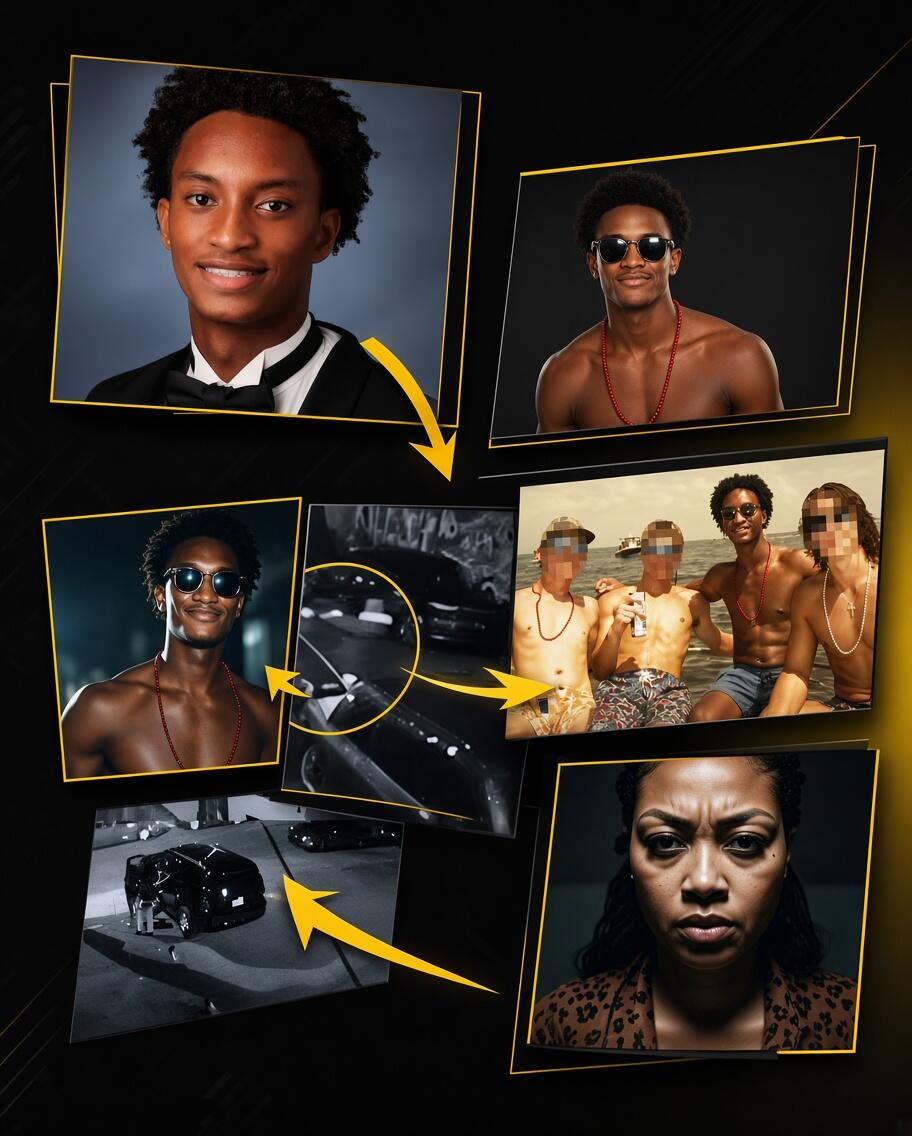
Nolan Wells Death Investigation: Viral Video, Missing Phone and a Mother’s Search for Answers Fuel New Questions
A viral video once viewed by thousands of people as a possible glimpse into Nolan Wells’ final moments has become one of the most disputed pieces of evidence in the investigation into the Mississippi teenager’s death.
The footage appeared to show young people gathered near boats on Horn Island on July 4, with a voice apparently demanding that someone return a phone. As the clip spread across TikTok, Reddit, X and other platforms, viewers began speculating that the person shouting was Wells and that the video captured a confrontation shortly before he disappeared.
But a close friend of Wells later came forward with a very different explanation.
Tracestin Shepherd told ABC News and Rolling Stone that the voice in the video was his, not Wells’. He said the footage captured a disagreement involving him and other people on the boat and had nothing to do with Wells’ disappearance.
That clarification did not end the online debate.
Instead, it highlighted a much larger problem surrounding the Wells investigation: several pieces of information that appear straightforward at first have become increasingly difficult to interpret once the full context is examined.
And at the center of it all remains one question:
What happened to Nolan Wells after he was last known to be on Horn Island?
A video becomes the center of a social-media storm
Wells, an 18-year-old football player from Ocean Springs, Mississippi, traveled to Horn Island with friends on July 4 to celebrate Independence Day.
The group eventually returned toward the mainland, while Wells remained on the island.
His body was discovered two days later.
Authorities initially said they did not suspect foul play, while Wells’ family quickly challenged the idea that he had simply chosen to remain behind and later drowned.
The family’s concerns intensified after questions emerged over the circumstances surrounding Wells’ phone, his reported plans and conflicting accounts about whether he intended to leave the island.
Then the video appeared.
The footage spread rapidly online.
Viewers claimed to see Wells standing among people on the island and hear him demanding that someone return his phone.
Attorney Ben Crump, who represents Wells’ parents, also referred publicly to a video in which he said Wells could be heard saying, “Give me my freaking phone. What are you freaking doing?” The Jackson County Sheriff’s Office confirmed it was seeking original footage related to an alleged altercation but did not publicly confirm that Wells was the person shown or heard in the clip.
That distinction became crucial.
Shepherd later said the voice belonged to him.
According to his account, the video captured a dispute involving him and other people, and Wells was not the person shouting.
ABC News reported Shepherd’s explanation, while Rolling Stone separately reported his account of what happened in the footage.
The revelation dramatically changed how the clip could be interpreted.
What thousands of viewers had treated as potential evidence involving Wells was now being disputed by someone who said he was actually in the video.
The mother’s questions have not gone away
Christine Wonsley, Wells’ mother, has repeatedly said she does not believe her son would voluntarily remain behind on the island.
In interviews, she described her son as someone who would normally return with the group he arrived with.
The family has also focused heavily on the fact that Wells’ phone and car keys were not with him when he was last known to be on the island.
Wonsley told investigators and reporters that the phone was eventually located on the mainland in the possession of people connected to the group.
She also said she noticed that some Snapchat and text-message activity appeared to be missing from the device.
Those claims became one of the biggest drivers of online speculation.
To some internet users, a missing phone combined with missing social-media content looked suspicious.
To others, the explanation could be much more ordinary.
Friends have said Wells left his phone behind while swimming because they did not want it damaged by water. Warren Hudson, one of Wells’ friends, later disputed the idea that anyone deliberately deleted information from the device and said people commonly left phones on boats during the outing.
That leaves investigators with a question that cannot be answered by TikTok comments:
Were the missing messages actually deleted, automatically removed by an app, or simply never present on the device?
The answer could potentially be established through forensic examination.
The phone is now a major piece of evidence
Wells’ family has taken formal steps to obtain digital information connected to his accounts.
Court records show that the family’s legal team subpoenaed Facebook, Instagram, WhatsApp, Snapchat, TikTok and Life360 for information related to Wells and his movements.
That move is significant because the case is ultimately a timeline problem.
Investigators need to establish where Wells was, who he communicated with and what happened after the group began leaving Horn Island.
Digital records could potentially help answer those questions.
Location information from Life360 and other services could be compared with cellphone records and witness accounts.
Social-media timestamps could potentially establish when photographs or videos were created.
Messages could show what Wells told people immediately before his disappearance.
But until those records are analyzed and authenticated, online interpretations remain speculation.
The “cruelty” narrative is not supported by the disputed video
The dramatic language surrounding the viral footage has also created another problem.
Some social-media posts have described the footage as showing Wells being bullied, mistreated or involved in a violent confrontation with friends.
That description has not been established.
The person who says he was actually involved in the confrontation — Shepherd — has explicitly rejected the idea that the video depicts Wells.
He said the dispute involved him and other people and that Wells was not the person being restrained or confronted in the footage.
This does not mean there were no disagreements or troubling incidents during the July 4 gathering.
It means that the viral video cannot currently be presented as proof of one.
That distinction is particularly important because online users have already attached identities, motives and criminal accusations to people based on footage that has since been disputed.
Reddit remains sharply divided
The debate is not limited to TikTok.
On Reddit, discussions about the Wells case have split into two broad camps.
One side believes the available timeline contains too many unanswered questions to accept an accidental drowning explanation without further investigation.
A widely discussed Reddit thread highlights the conflicting accounts concerning whether Wells planned to remain on Horn Island, questions about his phone and the circumstances surrounding the group’s departure.
Other Reddit users have urged people to slow down.
One discussion responding to the viral video emphasized that the online community does not yet know whether foul play occurred and warned against treating every inconsistency as evidence of a crime.
Another commenter argued that the video itself had already been misidentified and pointed to Shepherd’s explanation.
The divide illustrates how quickly the case has become an internet true-crime investigation of its own.
A tragedy becomes a digital evidence battle
The Wells family’s decision to subpoena technology companies reflects how important digital evidence has become.
It also reflects the family’s frustration with the early public narrative surrounding the case.
Initially, authorities indicated that Wells may have drowned after remaining on the island.
His family questioned that conclusion, arguing that important facts had not been resolved.
An independent autopsy later failed to establish a definitive cause or manner of death, listing both as undetermined pending further investigation. The examination also faced limitations because of the condition of Wells’ remains.
The official autopsy has since been completed, but its findings have not been publicly released.
That means the public still does not have the forensic conclusion needed to settle one of the most basic questions:
How did Nolan Wells die?
The family has sought answers rather than simply accepting the first explanation
Wonsley has repeatedly emphasized that the family wants to understand what happened.
In an interview with CNN, she described the grief of losing her son while still waiting for answers and said the family had not had an opportunity to fully grieve because of the continuing uncertainty.
Her public statements have helped turn the case into a national story.
The NAACP has since joined the Wells family’s legal effort, while prominent figures and civil-rights advocates have called for greater transparency.
At the same time, the attention has generated a darker side effect: people connected to the case have faced online harassment and threats.
That is one reason the distinction between investigation and speculation has become increasingly important.
The online theories have consequences
The Wells case demonstrates how quickly a social-media theory can become something much larger.
A short video becomes “the final video.”
An unclear voice becomes “Nolan.”
A missing Snapchat message becomes “deleted evidence.”
A private social-media account becomes “proof someone is hiding something.”
A disagreement becomes “an attack.”
Each individual claim may appear plausible when viewed alone.
But an investigation requires something different: corroboration.
That means original video files, metadata, forensic analysis, witness statements, GPS records, phone records and medical evidence must be compared against one another.
The fact that one piece of evidence appears suspicious does not automatically prove criminal conduct.
What investigators still need to establish
Several major questions remain open.
Why did Wells remain on Horn Island?
Did he actually intend to return to the mainland?
When was he last seen alive?
Who was with him at that time?
What happened to his phone?
What happened to the social-media material allegedly missing from the device?
What do location records show?
And, ultimately, what caused his death?
Those questions are more important than the viral interpretations surrounding any single video.
The disputed footage may still have value to investigators. Even if Wells is not the person heard shouting, the original recording could potentially help establish who was present, where they were and what else was happening at the time.
That is why investigators have sought original photographs and videos rather than relying on compressed versions circulating online.
The road ahead
The investigation now appears to be moving toward a more evidence-driven phase.
The Wells family has sought digital records from multiple technology companies. The official autopsy has been completed. Investigators continue gathering evidence, and prosecutors are expected to present the case to a grand jury.
The viral video that once appeared to offer a dramatic glimpse into Wells’ final moments now serves as a cautionary example.
It may still contain useful information.
But it also shows how easily an unresolved tragedy can be transformed online into a narrative that outruns the evidence.
For Christine Wonsley and her family, the central issue has never been whether a video can generate millions of views.
It is whether the evidence can finally answer the question they have been asking since July:
What happened to Nolan Wells?
Until investigators establish the answer, neither the most disturbing theory on TikTok nor the most reassuring explanation can be treated as fact.
The video may have been misunderstood.
The timeline may yet change.
And the evidence that ultimately matters most may still be sitting inside a phone, a GPS record, an autopsy report or another piece of evidence that the public has not yet seen.
Để lại một bình luận