Four legends sang the exact same hymn 33 years apart… and after November 14, only two of them are left on this earth 😭💔
In 1976, The Oak Ridge Boys recorded a forgotten gospel track that completely flopped on the charts. Yet they refused to drop it from their lives—and when Bill Gaither caught the same four voices singing it again in a tiny room in 2009, nobody knew how haunting that video would become 👀🔥
Wait—why did a hymn written behind prison bars in 1914 mean so much to this quartet? What happened on November 14 that left fans across country and gospel music heartbroken? And why are thousands of viewers suddenly replaying that 2009 room recording in tears? 😢🎶
Don’t scroll past—the full story behind the song and the two voices left behind is right here 👇🔥
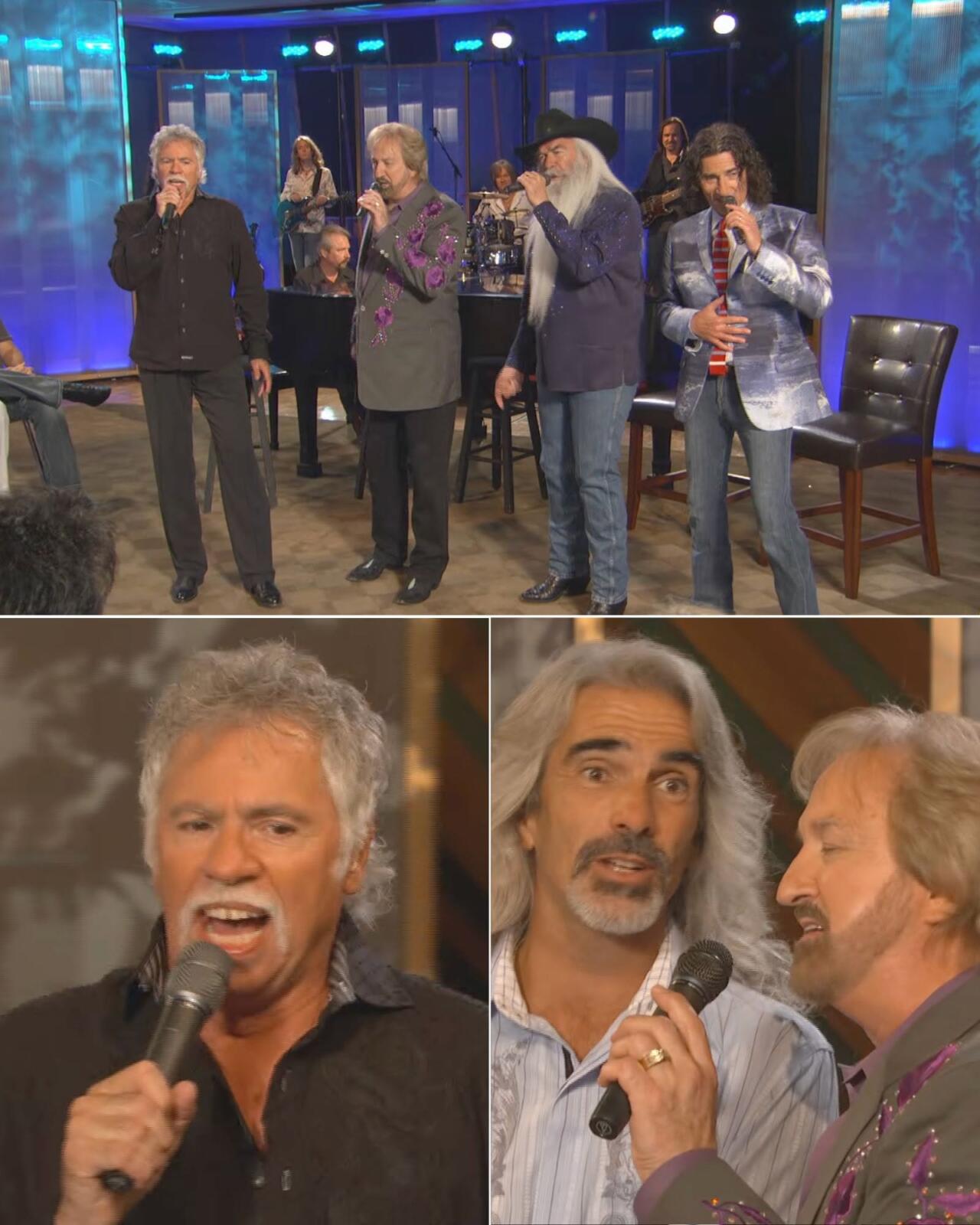
When four singers stand in a tight circle and lock into four-part harmony, the sound often feels permanent—immune to the passage of decades, changing radio formats, or the slow toll of time. That illusion is precisely why a pair of performances separated by 33 years has become a focal point of grief, nostalgia, and reflection across country and gospel music circles following November 14, 2026.
In 1976, the classic lineup of The Oak Ridge Boys—lead singer Duane Allen, baritone William Lee Golden, bass Richard Sterban, and tenor Joe Bonsall—recorded the traditional gospel hymn “Where the Soul Never Dies” for a Columbia album and issued it as a single. At the time, the record failed to chart, arriving just one year before the group pivoted toward mainstream country music and broke through with hits like “Y’all Come Back Saloon” and later “Elvira.” Yet the song never left them. In 2009, gospel impresario Bill Gaither filmed the exact same four men performing the hymn in an intimate studio gathering in Alexandria, Indiana. Today, after the losses that reduced that iconic quartet to two surviving members, fans across Reddit, X, YouTube, and Facebook are revisiting both recordings—alongside the remarkable, troubled origin story of the 1914 hymn itself.
A 1976 Chart Miss That Refused to Fade Away
Before The Oak Ridge Boys became staples of country radio and arena tours, they spent decades building their reputation on the Southern gospel circuit. By 1973, the group had assembled the four-man lineup that would define its golden era: Duane Allen, William Lee Golden, Richard Sterban, and Joe Bonsall.
When the quartet entered the studio in 1976 to record “Where the Soul Never Dies” for Columbia Records, they were still navigating the transition between traditional gospel roots and a broader commercial identity. Released as a single, the track made no impact on the charts. A year later, in 1977, the group fully embraced country music, launching a run of No. 1 singles, platinum records, and Country Music Hall of Fame recognition.
In the music business, non-charting singles from transitional years are routinely shelved and forgotten. The Oak Ridge Boys took the opposite approach. Rather than treating “Where the Soul Never Dies” as a relic of an earlier chapter, the quartet kept the hymn in its live repertoire and personal musical identity for decades. For longtime followers, that decision underscored a defining trait of the group: even at the height of country stardom, their vocal blend remained anchored in gospel phrasing, tight barbershop-style intervals, and songs built around faith and mortality.
Behind Prison Bars in 1914: The Unlikely Story of William M. Golden
Part of the fascination surrounding “Where the Soul Never Dies” stems from the history of the man credited with writing it—a figure whose name bears an uncanny resemblance to Oak Ridge Boys baritone William Lee Golden, though the two were unrelated.
The hymn was copyrighted in 1914 by William M. Golden, a Mississippi-born songwriter whose life story has long circulated in Southern gospel histories. According to historical accounts preserved in gospel hymnals and music archives, William M. Golden composed many of his most enduring songs—including “Where the Soul Never Dies”—while serving an eight-year prison sentence. Confronted with confinement and regret, he turned to sacred songwriting, crafting lyrics centered on a place free from sorrow, farewells, and death.
Over more than a century, the song became a cornerstone of American sacred music, recorded by generations of country, bluegrass, and gospel artists—from Hank Williams and Johnny Cash to the Statler Brothers and Ricky Skaggs. Its appeal has always rested on plainspoken directness: a promise of reunion in a realm where goodbyes no longer exist. For The Oak Ridge Boys, singing those words in 1976 was an expression of tradition; singing them decades later carried the weight of lived experience.
Inside Bill Gaither’s Studio in 2009: Four Voices, No Gimmicks
In 2009, 33 years after their Columbia recording, Bill Gaither invited The Oak Ridge Boys to his studio in Alexandria, Indiana, for one of his signature Homecoming-style sessions. Filmed in front of a small room of friends and fellow singers rather than a massive concert crowd, the performance stripped away stage lighting, pyro, and arena production.
What remained on camera were the exact same four men—Allen, Golden, Sterban, and Bonsall—standing close together, reading the room and each other with the instinct that only comes from thousands of nights on the road. In the 2009 footage, the harmonies are heavier with age and texture than they were in 1976, yet unmistakably locked in: Bonsall’s bright, urgent tenor cutting over the top, Allen’s steady lead carrying the melody, Golden’s warm baritone filling the middle, and Sterban’s signature bass anchoring the bottom end.
At the time of filming, the video played as a celebration of longevity—proof that four singers could stay together for more than three decades without losing their blend. Viewed after November 14, 2026, however, the clip has taken on an entirely different emotional dimension.
From Four to Two: Grief, Tribute, and the Reality of Time
The emotional resonance of that 2009 session deepened sharply as time caught up with the classic quartet. Joe Bonsall, whose energetic stage presence and high tenor helped define the group for half a century, stepped back from touring due to health struggles before passing away in July 2024 following complications from amyotrophic lateral sclerosis (ALS). Then, on November 14, 2026, news of another passing reduced the four men who stood in Bill Gaither’s studio to just two surviving members, closing the book on any possibility of the original four voices ever harmonizing together again in this life.
Because the lyrics of “Where the Soul Never Dies” explicitly speak of a place where “no sad farewells are ever spoken” and where loved ones meet again beyond the grave, listeners immediately connected the song’s message to the reality facing the surviving members and their families.
How Fans on Reddit, YouTube, and X Are Reacting
Across social media platforms, the juxtaposition of the 1976 studio track, the 2009 Gaither session, and the November 14 milestone has triggered an outpouring of emotion and detailed discussion among music fans.
On YouTube, comment sections beneath uploads of the 2009 Alexandria, Indiana performance have turned into virtual memorial walls. Viewers repeatedly point out the rarity of seeing the exact same four vocalists perform the same arrangement 33 years apart, with many noting that the lack of studio polish makes every breath, glance, and smile between the four men feel deeply personal. Several top comments highlight how the song’s 1914 origin—written by a man looking for redemption behind prison walls—adds another layer of grace when sung by four lifelong friends near the twilight of their careers.
On Reddit, discussions across country and music communities such as r/CountryMusicStuff and r/ClassicCountry have focused on both the musical craft of the quartet and the bittersweet nature of watching legacy acts age. Users noted that while casual radio listeners associate The Oak Ridge Boys almost exclusively with “Elvira,” their gospel recordings—especially “Where the Soul Never Dies”—showcase why they were inducted into both the Gospel Music Hall of Fame and the Country Music Hall of Fame. Commenters also praised Bill Gaither’s studio recordings for capturing aging country and gospel legends in relaxed, conversational settings before it was too late.
On X and Facebook, country radio hosts, gospel historians, and longtime concertgoers have shared side-by-side clips of the 1976 audio and the 2009 video, emphasizing the rare stability of the Allen–Golden–Sterban–Bonsall lineup in an industry notorious for bitter breakups and rotating rosters.
What Remains When Half the Quartet Is Gone
Looking ahead, the story of “Where the Soul Never Dies” and The Oak Ridge Boys stands as a testament to why recorded music—and simple, unscripted video sessions—matter so deeply. In 1976, nobody could have predicted that an uncharting Columbia single would become an emotional touchstone fifty years later, nor that a quiet afternoon in an Indiana studio in 2009 would preserve one of the final definitive portraits of four voices singing in complete unity.
For the two surviving members and the millions of fans who grew up with their harmonies, the grief after November 14 is undeniable. Yet as the final chord of William M. Golden’s 1914 hymn still echoes through speakers and screens, the song continues to do the exact job it was written to do more than a century ago: reminding listeners that while human voices eventually fall silent, the music and bonds they leave behind refuse to die.
Để lại một bình luận