Everyone thinks Dolly Parton’s biggest love songs are sweet romantic fairy tales… until you actually read the real stories hidden inside her lyrics 😱💔
Two of the most devastating songs in music history were written by Dolly in the SAME night—and fans online are still fighting over what she really meant when she begged another woman not to take her man, or said goodbye without a single angry word 👀🔥
Wait—why are Reddit and TikTok suddenly tearing apart modern covers of her classics? Which heartbreak track was actually inspired by a painful fight with her own husband right after their wedding? And why did one tribute performance just leave Taylor Swift in tears on live TV? 😭🎶
Don’t scroll past—the truth behind Dolly’s most unforgettable love lyrics is right here 👇🔥
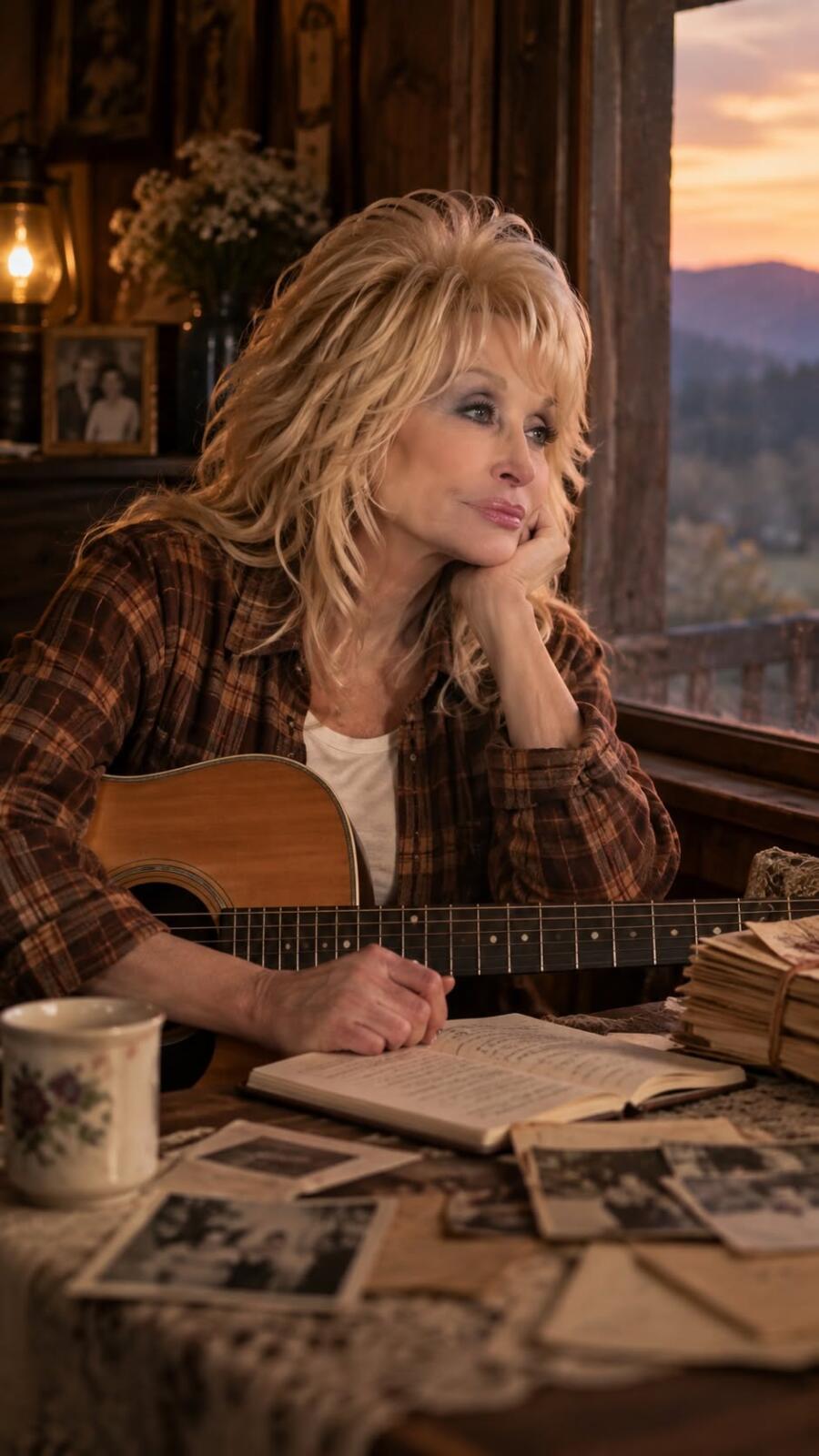
Long before streaming algorithms measured heartbreak in viral audio clips, Dolly Parton built a catalog of love songs that refused to treat romance as simple or tidy. In the months following her passing in August 2026, renewed attention to her catalog—highlighted by emotional tributes at the November 2026 CMA Awards and surging streams across older duets and solo ballads—has put her songwriting back under a microscope. Across Reddit threads, TikTok edits, and music journalism, listeners are revisiting what made Parton’s approach to love so distinctive: her willingness to hold tenderness, pride, longing, and farewell inside the very same verse.
Rather than relying on ornate metaphors, Parton wrote in conversational, unvarnished language that captured the contradictions of attachment. Whether writing about walking away from a mentor, confronting insecurity in marriage, or watching ambition pull two people apart, her lyrics continue to generate passionate analysis—and occasional sharp disagreement—among fans debating vulnerability, agency, and how modern artists reinterpret her work.
One Night, Two Masterpieces: The Dual Blueprint of Parton’s Love Writing
Few songwriting anecdotes circulate more widely among music fans than the story that Parton wrote “Jolene” and “I Will Always Love You” on the same day in 1973. Together, the two songs form a nearly complete map of how she understood romantic tension—one rooted in desperate attachment, the other in clear-eyed release.
In “I Will Always Love You,” Parton stripped away the bitterness that often defines breakup songs. Written as she prepared to leave longtime musical partner and mentor Porter Wagoner to pursue a solo career, the lyric opens not with blame, but with a blessing: wishing the other person kindness and everything they dreamed of. In interviews over the years, Parton explained that the song was meant to communicate that leaving someone does not erase gratitude or love. Critics and songwriters have frequently pointed out that its emotional weight comes precisely from its restraint—no elaborate imagery, just direct lines that acknowledge two truths at once: staying is impossible, yet affection remains intact.
“Jolene,” written during that same burst of inspiration, occupies the opposite emotional pole. Inspired in part by a bank teller who had a crush on Parton’s husband, Carl Dean, the lyric discards pride altogether. Instead of attacking a rival or demanding loyalty, the narrator pleads with another woman, openly admitting fear, insecurity, and the sense that her happiness hangs on someone else’s choice. Cultural analyses noted that the song’s open-ended structure—ending without telling listeners whether Jolene walks away or stays—turns a personal moment of vulnerability into an unresolved psychological drama that listeners keep projecting their own experiences onto decades later.
Marriage, Ambition, and the Unvarnished Truth Behind Her Lesser-Known Ballads
While “Jolene” and “I Will Always Love You” dominate public memory, music outlets examining Parton’s catalog in 2026 have emphasized how deeply her love songs drew from real friction inside marriage and working life.
One striking example is her 1968 track “Just Because I’m a Woman.” According to Parton’s own accounts recounted in PBS News and songwriting retrospectives, the song grew out of an early-marriage conversation with Carl Dean after he questioned her about past relationships before they met. Rather than apologizing or retreating into submissiveness, Parton turned the moment into a pointed reflection on romantic double standards, singing that her mistakes were no worse than a man’s. For listeners, it demonstrated that her idea of love never required erasing self-respect.
Similarly, her 1980 recording of Mike Settle’s “But You Know I Love You”—revisited in an October 2026 Taste of Country breakdown—highlighted another recurring tension in her repertoire: what happens when love collides with livelihood and ambition. The lyric confronts the reality that affection alone cannot pay bills or replace a calling on the road, capturing the ache of choosing work while wishing love were enough on its own.
Even in her more overtly romantic songs, Parton often paired devotion with quiet realism. Tracks written for or inspired by Dean—such as “From Here to the Moon and Back” and “Forever Love,” which she sang at their 50th wedding anniversary vow renewal in 2016—leaned on steadiness, friendship, and long-term endurance rather than fleeting infatuation. Meanwhile, on “The Grass Is Blue” (1999), she inverted heartbreak entirely, using absurdly cheerful opposites to show a narrator trying—and failing—to talk herself out of grief.
Cover Wars and Lyric Debates: How Redditors Dissect Parton’s Emotional Nuance
Because Parton’s lyrics leave so much emotional space between the lines, they have sparked intense online debates whenever other superstars cover or reinterpret them—a pattern that continued heavily across Reddit throughout 2026.
On r/beyonce and r/popculturechat, users engaged in lengthy threads comparing Parton’s original “Jolene” with Beyoncé’s reimagined version from Cowboy Carter, where the pleading tone was rewritten into a warning. Many commenters argued that altering the lyrics fundamentally changed the psychological power of the song. Users pointed out that Parton’s original hit harder precisely because Dolly—an icon of glamour herself—was willing to sound powerless, praising another woman’s beauty and admitting she could not control a man’s heart. Others pushed back in the same threads, arguing that both versions still circled around fear of losing a partner and asking why listeners sympathized more with a pleading narrator than a defiant one.
A similar debate has long played out on r/todayilearned and music forums over “I Will Always Love You” versus Whitney Houston’s landmark 1992 cover. While listeners widely praised Houston’s vocal power, many Reddit commenters maintained that Parton’s 1973 acoustic recording carried a quieter, bittersweet intimacy—making it sound less like a triumphant stadium anthem and more like a private, tearful goodbye spoken across a desk.
Even specific lines in her upbeat hits trigger close reading. On r/ToddintheShadow in September 2026, users debated the exact emotional register of “Here You Come Again” (written by Barry Mann and Cynthia Weil and popularized by Parton in 1977). Commenters went back and forth over whether the lyric framed falling back under an old flame’s spell as joyful surrender or helpless self-sabotage, ultimately noting that Parton’s wistful vocal delivery managed to make both readings feel true at the same time.
Viral Nostalgia on TikTok and Live Tributes Keep the Songs Alive
While Redditors dissect lyrical subtext, TikTok and YouTube have driven a massive wave of emotional rediscovery around Parton’s love songs. Her 1976 duet with Chet Atkins, “Do I Ever Cross Your Mind,” experienced a major resurgence via TikTok nostalgia trends, pushing the decades-old track back into Top 10 digital rankings as users paired its lyrics about wishing to turn back time with personal memory videos.
Following Parton’s death in August 2026, lyric videos and live archival performances of “I Will Always Love You” and “Islands in the Stream” drew millions of views and tens of thousands of comments from listeners sharing stories of lost spouses, estranged friends, and family grief. That collective emotion spilled onto the broadcast stage at the November 2026 CMA Awards, where a live tribute performance of “I Will Always Love You” prompted audience members—including Taylor Swift and Luke Combs—to sing along or visibly tear up during the broadcast, according to Us Weekly.
Why Her Chemistry of Love Endures
Looking forward, the enduring pull of Dolly Parton’s love songs lies in the fact that she never pretended love was painless or purely victorious. By allowing vulnerability, humor, devotion, and grief to coexist without neat resolutions, she created songs that grow alongside the listener—sounding one way during a first crush, another during a complicated marriage, and something deeper still after loss.
As new generations discover her catalog through viral clips, covers, and tribute performances, the debates over what her lyrics truly mean only underscore their staying power. Long after trends in production shift, Parton’s simple, unguarded words continue to articulate the exact feelings people struggle to say out loud when love arrives—and when it has to let go.
Để lại một bình luận