Before dawn on November 17, 2026, two suspected Russian military aircraft crossed into Japanese airspace near a sacred island — and fighter jets scrambled to meet them 😳
It lasted roughly three minutes per aircraft. Then the flight path reportedly swept past the Tsushima Strait and down toward Taiwan and the Pacific — right as major diplomatic summits and high-stakes talks were converging across Asia.
Wait until you see the four-part chain of friction Power Faultlines connects in its breakdown: an August visit to the Kuril Islands, a journalist detained in Russia, a seized tobacco business in November, and now an airspace protest from Tokyo… all while Japan brings in new F-15EX jets, orders Ukrainian interceptor drones, and hosts India’s defense minister.
Was it a routine test, a calculated signal, or something bigger? Watch the full breakdown and see every detail 👇
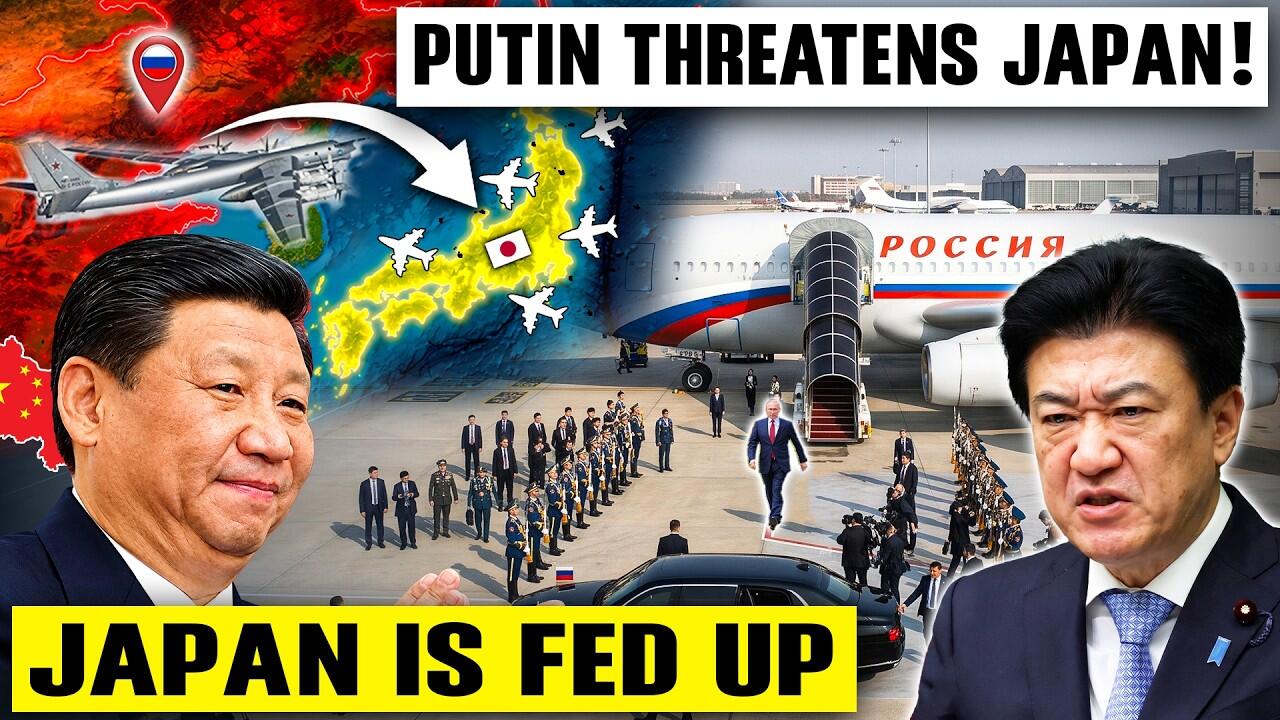
Early on Tuesday, November 17, 2026, two suspected Russian military aircraft briefly entered Japanese airspace off southwestern Japan near Okinoshima—a small, historically significant island off Fukuoka Prefecture—prompting Japan Air Self-Defense Force (JASDF) fighter jets to scramble and Tokyo to lodge a sharp diplomatic protest with Moscow. Within hours, reports also emerged of Russian military aircraft entering South Korea’s Air Defense Identification Zone (KADIZ) and passing near Taiwan’s air defense zone, turning a brief morning incident into a wider regional flashpoint.
In a 13-minute video breakdown titled “Russia Just Crossed Japan’s RED LINE… Japanese Fighter Jets SCRAMBLED!,” the channel Power Faultlines examines the timeline of the November 17 flights, pairs them with a sequence of recent diplomatic, legal, and economic friction points between Moscow and Tokyo, and places the episode against major regional summits and Japan’s ongoing defense modernization.
The Drama at a Glance: A Three-Minute Breach and a Wider Flight Path
According to Power Faultlines and news reports covering Tokyo’s official statements, the incident unfolded around 4:07 a.m. local time on November 17, 2026, northwest of Okinoshima in the waters off Kyushu:
-
Brief airspace entries and fighter scramble: Japanese defense authorities reported that the first aircraft entered airspace northwest of Okinoshima at 4:07 a.m. for roughly three minutes, followed by a second aircraft entering around 4:09 a.m. and departing by 4:12 a.m., with fighter jets scrambling and issuing warnings. Chief Cabinet Secretary Minoru Kihara called the intrusion a serious infringement of sovereignty and security threat that is “absolutely unacceptable,” while Defense Minister Shinjiro Koizumi noted that authorities were still assessing the flight’s purpose and had not publicly confirmed the specific aircraft types.
-
Broad regional flight track: Reporting cited in the breakdown notes that aircraft activity also prompted South Korea to scramble jets after entries into the KADIZ, with flight paths described as moving through the Tsushima Strait and south between Japan’s Yonaguni island and Taiwan toward the Pacific. Analysts and outlets noted how unusual it is for Russian military flights to trace a route touching areas monitored by Japan, South Korea, and Taiwan within a tight timeframe.
-
Historical context on intrusions and flares: Power Faultlines points to earlier flashpoints—including a brief August 2013 intrusion by two Russian Tu-95 bombers northwest of Okinoshima and a September 23, 2024 incident off Rebun Island in northern Japan in which Japanese fighters fired warning flares for the first time after a Russian patrol aircraft repeatedly crossed into Japanese airspace.
-
Summit diplomacy and Moscow’s messaging: The video highlights the timing of the flights alongside high-profile diplomatic engagements in Asia—including Russian President Vladimir Putin’s travel to China for APEC-related meetings involving U.S. President Donald Trump and Chinese President Xi Jinping, as well as a meeting in Moscow with North Korean official Jo Yong Won thanking Pyongyang for troops fighting in Kursk, amid Ukrainian intelligence reports regarding North Korean missile transfers.
Four Moves Against Japan and Tokyo’s Defense Counter-Shifts
A central argument in Power Faultlines is that the November 17 airspace incident should not be viewed in isolation, but rather alongside a series of moves affecting Japan’s interests since late summer 2026:
-
August 2026 visit to the Kuril Islands: Following Pacific Fleet exercises off Sakhalin, Putin visited the disputed Kuril Islands (known in Japan as the Northern Territories), a move that drew sharp pushback from Tokyo and underscored enduring territorial friction that has prevented a formal post-World War II peace treaty between the two countries.
-
October 2026 detention of a Japanese journalist: Russian authorities detained Hokkaido Shimbun reporter Yuki Imi on Sakhalin and transferred him to Moscow in connection with an espionage investigation carrying a severe prison term—an arrest strongly contested by Japanese officials and media organizations.
-
November 2026 state seizure of tobacco assets: Putin signed a decree placing Japan Tobacco’s Russian operations under temporary state management, adding to a broader pattern of asset seizures and retaliatory measures tied to sanctions over the war in Ukraine.
-
November 17 airspace breach: The early-morning flight near Okinoshima arrived just as diplomatic discussions and regional meetings were underway, reinforcing Tokyo’s view that security pressure from Moscow requires sustained vigilance.
At the same time, Power Faultlines notes that Japan—alongside regional partners—has moved to bolster its air and missile defenses. In mid-November 2026, the first U.S. Air Force F-15EX fighters slated for permanent rotation at Kadena Air Base in Okinawa arrived, complementing Japan’s own fighter fleet and defense cooperation. Tokyo has also pursued counter-drone capabilities—including contracts for interceptor drones developed with experience from the war in Ukraine—and expanded security and diplomatic engagement with partners such as India, including defense talks in Tokyo.
Wider Context: ADIZ vs. Sovereign Airspace and Regional Deterrence
Observers tracking East Asian security emphasize an important legal and operational distinction that often gets blurred in social media headlines: an Air Defense Identification Zone (ADIZ) is an area in which a country requests identification and tracking of approaching aircraft, whereas territorial airspace is sovereign territory under international law.
Because Russia and China do not recognize every ADIZ claim in the same way, unannounced entries into an ADIZ happen periodically across Northeast Asia without necessarily crossing into sovereign airspace. By contrast, when aircraft cross into sovereign airspace—even for a few minutes—governments typically treat it as a formal breach and respond with fighter scrambles, radio warnings, and diplomatic protests.
For Tokyo, managing Russian activity in the Sea of Japan, Tsushima Strait, and East China Sea also intersects with broader security pressures involving China and North Korea, making rapid detection, fighter readiness, drone defense, and alliance coordination central pillars of Japanese defense policy.
How the Community Reacted: Reddit, X, Discord, and TikTok
Across online platforms, the November 17 airspace incident and Power Faultlines’ breakdown have generated active debate over intent, legal definitions, and escalation risks:
-
On Reddit: Users in international relations and military-aviation subreddits frequently clarify the difference between ADIZ entries and sovereign airspace violations, while debating whether Moscow’s flights reflect deliberate signaling ahead of major summits, routine probing and intelligence collection, or navigation/weather factors near islands and straits.
-
On X (formerly Twitter): News alerts, map graphics, and clips from defense commentators circulate rapidly among OSINT accounts and geopolitical observers. Some users point to the sequence of asset seizures, journalist detention, and airspace friction as evidence of hardening bilateral relations, while others caution against reading grand strategic masterstrokes into every military flight without official confirmation of mission details.
-
In Discord servers: Smaller aviation and defense groups focus on operational details—such as scramble response times from bases like Tsuiki, how patrol or reconnaissance aircraft operate near narrow straits, and how the arrival of F-15EX aircraft at Kadena fits into regional force posture.
-
On TikTok: Short-form videos condense the story into high-urgency hooks about fighter jets scrambling and “red lines” being crossed, often sparking rapid comment exchanges between users who view the move as provocative brinkmanship and those who argue that brief, non-firing intercepts are a recurring feature of Great Power rivalry.
What Comes Next: What to Watch in the Region
As diplomatic talks, sanctions disputes, and regional defense upgrades continue into late 2026 and beyond, several developments will shape how this story evolves:
-
Further details and follow-on patrols: Whether Japanese officials release additional technical details about the aircraft involved, or whether follow-on flights occur near Hokkaido, Kyushu, or southwestern islands, will indicate how persistent this pattern becomes.
-
Diplomatic fallout and detained nationals: Tokyo’s diplomatic pressure over airspace violations, economic measures, and the case of detained reporter Yuki Imi will remain a key test of bilateral relations.
-
Force posture and counter-drone adaptation: The integration of newer fighter aircraft, air-defense systems, and lessons drawn from modern drone and missile warfare will continue to shape how Japan and its partners monitor and deter intrusions across surrounding seas.
Để lại một bình luận