They aren’t Western analysts. They aren’t anti-war critics. They’re Russia’s own pro-war Telegram bloggers — and some are now openly using a word Moscow couldn’t bear to hear two years ago 😳
After the Crimean Bridge’s road arch collapsed into the sea on November 17, 2026, pro-war military commentators erupted in shock, anger, and bleak warnings — from urging residents in Crimea to think about leaving to predicting a “defeat” if the current path holds.
Wait until you see what a jailed nationalist figure wrote from a Russian prison cell via handwritten letters… why one hawkish blogger says Moscow’s hopes in Washington fell flat… and why another warns that billionaires moving money abroad and fuel limits tell a story louder than state TV.
Are they sounding a real alarm, or pushing for even sharper escalation? Watch the full breakdown and decide for yourself 👇
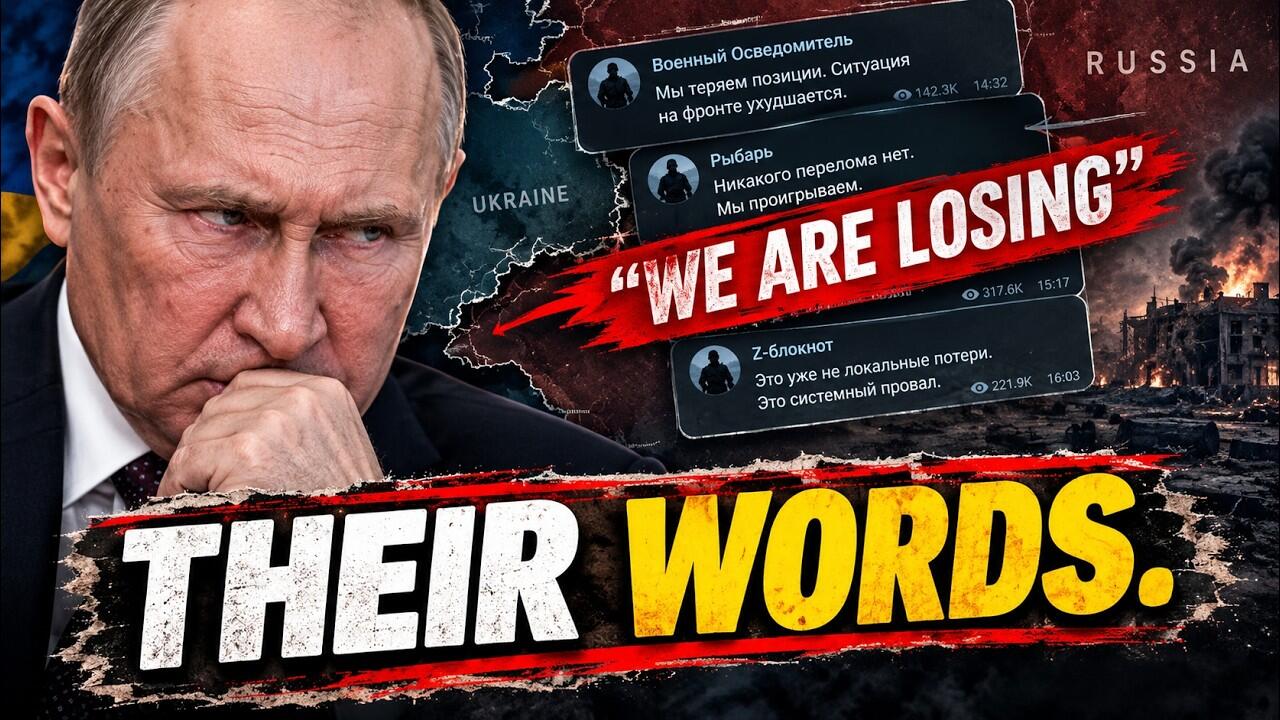
For much of the war in Ukraine, pro-Kremlin television broadcasts and official briefings have projected steady resolve, while critics at home faced steep legal risks under Russia’s laws against “discrediting” the armed forces. Yet over recent months—and with sudden intensity following strikes on the Kerch Strait’s Crimean Bridge in mid-November 2026—a growing number of influential Russian military correspondents and nationalist bloggers, widely known as voenkory or milbloggers, have published stark assessments questioning Moscow’s trajectory.
In a 14-minute video breakdown titled “Russia’s Own War Bloggers Now Say Russia Is Losing… In Their Own Words,” the channel Main Effort HQ translates and examines commentary from prominent figures inside Russia’s pro-war information space, comparing their warnings against broader reporting, OSINT tracking, and independent conflict assessments. What makes these voices draw heavy attention across defense circles is not that they oppose the war—many supported the 2022 invasion from day one and favor harsher escalation—but that even hardline supporters are voicing deep pessimism.
The Drama at a Glance: Bridge Collapse, Prison Letters, and Bleak Forecasts
According to Main Effort HQ’s walkthrough of translated Telegram posts and essays, pessimism inside Russia’s pro-war commentary has built across several months before spiking after the November 17, 2026 collapse of the Crimean Bridge’s road arch:
-
Earlier warnings over attrition and mobilization: Main Effort HQ highlights a June 11, 2026 post by nationalist writer Maxim Kalashnikov (Roy TV) summarizing views associated with futurist and military theorist Sergey Pereslegin, warning that Russia’s current course risks defeat due to delayed mobilization, public frustration over internet restrictions, drone strikes on logistics and infrastructure, and costly grinding battles around key fortified areas in Donetsk such as Sloviansk and Kramatorsk. In follow-up commentary, Kalashnikov also argued that Kremlin hopes of leveraging diplomatic pressure in Washington—including expectations around talks involving U.S. President Donald Trump—had not delivered the outcome Moscow sought.
-
Shockwaves after the Crimean Bridge strike: Following the November 17 collapse of the bridge’s road arch into the sea amid strikes on the Kerch Strait crossing, Telegram channel Art Jockey wrote that the bridge was suspending operations until the end of the war, questioned whether Moscow could reliably protect it from future strikes, and urged residents in Crimea to consider leaving. Other voices—including Alexey Vasiliev and Air Force-linked channel Fighter Bomber—focused on strike tempo and vulnerability of the remaining spans, while war correspondent Andrey Filatov faulted ground-force leadership for unresolved vulnerabilities deep in the rear. By contrast, large pro-war channel Rybar described the damage as non-critical, illustrating sharp divisions even among pro-war accounts.
-
Dispatches from inside a Russian prison cell: The video also cites handwritten letters published on the Telegram channel of former FSB officer and early 2014 Donbas figure Igor Girkin (Strelkov), who was imprisoned in 2024 on extremism charges after sharply criticizing President Vladimir Putin’s leadership. In a post responding to a November 8 letter, Girkin wrote pessimistically about Russia’s leadership conceding ground without stiff resistance and noted that falling autumn leaves reduce forest cover, aiding Ukrainian drones.
-
Money flight, fuel limits, and long-range fears: Commentary shared via Officer on the Front Line (citing Gleman) and an essay by Art Jockey echoed on Svodki pointed to strain on the domestic economy, rationing and fuel restrictions in Crimea, strikes on energy and logistics infrastructure, and elite capital outflows—alongside warnings over long-range strike capabilities and the possibility of a major Ukrainian counter-offensive in 2027.
Fact-Checking the Claims: What Holds Up and What Remains Speculative
When pro-war commentators use words like “defeat” or “catastrophe,” outside analysts stress the need to separate verifiable facts on the ground from dramatic rhetoric or worst-case scenarios. Main Effort HQ attempts that distinction directly, weighing specific claims against observable developments and independent assessments such as the Institute for the Study of War (ISW):
-
Infrastructure, fuel, and logistics pressure: Reports of severe damage to the Crimean Bridge’s road span on November 17, 2026, ongoing strikes against refineries, ports, and logistics nodes, and fuel supply constraints in Crimea align with wider reporting that logistics and rear-area infrastructure remain under sustained pressure. Losing or degrading road capacity across the Kerch Strait forces greater reliance on alternative ground routes through occupied southern Ukraine, complicating supply lines.
-
Front-line pace versus territorial control: While commentary points to slow Russian territorial gains in sectors such as Donetsk and heavy attritional costs, independent assessments also note that Russian forces still occupy roughly a fifth of Ukraine, continue pressing along multiple axes, and retain the ability to launch large-scale drone and missile barrages against Ukrainian cities and energy infrastructure. In other words, stalled momentum or high costs do not equate to an immediate collapse of Russian forces on the battlefield.
-
2027 offensive forecasts and elite capital flight: Predictions of a major Ukrainian breakthrough in 2027—even when raised by Russian bloggers themselves—are scenarios rather than established facts, and Ukraine faces its own serious pressures around manpower, air defense, and winter grid security. Meanwhile, reporting on wealthy Russians moving assets abroad, state asset seizures, and economic strain points to real financial anxiety among parts of the elite, though analysts caution against extrapolating wealth flight into an imminent systemic breakdown.
Why Hawks Sound Alarmist: Ideology, Incentives, and Information Control
A critical nuance highlighted in both defense analysis and Main Effort HQ’s breakdown is motivation. Many of Russia’s loudest voenkory are not advocating for a negotiated settlement or Ukrainian sovereignty; many argue that the Kremlin has moved too slowly, held back reserves, or failed to escalate aggressively enough.
From that hawkish perspective, warning of “defeat” serves a dual purpose:
-
Pressuring leadership for harsher measures: By painting a grim picture of stalled advances, drone threats, or air-defense gaps, bloggers can argue for tougher mobilization, stricter domestic discipline, deeper strikes, or sharper confrontation with Western states.
-
Navigating a tightly policed media space: Because direct attacks on Putin or open anti-war campaigning carry severe legal consequences in Russia, commentators often frame criticism around tactical incompetence, bureaucratic inertia, or insufficient force rather than questioning the war’s legitimacy outright. Even then, figures like Girkin discovered that crossing perceived red lines can lead to prosecution and imprisonment.
At the same time, state-controlled television and official messaging continue to project stability and incremental progress, creating a visible gap between official narratives and the anxieties surfacing on Telegram channels read by soldiers, volunteers, and nationalist hardliners.
How the Community Reacted: Reddit, X, Discord, and TikTok
Translations and summaries of Russian milblogger posts routinely ricochet across Western and international social platforms, where audiences interpret the same quotes in very different ways:
-
On Reddit: Users in geopolitical and conflict subreddits frequently scrutinize translations, channel credibility, and ulterior motives. Many commenters note that Russian milbloggers have cycled between triumphalism and doom-mongering throughout the war—often sounding most alarmist when pushing for mobilization or complaining about specific commanders—while urging caution against treating Telegram angst as proof of imminent Russian defeat.
-
On X (formerly Twitter): Translated snippets about the Crimean Bridge, prison letters from Girkin, and quotes from Art Jockey or Rybar circulate rapidly among OSINT observers, historians, and commentators. Supporters of Ukraine often highlight the quotes as evidence of cracks in pro-war morale, whereas skeptical analysts and Russian nationalists sometimes dispute specific interpretations or emphasize ongoing Russian pressure along the front line.
-
In Discord servers: Smaller defense and OSINT communities tend to dig into source context—checking whether a channel is closely aligned with the Defense Ministry, tracking how quickly claims spread from smaller Telegram feeds to larger aggregators like Svodki, and comparing milblogger accounts against satellite imagery and daily front-line maps.
-
On TikTok: Short-form clips distill complex commentary into punchy headlines—such as “Russia’s own bloggers admit defeat” or dramatic reactions to the bridge strike—often compressing months of evolving commentary and caveats into fast-scrolling hooks that drive debate in the comments.
Across all four platforms, a recurring theme is skepticism paired with fascination: observers know that Telegram channels are neither neutral newsrooms nor official records, yet they remain one of the few places where internal friction inside Russia’s pro-war ecosystem is visible in real time.
What Comes Next: Morale, Diplomacy, and the Road Ahead
Looking ahead, the wave of pessimism among segments of Russia’s pro-war commentary points to several key dynamics to watch:
-
Strain inside the pro-war coalition: When influential nationalist commentators and military bloggers openly debate failure, logistics bottlenecks, and economic strain, maintaining unified enthusiasm among hardline supporters becomes harder—even if many continue to back the war effort.
-
Negotiations versus battlefield leverage: As diplomatic discussions, security-guarantee debates, and pressure campaigns continue around the conflict, perceptions of momentum—and whether time favors Moscow or Kyiv—remain central to how both sides frame their bargaining positions.
-
Continued attrition and contested narratives: With drone warfare, long-range strikes, winter infrastructure pressure, and grinding ground clashes ongoing, both battlefield realities and information battles on Telegram, X, Reddit, and TikTok will remain closely intertwined.
Để lại một bình luận