Trump’s team is pushing for a fast peace deal—and Zelenskyy just fired back with a blunt condition that puts Washington on the spot. 🚨
“We also very much want peace, but not at Ukraine’s expense alone.”
While U.S. envoys push to speed up negotiations, Russian strikes are pounding Ukraine’s power grid ahead of winter—and Kyiv says it won’t pause hitting Russian refineries unless it gets the Patriot air-defense interceptors it needs to protect its cities.
Now Zelenskyy is openly warning what happens if there’s no acceptable deal by year-end—pointing straight to a newly elected U.S. Congress in January while brushing off talk of threats from allies.
Wait until you see the exact deal Zelenskyy put on the table for a one-month refinery pause, how Trump laughed off talk of a hard deadline, and why Moscow is already calling Kyiv’s remarks a veiled threat.
Read the full breakdown before the next diplomatic clash hits the headlines 👇🔥
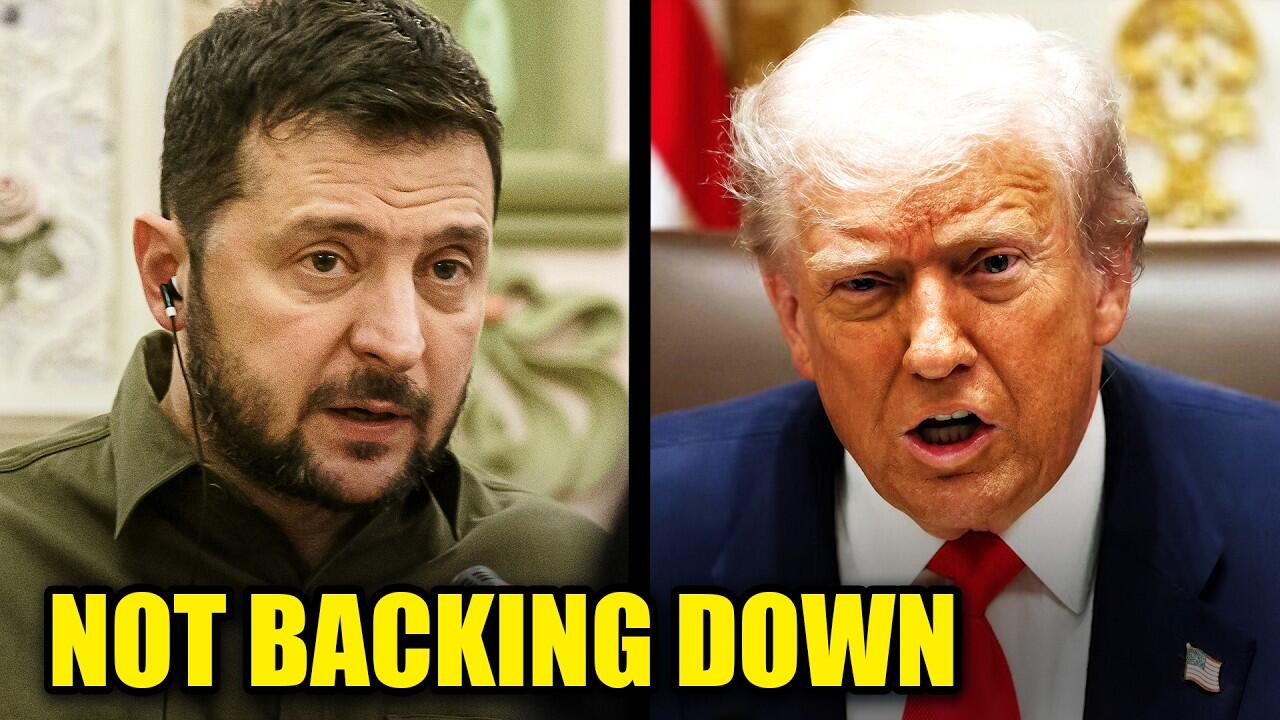
Ukrainian President Volodymyr Zelenskyy has delivered a pointed pushback against pressure for a rapid peace settlement with Moscow, warning that Kyiv will not accept a deal made “at Ukraine’s expense alone” while criticizing delays in Patriot air-defense interceptors and outlining plans to appeal to a newly seated U.S. Congress in early 2027 if talks fail to produce an acceptable outcome by year-end.
In late-November interviews—including with Bloomberg, Fox News, and British media—and amid ongoing diplomatic shuttle diplomacy involving U.S. representatives, Kyiv, Moscow, and European partners, Zelenskyy sought to draw a firm line between wanting an end to the war and surrendering territorial or sovereign red lines. At the same time, he rejected claims that President Donald Trump had threatened European allies over aid, even as he faulted the pace of U.S. air-defense deliveries while Russian missiles and drones batter Ukrainian cities and energy infrastructure.
The exchanges underscore how high the stakes have become as winter approaches: Washington is pressing for diplomatic movement, Moscow shows little sign of abandoning core demands, and Kyiv is trying to pair battlefield resilience with political leverage in both Europe and the United States.
Pushing Back on Rushed Deals and Red Lines
According to reporting from Bloomberg, Ukrainska Pravda, and regional outlets in late November 2026, Zelenskyy said U.S. special representatives—including Steve Witkoff and Jared Kushner—have pushed to conclude a peace agreement as quickly as possible, ideally before January. Following U.S.-led diplomatic contacts, including talks in Abu Dhabi and meetings involving envoys in Moscow and European capitals, negotiators have wrestled with complex questions over territorial control, ceasefires, and postwar security arrangements.
Zelenskyy’s response blended urgency with defiance. While stating that Ukraine wants peace and understands the high cost of continued fighting, he stressed that peace cannot come solely at Ukraine’s expense—rejecting demands to cede territory or formally recognize Russian-occupied areas as part of Russia, and pushing back against proposals that would compromise Ukraine’s sovereignty or constitutional path.
President Trump, responding to questions about Zelenskyy’s remarks on a January timeline, laughed off the idea that he was bound by a fixed deadline, saying he wanted the war to end as soon as possible while noting that ending a conflict “takes two to tango” and that both sides’ willingness to compromise shifts day by day. Meanwhile, Russian officials continued to insist on their own territorial and security conditions, and Kremlin envoy Kirill Dmitriev characterized Zelenskyy’s blunt comments toward Washington as an almost veiled threat.
The Refinery-for-Patriots Trade-Off and Winter Power Strikes
A central flashpoint in Zelenskyy’s public remarks has been energy infrastructure—both inside Ukraine and inside Russia. As winter sets in, Russian missile and drone attacks have knocked out power and damaged utility facilities across multiple Ukrainian regions, leaving large numbers of residents facing blackouts and cold temperatures.
In remarks aired on Fox News and covered by outlets including Reuters and The Washington Examiner, Zelenskyy tied Ukrainian strikes on Russian oil refineries directly to Moscow’s bombardment of Ukraine’s power grid. He argued that Ukraine cannot hold back from hitting Russian energy facilities if Russia continues pounding Ukrainian electricity, gas, and heating infrastructure—while suggesting that Kyiv would be willing to halt refinery strikes in exchange for concrete air-defense support, such as a package of Patriot interceptor missiles to shoot down incoming Russian ballistic and cruise missiles.
Washington has long distinguished between strikes on Russian military targets and attacks on energy infrastructure, with U.S. officials previously expressing concern over global fuel and diesel market effects when refineries are hit. Zelenskyy, however, argued that air-defense interceptors are essential to protect major cities—naming Kyiv, Dnipro, Odesa, Kharkiv, and Zaporizhzhia—against Russian strikes while diplomatic talks proceed.
Eyes on January: A New U.S. Congress and European Backing
One of the sharpest strategic signals in Zelenskyy’s late-November messaging is his look ahead to early 2027 in Washington. Following the November 2026 U.S. midterm elections—in which Democrats won majorities in both the House and the Senate, narrowing President Trump’s legislative leverage—Zelenskyy told Bloomberg that if a peace deal acceptable to Ukraine is not reached by the end of the year, Kyiv plans to appeal to the incoming Congress in January or February for new military assistance and tougher sanctions on Russia.
In the meantime, Zelenskyy emphasized that Ukraine needs its immediate air-defense and operational needs covered through December. Even as the Trump administration has shifted away from direct U.S. grant aid toward allied purchases of U.S. weapons—with NATO and European partners contributing billions of dollars—Zelenskyy has worked to keep European allies aligned. Following meetings in Berlin involving European leaders and the “Coalition of the Willing,” Zelenskyy pushed back against reports that Trump had threatened Europe over funding, stating he had not heard threats personally and expressing confidence that European partners remain committed to backing Ukraine.
How Communities Are Reacting: Reddit, X, Discord, and Analysts
Zelenskyy’s remarks and the surrounding diplomatic maneuvers have triggered brisk debate across online communities and policy circles:
-
Reddit (
r/worldnews,r/ukraine,r/geopolitics,r/CredibleDefense): Users have closely parsed whether Zelenskyy’s pivot toward the incoming Democratic-led Congress is a realistic lifeline or an uphill battle given shifting U.S. politics and competing domestic priorities. Many commenters also debate the practical math of Patriot interceptor stockpiles and production capacity. -
X (formerly Twitter) & Commentator Feeds: Clips from Zelenskyy’s interviews and Trump’s responses have circulated widely alongside posts from diplomats, commentators, and milbloggers. Supporters of Kyiv praise his refusal to trade away sovereignty under deadline pressure, while critics and pro-Kremlin accounts argue that hardening demands prolongs the war and strain ties with Washington.
-
Discord & Geopolitics/Defense Servers: In foreign-policy and strategy communities, discussions have centered on negotiation dynamics—how Washington, Moscow, Kyiv, and European capitals are positioning ahead of winter and 2027, and what happens if talks stall without a ceasefire.
-
Policy Analysts & Foreign Correspondents: Analysts note that Zelenskyy is walking a delicate tightrope: pushing hard for air defense and avoiding unfavorable territorial concessions without alienating the White House completely, while counting on European financial/military commitments and potential congressional leverage next year.
Strategic Outlook: Pressure on All Sides Heading Into 2027
The clash over negotiation timelines, refinery strikes, and Patriot deliveries highlights how diplomatic talks and battlefield attrition are tightly linked. For Kyiv, entering winter without sufficient interceptors risks severe damage to cities and power grids, making concessionary peace terms even harder to sell at home. For Washington, brokering an end to the war involves competing pressures from Moscow’s maximalist demands, Kyiv’s red lines, European allies’ security concerns, and a changing U.S. congressional landscape.
Whether late-2026 diplomacy produces a breakthrough, a temporary truce on energy strikes, or a prolonged standoff into the new Congress in January remains to be seen—leaving both the front lines and diplomatic tables on high alert.
Để lại một bình luận