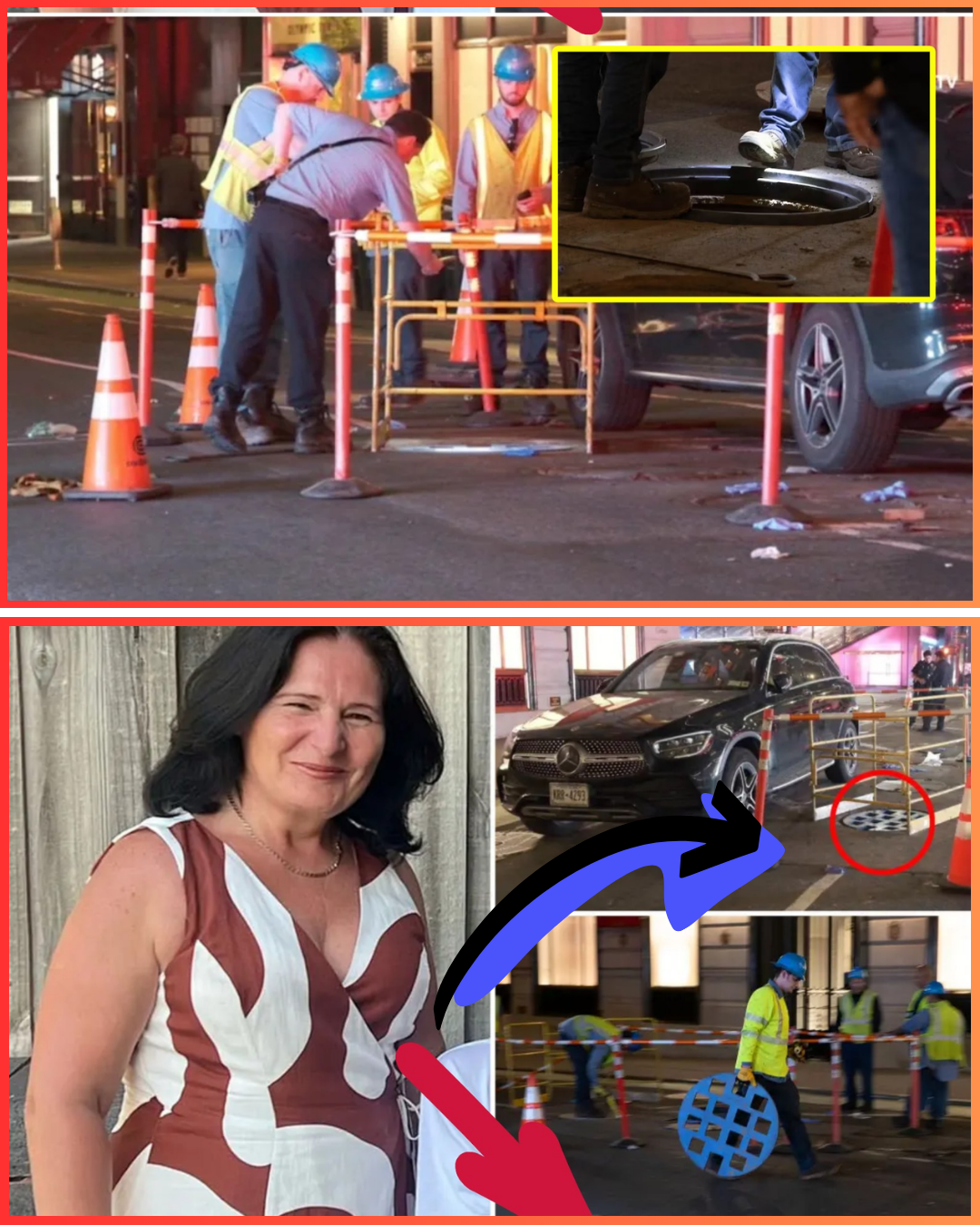
A devoted grandmother steps out of her SUV on Fifth Avenue, plunges 10 feet into an open manhole, and is hit by boiling steam that caused cardiac arrest. She was heard screaming in unbearable pain before going silent. The medical examiner has now revealed the excruciating truth behind this preventable New York City horror that has left a family shattered and reignited outrage over the city’s aging infrastructure.
On Monday night, May 18, 2026, around 11:20 p.m., 56-year-old Donike Gocaj parked her Mercedes-Benz SUV near East 52nd Street and Fifth Avenue in Midtown Manhattan, right in front of the flagship Cartier store. The loving mother of two and grandmother had just stepped out of her vehicle and taken a few steps when she suddenly vanished into an uncovered manhole, falling approximately 10 to 15 feet into a Con Edison steam vault. Witnesses who rushed to the scene were horrified to hear her desperate, agonizing screams echoing from below: “I’m dying! I’m dying!” over and over, her voice filled with unbearable pain as she was exposed to intense heat and steam. Bystanders frantically tried to help, but the situation quickly turned tragic as her cries eventually fell silent.
First responders arrived within minutes and pulled Gocaj from the hole. She was unresponsive and in cardiac arrest. She was rushed to New York-Presbyterian Hospital, where she was pronounced dead. The New York City Medical Examiner’s office later ruled her death an accident, determining the cause to be scald burns combined with inhalational thermal injury from the superheated steam, along with blunt force trauma from the fall. The steam inside these utility vaults can reach temperatures high enough to cause catastrophic injuries almost instantly, turning what might have been a survivable fall into a fatal nightmare.
Investigators determined that the manhole cover had been dislodged just minutes earlier—approximately 12 minutes before Gocaj parked—when a multi-axle truck turned from Fifth Avenue onto 52nd Street and drove over it. There were no barriers, cones, or warning signs in place around the open hole, despite the busy Midtown location. Con Edison has stated it is investigating the incident and reviewed surveillance footage confirming the sequence of events. The utility company noted that while rare, heavy vehicles can sometimes displace manhole covers, especially on aging infrastructure. This tragedy has highlighted ongoing complaints about open manholes and deteriorating steam pipes beneath New York City streets, with reports of such incidents doubling in recent times.
Donike Gocaj was remembered by loved ones as a devoted mother and grandmother who lived in Briarcliff Manor, Westchester. Family members described her as a warm, caring woman who cherished time with her children and grandchildren. Instead of enjoying another ordinary evening in the city, her life was cut short in one of the most horrific ways imaginable. Witnesses, including hotel worker Carl Wood who called 911, recounted the helplessness they felt hearing her screams and being unable to immediately reach her. Good Samaritans tried desperately to assist until emergency services arrived, but the combination of depth, darkness, and scalding steam left little chance.
The incident has sparked widespread anger and calls for accountability. Many New Yorkers are questioning how an open manhole could remain unmarked in a high-traffic tourist and shopping area, even for a short period. City officials and Con Edison face renewed pressure to improve infrastructure maintenance, inspection protocols, and rapid response to hazards like displaced covers. This case has become a grim symbol of preventable urban dangers that residents and visitors face daily in one of the world’s busiest cities.
As the family mourns their devastating loss, they are seeking answers and hoping that Donike’s death leads to meaningful changes that could prevent similar tragedies. The medical examiner’s findings paint a picture of unimaginable suffering in her final moments — the scalding steam causing severe burns and respiratory damage that led to cardiac arrest far beyond the initial impact of the fall. Experts have described it as one of the most painful ways to die in an urban environment, underscoring the lethal risks hidden beneath seemingly ordinary city streets.
This heartbreaking story serves as a stark reminder of the vulnerabilities in New York City’s infrastructure. While investigations continue into the exact circumstances and potential negligence, the agonizing final screams of a devoted grandmother echo as a tragic warning. Donike Gocaj’s death was ruled accidental, but for her loved ones and many New Yorkers, it feels like a horror that should never have been possible in a modern metropolis. The city that never sleeps has once again been forced to confront the dangers lurking right underfoot.
Để lại một bình luận