They Were Riding Into Battle With a Camera Rolling—Until a 138 km/h Drone Wrecked Their Assault in Seconds. 🚨💥
Imagine sitting on top of a BMP-2 rolling toward the front line in Zaporizhzhia, completely unaware that a Ukrainian FPV pilot is already locked onto your ride through a headset—while your own squad camera records the exact moment everything falls apart. 🎥⚡
One strike stops the armor dead in its tracks, scatters the infantry into the tree line, and leaves everyone staring at the sky waiting for the second wave. Then the cameraman does something nobody expects: he turns right back toward the hit vehicle in the open.
Hold on… why did he run straight back into the danger zone after everyone else bolted for cover? What happened when they tried to pull a badly wounded soldier off the hull—and why did gunfire suddenly erupt outside under the trees? 👀
Watch the full frame-by-frame breakdown before everyone else starts sharing it 👇🔥
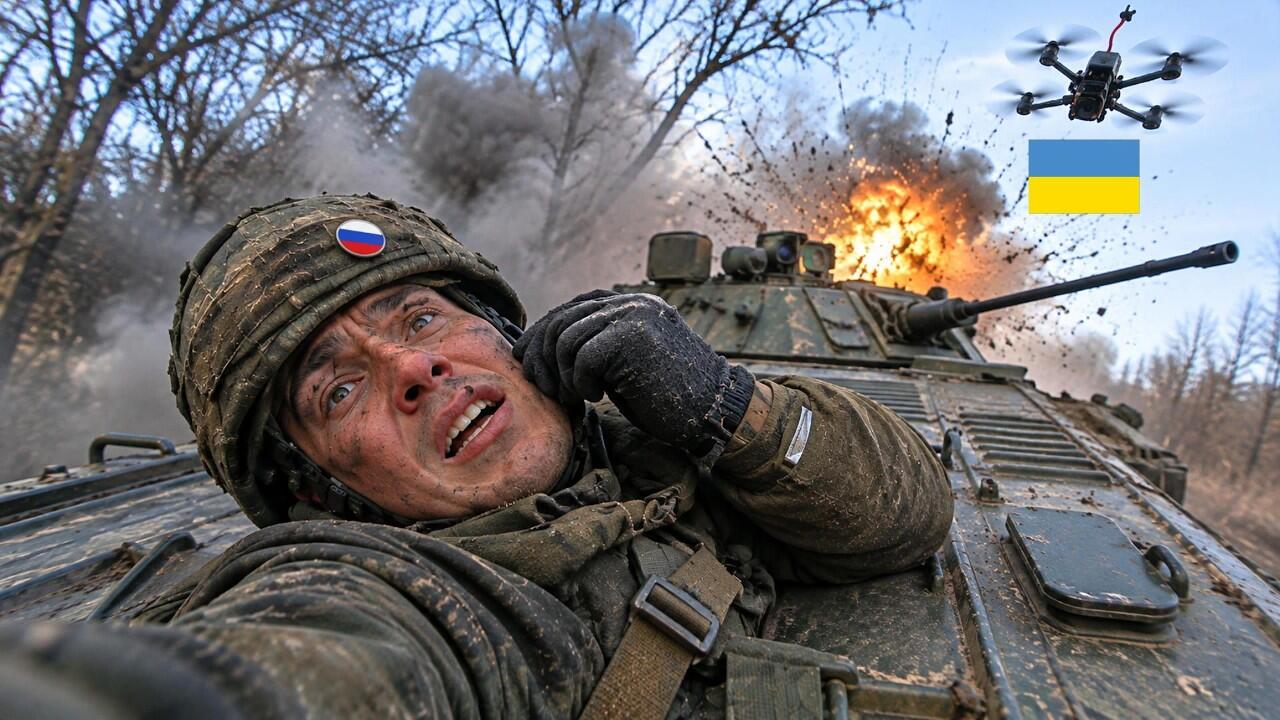
A Russian assault group was riding toward the front line atop a BMP-2 infantry fighting vehicle with a camera rolling, completely unaware that Ukrainian reconnaissance spotters and an incoming first-person-view (FPV) strike drone were already closing the distance at high speed.
What unfolded over roughly nine minutes of combat footage—examined in a MilitaryHub breakdown and reflecting broader reporting on FPV drone warfare along the southern front in autumn 2026—offers a stark, dual-perspective look at how unmanned systems disrupt mechanized infantry attacks before they even reach their objective. By pairing the perspective of a Ukrainian recon-and-FPV kill chain with helmet- or body-mounted footage recorded from the Russian squad’s side, the clip captures the sudden shift from an organized approach to a chaotic scramble for cover, a risky rescue back at the damaged hull, and tense moments beneath the tree line.
Two Angles on a Nine-Minute Ambush
According to the MilitaryHub analysis, the engagement began around 18:41 local time in the Zaporizhzhia sector, where a Ukrainian reconnaissance drone tracked a Russian BMP-2 carrying infantry riders toward a Ukrainian position.
In modern drone-saturated warfare, troops frequently ride on top of armored vehicles rather than inside the troop compartment so they can dismount rapidly if the vehicle hits a mine or takes fire, avoiding getting trapped inside a damaged hull. That choice carries an obvious vulnerability: riders sitting exposed on the roof have minimal protection against shrapnel, blast waves, or precision drones.
On the Ukrainian side, operators watching the live overhead feed faced a classic tactical decision: strike while the vehicle and riders were still moving across open ground, or wait until the BMP neared the tree line where infantry could dismount and disperse into cover. Once the strike team committed, an FPV drone raced toward the target—reported in the video at speeds around 138 km/h—while the soldiers riding the vehicle continued forward without spotting the incoming threat.
From the camera mounted on the Russian side, the initial approach looked calm and routine: men perched on the armored hull looking ahead, no visible return fire into the sky, and no sign that the squad knew a pilot was lining up a strike seconds away. Then the impact hit, bringing the advance to a sudden halt and breaking the assault’s momentum before the infantry could mount a coordinated push on the objective.
Scattering Into the Woods and the Fear of a “Double Tap”
The immediate aftermath illustrated one of the defining psychological and tactical effects of FPV warfare: disruption and dispersion.
Once the BMP stopped and the strike landed, the squad scrambled off the vehicle and sprinted toward nearby woodland cover. Rather than moving forward as a cohesive assault team, soldiers broke apart—each individual trying to put trees and foliage between themselves and the sky while worrying whether a second FPV drone was already inbound.
As the MilitaryHub breakdown notes, clustering together after an initial hit makes a squad an inviting target for a follow-up strike. Soldiers calling out to spread out and watch overhead reflects a survival calculus shaped by years of combat footage: when the first drone disables or shocks a group, survivors fear that a second operator is already hunting for those running or bunched up.
Yet moving beneath the tree canopy creates a different challenge for drone crews. Overhead branches obscure clear sightlines on individual infantrymen moving through the woods. Instead of chasing every figure through the leaves, reconnaissance observers can monitor chokepoints and high-probability return zones—such as the edge of the treeline, open ground, and the abandoned or damaged vehicle itself—knowing that wounded comrades left behind often prompt rescue attempts.
Running Back Into the Open
One of the most striking turning points in the footage comes when the soldier carrying the camera turns around and heads back toward the stationary BMP—reversing direction from the rest of the squad heading into the woods.
The reason becomes clear near the vehicle: a Russian soldier who did not make it into the trees appears seriously wounded on or beside the armor, with a leg injury visible as comrades try to help him down and urge him to shed body armor to make extraction easier.
Tactically, returning to a struck vehicle in the open is one of the highest-risk moves on a drone-monitored battlefield. The BMP has already been located and targeted once, and any renewed movement around a stationary hull gives a follow-up FPV operator a clear, stationary landmark—even if the window is brief before rescuers drag the casualty back under the canopy.
In the clip, soldiers manage to get hold of the wounded man and pull him away from the vehicle into the cover of the trees. Once under the branches, attention turns to stemming bleeding—with the breakdown noting what appears to be an improvised band or strap rather than a standard tourniquet—while nearby troops continue scanning the surroundings and small-arms gunfire breaks out outside, highlighting the mix of confusion, urgency, and exposure even after reaching cover.
How FPV Drones Are Reshaping Front-Line Tactics
While this single engagement captures one squad’s experience in Zaporizhzhia, defense analysts, reporters, and combat-footage observers note that the mechanics on display reflect wider shifts across the war in Ukraine through late 2026:
-
Speed and Surprise: Fast FPV drones guided via live video feeds—including newer iterations and fiber-optic-guided systems designed to resist electronic jamming—allow small teams to hit moving vehicles and exposed infantry with minimal warning.
-
Recon-to-Strike Integration: Pairing persistent overhead reconnaissance with fast-response strike drones compresses the timeline between spotting an assault group and breaking it up before it reaches friendly trenches or strongpoints.
-
Evacuation Dilemmas: Extracting wounded troops from open ground or around disabled armor under drone observation remains one of the hardest tasks in modern infantry combat, forcing squads to weigh humanitarian and morale obligations against the risk of drawing follow-on strikes.
-
Personal Cameras and Information Warfare: Helmet cams, body cams, and drone feeds from both sides have turned small-unit skirmishes into intensely scrutinized visual records—often circulating on Telegram, Reddit, X, and YouTube before full context or independent verification is available.
Community Reaction: Reddit, Telegram, and YouTube Debate the Footage
Across online communities that track combat footage and defense news, dual-angle clips showing both the strike/recon perspective and the infantry camera view reliably spark fierce discussion:
-
Combat & Defense Subreddits (
r/DroneCombat,r/UkraineWarVideoReport,r/CredibleDefense): Viewers frequently analyze tactics—such as riding on top of BMPs, spacing during dismounts, the danger of returning to a hit vehicle to rescue a wounded comrade, and how infantry try to spot or evade drones in wooded terrain. Users often note how jarring it is to see the exact same approach from both sides of the fight, while debating broader casualty and drone-infliction figures cited in news reports. -
Telegram Channels & X: Russian milbloggers and pro-Ukrainian channels interpret such clips through sharply different lenses. Pro-Ukrainian accounts highlight the effectiveness of recon-FPV coordination in halting a mechanized push early, while Russian commentary often focuses on squad survival, evacuation bravery under fire, and calls for better electronic warfare, counter-drone shotguns or jammers, and medical gear.
-
YouTube Commenters: On breakdowns like MilitaryHub’s, viewers weigh in on the human toll and tactical lessons—often debating whether the risk of going back for a wounded soldier was heroic or suicidal in an active drone zone, and pointing out how quickly a seemingly quiet ride can turn into a fight for survival.
What Comes Next? Scenarios for Drone and Infantry Warfare
As fighting continues across sectors like Zaporizhzhia amid shifting weather and ground conditions, several trends will shape how similar engagements play out:
-
Counter-Drone Adaptation vs. Drone Evolution: Both sides continue racing to adapt—through better dispersion, camouflage, tree-line movement, shotguns and electronic warfare on the ground, and faster, smarter, or jam-resistant drones and interceptor UAVs in the air.
-
Armor Doctrine Under Pressure: Armed forces will keep refining how armored vehicles and infantry transport are used near drone-saturated front lines, balancing rapid dismount speed against exposure to top-attack and FPV munitions.
-
Medical and Evacuation Realism: As drone threats complicate casualty evacuation from open terrain, medical readiness, tourniquet availability, and armored or robotic evacuation methods remain critical pressure points for front-line units.
-
Fog of War in Viral Clips: Because short combat clips capture only a slice of a larger battle—and lack official confirmation of casualties or broader sector outcomes—analysts and viewers alike will continue to treat individual videos as tactical snapshots rather than the whole story of a frontline push.
For the soldiers on that BMP in Zaporizhzhia, an approach that began as a routine ride toward the line turned within minutes into a scramble for cover and a high-stakes pull back into the woods—a vivid reminder of how drones have compressed time and space on the modern battlefield.
Để lại một bình luận