Imagine losing your two young children in a horrific boat crash… and then doing the absolute UNTHINKABLE in the courtroom. 🤯
While prosecutors aggressively pushed to lock 64-year-old Stephen Schneider behind bars for the tragedy, a shocking, emotional letter from the children’s own grieving father just brought the entire courtroom to a dead halt. Why did a heartbroken dad just beg the judge to let the man at the helm walk free—and what devastating secret was inside that letter? 👇
🔥 Read the jaw-dropping courtroom twist that just turned this entire case upside down:
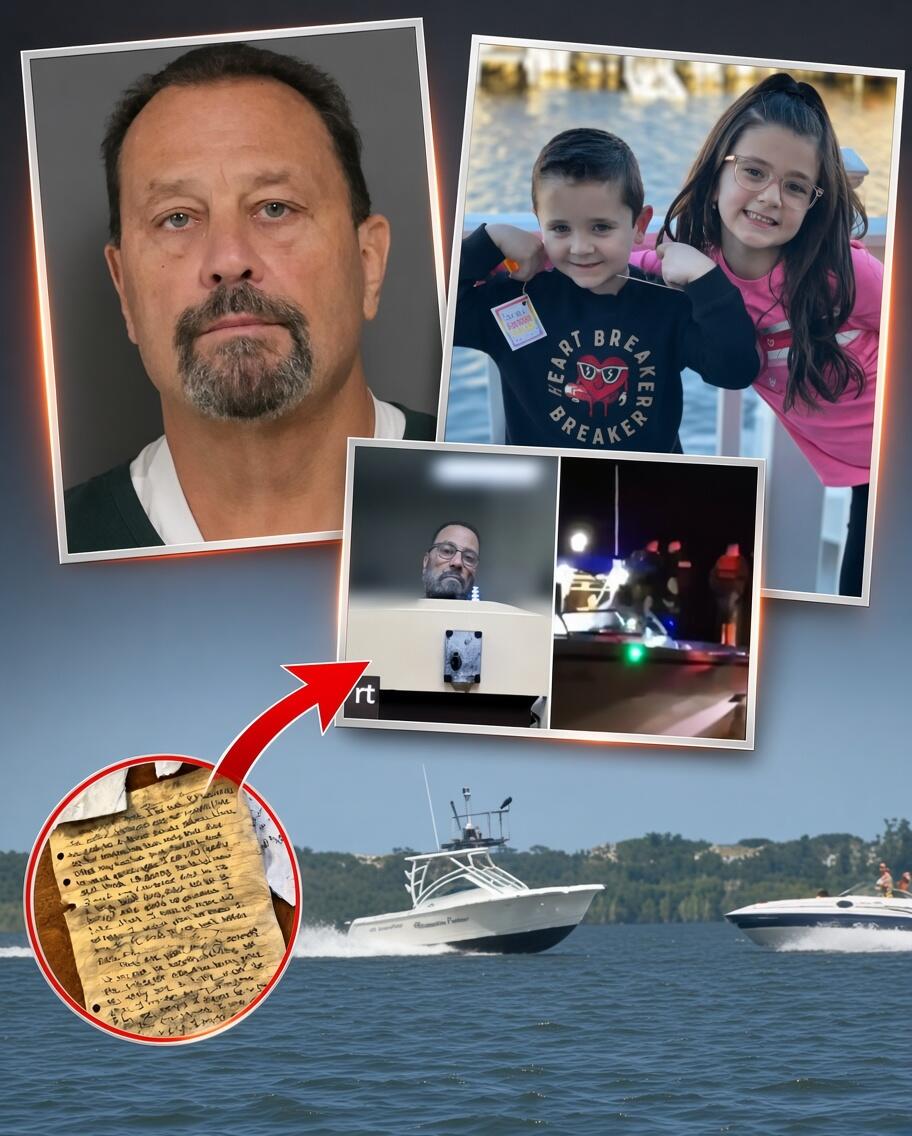
In the annals of courtroom drama, it is the moment no one sees coming: the grieving family of the victims standing up to shield the accused.
Just weeks after 9-year-old Mya Bella Golabek and her 7-year-old brother, Sigmund Paul Golabek, tragically perished in the dark waters of Barnegat Bay following a catastrophic boat crash, the case against their grandfather has taken an emotional and legally unprecedented detour. While the State of New Jersey pushes forward with severe reckless vessel homicide charges against 64-year-old Stephen Schneider, citing a blood alcohol level double the legal limit, the prosecution’s most formidable opponent isn’t just the defense attorney—it’s the victims’ own father.
In a stunning courtroom twist that has left the local community divided and legal analysts reeling, the father of the deceased siblings submitted a heart-wrenching letter to the judge, explicitly pleading for Schneider’s release.
The Courtroom Bombshell
The Ocean County Superior Court was heavy with tension during Schneider’s detention hearing. Assistant prosecutors had laid out a clinical, damning narrative: a 30-foot Tidewater striking an Intracoastal Waterway channel marker on July 19, two children thrown into the bay, and a vessel operator whose post-crash blood alcohol concentration (BAC) allegedly read 0.16%. The state demanded that Schneider remain incarcerated pending trial, citing the severity of the double-homicide charges and arguing he posed a flight risk.
But defense attorney William P. Cunningham had a different narrative to present—one written directly by the family whose lives had been shattered.
Addressing Judge Wendel Daniels, Cunningham produced a letter authored by Jennifer and Sigmund Golabek, the parents of the two young victims and the daughter and son-in-law of the accused. In a courtroom where victim impact statements typically demand maximum vengeance and strict justice, the Golabeks’ letter asked for the exact opposite: grace, family unity, and immediate bail.
“Our family is better because of him,” the letter read in part, its contents echoing through a stunned courtroom. “He is a wonderful father-in-law, a loving grandfather, and his presence is vital to our family right now as we try to survive this nightmare.”
A Family’s Forgiveness vs. The State’s Mandate
The letter laid bare a profound philosophical and legal conflict: When a family experiences an unthinkable, accidental tragedy resulting in the loss of children, who has the ultimate right to dictate justice—the grieving parents, or the state upholding the law?
The parents argued that prosecuting and jailing Schneider would only compound their devastation, tearing away a patriarch they desperately need for emotional support. They emphasized that Schneider’s suffering and guilt over the loss of his beloved grandchildren was a prison sentence in itself, far worse than anything the state could impose.
Judge Daniels, visibly moved by the extraordinary plea, delivered a decision that shocked legal observers. Bucking the prosecution’s aggressive stance, Daniels granted Schneider a conditional release under Level 3 monitoring. Schneider was permitted to walk out of jail, pending trial, under strict mandates: absolute prohibition from operating any motor vehicle or vessel, surrender of his passport, and mandatory ongoing substance abuse evaluations.
“The court cannot ignore the specific and unique dynamics of this family structure,” legal analysts noted following the hearing. “When the primary victims—in this case, the parents of the deceased—actively lobby for the defendant’s freedom, it fundamentally alters the judge’s calculus regarding the ‘danger to the community’ standard.”
The Internet Reacts: Compassion or Outrage?
The explosive revelation of the father’s letter and the judge’s subsequent decision has ignited a firestorm across social media and digital communities, highlighting the deep public fracture over how society handles DUI-related tragedies.
-
The True Crime TikTok Community: Several prominent legal commentators on TikTok have gone viral analyzing the letter. Many users expressed profound awe at the parents’ capacity for forgiveness. “I don’t know if I could be this strong,” one viral comment with over 40,000 likes read. “Losing your kids and still having the grace to realize your father-in-law didn’t do it on purpose. That is unimaginable love.”
-
X (formerly Twitter) Backlash: On X, the reaction leaned heavily toward outrage, with Mothers Against Drunk Driving (MADD) advocates and strict-law proponents arguing that grief does not excuse a 0.16% BAC. “The law is the law for a reason,” tweeted one New Jersey resident. “If this was a stranger who crashed into their boat, they’d want him locked up forever. Blood shouldn’t give you a free pass on a double homicide.”
-
Reddit’s
r/newjerseyForums: Local boaters debated the systemic issues on Barnegat Bay. While acknowledging the family’s letter, many users pointed back to the defense’s emerging technical argument—that the channel marker itself was unlit and virtually invisible in the pitch-black waters. “Drunk or sober, if that marker was dark, anyone could have hit it,” wrote one seasoned local captain.
The Complex Road Ahead
As the case hurdles toward its next critical milestone—a pre-trial hearing slated for September 15—the prosecution finds itself in an incredibly precarious position.
To secure a conviction, the state must convince a jury that Stephen Schneider acted with criminal recklessness. However, doing so now requires prosecutors to essentially fight against the explicit wishes of the victims’ grieving parents. If the case goes to trial, the optics of the state aggressively cross-examining a heartbroken mother and father to put their beloved grandfather in state prison could prove disastrous for the prosecution.
Coupled with the defense’s mounting investigation into whether the maritime channel marker was functioning properly, the state’s seemingly airtight 0.16% BAC case is rapidly becoming one of the most complex, emotionally agonizing, and fiercely debated legal battles in recent New Jersey history.
For now, Stephen Schneider is at home with his family. They are mourning together—bound not just by an unspeakable tragedy, but by a shocking act of forgiveness that the courtroom will not soon forget.
Để lại một bình luận