Critics just gave GTA 6 a PERFECT 99 and called it the greatest game ever made.
Then this guy played it for 12+ hours… and said it’s NOT a masterpiece.
He calls it GTA 5.5. Systems that actively discourage the chaos you expect. A world that sometimes feels more like a chore simulator than pure crime. Performance issues the perfect scores completely gloss over.
Is the 99 score pure hype? Or did the gaming press finally lose all credibility on the biggest game of the decade?
Watch the full breakdown before the comments get locked 👇
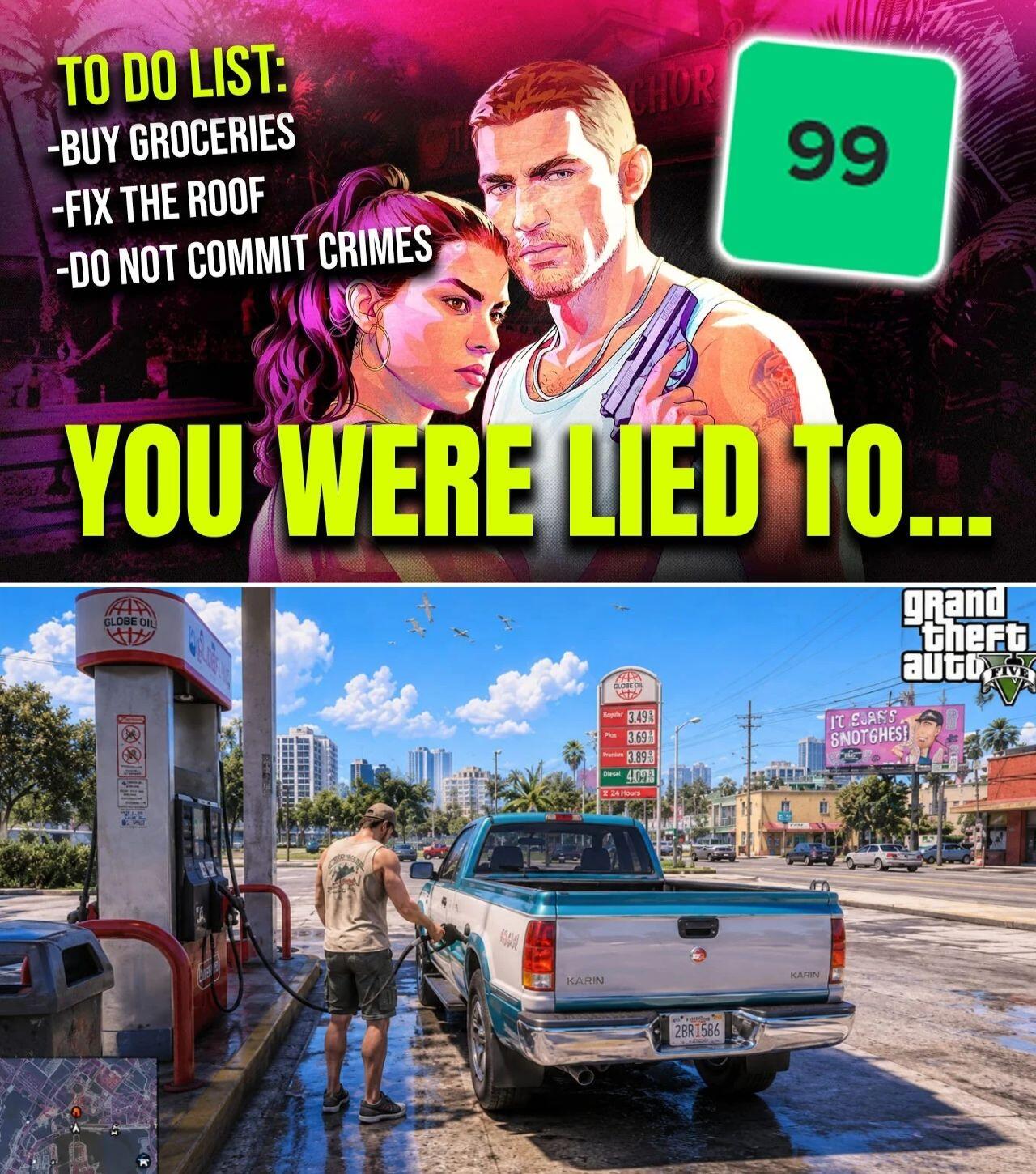
Grand Theft Auto VI launched on November 19, 2026, to a Metacritic critic score of 99 — tying The Legend of Zelda: Ocarina of Time as the highest-rated game in the site’s history. Outlets including The Guardian, IGN, Bloomberg, The Verge, and others described it as a masterpiece, the single most impressive video game they had ever played, and the new benchmark for open-world design. Within days, videos and posts arguing the opposite began circulating widely, with one prominent example titled “GTA 6 is NOT a Masterpiece” by YouTuber Big Dan Gaming (channel with roughly 281,000 subscribers) accumulating over 100,000 views shortly after upload.
The video’s core claim is straightforward: after more than 12 hours of play, the game is enjoyable and ambitious but falls short of masterpiece status. It is framed as closer to an enhanced GTA V (“GTA 5.5”) than a generational leap, with systems that can discourage traditional crime gameplay, stretches that feel closer to a life or chore simulator, and technical shortcomings that professional reviews underplayed relative to the perfect scores. The video acknowledges strengths — particularly the density and detail of the world — while arguing that the near-unanimous 10/10s and 99 aggregate obscure real flaws.
The Critic Consensus vs. the Counter-Argument
The professional reception was unusually uniform. IGN’s Luke Reilly called it “the single most impressive video game I have ever played.” Bloomberg’s Jason Schreier labeled it a masterpiece. The Guardian’s Keza MacDonald described the most extraordinarily detailed virtual world yet seen and highlighted the emotional bond with protagonists Jason and Lucia. Similar language appeared across dozens of other outlets. OpenCritic and Metacritic both settled at 99, with nearly all scored reviews at 90 or above.
Skeptics of the scores point to a pattern in which reviewers noted drawbacks — a 30 fps target on all current consoles, occasional slow stretches in the narrative, clunky combat or controls in places, and mission design that can feel prescriptive or errand-like — yet still awarded the highest marks. A Chinese-language analysis circulating online examined dozens of full reviews and argued that repeated mentions of performance problems, pacing issues, and narrative lulls were not fully reflected in the final numbers. Player-facing platforms told a different story: Metacritic’s user score settled in the mid-5 range amid a mix of review bombing and substantive criticism, while verified buyer ratings on the PlayStation Store remained high (around 4.8/5).
Systems, Pacing, and the “Chore” Perception
A recurring theme in both the Big Dan video and broader player discussion is that GTA VI prioritizes immersion and simulation over the freer, more arcade-style chaos of earlier entries. Activities involving relationship building, everyday tasks, and grounded vehicle or weapon limitations appear early and frequently. Some players and commentators describe these as deepening the world and characters; others say they actively reduce the incentive or opportunity for the free-form criminal mayhem that defined the series for many. The opening hours in particular have drawn complaints of being slow, dialogue-heavy, or more focused on establishing the couple’s dynamic than delivering immediate sandbox freedom.
Even positive reviews sometimes noted elongated lulls, missions that felt like tutorials late into the campaign, or sequences heavy on walk-and-talk or escort-style pacing. Ars Technica, for example, observed that many early missions for secondary characters can feel like the criminal equivalent of errands. The Guardian acknowledged that the systems can make the game unpredictable, laborious, or occasionally unfair because the player is not the absolute master of the world. These observations did not prevent high scores, but they form the basis of the argument that the game, while excellent, contains structural choices that keep it from being an unqualified masterpiece.
Technical and Presentation Issues
Performance is the most concrete, repeatedly cited limitation. The game targets 30 frames per second across PS5, PS5 Pro, and Xbox Series consoles, with no performance mode at launch. Digital Foundry and player reports documented dips below that target in dense scenes, particularly on the base PS5. In late 2026, a hard 30 fps lock on current-generation hardware is viewed by a substantial portion of the audience as a compromise, even when visual fidelity is high. Launch-window bugs — characters falling through geometry, clipping, occasional crashes, and other glitches — also appeared in player clips and discussion, though many of these are typical of large open-world launches and may be addressed in patches.
Weapon and inventory restrictions, more realistic vehicle damage, and certain safehouse or activity limitations further differentiate the experience from GTA V. Supporters argue these changes create a more coherent, lived-in simulation. Critics of the “masterpiece” label say they make the game feel more constrained and less playful than its predecessors.
Community Reaction and Context
The pushback exists alongside massive commercial success. Launch-day sales figures reported by Rockstar were among the highest ever for an entertainment product. On platforms requiring purchase to rate, scores stayed strong. At the same time, social media and YouTube filled with titles and posts calling the game “mid,” overhyped, or a disappointment relative to 13 years of anticipation. Some of this is standard post-launch reaction to any hyped title; some is amplified by culture-war framing around the protagonists or tone; and some reflects genuine preference for the older, freer style of GTA.
Videos such as Big Dan Gaming’s sit in the middle: they do not claim the game is bad, but reject the idea that it is an unblemished peak of the medium. Similar measured skepticism has appeared from other creators and in comment sections, often focusing on the gap between the language of the reviews (“most impressive ever,” “transcendent”) and the concrete experience of pacing, systems, and frame rate.
Outlook
Whether GTA VI ultimately settles as a masterpiece, a very good but flawed evolution, or something in between will depend on longer-term player consensus once more people finish the campaign, patches arrive, and the eventual PC version is available. The 99 critic score is unlikely to move. The volume of counter-takes, however, shows that a significant segment of the audience — including players who are enjoying the game — does not accept the “masterpiece” framing without qualification. For that group, the video’s central argument is simple: a title can be ambitious, detailed, commercially dominant, and still fall short of the absolute standard its perfect scores imply. The conversation around GTA VI is now as much about the gap between critical language and player experience as it is about the game itself.
Để lại một bình luận