“It’s better than meeting her.” 💔📺
Joey Feek barely had the strength to whisper those words from her hospice bed in November 2015—right after Dolly Parton appeared on the TV screen with a personal message meant ONLY for her.
The family had gathered on a Friday night expecting to watch Hope Floats, one of the few movies Joey genuinely loved. Instead, Rory Feek hit play on something that shattered every expectation in the room.
Since age four, Joey had sung Dolly’s songs. Her very first stage performance—a first-grade talent show—was “Coat of Many Colors.” She spent her life admiring an icon who, as far as Joey knew, didn’t even know her name.
Then Dolly looked right through the screen and said, “I’ve loved you for years.”
“How did that happen?” Joey asked quietly as Rory held her hand.
They never got to stand in the same room. Dolly later admitted she had thought about making the trip to see Joey, yet it never came together—leaving fans tearing up over what happened next, what else was inside that message, and the heartbreaking reason a real-life meeting never happened 👇🔥
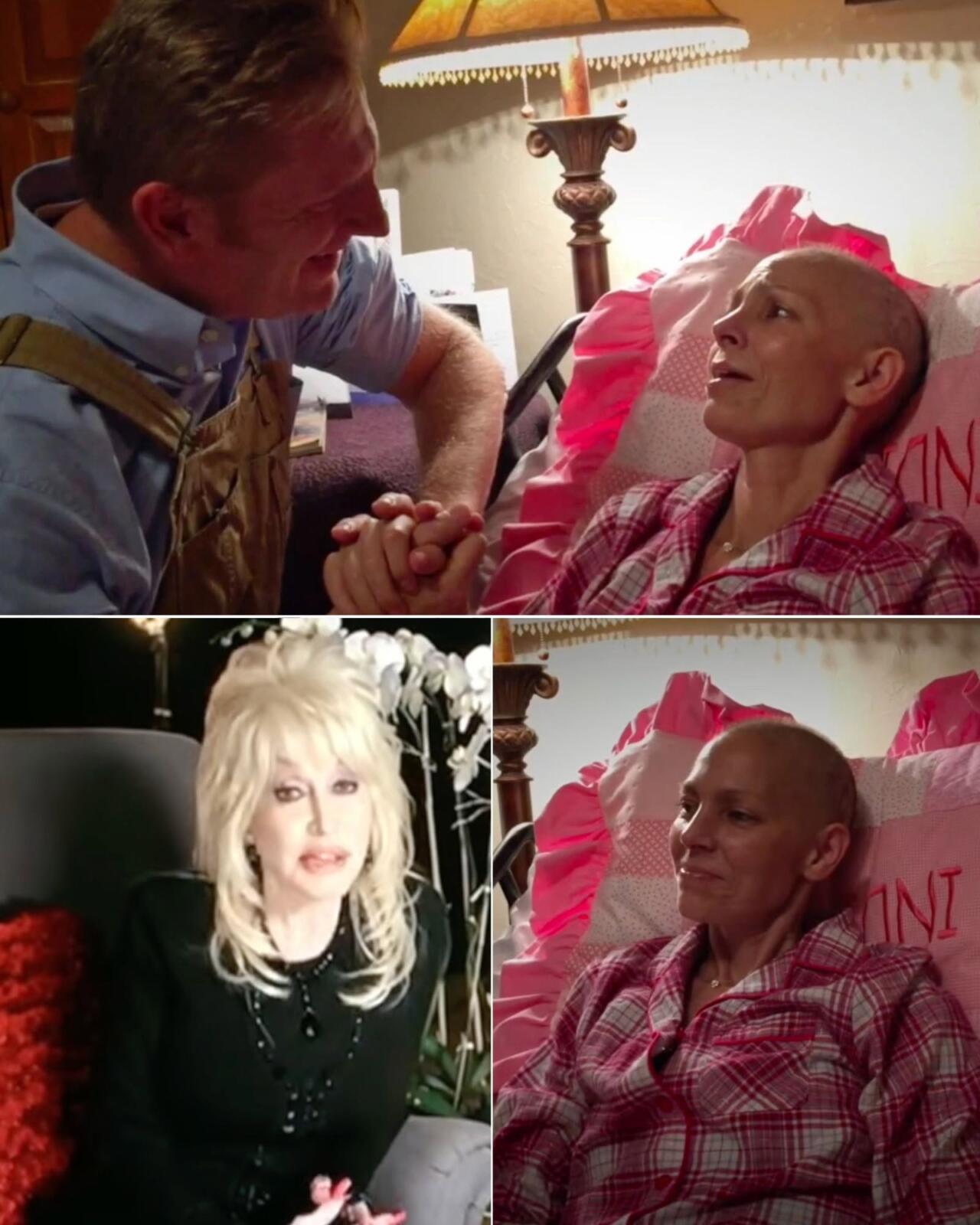
In the quiet stillness of a hospice room in November 2015, country music singer Joey Feek was fighting a terminal battle against cervical cancer when her husband, Rory Feek, pressed play on a video that stunned everyone gathered around her bed.
The family had come together on a Friday night expecting to watch Hope Floats, one of the rare films Joey truly loved. Instead of a movie, Dolly Parton spoke to Joey directly from the television screen—telling her, “I’ve loved you for years.”
“How did that happen?” Joey whispered softly as Rory held her hand and explained that the country icon had heard about her and recorded the message specifically for her. Moments later, Joey offered a line that has echoed across country music circles for more than a decade: “It’s better than meeting her.”
Despite the emotional weight of that exchange, the two singers never met in person. Parton later acknowledged that she had thought about visiting Feek, though circumstances prevented it from ever happening.
On social media, fans across X, Reddit, TikTok, and Discord continue to revisit the clip and the story behind it—debating the bittersweet reality of parasocial dreams fulfilled at the eleventh hour, praising Rory’s timing on a quiet Friday night, and reflecting on the enduring pull of Parton’s catalog on generations of performers.
The Friday Night Switch That Changed the Room
By November 2015, Joey Feek—half of the beloved husband-and-wife country duo Joey+Rory—was receiving hospice care as her illness progressed. Moments that felt ordinary or comforting took on heightened meaning for the family.
Gathering for Hope Floats was meant to offer familiar comfort. Few movies held Joey’s genuine affection, making the choice of film deliberate. Yet Rory Feek held back the movie and queued up Parton’s video instead.
For anyone who has watched a loved one navigate end-of-life care, the contrast between a routine movie night and a sudden, deeply personal tribute from a lifelong idol is stark. There were no cameras rolling in a studio, no red carpet, and no public stage—just a television screen, family nearby, and a voice that had shaped Joey’s musical life from childhood.
When Parton’s words came through the speaker—“I’ve loved you for years”—the surprise was immediate. Joey had grown up singing Parton’s songs starting at age four. Her very first public performance, at a first-grade talent show, was “Coat of Many Colors,” a staple of Parton’s songwriting that resonates with themes of perseverance, family, and pride despite having little material wealth.
For a young singer starting out in a first-grade talent show, “Coat of Many Colors” is more than a cover song; it is a statement of identity. That Joey carried Parton’s music from toddlerhood into her first real spotlight—and still wondered how Parton could possibly know who she was—underscores how wide the gulf often feels between an everyday artist and a cultural titan.
Why “It’s Better Than Meeting Her” Hit Such a Nerve
At face value, Joey’s remark—“It’s better than meeting her”—sounds counterintuitive. For decades, music fans and aspiring singers alike have treated a face-to-face meeting with an idol as the ultimate milestone.
In the context of Joey’s condition in November 2015, however, the logic feels unmistakable. A surprise video message could arrive on her terms, inside a room where she was already surrounded by family and supported by Rory. There was no pressure to perform, no energy drained by travel or scheduling, and no illusion broken by a rushed encounter.
Instead, the message delivered pure validation at a moment when validation mattered most. Hearing Parton say she had loved her for years bridged a lifetime of one-sided devotion in a single sentence.
Music industry observers and grief counselors often note that meaningful connections during serious illness do not always require grand gestures; they require emotional resonance and timing. By choosing not to start Hope Floats and instead letting Joey hear Parton’s voice first, Rory turned a quiet Friday night into an anchor memory for everyone in the room.
A Meeting That Never Materialized
The most poignant footnote to the story is what did not happen. Joey and Dolly Parton never met in person.
Parton later shared that she had thought about visiting Joey, but it never worked out. In real life, schedules collide, distance intervenes, and health timelines move faster than plans. Even when goodwill and genuine intention exist on both sides, life frequently denies neat resolutions.
That reality separates real-world biographies from scripted television dramas. In a fictional storyline, the idol might walk through the door at the final hour. In reality, a screen became the bridge—and the distance remained.
For fans looking back at the episode, that tension between intention and outcome is part of why the story lingers. It reminds audiences that even beloved public figures operate within real constraints, and that an unfulfilled plan to meet does not erase the impact of a sincere gesture sent from afar.
How Online Communities React and Debate the Moment
Whenever clips or discussions surrounding Joey Feek, Rory Feek, and Dolly Parton resurface online, the reaction tends to split into distinct emotional and analytical threads across platforms:
-
On X (formerly Twitter): Users frequently quote “It’s better than meeting her” alongside short reflections on how Parton has long used personal outreach and encouragement to uplift fellow artists and fans. Many highlight the quiet intimacy of the moment compared to flashy celebrity headlines.
-
On Reddit: Discussions in country music and general entertainment subreddits often focus on the bittersweet contrast between Parton’s intention to visit and the fact that it never came together. Commenters frequently point out how relatable it is when well-meaning plans get overtaken by timing and circumstance, while praising the care shown in setting up the video instead of Hope Floats.
-
On TikTok: Short tribute edits and storytelling videos lean heavily into the childhood arc—from singing Parton’s songs at age four and performing “Coat of Many Colors” in first grade to hearing “I’ve loved you for years” years later. Viewer comments often center on how deeply “Coat of Many Colors” connects fans across generations.
-
On Discord: Music and storytelling communities tend to examine the narrative craft of real life—how a planned Hope Floats screening pivoted into a far more personal centerpiece, and how a whispered line from a hospice bed carries more weight than elaborate public tributes.
Across all four spaces, the tone is largely empathetic rather than sensational. Even when users debate the details or share personal stories of losing loved ones, the conversation keeps returning to the same core elements: childhood musical roots, unexpected recognition, and the ache of a meeting that never happened.
Industry Context: Legacy, Outreach, and Parasocial Milestones
Within the broader country music ecosystem, Joey Feek’s story sits at the intersection of grassroots authenticity and mainstream legacy. Country music has long prized storytelling rooted in family, faith, small-town origins, and hardship—themes central to both Joey+Rory’s appeal and Parton’s enduring career.
Parton’s stature in American pop culture gives any personal note from her an outsized weight. When a legend who has spent decades in the spotlight tells an artist who grew up singing her songs, “I’ve loved you for years,” it flips a dynamic that usually flows in one direction.
At the same time, entertainment historians and media commentators note that stories like this highlight a delicate boundary in modern celebrity culture:
-
Intimacy vs. Spectacle: Private moments shared later in public reflections resonate most when they feel unmanufactured. The Friday night setting—watching a favorite movie or getting a surprise video—feels grounded rather than staged.
-
Unmet Expectations: Fans sometimes hope every story ends with an in-person reunion. Acknowledging that a planned visit never worked out keeps the account honest and grounded in reality.
-
Catalog Longevity: A song like “Coat of Many Colors,” first sung by a first grader, continues to anchor memories decades later, proving how early musical touchstones shape an artist’s entire journey.
What Lies Ahead for the Legacy of This Story
Looking forward, the story of Joey Feek’s final Dolly Parton moment is unlikely to fade from public memory. New listeners continually discover Joey+Rory’s catalog, while long-time fans revisit milestone moments in country music history and share them with younger family members.
As streaming platforms and social feeds keep older performances and personal stories in circulation, moments like a first-grade rendition of “Coat of Many Colors” and a Friday night video message in November 2015 will keep finding fresh audiences. Each new wave of listeners brings its own perspective on grief, gratitude, and the unpredictable ways meaningful connections happen.
Ultimately, the power of Joey’s words lies in their simplicity. In a world that often measures moments by grand finales or big reunions, she found something complete in a screen, a song she had loved since age four, and a voice telling her she had been loved for years—even though they never met.
Để lại một bình luận