🚨 NOLAN WELLS’ MOM JUST SENT A MESSAGE — AND THIS CASE IS FAR FROM OVER.
Christine Wonsley has repeatedly refused to let the questions surrounding her son’s death disappear, even as pressure, online attacks and a growing legal battle continue to surround the investigation. But what exactly is her family demanding now — and why are the unanswered questions getting even harder to ignore? 👀
The autopsy. Nolan’s phone. The disputed timeline. And a case that still has no definitive explanation for how an 18-year-old died.
Here’s what Christine’s latest fight for answers means — and what has happened behind the scenes. 👇
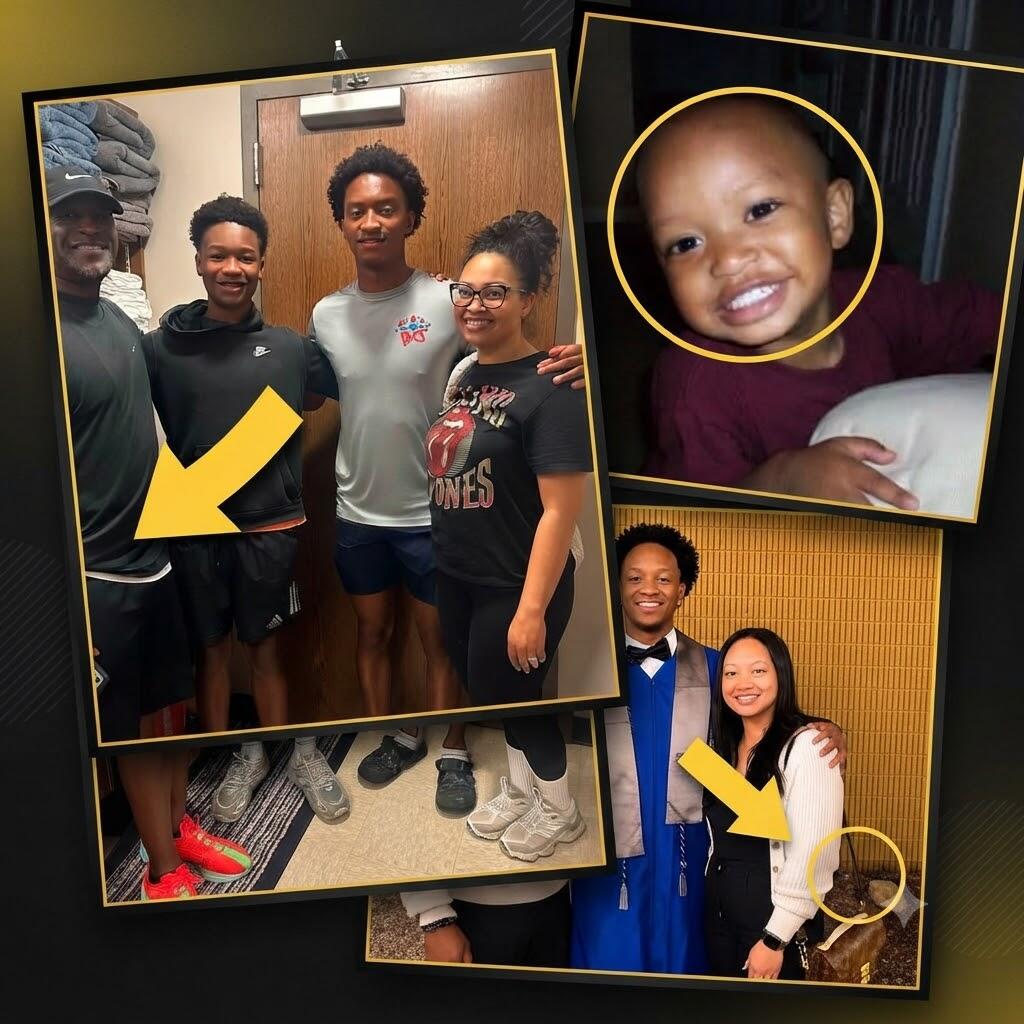
Christine Wonsley has spent much of the past two months asking the same question: What happened to her son Nolan Wells?
The 18-year-old Mississippi college student and athlete disappeared during a July 4 boating trip to Horn Island with friends. His body was discovered two days later on the island.
What initially appeared to authorities to be a likely drowning has since become a much more complicated and closely watched investigation.
An independent autopsy commissioned by Wells’ family was unable to determine the cause or manner of death and did not rule out foul play. The official investigation remains active, while a grand jury review is expected.
For Wonsley, the uncertainty has transformed grief into a public campaign for transparency.
And despite mounting pressure, she has repeatedly made clear that she does not intend to stop.
A mother’s demand for answers
Wonsley first broke her silence publicly in early July, shortly after her son’s body was found.
In an interview with ABC News, she and Nolan’s father, Elmore Wonsley, called for a thorough and independent investigation.
“We just want honesty and transparency,” Wonsley said at the time. “We want a thorough investigation.”
That message has remained remarkably consistent.
As new details have emerged, the family has continued pressing authorities for more information about Nolan’s final hours, his interactions with the people who accompanied him to Horn Island and the circumstances surrounding his death.
The family has also retained civil-rights attorney Ben Crump, who has publicly challenged the initial assumption that Nolan drowned accidentally.
Crump and the Wonsleys have repeatedly emphasized that they are not asking authorities to treat Nolan’s case differently from other deaths.
They want, they say, the same level of investigative scrutiny that would be expected in any unexplained death.
The autopsy failed to provide the answer
The most significant development so far has been the independent autopsy.
Dr. Roger Mitchell Jr., a forensic pathologist retained by the Wells family, examined Nolan after the state completed its initial autopsy.
His preliminary conclusion was deeply frustrating for the family: the cause and manner of death remained undetermined.
The examination also could not rule out foul play.
That does not mean the independent pathologist concluded Nolan was murdered.
Instead, the findings reflected the limitations of the available evidence, including decomposition and the inability to examine certain tissue that could potentially have helped establish whether drowning occurred.
The state medical examiner’s findings have not been fully released publicly because the investigation remains active and the results are expected to be presented to a grand jury.
That information gap has become one of the defining features of the case.
Why the family’s questions have continued
Nolan had traveled to Horn Island with several friends on July 4.
According to accounts reported publicly, the group eventually returned to the mainland without him.
The friends have said Nolan chose to remain on the island after meeting a woman there.
But the Wells family has questioned that explanation.
One reason is that Nolan reportedly left behind his cellphone and keys.
That detail has become a major focus of the public debate.
If Nolan had intended to remain on the island, his parents have asked, why would he leave behind items he would ordinarily need?
It is a legitimate question.
But it is important to distinguish a question from a conclusion.
The available public evidence does not establish that Nolan’s friends caused his death, and no criminal charges have been announced against them.
The three friends have also faced intense online scrutiny and accusations, despite those allegations not being established in court.
The phone has become a crucial piece of evidence
Perhaps the most important unresolved investigative issue is Nolan’s cellphone.
The family’s attorneys have sought access to digital records that could potentially clarify his final communications and movements.
In July, the family issued subpoenas to several major technology companies, including Meta platforms Facebook, Instagram and WhatsApp, as well as Snapchat, TikTok and Life360.
The legal filings sought records associated with Nolan’s accounts and location information.
The purpose is straightforward: establish as much of Nolan’s digital timeline as possible.
Who did he communicate with?
Where was his phone?
What messages were sent?
Were any messages deleted?
And what location data might exist?
Those records could potentially help investigators distinguish between competing accounts of Nolan’s final hours.
But obtaining records is not the same thing as discovering incriminating evidence.
At this point, the public does not have a verified digital reconstruction that definitively explains what happened.
A dispute over whether the phone has even been examined
The cellphone issue has itself become controversial.
A recently reported letter from an attorney representing the Wells family stated that a planned joint forensic examination of Nolan’s phone had still not taken place more than five weeks after his death.
That development has added another layer to the family’s frustration.
The family has said it is willing to cooperate and make the phone available.
Meanwhile, questions about why the examination has not occurred have circulated publicly.
For investigators, a cellphone examination could potentially be one more tool for reconstructing the timeline.
For the family, it represents something even more basic: the possibility of finally obtaining information about what Nolan was doing before he disappeared.
Christine Wonsley has faced attacks of her own
The search for answers has also come at a personal cost for Nolan’s mother.
Earlier this month, Wonsley disclosed that an anonymous complaint had triggered a professional misconduct investigation by the Mississippi Board of Nursing.
She said the complaint added to the pain of losing her son and continuing to search for answers.
The Mississippi Board of Nursing subsequently closed the investigation, according to Wonsley and local reporting.
Crump characterized the complaint as an attempt to intimidate or silence a grieving mother.
But the underlying allegation itself should not be confused with evidence concerning Nolan’s death.
The important confirmed development is that the professional investigation was closed.
For Wonsley, however, the episode became another example of what she described as pressure surrounding her family’s campaign.
“We will not stop searching for the truth”
In a Facebook post reported earlier this month, Wonsley responded directly to critics of the family’s advocacy.
She said that she and Nolan’s father were not seeking special treatment.
They wanted a fair, honest and transparent investigation.
And she made clear that the family’s campaign would continue.
That message has resonated with supporters who believe authorities should not settle on an accidental drowning explanation without fully resolving the unanswered questions.
But it has also intensified tensions surrounding the case.
The three friends who accompanied Nolan have faced accusations online, and supporters of the friends have pushed back strongly against what they describe as baseless attacks.
The dispute has now moved beyond social media.
The legal fight is expanding
The conflict surrounding the case has recently taken another turn.
On Aug. 25, attorneys representing three of Nolan’s friends sent a pre-suit demand letter to Rev. Al Sharpton, demanding that he retract and apologize for statements they characterize as defamatory.
The letter reportedly concerns statements made by Sharpton in July and August about the three young men.
That development does not change the official investigation into Nolan’s death.
But it demonstrates how intensely polarized the public conversation has become.
What began as a family’s search for answers has developed into a broader confrontation involving lawyers, civil-rights organizations, public figures, online communities and people connected to the July 4 trip.
The birthday that became a national moment
On Aug. 19, Nolan would have turned 19.
Instead of celebrating his birthday, his family marked the occasion with a national day of prayer.
Wonsley spoke through tears during a virtual vigil.
“Nolan was an incredible person,” she said, while asking people to continue praying for the family.
The event illustrated the other side of the increasingly heated investigation.
For all the courtroom arguments, social-media theories and legal disputes, Nolan was an 18-year-old whose family was suddenly forced to bury him.
His mother has repeatedly emphasized his personality, his kindness and the impact his death has had on the family.
The investigation is important because of the unanswered circumstances.
But the family is also trying to preserve Nolan’s memory while the search continues.
The social-media storm
The Wells case has become unusually vulnerable to online speculation because so much of the official evidence remains unavailable to the public.
When information is limited, gaps can quickly become theories.
Some online users have questioned the accounts given by Nolan’s friends.
Others have focused on the possibility that someone else was involved.
Still others have criticized the investigation itself.
That scrutiny has occasionally crossed into threats.
Three people with no apparent connection to Wells, his family or the boating group were charged earlier this month in connection with threats directed at a judge, a witness and officials associated with the investigation.
The arrests underscore the danger of allowing online speculation to become detached from verified evidence.
There is a legitimate role for public scrutiny.
There is a very different line between scrutiny and harassment.
What authorities are saying
Mississippi officials have continued to defend the investigation.
The case remains active, and the state’s findings are expected to be presented to a grand jury.
That means authorities are not publicly providing every piece of evidence they possess.
Jackson County District Attorney Angel Myers McIlrath has emphasized legal restrictions surrounding the disclosure of investigative information.
For the Wells family, that lack of information is understandably frustrating.
For investigators, however, withholding evidence during an active investigation can be necessary to protect witnesses, preserve evidence and avoid compromising potential proceedings.
Both realities can exist simultaneously.
The biggest unanswered question
At the center of everything is one question:
How did Nolan Wells die?
Authorities initially suspected drowning.
The independent autopsy did not establish drowning as the cause.
It also did not establish homicide.
Instead, the independent findings left the cause and manner of death undetermined.
That is an unusual position for a case that has already attracted national attention.
It means the public currently lacks a definitive forensic explanation.
And until that explanation emerges, questions about Nolan’s final hours are likely to continue.
What happens next?
The investigation is moving toward a potentially important stage.
The official autopsy findings are expected to be considered by a grand jury, while the family continues pursuing its own legal and forensic investigation.
The cellphone remains an important unresolved source of potential evidence.
The family also continues to press for broader scrutiny, with civil-rights organizations and political figures supporting calls for greater transparency.
Meanwhile, the people who accompanied Nolan to Horn Island have become increasingly vocal in defending themselves against public accusations.
The result is a case in which virtually every major development produces another layer of controversy.
But one fact remains unchanged.
Nolan Wells was 18 years old when he disappeared during a July 4 boating trip. His body was found two days later. And, more than a month later, the public still does not have a definitive explanation for how he died.
That is why Christine Wonsley’s campaign has not ended.
It is also why the latest developments should be judged carefully.
There is a difference between demanding answers and claiming to already know the answer.
There is a difference between an inconclusive autopsy and proof of foul play.
And there is a difference between online allegations and evidence that can withstand legal scrutiny.
For Christine Wonsley, the central message has remained remarkably consistent since the beginning:
She wants to know what happened to her son.
Until investigators, forensic evidence and the grand-jury process provide that answer, the Wells family’s fight for clarity is likely to continue.
Để lại một bình luận