EVERYONE THOUGHT THEY KNEW PAMELA CISNEROS — UNTIL THAT DAY IN TIMES SQUARE.
She had the education, the career and a life that seemed completely ordinary. But behind the scenes, her family says something may have gone seriously wrong shortly before the attack.
One detail about her treatment is now raising questions… and it could change how people look at the final days before the tragedy.
What happened when her condition appeared to change? 🔥👇
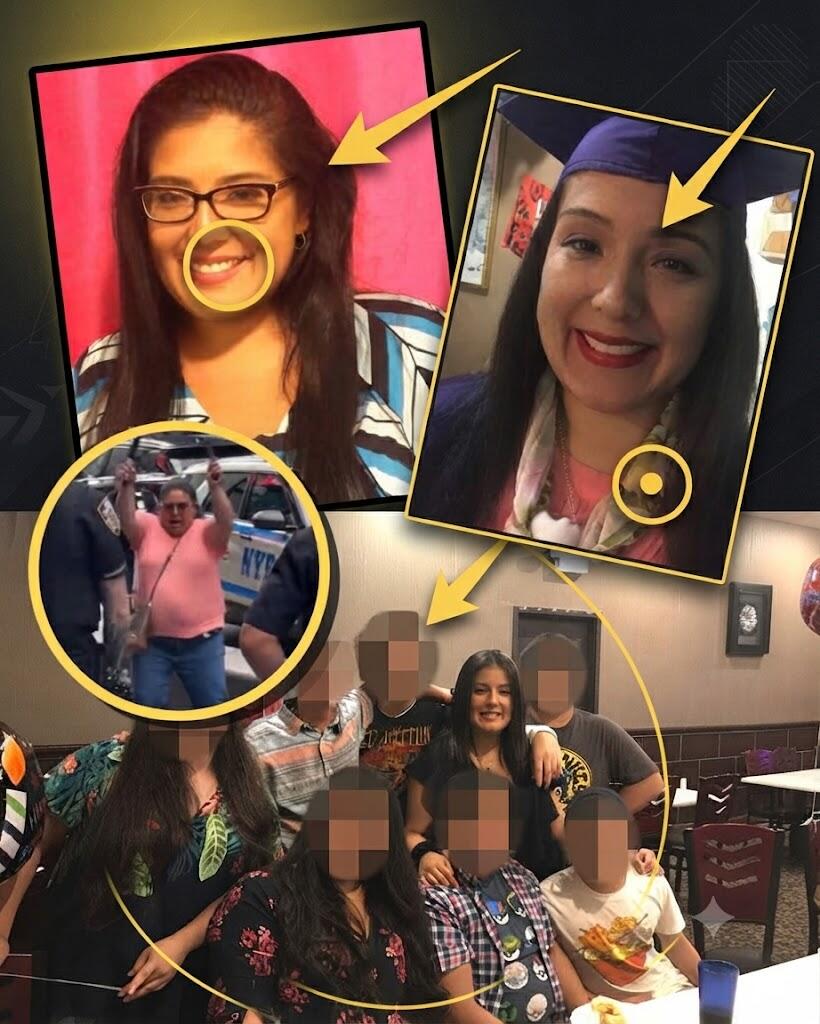
The woman identified by police as the suspect in a deadly Times Square stabbing had a background that, on the surface, seemed almost impossible to reconcile with the horrifying violence that unfolded Monday.
Pamela Cisneros, 49, of Queens, was described by relatives and people who knew her as an educated woman who had earned a master’s degree in psychology and worked with an attorney handling immigration cases. Her brother, Patrick Peralta, said she had struggled with mental-health problems for years but had appeared more stable in recent years while receiving treatment.
Then, according to her family, something may have changed.
Peralta told The New York Post that Cisneros had been receiving monthly injections as part of her treatment. He speculated that she may have stopped receiving them and that the change could have contributed to the dramatic deterioration that preceded the attack.
That possibility remains unconfirmed. Authorities have not publicly established that a missed treatment caused Cisneros’ actions, and her precise medical diagnosis and treatment history have not been fully disclosed.
What is known is that on Aug. 31, Cisneros allegedly attacked two strangers in the middle of Times Square, killing one and seriously injuring another before police shot her.
The case has since raised difficult questions about mental illness, treatment, public safety and how someone who appeared relatively stable to those around her could suddenly become involved in an apparently random act of violence.
A woman whose life did not fit the image people later saw
Cisneros’ background has emerged gradually since the attack.
According to her brother and reporting by The Post and Gothamist, she was a mother of three and had experienced mental-health difficulties for decades. Peralta said she had suffered postpartum depression after the birth of her second child and later described her condition as possibly involving bipolar disorder. He stressed that he did not understand what had happened to his sister and had never known her to be violent.
Her educational background was also striking.
Multiple reports say Cisneros had earned a master’s degree in psychology. She was also reportedly working, at least intermittently, for an attorney involved in immigration matters.
That history has become one of the most discussed aspects of the case because it contrasts so sharply with the images captured in Times Square: a woman holding two knives, confronting police officers and refusing repeated commands to put the weapons down.
But mental-health professionals and advocates generally caution against assuming that education, employment or a diagnosis can predict violent behavior. A mental-health condition by itself does not establish that someone will become violent.
In this case, investigators have yet to publicly establish the precise motive or sequence of events that led to the attack.
The attack unfolded in seconds
Police said the violence began around 4:24 p.m. Monday near Seventh Avenue and West 41st Street.
Cisneros allegedly approached a 68-year-old man and stabbed him in the abdomen. Moments later, she allegedly attacked 32-year-old Erin Piacenti, who was later pronounced dead at Bellevue Hospital. The two victims were not known to have had any previous connection to Cisneros. Authorities have characterized the attacks as random and unprovoked.
Piacenti’s death added another heartbreaking dimension to the case.
She was a Bank of America vice president and a lawyer who had recently become a mother. She had returned to work after maternity leave and was heading home when she was attacked, according to reporting from People and other outlets.
The other victim, a 68-year-old man, survived and was reported to be in stable condition.
Police then confronted Cisneros.
According to NYPD Commissioner Jessica Tisch, officers repeatedly ordered her to drop the knives. She refused. Police said she threatened the officers and continued moving toward them while holding the weapons.
Officers attempted to use Tasers, but the efforts were unsuccessful. Two officers ultimately fired their guns, striking Cisneros. She was transported to Bellevue Hospital, where she was pronounced dead.
The police shooting is itself subject to an investigation by the NYPD’s Force Investigation Division.
The treatment question
The most significant new detail surrounding Cisneros’ mental-health history came from her brother.
Peralta told The Post that Cisneros had been receiving regular treatment and monthly injections. He said he believed she might have stopped receiving the injections and suggested that this could have played a role in her behavior.
“I think maybe she stopped the injection she was getting and that caused her to act the way she was,” Peralta said, according to Hindustan Times’ account of the interview.
That statement has rapidly become one of the most widely discussed details surrounding the case.
But it is important to separate what the family suspects from what investigators have established.
There is currently no public evidence establishing that Cisneros missed a particular dose immediately before Aug. 31, nor has authorities publicly identified the medication involved. Her brother himself framed the possibility as his personal belief rather than a confirmed medical explanation.
The New York Post likewise reported that Peralta believed she may have discontinued treatment, while describing her as having appeared stable in the period before the attack.
That distinction matters.
Without medical records, treating clinicians’ statements or findings from investigators, it would be premature to say that a missed injection caused the attack.
Her family says there was little warning
Perhaps the most unsettling element for those who knew Cisneros is how ordinary she reportedly seemed shortly before the violence.
Peralta said he last saw his sister at a family gathering in August. He told reporters that she regularly visited their mother but had recently stopped doing so.
When family members called her, however, she reportedly said she was fine.
Peralta told The Post that she had told the family she was doing well as recently as Saturday — just two days before the Times Square attack.
Her brother also said he had never seen her become violent.
That account was echoed by people familiar with her life. Gothamist reported that Peralta said he could not have imagined his sister becoming violent because of her mental-health struggles.
The revelation has made the case particularly disturbing for people following it online.
A history that was more complicated than it appeared
As investigators and reporters have reconstructed Cisneros’ past, a more complicated picture has emerged.
Police confirmed that she had a documented mental-health history involving the department, including incidents in 2018 and 2019. At the same time, reports indicate she did not have a prior NYPD arrest record.
Her brother also said she had attempted suicide when she was young.
Cisneros’ family life had become complicated as well. Her marriage broke down, with divorce proceedings filed in Florida in 2020, and her three daughters were living separately, according to reporting by The Post.
More recently, some of her social-media activity reportedly became increasingly preoccupied with religion and societal collapse. The Post reported that one 2025 post referenced the idea of people stabbing others for no reason as a sign of the biblical end times.
Such posts may now look ominous in hindsight, but they do not by themselves establish intent or prove that Cisneros was planning violence.
That distinction is especially important in a case where the available evidence is still developing.
Online reaction focuses on the apparent contradiction
The story has also generated intense discussion across social-media platforms.
Posts circulating on Facebook and other platforms have focused heavily on the apparent contradiction between Cisneros’ psychology education and her reported mental-health struggles. Some online commenters have treated the missed-treatment theory as established fact, while others have questioned whether anyone can know what caused the sudden change.
That debate mirrors a broader problem with breaking-news cases: information from relatives, eyewitnesses and social media can emerge long before investigators complete their work.
The most reliable reporting so far has consistently identified the same basic facts: Cisneros had a documented mental-health history, relatives said she received treatment, and her brother suspected that a disruption in that treatment might have contributed to the deterioration he observed.
But none of that establishes a direct medical cause.
The unanswered questions
The investigation now faces several major questions.
What exactly was Cisneros being treated for?
What medication was she receiving?
When was her last treatment?
Did she actually miss a dose?
Did her behavior change noticeably before the attack?
And, most importantly, was there another factor that investigators have not yet identified?
Those questions may become clearer as authorities examine her medical history, communications, social-media activity and movements before the stabbing.
Police will also continue examining the circumstances surrounding the use of deadly force after the attack. Authorities have said the officers attempted to stop Cisneros with commands and Tasers before shooting her as she advanced while armed.
A tragedy with no simple explanation
The Times Square attack has left two families dealing with entirely different kinds of devastation.
Erin Piacenti’s family is mourning a 32-year-old wife, daughter and new mother whose life was cut short while returning home from work.
Cisneros’ family is left trying to understand how a woman they knew as educated, complicated and, according to her brother, nonviolent could become the person seen in the final moments of her life.
The temptation is to find one explanation — a missed injection, a psychiatric diagnosis, a warning sign or a single event.
But the evidence currently available does not support such a simple conclusion.
The treatment theory raised by Cisneros’ brother is significant and may eventually become part of the explanation. For now, however, it remains a family hypothesis rather than an established fact.
What is certain is that a woman with a documented history of mental-health difficulties allegedly carried two knives into one of the world’s busiest public spaces, attacked strangers without an apparent connection, and triggered a deadly confrontation with police.
As investigators continue examining the case, the biggest question may not simply be what happened inside Times Square — but what changed in Pamela Cisneros’ life during the days leading up to it, and whether anyone could have recognized the danger in time.
:::
Để lại một bình luận