FROM CLOSEST ALLIES TO MORTAL ENEMIES: The Untold Story of the US-Iran Blood Feud! 🚨🔥
Most people think the hatred between Washington and Tehran started overnight. But behind the closed doors of history lies a shocking truth: The United States actually helped build Iran’s first nuclear reactor in 1957, and supplied the Shah with top-tier F-14 fighter jets!
So how did a rock-solid Cold War alliance shatter into a nightmare of oil embargoes, proxy wars, devastating bunker-busting airstrikes, and the closure of the world’s most critical shipping lane?
From the covert 1953 CIA-backed coup that overthrew Iran’s democracy to the fiery hostage crisis and modern underground nuclear fortresses, the hidden sequence of events will blow your mind.
The classified details of how this superpower collision course was engineered are leaking out right now.
👉 Read the full geopolitical breakdown before it gets taken down: 🔥
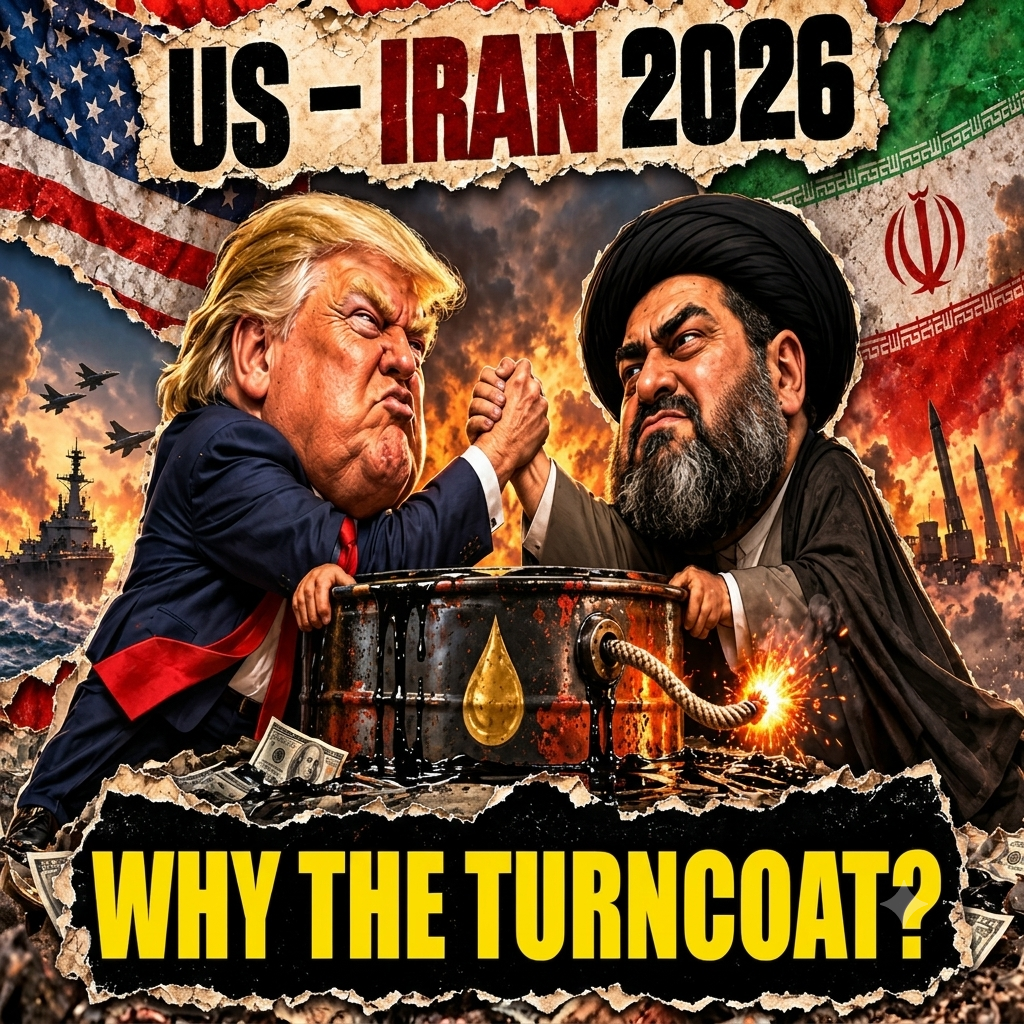
Few geopolitical transformations in modern history match the sheer tragedy and volatility of the relationship between the United States and Iran. Once the twin pillars of Western strategy in the Persian Gulf during the Cold War, the two nations have spiraled into an unyielding cycle of hostility, culminating in high-stakes regional military confrontations, crippling economic sanctions, and an enduring standoff over nuclear enrichment.
To understand how a partnership forged in the mid-20th century disintegrated into a bitter, multi-decade death match, one must look beyond the daily headlines of crisis and reexamine the historical turning points that shaped the modern Middle East.
The Oil, the Coup, and the Fall of Democracy (1951–1953)
The roots of the modern antagonism trace back not to religious ideology, but to economic nationalism and the control of oil. In the early 20th century, British corporate interests—through the Anglo-Iranian Oil Company (the precursor to BP)—extracted immense wealth from Iran’s vast petroleum reserves while leaving the local population in deep poverty.
In May 1951, the democratic Iranian Parliament elected Mohammad Mossadegh as Prime Minister. Mossadegh promptly nationalized the country’s oil industry, triggering a fierce British economic blockade. Convinced by London that Mossadegh would open the door to Soviet influence, the United States crossed a fateful Rubicon in August 1953.
Collaborating closely with British intelligence (MI6), the CIA orchestrated Operation Ajax, a covert coup d’état that overthrew Mossadegh and reinstated the young monarch, Shah Mohammad Reza Pahlavi. For the next 25 years, Washington backed the Shah’s autocratic regime as an indispensable bulwark against Soviet expansion in the Middle East.
The Irony of the Pahlavi Era and the Seeds of Revolution
In a supreme irony of history, it was the United States that jumpstarted Iran’s nuclear program in 1957 by supplying a research reactor to Tehran under the “Atoms for Peace” initiative. Throughout the 1960s and 1970s, the Shah’s Royal Iranian Air Force became the sole foreign buyer of elite American hardware, including F-14 Tomcats and Phantom jets.
Yet, behind the glittering facade of modernization fueled by the 1973 oil boom lay brutal political repression enforced by the Shah’s CIA-trained secret police, SAVAK. As thousands of dissidents, intellectuals, and religious students filled notorious prisons like Evin, public rage fused with religious opposition. From exile in France, Ayatollah Ruhollah Khomeini galvanized the population through cassette tapes condemning the Shah as an American puppet.
In January 1979, the Shah fled the country. Weeks later, Ayatollah Khomeini returned in triumph, and the Islamic Republic of Iran was born—instantly recasting the United States as the “Great Satan” and setting the stage for direct confrontation.
The Hostage Crisis and the Birth of Perpetual Enmity
The diplomatic point of no return occurred on November 4, 1979, when radical student activists scaled the walls of the U.S. Embassy in Tehran, seizing 52 American hostages for 444 days. The ensuing crisis shattered American political culture and prompted President Jimmy Carter to sever diplomatic ties, freeze billions in Iranian assets, and enact the first sweeping trade embargoes.
A botched rescue mission in the Iranian desert (Operation Eagle Claw) ended in tragic disaster in April 1980, reinforcing Tehran’s narrative of divine protection against American intervention.
Worse was to follow. In September 1980, Iraqi dictator Saddam Hussein invaded Iran, launching an eight-year war of attrition. While Washington officially claimed neutrality, U.S. intelligence quietly supplied Iraq with satellite data and tacitly countenanced the use of chemical weapons, cementing Tehran’s deep-seated paranoia regarding Western intentions.
Asymmetrical Warfare and the Nuclear Standoff
The bloody lessons of the Iran-Iraq War—including naval clashes in the Persian Gulf in the late 1980s—forged Iran’s modern military doctrine: asymmetric warfare. Realizing it could not defeat the U.S. Navy in conventional combat, Tehran invested heavily in fast-attack speedboats, anti-ship missiles, underground ballistic missile networks, and a formidable network of regional proxy militias (the “Axis of Resistance”) across Lebanon, Iraq, Syria, Yemen, and Gaza.
Simultaneously, under Supreme Leader Ayatollah Ali Khamenei, who succeeded Khomeini in 1989, Iran quietly resumed its nuclear ambitions. What began as discreet technological research gradually evolved into an advanced enrichment infrastructure at underground sites like Natanz and Fordow.
By the early 2000s, the discovery of these covert facilities triggered an international crisis. Despite American cyberwarfare campaigns (such as the Stuxnet virus) and targeted assassinations of Iranian nuclear scientists, Tehran pushed closer to the nuclear threshold, mastering uranium enrichment and building indigenous missile arsenals.
From the JCPOA to the Brink of Total War
Brief diplomatic optimism emerged in 2015 with the signing of the Joint Comprehensive Plan of Action (JCPOA)—the landmark nuclear deal brokered by the Obama administration and international powers, which curbed Iran’s nuclear program in exchange for sanctions relief.
However, the fragile accord collapsed in 2018 when the Trump administration unilaterally withdrew the U.S. from the agreement and launched a “maximum pressure” campaign. Tehran responded with its own “maximum resistance” strategy, systematically rolling back nuclear restrictions, targeting commercial tankers in the Gulf, and engaging in direct tit-for-tat military escalations—culminating in the dramatic targeted elimination of powerful Iranian General Qasem Soleimani in January 2020 and subsequent direct missile exchanges.
Conclusion: A Fragile Truce in a Fractured Region
Today, the standoff between Washington and Tehran remains locked in a dangerous, high-stakes equilibrium. Despite temporary ceasefires, diplomatic backchannels, and the severe economic tolls of international isolation, the foundational friction remains unresolved.
The historic arc from the 1953 coup to modern underground enrichment facilities illustrates a tragic geopolitical truth: mutual mistrust, born of historical intervention and ideological rigidity, has trapped two powerful nations in a perpetual cycle of confrontation—with the security, energy stability, and peace of the entire Middle East hanging in the balance.
Để lại một bình luận