🚨 THE LAST PEOPLE WHO SAW STEPHEN SCHNEIDER BEFORE THE BOAT LEFT MAY HOLD THE MISSING PIECE.
Schneider told police he had just THREE beers at dinner — but a blood test later showed a 0.16% BAC. So what happened during those final hours at the restaurant, and what did the people sitting beside him actually see? 👀
Family members, restaurant staff and others nearby may have witnessed the moments immediately before he took the helm — but how much of that night’s timeline is still missing?
And now, one question is getting harder to ignore: Could the people who saw him leave help explain the gap between his account and the evidence?
See what we know so far 👇
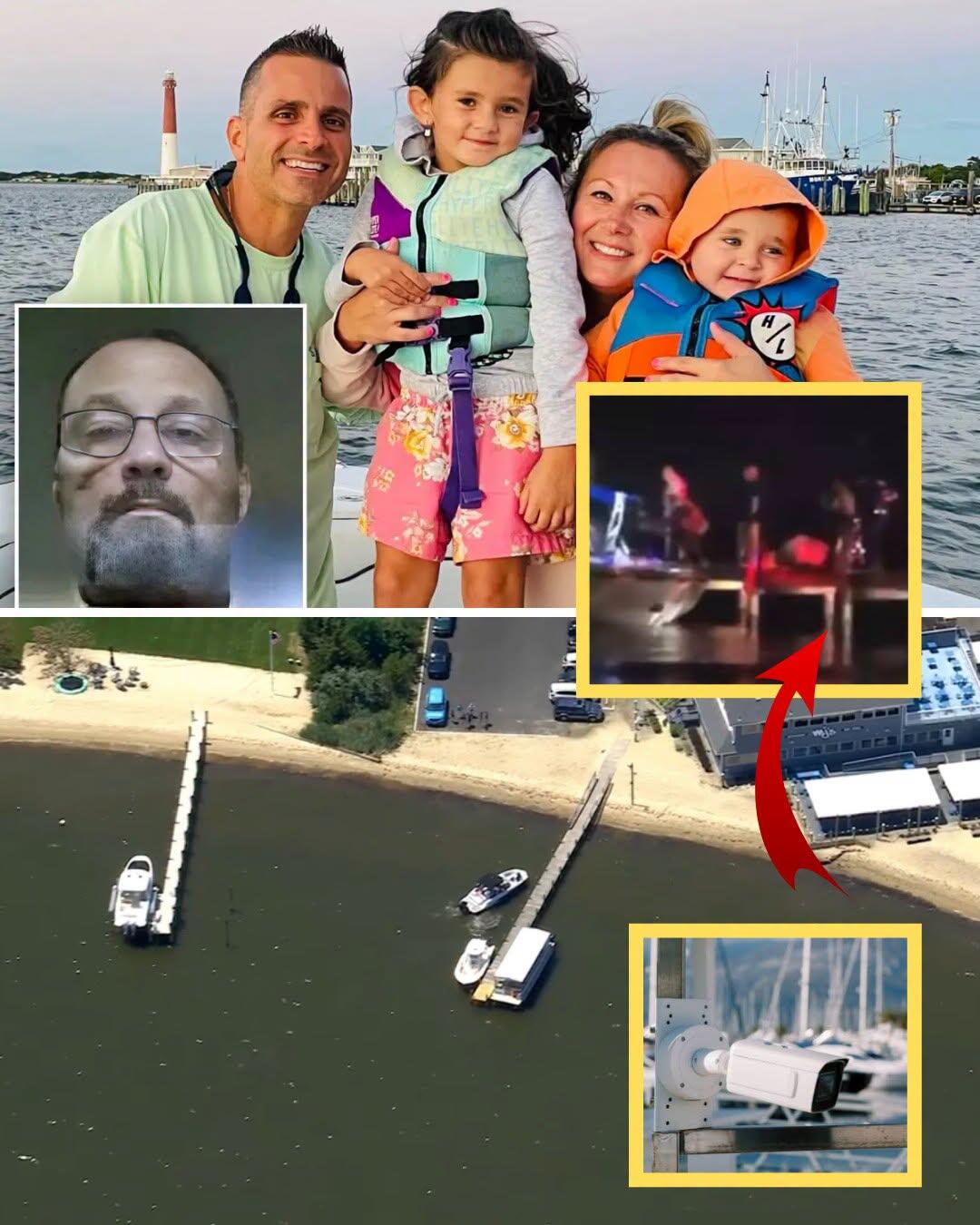
The People Who Saw Stephen Schneider Before the Fatal Boat Trip Could Hold a Crucial Piece of the Timeline
The hours before a fatal July boat crash in New Jersey are coming under renewed scrutiny as investigators and the public examine what happened before Stephen Schneider took the helm of his boat.
Schneider, 64, has been charged with two counts of reckless vessel homicide, along with operating a vessel under the influence and reckless operation of a vessel, after his 30-foot Tidewater Custom 280 struck a channel marker in Barnegat Bay on July 19.
His grandchildren, 9-year-old Mya Bella Golabek and 7-year-old Sigmund Paul Golabek, were thrown from the boat. Both children were wearing life jackets, according to court documents, but were found unresponsive in the water and later pronounced dead at a hospital.
Now, attention is increasingly focused on what happened before the boat ever left the restaurant area.
A Family Dinner Before the Crash
According to court documents cited by ABC7 New York and other outlets, Schneider had dinner with his wife, his daughter, his son-in-law and the two children at MJ’s Restaurant Bar & Grill in Bayville.
The families had arrived by separate boats. After dinner, the children went with their grandparents for the return trip rather than traveling back with their parents.
Schneider later told police that he consumed three beers during the roughly two-hour dinner — two Guinness beers and one Miller Lite.
That statement has become one of the most closely examined details in the case because of what investigators later found.
A blood sample taken after the crash showed a BAC of approximately 0.16%, according to prosecutors and subsequent reporting — roughly twice New Jersey’s legal limit for operating a motor vehicle.
State Police also said laboratory experts concluded that Schneider’s alertness, judgment, perception, response time and coordination were markedly impaired by alcohol.
That creates an obvious question: What did the people around Schneider observe during the dinner and immediately before departure?
Why the Restaurant Timeline Matters
The restaurant itself does not establish what Schneider’s BAC was at the exact moment he left.
But the people who interacted with him during those final hours potentially provide another piece of the timeline.
Family members were present at the table. Restaurant employees may have taken orders, delivered drinks or interacted with the group before they left. Other patrons could potentially have seen the family departing.
Those observations, if investigators obtained them, could potentially help establish details such as when drinks were ordered, how long the meal lasted and what Schneider appeared like immediately before returning to the boat.
Importantly, however, there is currently no public confirmation that a particular server or patron has emerged as a decisive witness.
The significance of those people is therefore best understood as an investigative possibility rather than an established breakthrough.
Three Beers vs. a 0.16 BAC
The central tension is straightforward.
Schneider reportedly told investigators he consumed three beers over approximately two hours.
Later testing showed a BAC of about 0.16%.
The difference between those two pieces of evidence has become a major point of discussion both in media coverage and online.
On Reddit, commenters discussing the case have repeatedly questioned whether three beers could account for the reported BAC and what the family members at the dinner may have observed. Some users have also questioned why the children were allowed to leave with Schneider if those around him recognized that he had been drinking.
Those are public reactions, not findings by investigators.
They also illustrate why the restaurant portion of the evening has attracted so much attention: multiple people were reportedly present during the period in which Schneider says he consumed the alcohol.
The Final Minutes Before Departure
The most potentially useful observations would not necessarily come from someone who watched Schneider for the entire evening.
A person who interacted with him immediately before departure could potentially provide information about his condition at the moment he was preparing to operate the boat.
That could include family members who walked with him, restaurant workers who handled the final interaction with the group or anyone who saw the family heading toward the dock.
Again, there is no public evidence establishing that such a witness has provided a new statement that changes the investigation.
But the timing matters.
The boat left after the dinner, and shortly afterward Schneider was operating the vessel through Barnegat Bay at night.
According to court documents, Schneider told investigators he was traveling around 20 mph and saw the channel marker only at the last moment. Reports have also indicated that the marker was illuminated and functioning properly.
The collision occurred around 9 p.m.
The children were thrown into the water, where Schneider and his wife attempted to locate and rescue them.
The 911 Call Added Another Layer
More recently, the release of 911 audio provided the public with a clearer picture of the chaotic aftermath.
According to the New York Post’s report on the recording, Laurie Schneider called 911 after the crash and told the dispatcher that one child was on the boat while her husband was in the water trying to retrieve the other.
The children were described as unconscious, and emergency crews responded to the scene.
NBC New York also reported on the release of the 911 recordings, adding another documented piece to the timeline from the moment of impact through the rescue attempt.
That evidence does not answer what happened at the restaurant.
But it helps establish how quickly the evening moved from a family dinner to a desperate emergency.
What the Community Is Asking
The case has generated strong reactions online, particularly after the release of information about the alleged alcohol level.
On Reddit, some commenters have focused on the responsibility of the adults who were present at dinner, while others have cautioned against assigning blame beyond the charges already filed.
One discussion in the South Jersey subreddit questioned whether family members could have recognized Schneider’s level of intoxication before allowing the children to board his boat. Other commenters pushed back against making assumptions about what people knew or perceived at the time.
Another Reddit discussion focused specifically on Schneider’s claim that he drank three beers and the reported BAC, with users debating what could explain the apparent discrepancy.
That debate illustrates an important distinction.
Public speculation is not evidence.
The fact that people online believe restaurant employees or relatives must have noticed something does not establish that they did. Likewise, a person appearing normal to a witness would not by itself disprove a later toxicology result.
The value of witness testimony would depend on what was actually observed and how it fits with the broader evidence.
What Investigators Still Need to Establish
The investigation will ultimately have to connect several separate pieces of information.
First is the drinking timeline.
Exactly when were the drinks ordered? How quickly were they consumed? Were there additional alcoholic beverages? What did restaurant records show?
Second is Schneider’s condition before departure.
Did anyone notice changes in his speech, coordination or behavior? Did he appear impaired? Or did witnesses describe him as functioning normally?
Third is the transition from restaurant to boat.
Who was with Schneider when he left? How did he get aboard? How long passed before the vessel was underway?
And fourth is the collision itself.
Investigators must consider the vessel’s speed, visibility, navigation, lighting, the functioning of the channel marker and Schneider’s ability to perceive and react to the hazard.
The answers do not necessarily come from one witness.
They may come from a combination of statements, toxicology, physical evidence, vessel information, emergency recordings and other records.
A Case Now Moving Into the Court Process
Schneider surrendered to authorities in August and was charged with the offenses connected to the crash. He was subsequently released after a judge considered the circumstances of the case.
The case has also taken an unusual emotional turn because the children’s father, Schneider’s son-in-law, reportedly asked the court to release him. The request and Schneider’s release have generated significant public discussion.
That does not change the underlying evidence.
Schneider remains accused, not convicted, and the charges will have to be resolved through the court process.
The tragedy itself, however, has already had a profound effect on the local community.
The crash was one of several serious boating incidents involving channel markers in Barnegat Bay this year, prompting broader attention to nighttime boating and alcohol impairment on the water.
The Question That Remains
For now, the restaurant remains an important part of the known timeline.
Schneider reportedly ate with his family for about two hours. He told police he consumed two Guinness beers and one Miller Lite. The family then separated, with the children returning with their grandparents.
Less than an hour later, the boat struck a channel marker.
A subsequent blood test showed a BAC of approximately 0.16%, and prosecutors have pointed to the reported level as evidence of significant impairment.
What remains less clear publicly is exactly what happened between those points.
Who interacted with Schneider immediately before he left?
What did they see?
And does their recollection support, contradict or simply add context to his account of the evening?
Those questions should not be answered by social media speculation. They can only be resolved through evidence gathered by investigators and presented in court.
But as the case moves forward, the people who witnessed the final moments before Schneider took the helm could prove important in reconstructing the sequence of events.
For investigators, prosecutors and the defense alike, the timeline begins long before the channel marker.
It begins at the dinner table.
Để lại một bình luận