IT HAS A 99 ON METACRITIC—SO WHY DO SOME PLAYERS CALL GTA 6 “LIFELESS”?! 🚨👀
Wait a second… how can a game with over a hundred perfect review scores feel weirdly empty in its first few hours?! 😱🔥
A viral breakdown just dug into why some players feel GTA 6 is “hollow” or “generated” even with jaw-dropping visuals—pointing to deliberate 30 FPS pacing, Red Dead-style survival chores, no GTA Online or PC version at launch, and comparing a brand-new release against 12 years of GTA 5 updates… while reviewers who put in 70 to 200+ hours say the magic only clicks once the world’s systems truly come alive! 💀🎮
Is the “lifeless” feeling just a slow-burn illusion, nostalgia talking, or a real flaw in Rockstar’s new formula? Drop your take below and hit the link to see the full breakdown before everyone else chimes in 👇🔥
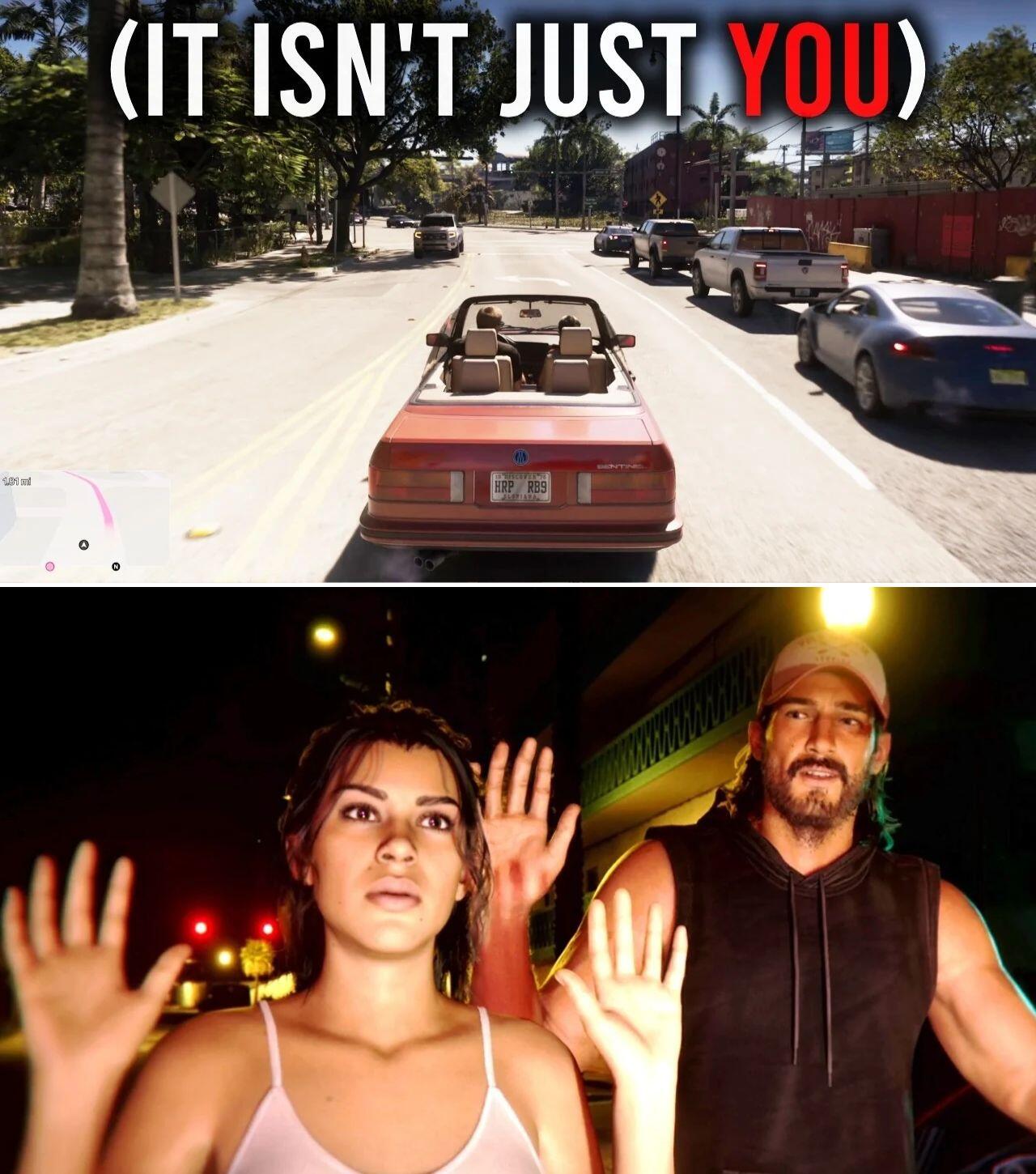
Few paradoxes in modern gaming are as striking as Grand Theft Auto VI sitting near the top of Metacritic with a 99 score and more than a hundred perfect critic reviews while simultaneously prompting viral complaints from early players that the game feels “weird,” “hollow,” or strangely “lifeless.” In a 13-minute video titled “GTA 6 Feels Weird and Lifeless…”—which has racked up over 630,000 views—YouTuber IAmBeanz sets out to untangle that exact contradiction after logging roughly four hours in Leonida.
Rather than dismissing GTA 6 as broken or unplayable, IAmBeanz praises its visual fidelity—highlighting lighting filtering through palm trees, water, faces, and overall presentation—before explaining why the initial hours left him and several friends in streams and chats feeling underwhelmed. Across YouTube comments, X threads, Reddit boards, Discord servers, and TikTok clips, his breakdown has tapped into a nuanced debate over pacing, realism, 30 FPS console performance, missing launch features, and how much time it takes for Rockstar’s open world to hit its stride.
The “Generated” Illusion and the Uncanny Valley of Realism
One of the central ideas in IAmBeanz’s critique is that GTA 6‘s hyper-polished presentation can make moments feel oddly artificial—almost like an expensive simulation or something “generated” rather than spontaneous street chaos. While Take-Two CEO Strauss Zelnick has stated that generative AI plays zero part in Rockstar’s creative world-building for GTA 6—emphasizing that neighborhoods and environments are handcrafted over years rather than procedurally generated, even as machine learning and AI tools are used elsewhere in the business—IAmBeanz points to how large-scale simulation systems can still feel rule-driven up close.
He cites Take-Two patent filings linked to Rockstar developers David Hind and Simon Par involving more realistic NPC navigation and traffic behavior, arguing that when thousands of characters operate under complex behavioral rules alongside ultra-realistic visuals, players can sense the underlying machinery. Drawing on Masahiro Mori‘s uncanny valley concept—and extending it to animation and movement—IAmBeanz notes that GTA 5 looked unmistakably like a stylized video game, making silly physics quirks and wild antics funny. When a game looks near-photorealistic, expectations shift closer to real life, making stiff reactions or predictable routines feel uncanny instead of comedic.
There is also what players often call the loss of productive “jank.” In older open-world games, eccentric glitches and unpredictable physics sometimes created hilarious, unscripted stories. When a release is heavily polished and tightly constrained, some of that scrappy, accidental personality can feel sanded down.
Deliberate Pacing, Survival Mechanics, and 30 FPS
Another major factor behind the “slow” or “lifeless” impression is intentional design. As IAmBeanz notes—referencing reporting from outlets like Kotaku and comments from Rockstar North’s Rob Nelson—Rockstar deliberately slowed pacing down compared to GTA 5 so the world’s lifelike scale and mood would breathe rather than rush from one chaotic set piece to the next. That includes encouraging downtime, walking or taking a breather between jobs, and building up money or preparation instead of chain-pulling missions back-to-back.
Alongside that slower rhythm sit survival and grounding mechanics reminiscent of Red Dead Redemption 2: characters need to eat and rest, physical traits respond to habits, weapon carry limits replace pulling heavy ordnance out of thin air, NPCs react when firearms are drawn, and law enforcement retains memory of outfits, faces, and vehicles even after heat fades. For players who love immersive role-play and weight, those systems are a triumph; for those wanting immediate, consequence-light mayhem, feeding characters or doing routine tasks can feel like “admin.”
Technical frame rate adds another layer. With GTA 6 running at 30 FPS across consoles—including PS5 Pro—IAmBeanz notes that while performance appears stable rather than broken, moving from 60 FPS titles can make camera movement and driving feel heavier or less snappy, reinforcing the sense of a slower, more deliberate world.
Mission Structure, Missing Launch Staples, and Nostalgia
Critics and commentators have also pointed to structural and launch-day context that shapes early impressions:
-
Familiar Mission Bones: Echoing observations previously raised by outlets like PC Gamer, IAmBeanz argues that early missions still follow recognizable Rockstar beats—meeting characters, driving and talking, then hitting a shootout—even though the surrounding world and graphics have leaped forward.
-
No GTA Online or PC Version Yet: With GTA 6 launching as a single-player story experience without GTA Online or a PC release on day one—a point pre-launch commentator Ludwig also highlighted—players miss multiplayer chaos with friends and inevitably compare a brand-new launch to a 12-year-old, heavily updated GTA 5 rather than GTA 5 on day one in 2013.
-
Growing Older and Pre-Launch Spoils: IAmBeanz also turns the lens on himself and longtime fans, acknowledging that playing GTA 5 as a teenager with fewer real-world responsibilities—and having seen years of trailers, leaks, and breakdowns before launch—naturally makes it harder to recapture first-time wonder.
Why Reviewers Gave It a 99 While Early Players Split
The sharpest contrast in the conversation is between quick early impressions and long-form reviews. GTA 6 has earned massive critical acclaim—including a 99 on Metacritic alongside Ocarina of Time and over a hundred perfect scores—yet outlets like IGN have also flagged that the game can be divisive, particularly for players whose main point of reference is GTA 5‘s faster, looser chaos.
Many reviewers who logged 70 to over 200 hours emphasize that GTA 6‘s strengths compound over time: emergent systems interlock, Jason and Lucia’s dynamic evolves across a longer arc, and subtle clues or mysteries pay off dozens of hours later. That gap between hour four and hour eighty helps explain why a game can simultaneously look like a critical masterpiece to marathon reviewers and feel quiet or slow to someone just getting off the couch.
What Happens Next in Leonida
As more players push past the opening hours and share deeper impressions across Reddit, X, TikTok, Discord, and YouTube, the narrative around GTA 6‘s pacing is likely to test whether early “lifeless” complaints fade once players unlock more of the map, story, and systems—or whether a slower, more grounded GTA remains a permanent dividing line in the community.
Looking ahead, future patches, eventual GTA Online plans, and a long-awaited PC release will each bring new waves of players into Leonida under very different conditions. For now, GTA 6 sits right in the middle of a tug-of-war between breathless critical praise and raw, unfiltered first impressions—proving that even a 99-rated giant can spark fierce debate before the ink on its launch week is dry.
Để lại một bình luận